
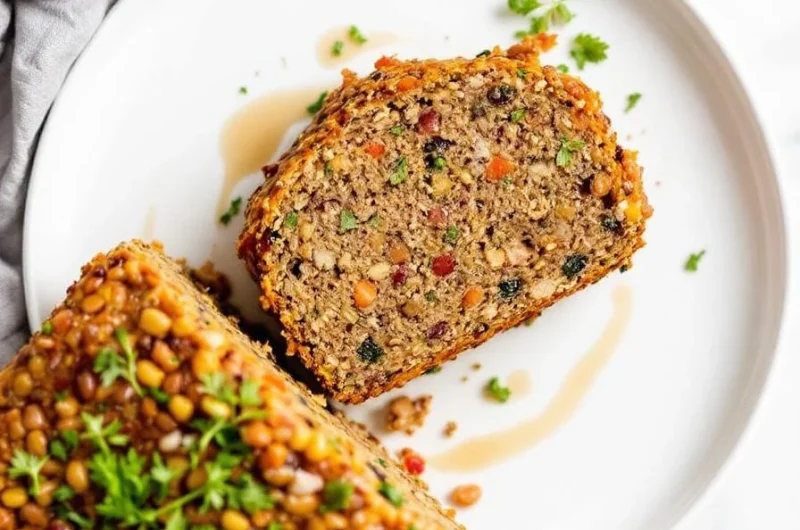
Pulling together a lentil loaf means boiling a big pot of lentils until they’re soft and split, then mashing them with the back of a fork until they squish easily. It’s about feeling the texture give under your fingers, signaling they’re just right for mixing. No fancy gadgets needed, just a sturdy spoon and some patience.
Chopping onions, carrots, and herbs comes next, the satisfying sound of knife meeting wood, releasing that raw veggie aroma. Once everything’s prepped, mixing it all up in a big bowl feels like assembling a rough sculpture—messy but honest, with ingredients that look like they belong together.
the tactile satisfaction of mashing cooked lentils with a sturdy fork, feeling each one give way with a soft squish that signals readiness, before mixing in the rough texture of oats and the snap of chopped herbs.
Key ingredients and swaps
- Lentils: I use dried brown or green lentils, cooked until tender but not mushy—moist and earthy, they squish just right. Swap in canned for convenience, but watch for excess salt, and rinse well.
- Oats: Old-fashioned rolled oats add a hearty texture and help bind everything together. If you’re gluten-free, try certified gluten-free oats, or crushed rice crackers for a different snap.
- Onions & Carrots: Finely chopped onions bring sweetness and depth, while grated carrots add moisture and a slight crunch. Skip the onion if you’re sensitive, but don’t skip the carrot—adds a natural sweetness.
- Herbs & Spices: Fresh parsley and thyme brighten each bite, but dried work fine if fresh is unavailable. A dash of smoked paprika gives a smoky undertone—skip if you prefer milder flavors.
- Binding Agents: Eggs are traditional for cohesion, but mashed avocado or flaxseed slurry can stand in. They offer a different richness or nuttiness, and are good plant-based alternatives.
- Tomato Paste & Worcestershire: The tomato paste adds a concentrated umami flavor, while Worcestershire gives a savory kick. For a soy-based twist, soy sauce works but watch the salt level.
- Breadcrumbs or Crumbs: They help hold the loaf together; breadcrumbs are classic, but crushed crackers or even cooked quinoa can fill in, especially if you’re aiming for a gluten-free version.
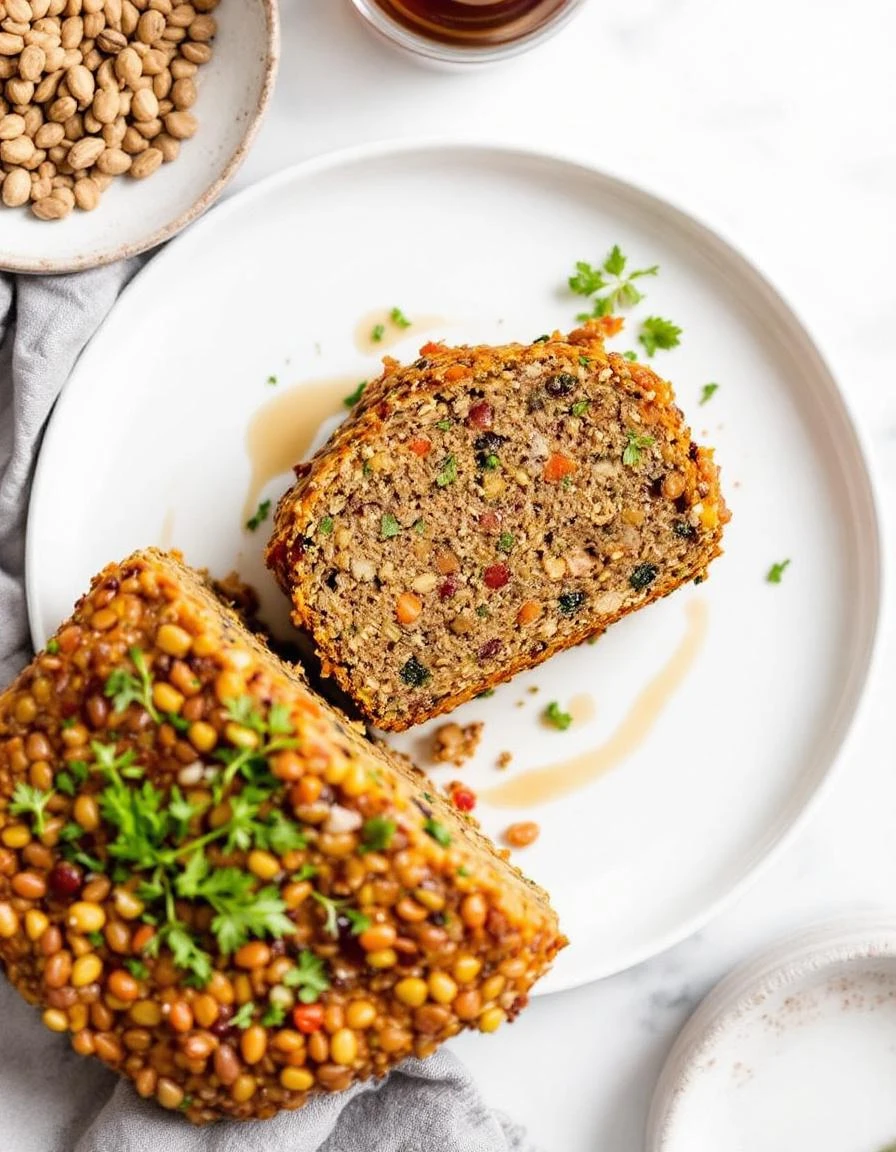
Lentil Loaf
Ingredients
Equipment
Method
- Place the lentils in a large pot and cover with water. Bring to a boil and simmer until tender, about 20-25 minutes. Drain excess water and mash the lentils with the back of a fork until they are soft and slightly squished, feeling the texture give under your fingers.
- While the lentils are cooking, finely chop the onion and grate the carrot using a grater. In a mixing bowl, combine the chopped onion, grated carrot, chopped parsley, and thyme, stirring to distribute evenly.
- Add the mashed lentils to the bowl with the vegetables. Mix in oats, eggs, tomato paste, Worcestershire sauce, breadcrumbs, salt, and pepper. Stir until all ingredients are well combined and the mixture holds together when pressed.
- Transfer the lentil mixture into a greased loaf pan, pressing down gently to shape it evenly. Smooth the top with the back of a spoon or spatula.
- Bake in a preheated oven at 375°F (190°C) for about 35-40 minutes, until the top is golden brown and the edges are set. Loosely cover with foil if it starts to brown too quickly.
- Remove the loaf from the oven and let it rest for 5 minutes. Then, carefully lift it out of the pan and transfer to a cutting board.
- Slice the lentil loaf into thick pieces, revealing its firm yet tender interior. Serve warm, perhaps with a side of greens or gravy.
Notes
Common mistakes and how to fix them
- FORGOT to drain excess water from canned lentils, making the loaf too mushy. Rinse well.
- DUMPED in too much liquid when mixing, resulting in a loose loaf. Keep it just moist.
- OVER-TORCHED the edges during baking, causing a bitter, burnt flavor. Cover loosely if browning too fast.
- MISSED adding enough herbs, leaving the loaf bland. Taste and adjust herbs before baking.
Make-Ahead and Storage Tips
- You can prepare the lentil mixture a day ahead; keep it covered in the fridge for up to 24 hours. Flavors meld and improve overnight.
- Bake the loaf, then cool completely before wrapping tightly in foil or plastic wrap. It can be stored in the fridge for 3-4 days or frozen for up to 3 months.
- Freezing before or after baking helps; reheat directly from frozen, adding a few extra minutes to the bake time.
- Reheating in the oven at 350°F (175°C) for 15–20 minutes restores texture and warmth. Check for a crispy top and a hot center.
- The flavor deepens over time, sometimes tasting more savory the next day. Keep an eye on moisture—if it seems dry, sprinkle with a splash of water before reheating.
FAQs
1. How do I know when it’s done?
The loaf can be slightly firm or tender, depending on how long you bake it and the moisture of your ingredients. Feel for a golden crust and a firm, but not rock-hard, center.
2. My loaf is cracking or burning on top?
If you notice cracks on top or it’s browning too quickly, tent it loosely with foil. It helps keep the edges moist and prevents burning.
3. How should I store leftovers?
Storing it wrapped in foil or plastic keeps it moist. Reheat in the oven until hot and smells warm, about 15 minutes at 350°F.
4. Can I freeze the lentil loaf?
You can freeze slices or the whole loaf, wrapped tightly. Let it thaw at room temperature, then reheat until steamy and fragrant.
5. How do I reheat for the best texture?
Yes, adding a splash of water or broth before reheating helps revive the moisture. Reheat until it’s hot and you hear a gentle steam escaping.

Hi there! I’m Himani and welcome to Val’s Recipe Box. This little corner of the internet didn’t begin with me. It began with Val my neighbourhood aunt whose kitchen held more warmth than any fireplace ever could.


 This little corner of the internet didn’t begin with me.
It began with Val my neighbourhood aunt whose kitchen held more warmth than any fireplace ever could.
She was more of a friend and I’ve come to know her in the most unexpected way.
This little corner of the internet didn’t begin with me.
It began with Val my neighbourhood aunt whose kitchen held more warmth than any fireplace ever could.
She was more of a friend and I’ve come to know her in the most unexpected way.