
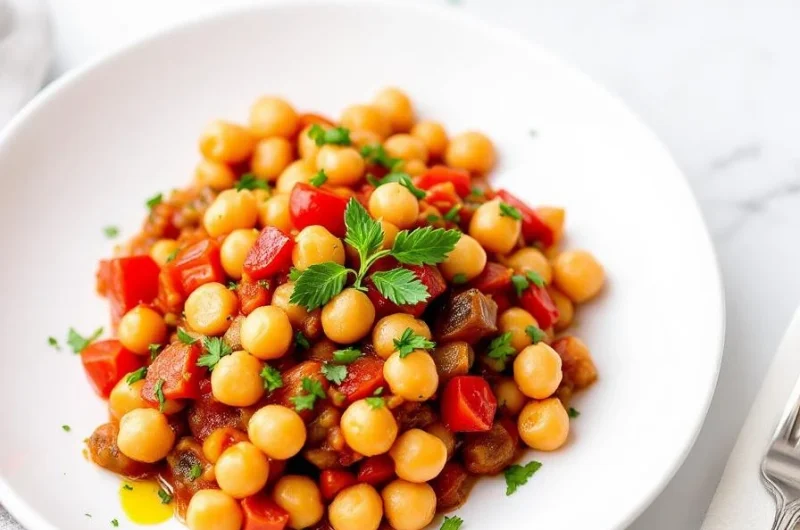
Chickpea ragout is about the slow, patient simmer. You hear the chickpeas softly thudding against the pot as they soak up the broth, swelling and softening over time.
Getting it right means standing by the stove, stirring gently, watching the sauce thicken and the chickpeas break down just enough to create a hearty, textured stew.
The gentle simmer and occasional stir, hearing the chickpeas softly thud against the pot as they absorb the fragrant broth.
What goes into this dish
- Chickpeas: I go for the dried ones, soak overnight, then simmer until tender—about 45 minutes. Canned work in a pinch, just rinse and drain, but they’re softer and less earthy that way.
- Olive oil: A good splash for sautéing veggies, it adds a fruity depth. If you’re out, a neutral oil like canola works, but skip the rich aroma and complexity.
- Onion: Finely chopped, this is the base’s backbone—sweat until translucent, releasing a sweet aroma. Skip if you’re in a rush, but you’ll miss that subtle sweetness.
- Garlic: Minced and tossed in at the last minute of sautéing, it brightens the whole dish. Use garlic powder in a pinch, but it won’t have that punch of fresh cloves.
- Tomatoes: Crushed canned tomatoes bring a tangy richness, giving the ragout its body. Fresh tomatoes work in summer, but they’ll be less concentrated and more watery.
- Herbs: Bay leaf and thyme add earthy, aromatic notes. Fresh herbs are best, but dried work, just cut the amount in half to avoid overpowering.
- Broth: Vegetable stock is ideal, giving the stew a savory backbone. Water with a dash of miso or soy can boost flavor if you’re out, but it’s not quite the same.
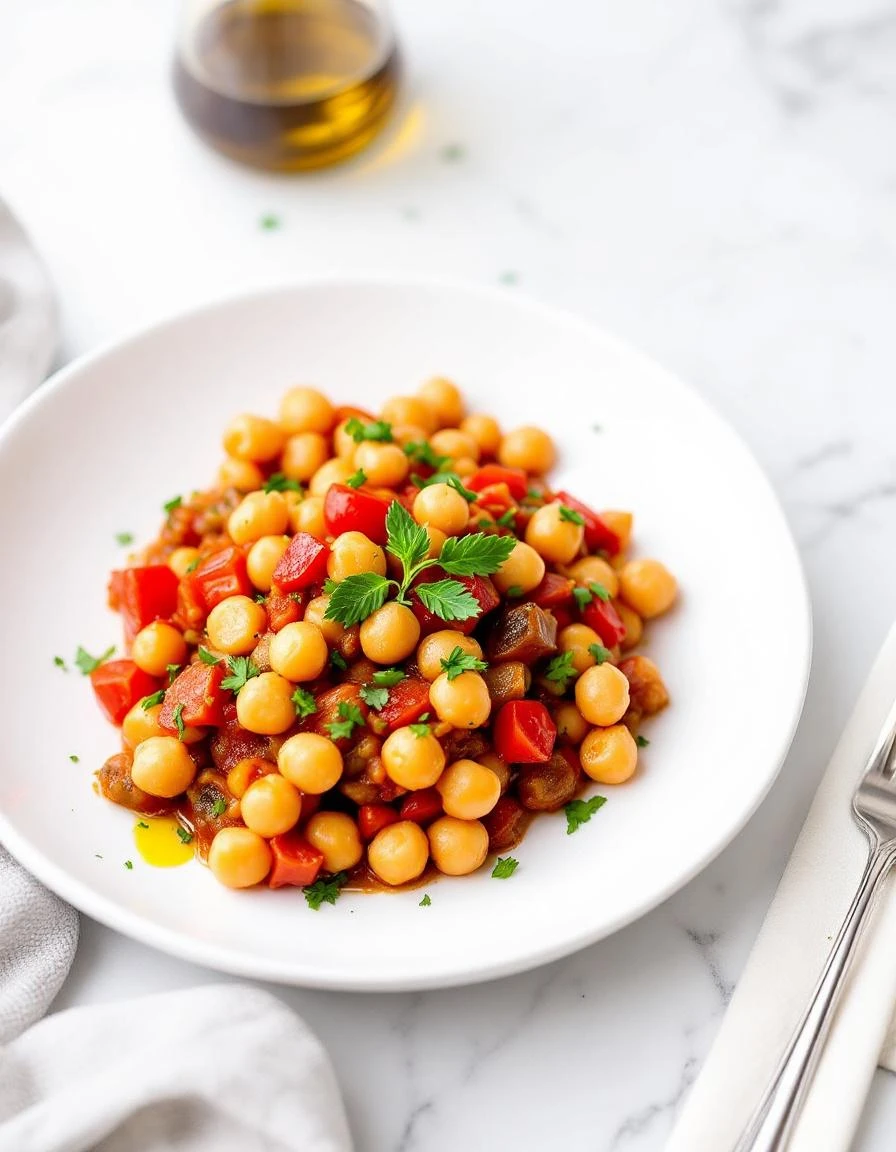
Chickpea Ragout
Ingredients
Equipment
Method
- Drain and rinse the soaked chickpeas, then add them to a large pot filled with fresh water. Bring to a boil, then reduce to a simmer and cook until tender, about 45 minutes. Drain and set aside.
- Heat the olive oil in the same pot over medium heat. Add the chopped onion and sauté, stirring frequently, until it becomes translucent and fragrant, about 5 minutes.
- Add the minced garlic to the onions and cook for another minute, until fragrant and just starting to turn golden.
- Pour in the crushed tomatoes and stir well, allowing the mixture to simmer gently and develop a rich, red color, about 5 minutes.
- Add the bay leaves and dried thyme to the tomato base, stirring to combine, and let the flavors meld for a minute or two.
- Pour in the vegetable broth, stirring to combine the sauce and create a flavorful liquid for simmering.
- Return the cooked chickpeas to the pot, stir them into the broth and tomato mixture, and bring to a gentle simmer. Cover partially and cook for 20-30 minutes, stirring occasionally, until the sauce thickens and the chickpeas are fully tender.
- Remove the bay leaves, taste, and season with salt or additional seasoning as desired. The ragout should be thick, hearty, and aromatic.
- Spoon the warm chickpea ragout into bowls and enjoy with crusty bread or on its own for a comforting, textured meal.
Common mistakes and how to fix them
- FORGOT to soak dried chickpeas overnight? Soak them at least 8 hours or quick soak for 1 hour.
- DUMPED in cold broth without simmering? Bring the stew to a gentle simmer and cook until tender.
- OVER-TORCHED the garlic too early? Sauté garlic at lower heat, just until fragrant, to avoid bitterness.
- MISSED tasting and adjusting seasoning? Always taste near the end and add salt or acid as needed.
Make-Ahead and Storage Tips
- Chickpeas: Soak dried chickpeas overnight, then cook until tender—about 45 minutes. Canned chickpeas can be rinsed and used immediately, but they’ll lack some earthiness.
- Vegetables: Chop onions, garlic, and herbs ahead. Store in airtight containers in the fridge for up to 2 days to speed up cooking.
- Broth Base: Prepare the broth mixture in advance; it keeps well in the fridge for 2-3 days or frozen for up to 1 month. Flavors deepen with time.
- Flavor Development: The ragout tastes even better the next day as the spices and chickpeas meld. Expect richer, more integrated flavors after a night in the fridge.
- Reheating: Warm on low heat, stirring occasionally. Check for bubbling and taste for seasoning—add a splash of water or broth if it thickens too much or flavors dull.
FAQs
1. Can I use canned chickpeas?
Yes, canned chickpeas work fine. Rinse them well to remove excess salt and canning liquid. They’ll be softer and less earthy, but save time.
2. Can I use pre-cooked chickpeas?
Definitely. Just drain and rinse to get rid of that tinny smell. They’ll add a softer texture but still soak up flavors nicely.
3. How do I season it properly?
Add salt gradually, tasting as you go. The chickpeas absorb salt, so start small and adjust for a balanced, not overly salty, stew.
4. How long should I cook it?
Simmer until the chickpeas are tender, and the sauce thickens slightly. You’ll smell the rich tomato aroma and see the sauce cling to the beans.
5. How do I reheat leftovers?
Reheat gently on low, stirring often. The flavors deepen overnight, but watch for sticking or burning at the bottom of the pot.

Hi there! I’m Himani and welcome to Val’s Recipe Box. This little corner of the internet didn’t begin with me. It began with Val my neighbourhood aunt whose kitchen held more warmth than any fireplace ever could.


 This little corner of the internet didn’t begin with me.
It began with Val my neighbourhood aunt whose kitchen held more warmth than any fireplace ever could.
She was more of a friend and I’ve come to know her in the most unexpected way.
This little corner of the internet didn’t begin with me.
It began with Val my neighbourhood aunt whose kitchen held more warmth than any fireplace ever could.
She was more of a friend and I’ve come to know her in the most unexpected way.