
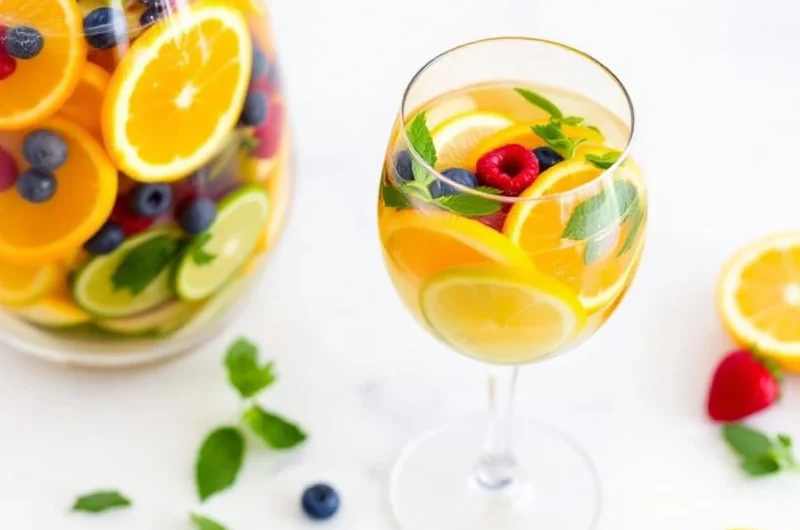
I start by slicing up bright citrus—lemons, limes, oranges—watching the juice run into my bowl, sticky and sharp. The mess is real, but it’s part of the process, the smell of zest filling the air as I muddle the fruit slightly to release more juice.
Next, I toss the fruit into a pitcher, pour in a decent splash of white wine—something crisp and not too sweet—and then top it with soda just before serving. It’s about balancing the fizzy, the tart, and the fruit, all while trying not to spill half the ingredients on the counter.
The gentle clink of the glass as I pour the wine, followed by the satisfying splash of soda, fills the kitchen with a quiet rhythm that signals the start of something refreshing.
What goes into this dish
- White wine: I use a crisp, dry Sauvignon Blanc—bright citrus and apple notes. Skip the fancy bottles; a decent supermarket find works fine, just avoid anything too sweet that could throw off the balance.
- Fresh citrus: Lemons, limes, oranges—slice them thin, and squeeze as you go. The zest’s aroma wakes up the whole mix, so don’t skip the peel. Swap with grapefruit if you want more bitterness.
- Sweetener: A splash of honey or simple syrup helps tame the tartness. Skip it if you prefer less sweetness, but don’t skimp—your taste buds will thank you for the smooth finish.
- Sparkling element: Soda water or lemon-lime soda—your choice depends on how fizzy and sweet you want it. Too much soda can flatten the fruit flavors, so add just before serving.
- Fresh herbs (optional): Mint or basil—toss in a handful for a fragrant, herbal lift. Skip if you’re not into greenery, but it makes the whole thing smell like summer.
- Additional fruit: Berries, pineapple chunks, or peaches—whatever’s ripe and juicy. They add color and surprise bites, but be careful not to overload, or it gets watery fast.
- Ice: Crushed or cubed—so it chills quickly without watering down the drink too much. Keep some extra ice handy if you’re serving a crowd or want it extra cold.
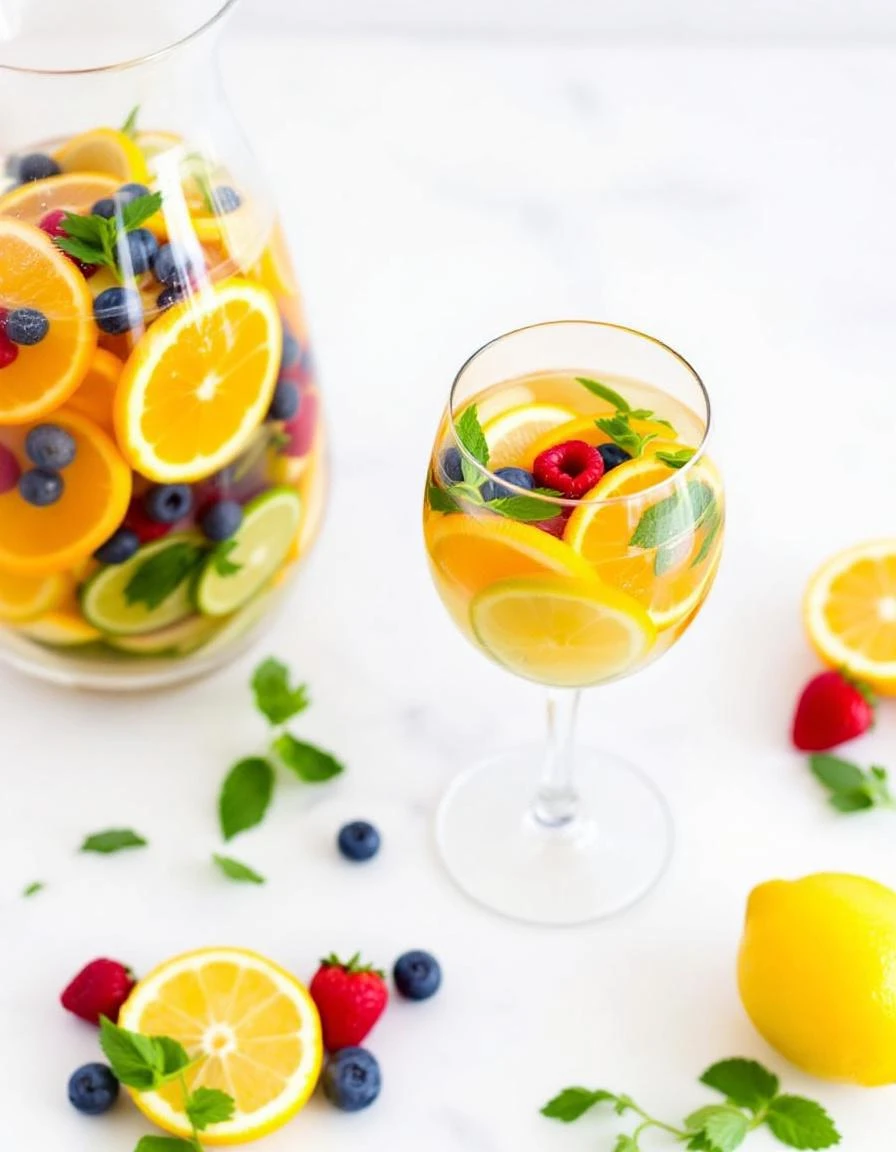
Citrus White Wine Sangria
Ingredients
Equipment
Method
- Start by slicing the citrus fruits thinly, keeping the peel on to add aroma and color, then place them in a large pitcher.
- Using a muddler or the back of a wooden spoon, gently muddle the citrus slices to release their juice and essential oils, filling your nose with a bright citrus aroma.
- Pour the chilled white wine into the pitcher over the muddled fruits, allowing the flavors to mingle as you stir gently.
- Stir in a tablespoon of honey or simple syrup to balance the tartness, tasting as you go to adjust sweetness.
- Add the optional fresh herbs and berries to the pitcher, gently stirring them into the mix for extra flavor and visual appeal.
- Refrigerate the mixture for at least 15 minutes, or up to a few hours, to let the flavors meld and the drink chill thoroughly.
- Just before serving, add ice to the pitcher to keep the sangria cold and refreshing.
- Pour in the soda water or lemon-lime soda to give the drink its signature sparkle, stirring gently to combine.
- Give the sangria a final gentle stir, then serve immediately in glasses garnished with extra citrus slices or herbs if desired.
Common mistakes and how to fix them
- FORGOT to chill the wine, resulting in a lukewarm drink. Use cold wine straight from the fridge.
- DUMPED all the fruit at once, which caused uneven flavor. Add fruit gradually for balance.
- OVER-TORCHED the citrus slices, making them bitter. Slice thin and watch closely during muddling.
- MISSED adding the soda last, which flattened the fizz. Pour soda just before serving for sparkle.
Make-Ahead and Storage Tips
- Prepare the fruit the day before—slice citrus and berries. Store in an airtight container in the fridge to keep them fresh and juicy.
- You can make the sangria base up to 24 hours ahead. Keep it covered in the fridge, the flavors will meld and deepen overnight.
- Adding soda or sparkling water should be done right before serving to keep the fizz lively and prevent it from going flat.
- If you want a more intense fruit flavor, let the mixture sit for a few hours, but avoid more than 24 hours as the fruit can start to break down and release too much water.
- Refrigerate any leftovers for up to 2 days. The flavors will mellow and the fruit may become a bit softer, but it still tastes refreshing.
- Reheat is not recommended—serve chilled. If necessary, gently stir and taste to check the balance before pouring.
FAQs
1. Should I chill the ingredients first?
Use a chilled glass and cold wine to keep the drink crisp and refreshing, especially on hot days where the aromas seem brighter.
2. Why add fresh fruit?
Yes, adding fresh fruit releases juices and aroma, giving the sangria a lively, juicy burst with each sip.
3. When should I add the soda?
Add soda just before serving; otherwise, the fizz will fade, making the drink flat and dull on your tongue.
4. Can I skip the sweetener?
A splash of honey or simple syrup balances the tartness of citrus, making each sip feel smooth and not too sharp.
5. How should I serve it for best flavor?
Warm or flat sangria loses its sparkle and fresh fruit aroma. Serve it chilled and fresh for that bright, zesty punch.

Hi there! I’m Himani and welcome to Val’s Recipe Box. This little corner of the internet didn’t begin with me. It began with Val my neighbourhood aunt whose kitchen held more warmth than any fireplace ever could.


 This little corner of the internet didn’t begin with me.
It began with Val my neighbourhood aunt whose kitchen held more warmth than any fireplace ever could.
She was more of a friend and I’ve come to know her in the most unexpected way.
This little corner of the internet didn’t begin with me.
It began with Val my neighbourhood aunt whose kitchen held more warmth than any fireplace ever could.
She was more of a friend and I’ve come to know her in the most unexpected way.