
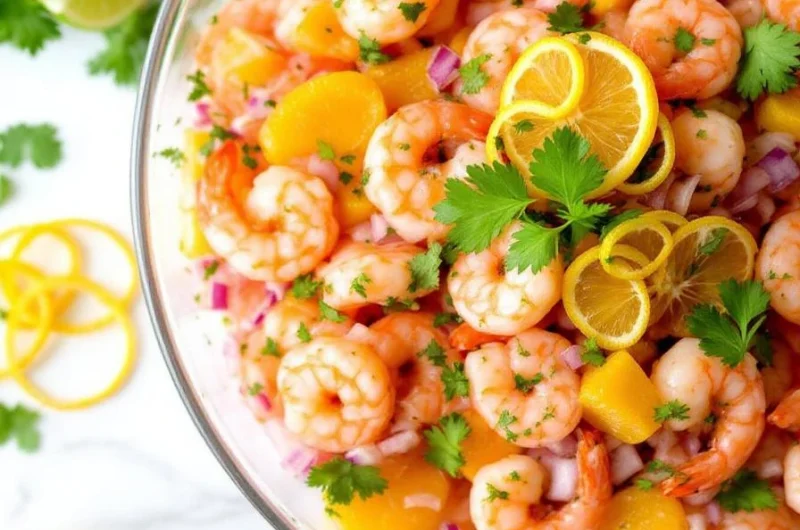
Watching the shrimp turn opaque in the citrus bath, I notice the edges firming up against the acid. It’s a slow dance, the seafood gently changing texture as it absorbs the tangy lime juice.
Chopping the tomatoes and onions is a messy, loud process—juices splattering, seeds spilling onto the cutting board. This dish isn’t about precision, but about feeling how the ingredients come together under your hands.
Listening to the gentle slosh of the lime juice mixing with the shrimp, feeling the slight give of the seafood as it ‘cooks’ in the citrus.
What goes into this dish
- Shrimp: Fresh, firm shrimp are key—if yours smell a bit off or feel slimy, skip them. Frozen works in a pinch; just thaw completely and pat dry to avoid watering down the ceviche. Their sweet, briny flavor is what makes this dish pop.
- Lime juice: Bright, zesty lime juice is non-negotiable. If you’re out, lemon can work, but it’s less tart and a bit dull. Freshly squeezed is best—no bottled stuff that tastes flat or has a weird aftertaste.
- Red onion: Thinly sliced, it adds a sharp crunch and a pungent kick. If you hate raw onion, soak slices in cold water for 10 minutes—mildens the bite but keeps the crunch.
- Tomatoes: Juicy, ripe tomatoes add sweetness and color. Canned diced tomatoes are a quick swap, but fresh, vine-ripened are the real deal—more flavor, less watery. Seed and drain well.
- Cilantro: Bright, herbal, with a hint of earthiness. No cilantro? Fresh parsley works, but it won’t give that same citrusy pop. Add just before serving so it stays vibrant.
- Jalapeño: For a smoky heat, slice up a jalapeño. If you want milder, remove seeds and membranes. No fresh pepper? A dash of hot sauce can add that fiery kick, but fresh is best for flavor.
- Salt and pepper: Essential for balance. Taste as you go—over-salting can ruin the delicate seafood flavor, but a pinch at the end really rounds it out.
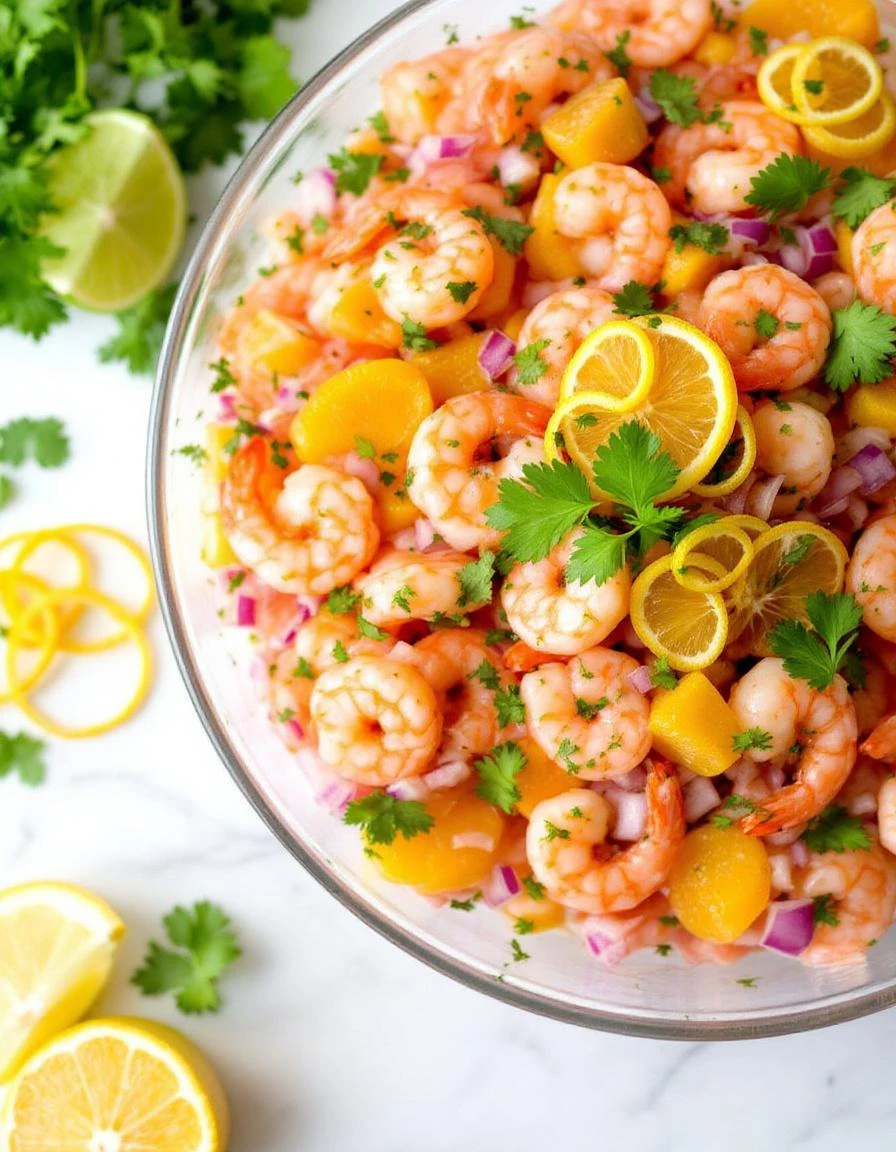
Shrimp Citrus Ceviche
Ingredients
Equipment
Method
- Start by placing the peeled and deveined shrimp in a mixing bowl. Pour the fresh lime juice over the shrimp, making sure they are fully submerged. Cover and refrigerate for 15-20 minutes until the shrimp turn opaque and firm to the touch, absorbing the citrus flavor.
- While the shrimp marinates, prepare the vegetables. Thinly slice the red onion and set aside. Dice the ripe tomatoes, removing excess seeds, and place in a separate bowl. Slice the jalapeño thinly, removing seeds for less heat if desired.
- Once the shrimp are opaque and firm, drain them slightly if needed, but keep most of the lime marinade in the bowl. Gently fold in the chopped tomatoes, sliced red onion, and jalapeño slices. Stir carefully to combine all the vibrant ingredients.
- Add freshly chopped cilantro to the mixture, then season with salt and pepper to taste. Give everything a gentle stir, making sure the herbs and seasonings are evenly distributed. Let the ceviche sit for an additional 5 minutes for flavors to meld.
- Taste the ceviche and adjust salt or lime juice if needed. Serve immediately in chilled bowls or glasses, garnished with extra cilantro if desired. Enjoy this bright, citrusy seafood dish with tortilla chips or on its own for a refreshing treat.
Common Mistakes and How to Fix Them
- FORGOT to chill the shrimp properly before prep? Fix by ice-cooling for 10 minutes to firm up.
- DUMPED too much lime juice? Balance acidity by adding more seafood or gentle sweetener like honey.
- OVER-TORCHED the shrimp in the citrus? Prevent by removing shrimp before they turn opaque; keep an eye.
- MISSED to remove the shrimp’s veins? Always devein for cleaner, less gritty ceviche experience.
Make-Ahead and Storage Tips
- Prepare the shrimp and chop ingredients a few hours ahead—keep them chilled in airtight containers to maintain freshness.
- Shrimp ceviche can sit in the fridge for up to 2 hours before serving; flavors meld and the seafood firms up in that time.
- Avoid freezing once assembled; the texture of the seafood and fresh herbs can suffer after thawing.
- The citrus flavors intensify overnight, so expect a brighter, more piquant profile if it rests longer—taste before serving.
- Reheat is not recommended; serve ceviche cold straight from the fridge, checking that the seafood remains firm and the citrus bright.
FAQs
1. How do I know shrimp is cooked in ceviche?
The shrimp should be firm and opaque, with a slight bounce when pressed. If it’s slimy or smells off, toss it out. The citrus will turn it pink and tender, giving a fresh, clean bite.
2. What if my lime juice isn’t very tart?
The lime juice should be bright and tangy, not dull or flat. If it tastes sour but lacks brightness, add a squeeze of fresh lime or a dash of honey for balance.
3. How do I tame raw onion sharpness?
Onions should add a sharp, pungent crunch. If they’re too harsh, soak them in cold water for 10 minutes. That mellows the bite while keeping their crispness.
4. Can I use canned tomatoes instead of fresh?
Chopped tomatoes need to be ripe and juicy. If they’re watery, drain them well. Canned diced tomatoes can work in a pinch but won’t have the same flavor and sweetness.
5. What’s a good substitute for cilantro?
Cilantro adds a bright, herbal note with citrus undertones. If you dislike it, parsley is a decent substitute, but it won’t have that zesty edge. Add herbs just before serving to keep them vibrant.

Hi there! I’m Himani and welcome to Val’s Recipe Box. This little corner of the internet didn’t begin with me. It began with Val my neighbourhood aunt whose kitchen held more warmth than any fireplace ever could.


 This little corner of the internet didn’t begin with me.
It began with Val my neighbourhood aunt whose kitchen held more warmth than any fireplace ever could.
She was more of a friend and I’ve come to know her in the most unexpected way.
This little corner of the internet didn’t begin with me.
It began with Val my neighbourhood aunt whose kitchen held more warmth than any fireplace ever could.
She was more of a friend and I’ve come to know her in the most unexpected way.