
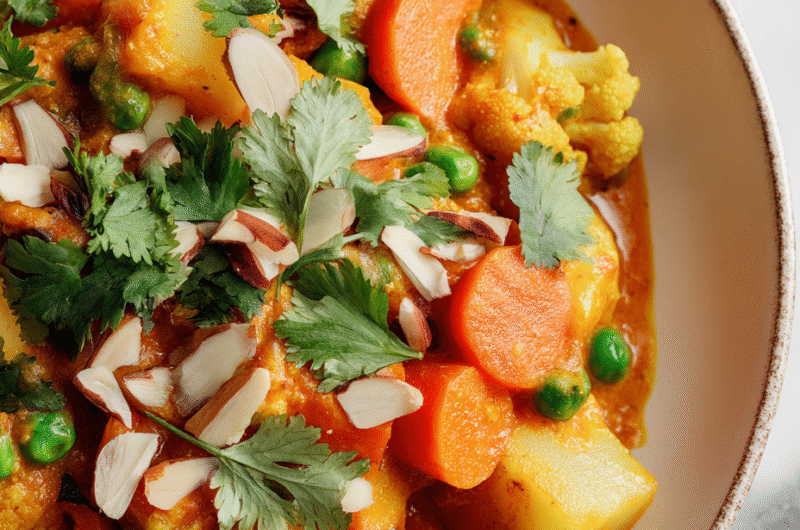
This vegetable korma is my go-to for those cozy nights when I want something warm, hearty, and a little imperfect. I love how forgiving it is—chunky vegetables, a slightly rustic spice blend, no fuss about keeping everything perfectly uniform. It’s the kind of dish that feels like a hug from the inside out, perfect for family dinners or just when I need a bit of comfort.
What makes this recipe special is how it embraces a more homemade, unpolished vibe. I’ve tweaked it over the years, keeping the flavors rich but simple, with a bit of nostalgic charm. It’s a dish that invites you to relax, let go of perfection, and enjoy the messy, delicious results.
It’s about the joy of slow-cooked spices melding with tender vegetables, filling the kitchen with warm, fragrant smells. No fancy ingredients needed—just honest, everyday stuff turned into something memorable. When I make this, I feel like I’m reconnecting with those cozy, chaotic family dinners from my childhood, where everyone piled their plates high and sopped up every last bit with naan.
Focusing on a nostalgic, homemade vegetable korma that embraces imperfect, chunkier textures and a more forgiving, less refined spice blend, perfect for cozy nights and family dinners.
Embracing Imperfection in Every Bite
- This dish reminds me of my grandmother’s kitchen—chaotic, fragrant, and full of love.
- I love how the rich spices turn humble vegetables into something almost decadent.
- Making this feels like a small act of rebellion against bland, over-processed dinners.
- There’s a quiet pride in turning everyday ingredients into a comforting, soulful meal.
- Sometimes, it’s the imperfect, slightly chunky texture that makes this dish so memorable.
The story behind this recipe
This vegetable korma came from my late-night craving for something warm and familiar, but with a little twist. I started playing around with chunkier vegetables and a more rustic spice mix, wanting to create a dish that felt both comforting and imperfect—something that reminded me of home-cooked chaos. Over time, it became a go-to, especially on nights I need that cozy, unpolished hug in a bowl.
What keeps me coming back to this dish is how it’s forgiving—no perfect cuts, no fuss about timing. It’s about embracing the mess of cooking, letting the spices and vegetables meld into something soulful and honest. It’s a reminder that sometimes, the best meals are the ones made with love and a bit of spontaneous improvisation.
Historical and Cultural Insights
- Vegetable korma has roots in Mughlai cuisine, blending Persian and Indian flavors in royal kitchens.
- Historically, it was a dish for special occasions, using rich spices and seasonal vegetables to impress guests.
- The dish’s creamy, nutty sauce likely originated from coconut and almond bases introduced by traders centuries ago.
- In modern times, home cooks adapt korma with local vegetables and pantry staples, making it more accessible.
- Its slow-simmered spice melds evoke memories of communal family dinners across South Asia.
Component Highlights
- Cauliflower: I love how cauliflower becomes tender yet holds its shape, offering a slight chew that contrasts the creamy sauce. If you prefer softer veggies, steam it a bit longer before adding.
- Coconut Milk: The richness here is what makes the sauce velvety and fragrant. Use full-fat for the best texture; if you want lighter, try almond milk but expect a less lush result.
- Garam Masala: This blend is my secret weapon—warm, fragrant, with a hint of sweetness. Toast it lightly in the pan first to awaken those aromatic oils, or skip if you’re out of it.
- Tomatoes: I prefer ripe, juicy tomatoes that add a bright, tangy note. If you’re using canned, choose crushed or diced for a more rustic, chunky sauce—fresh tomatoes can be too watery.
- Vegetables: I like a mix—carrots, peas, bell peppers—chunky and rustic. Keep the pieces irregular for a homey feel. If you’re short on time, pre-cooked frozen peas work beautifully.
- Ghee or Oil: The base fat adds depth and a slight nutty aroma. Use ghee if you can, but neutral oil works fine. Don’t skimp—this is the foundation of the dish’s warmth.
- Nuts (optional): I sometimes add toasted almonds or cashews for extra richness and texture. If you prefer a smoother sauce, blend them in with the coconut milk for a nutty undertone.
Spotlight on key ingredients
Cauliflower:
- I love how cauliflower becomes tender yet holds its shape, offering a slight chew that contrasts the creamy sauce. If you prefer softer veggies, steam it a bit longer before adding.
- Its slightly nutty aroma deepens as it roasts or simmers, adding a rustic undertone to the dish.
- During cooking, it tends to soak up flavors, so don’t skimp on the spice marinade or sauce for maximum flavor.
Coconut Milk:
- The richness here is what makes the sauce velvety and fragrant. Use full-fat for the best texture; if you want lighter, try almond milk but expect a less lush result.
- When it heats, it becomes silky and slightly sweet, balancing the spices beautifully.
- Watch for splitting if boiled too vigorously—gentle simmer is key to maintaining creaminess.
Notes for ingredient swaps
- Dairy-Free: Coconut cream can replace yogurt for creaminess, but it’s richer and more coconut-forward.
- Vegetable Variations: Sweet potatoes or zucchini work well, adding different textures and flavors, but may alter cooking time.
- Spice Mix: If you don’t have garam masala, use a mix of cinnamon, cloves, and coriander for a similar warmth.
- Oil Choices: Swap ghee for neutral oil like sunflower or canola—less nutty, but still effective for cooking.
- Fresh Tomatoes: Use plum or heirloom tomatoes for a brighter, juicier sauce—less tangy than canned.
- Nuts: Omit nuts or use sunflower seeds for crunch and richness without the nutty flavor, especially if nut allergies are a concern.
- Herbs: Fresh cilantro adds brightness, but dried coriander can be a good substitute if fresh isn’t available—just use half the amount.
Equipment & Tools
- Large heavy-bottomed pan or Dutch oven: Even heat distribution for slow simmering.
- Wooden spoon or spatula: Stirring and scraping to prevent sticking.
- Measuring spoons: Accurate spice and liquid measurement.
- Knife: Chopping vegetables and garnishes.
Step-by-step guide to vegetable korma
- Gather your equipment: a large heavy-bottomed pan or Dutch oven, a wooden spoon or spatula, measuring spoons, and a knife for chopping.
- Heat 2 tbsp ghee or oil over medium heat (about 160°C/320°F). Add 1 tsp cumin seeds, let them crackle for 30 seconds to release aroma.
- Add 1 chopped onion (about 150g), cook until translucent and slightly golden, 5-7 minutes, stirring occasionally. Watch for caramelization around the edges.
- Stir in 2 tbsp garam masala, cook for 1 minute until fragrant. If it smokes or burns, lower heat slightly.
- Add 2 chopped carrots, cook 3-4 minutes until starting to soften. They should develop a slight sheen from the spices.
- Pour in 400ml coconut milk and 200g chopped tomatoes (fresh or canned). Stir well, bring to a gentle simmer (about 90°C/194°F).
- Add 1 cup cauliflower florets, 1/2 cup frozen peas, and any other chunky veggies. Stir, then cover and simmer on low heat for 20-25 minutes.
- Check the sauce: it should thicken slightly, vegetables tender but not mushy, and the aroma rich and fragrant.
- Taste and adjust salt, sweetness, or spice. If the sauce is too thin, uncover and simmer a few more minutes to thicken.
- Let it rest off heat for 5 minutes to allow flavors to settle. Serve hot with rice or naan, garnished with fresh herbs if desired.
Remove from heat and let sit for 5 minutes. Garnish with chopped cilantro or fresh herbs. Serve with warm naan or fluffy rice, allowing the flavors to meld and settle for a better taste experience.
How to Know It’s Done
- Vegetables are tender but still hold shape, with a slight bite.
- Sauce has thickened to a velvety consistency, coating the veggies evenly.
- Aromas of spices and coconut fill the air, with a fragrant, smoky hint from toasted garam masala.
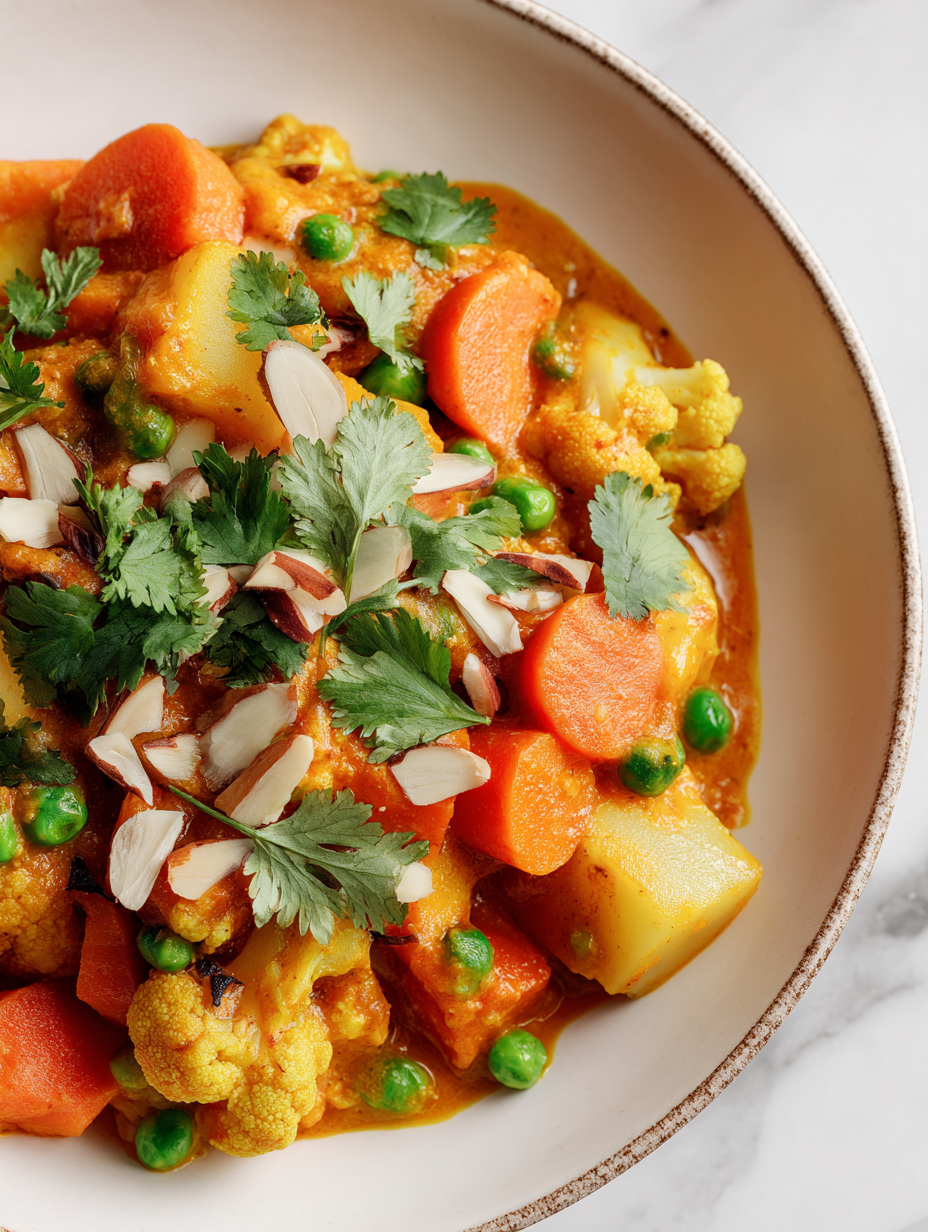
Hearty Vegetable Korma
Ingredients
Equipment
Method
- Heat the ghee or oil in a large heavy-bottomed pan over medium heat until it shimmers. Add the cumin seeds and let them crackle for about 30 seconds, releasing a warm aroma.
- Add the chopped onion to the pan and cook, stirring occasionally, until it becomes translucent and starts to turn golden around the edges, about 5-7 minutes. The kitchen will fill with a sweet, caramelized smell.
- Stir in the garam masala and cook for another minute, allowing the spices to toast lightly and release their fragrant oils.Be careful not to burn the spices; lower the heat if needed.
- Add the chunked carrots to the pan and cook for about 3-4 minutes, stirring often, until they begin to soften and their edges glisten with spice oil.
- Pour in the coconut milk and add the chopped tomatoes, stirring well to combine. Bring the mixture to a gentle simmer, watching as it bubbles softly and the sauce starts to thicken slightly.
- Stir in the cauliflower florets and frozen peas, then cover the pan with a lid. Reduce the heat to low and let everything simmer gently for 20-25 minutes, until the vegetables are tender and the sauce is velvety.
- Check the seasoning and add salt to taste. If the sauce is too thin, uncover and let it simmer for a few more minutes to thicken it further.
- Remove the pan from heat and let the vegetable korma rest for 5 minutes so the flavors meld. Garnish with chopped cilantro if desired for a fresh, herby touch.
- Serve the hearty vegetable korma hot with fluffy rice or warm naan, enjoying the rustic, comforting flavors and imperfect textures that make this dish so special.
Tips for perfect vegetable korma
- Toast spices first—brings out aroma and deepens flavor.
- Use a heavy pan—ensures even heat and prevents burning of spices.
- Cook vegetables with a bit of salt—helps them soften and enhances flavor.
- Add coconut milk off heat—prevents splitting and keeps sauce creamy.
- Simmer uncovered—helps sauce thicken and develop rich aroma.
- Taste and adjust seasoning at the end—balance sweetness, salt, and spice.
- Let the dish rest 5 minutes off heat—flavors meld and intensify.
Common mistakes and how to fix them
- TOO MUCH HEAT: DUMPED spices or burnt the sauce—lower heat and stir constantly.
- UNDERSALTED: FORGOT to season early—add salt in stages for depth.
- OVERCOOKED VEGETABLES: DUMPED too long—check tenderness with a fork, remove from heat once tender.
- SEPARATED SAUCE: OVER-TORCHED or boiled vigorously—keep at gentle simmer and stir frequently.
Quick Fixes and Pantry Swaps
- If sauce splits, splash in a bit of cold water and stir vigorously.
- When vegetables are undercooked, steam them briefly before continuing.
- Splash extra coconut milk if the sauce becomes too thick or dry.
- Patch over-seasoned dishes with a squeeze of lemon or a pinch of sugar.
- Shield the pan from direct heat if spices start to burn, then stir and lower heat.
Prep, store, and reheat tips
- Chop vegetables like cauliflower, carrots, and onions a day ahead. Store in airtight containers in the fridge; they stay fresh for up to 24 hours and will save you time when cooking.
- Prepare the spice mix (garam masala, cumin) in advance and keep it in a small jar. The fragrant oils develop over time, making the dish even more aromatic.
- Coconut milk can be made or opened a day early. Keep refrigerated and give it a quick stir before adding to the pot. It maintains its creaminess for up to 2 days.
- Refrigerate any leftover korma in an airtight container for up to 3 days. The flavors meld even more overnight, becoming richer and more fragrant.
- Reheat gently on the stove over low heat, stirring often. The sauce may thicken; add a splash of water or coconut milk to loosen it up and bring back the silky texture. Expect the aroma to intensify with warmth.
Common Questions About Vegetable Korma
1. Can I customize the vegetables?
Use a mix of hearty vegetables like carrots, potatoes, and cauliflower for the best texture and flavor. Feel free to swap in zucchini or green beans for a lighter touch.
2. How can I adjust the sauce consistency?
Absolutely. If you want a creamier sauce, add a dollop of yogurt or a splash more coconut milk at the end. For a thinner sauce, stir in a bit of warm water.
3. What kind of tomatoes work best?
Use fresh, ripe tomatoes for a tangy brightness, or canned crushed tomatoes for convenience. Rinse and drain excess liquid if the sauce gets too watery.
4. Can I make this nut-free?
If you’re avoiding nuts, skip the optional toasted almonds or cashews. For added richness, a spoonful of coconut cream works well without nuts.
5. Is toasting spices necessary?
Garam masala adds warmth and depth. Toast it lightly in the pan before adding to release aromatic oils—skip this step if you’re in a hurry.
6. How do I know when it’s done?
The dish is ready when the vegetables are tender, the sauce has thickened slightly, and the aroma is fragrant and inviting. It should look velvety and coat the veggies evenly.
7. How can I enhance the flavor at the end?
Feel free to add a squeeze of lemon or a dash of sugar to brighten or balance flavors just before serving. Fresh herbs like cilantro also add a fresh note.
8. Can I prepare this in advance?
This dish can be made a day ahead. Reheat gently on the stove, stirring often, until hot and fragrant. The flavors deepen overnight.
9. How do I fix a thickened or split sauce?
Stir in a splash of water or coconut milk if the sauce thickens too much during reheating. Keep the heat low to prevent burning or splitting.
10. What if my vegetables aren’t tender enough?
If your vegetables are undercooked, cover and simmer a few more minutes. Overcooked veggies can be rescued by quick steaming or adding a little fresh broth.
This vegetable korma isn’t just a recipe; it’s a small act of rebellion against the overly polished, perfect-looking dishes. It’s about embracing the slightly charred edges, the rustic chunks of vegetables, and that warm, fragrant sauce that sticks to your fingers. Making it reminds me that sometimes, the mess and imperfections are what make a dish truly memorable.
In a world rushing toward convenience, this dish offers a moment to slow down and enjoy the honest, soulful flavors of home cooking. It’s a reminder that good food doesn’t need to be flawless—it just needs to be made with love, patience, and a little bit of chaos in the kitchen.

Hi there! I’m Himani and welcome to Val’s Recipe Box. This little corner of the internet didn’t begin with me. It began with Val my neighbourhood aunt whose kitchen held more warmth than any fireplace ever could.


 This little corner of the internet didn’t begin with me.
It began with Val my neighbourhood aunt whose kitchen held more warmth than any fireplace ever could.
She was more of a friend and I’ve come to know her in the most unexpected way.
This little corner of the internet didn’t begin with me.
It began with Val my neighbourhood aunt whose kitchen held more warmth than any fireplace ever could.
She was more of a friend and I’ve come to know her in the most unexpected way.