
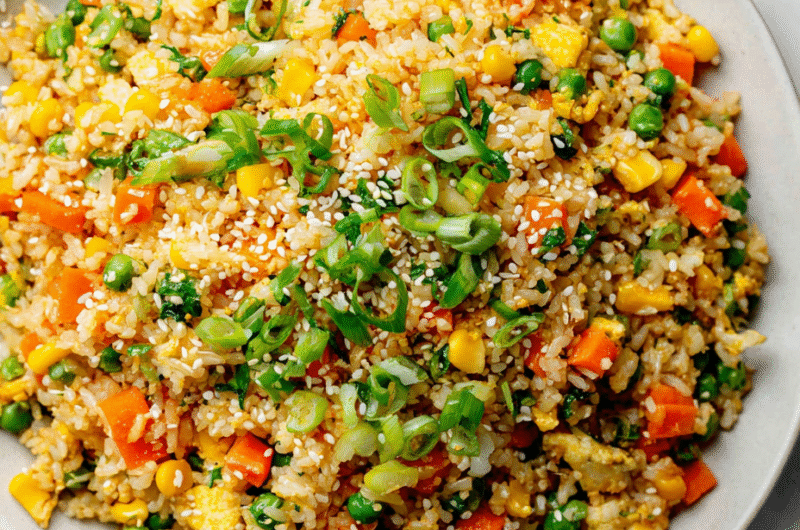
This vegetable fried rice is my go-to way to clear out the fridge. I love tossing in whatever odds and ends of vegetables I’ve got—carrots, peas, bell peppers, you name it. It’s a bit of a kitchen puzzle, but that’s part of the fun, turning scraps into something filling and colorful.
There’s something honest about using up leftovers this way. No fuss, no waste, just good, simple rice that hits all the right notes—crisp veggies, a touch of soy, and rice that’s perfectly fried, not soggy. It’s a dish that feels like a little victory every time I make it, especially when I’m short on time but craving something nourishing.
Plus, it’s a flexible recipe that can adapt to whatever you have lurking in the fridge. No need for a special trip to the store. Just gather your leftovers, heat up the pan, and turn those humble ingredients into a satisfying meal. It’s quick, honest, and always satisfying.
Focusing on how to use up leftover vegetables from the fridge, turning what might seem like scraps into a hearty, satisfying dish that champions resourcefulness and reduces waste.
Transforming Scraps into a Meal
- I love how this dish turns random leftovers into something vibrant and satisfying, almost like magic in a pan.
- There’s a nostalgic comfort in the smoky aroma of fried rice bubbling away, reminding me of simple family dinners.
- Filling my plate with bright, crisp vegetables makes me feel good—like I’m nourishing more than just my stomach.
- It’s a relief to toss everything in and have dinner ready in minutes, no fuss, no waste.
The story behind this recipe
- This vegetable fried rice came about during a particularly chaotic week when I had a fridge full of odds and ends but no clear plan. I started tossing in whatever veggies I had—some wilted spinach, a lonely carrot, bits of broccoli—and it turned into something surprisingly satisfying. That moment made me realize how forgiving and adaptable this dish can be, even with ingredients that seem too tired for anything else.
- Cooking this dish feels like a little act of resourcefulness, turning what might seem like scraps into a colorful, hearty meal. The aroma of garlic and soy simmering together always takes me back to weekend mornings in my childhood, where simple flavors carried a sense of home. It’s a reminder that good food doesn’t need to be complicated—it just needs to be honest, and made with what’s on hand.
- heading: ‘The story behind this recipe’
Fascinating Origins of Vegetable Fried Rice
- Vegetable fried rice traces its roots to the humble home kitchens of China, where rice was a staple and leftovers were a treasure.
- The dish became a symbol of resourcefulness, often made from whatever vegetables and scraps were available nearby.
- In many Asian cultures, fried rice is a way to extend a meal, turning plain rice into a flavorful, satisfying dish.
- Variations of vegetable fried rice have traveled across borders, adapting local ingredients and flavors into comforting everyday fare.
Ingredient breakdown: key components
- Carrots: I like slicing them thin for a sweet crunch that catches the wok’s heat, but you can dice them smaller if you prefer a softer bite.
- Frozen peas: They pop with a burst of sweetness and color, just toss them in frozen—no need to defrost first, they’ll steam quickly and keep their vibrant hue.
- Bell peppers: Their bright, smoky aroma when charred adds a lovely depth; roast or sauté until slightly blackened for extra flavor.
- Eggs: I scramble them directly in the pan, creating little fluffy clouds that meld with the rice; if you prefer, leave them out or swap for tofu for vegan vibes.
- Soy sauce: It’s the backbone, providing that umami smack; I recommend starting with less and adjusting, to avoid over-salting, especially if your soy is salty.
- Green onions: A zesty, fresh finish—slice thin and sprinkle just before serving; they add a crisp sharpness that balances the richness.
- Sesame oil: Just a splash for that toasty, nutty aroma—add at the end to preserve its fragrant punch, but be careful not to overdo it, or it’ll overpower.
Spotlight on key ingredients
Carrots:
- Their natural sweetness and firm bite add a satisfying crunch, and they soften just right if sliced thin.
- Frozen peas: They burst with a sugary freshness when heated, keeping their bright green hue and plump texture even after freezing.
Green onions and sesame oil:
- Green onions: Their crisp, sharp bite adds a fresh contrast; slice thinly to distribute their zesty flavor evenly across the dish.
- Sesame oil: Toasted and nutty, it shimmers with aroma just before adding, infusing the rice with a toasty, fragrant finish.
Notes for ingredient swaps
- Dairy-Free: Swap soy sauce for coconut aminos—adds a slightly sweeter, less salty note, but retains umami punch.
- Vegan: Replace eggs with scrambled tofu—offers a similar texture and absorbs flavors well, keeping it filling.
- Low-Sodium: Use reduced-sodium soy sauce or tamari—keeps the savory profile but cuts salt intake.
- Gluten-Free: Opt for tamari instead of soy sauce—provides that rich, smoky flavor without gluten.
- Fresh Veggies: Substitute frozen peas with fresh snap peas or green beans—crisp, vibrant, and just as quick to cook.
- Oily Flavor: Instead of sesame oil, try toasted walnut or avocado oil—adds depth without overpowering the dish.
- Sweetness: Add a dash of honey or maple syrup if you want a touch of sweetness that balances the savory flavors.
Equipment & Tools
- Wok or large frying pan: For high-heat stir-frying, ensuring even cooking and quick tossing.
- Spatula or wooden spoon: To stir and toss ingredients without breaking them apart.
- Knife and cutting board: Chopping vegetables into uniform pieces for even cooking.
- Measuring spoons: To add soy sauce and sesame oil accurately.
- Bowl: For beating eggs and holding prepped ingredients.
Step-by-step guide to vegetable fried rice
- Equip your wok or large frying pan—hotter is better, aim for about 200°C (392°F).
- Prep your ingredients: chop vegetables into uniform small pieces, beat 2 eggs, and have rice ready (preferably day-old for better fry).
- Heat the pan over high heat, add 1 tbsp oil, swirl to coat, and wait until shimmering but not smoking.
- Add harder vegetables like carrots and broccoli first, stir-fry for 2 minutes until slightly tender and fragrant.
- Toss in softer veggies—peppers, peas—and cook for another 1-2 minutes, until vibrant and just cooked through.
- Push veggies to one side of the pan, crack in eggs, scramble quickly, and stir into vegetables once set, about 30 seconds.
- Add rice, breaking up clumps, and stir well to combine everything evenly. Cook for 3-4 minutes, until rice is heated through and slightly crispy.
- Pour in 2-3 tbsp soy sauce, drizzle with a dash of sesame oil, and toss vigorously to coat all ingredients evenly.
- Taste and adjust seasoning—add more soy or salt if needed. Cook for another minute, until fragrant and well-mixed.
- Check for doneness: rice should be hot and slightly crispy, vegetables tender but not mushy, and aroma smoky and savory.
- Remove from heat, sprinkle with sliced green onions, and let rest for 1 minute before serving.
Finish by sprinkling sliced green onions over the hot rice. Serve immediately to enjoy the crispness and aroma. A quick toss before plating helps distribute flavors evenly.
How to Know It’s Done
- Vegetables are tender yet retain some bite, bright in color.
- Rice is hot, with a slight crisp, not soggy or clumped.
- Aromatic soy and sesame dominate, with a balanced, savory smell.
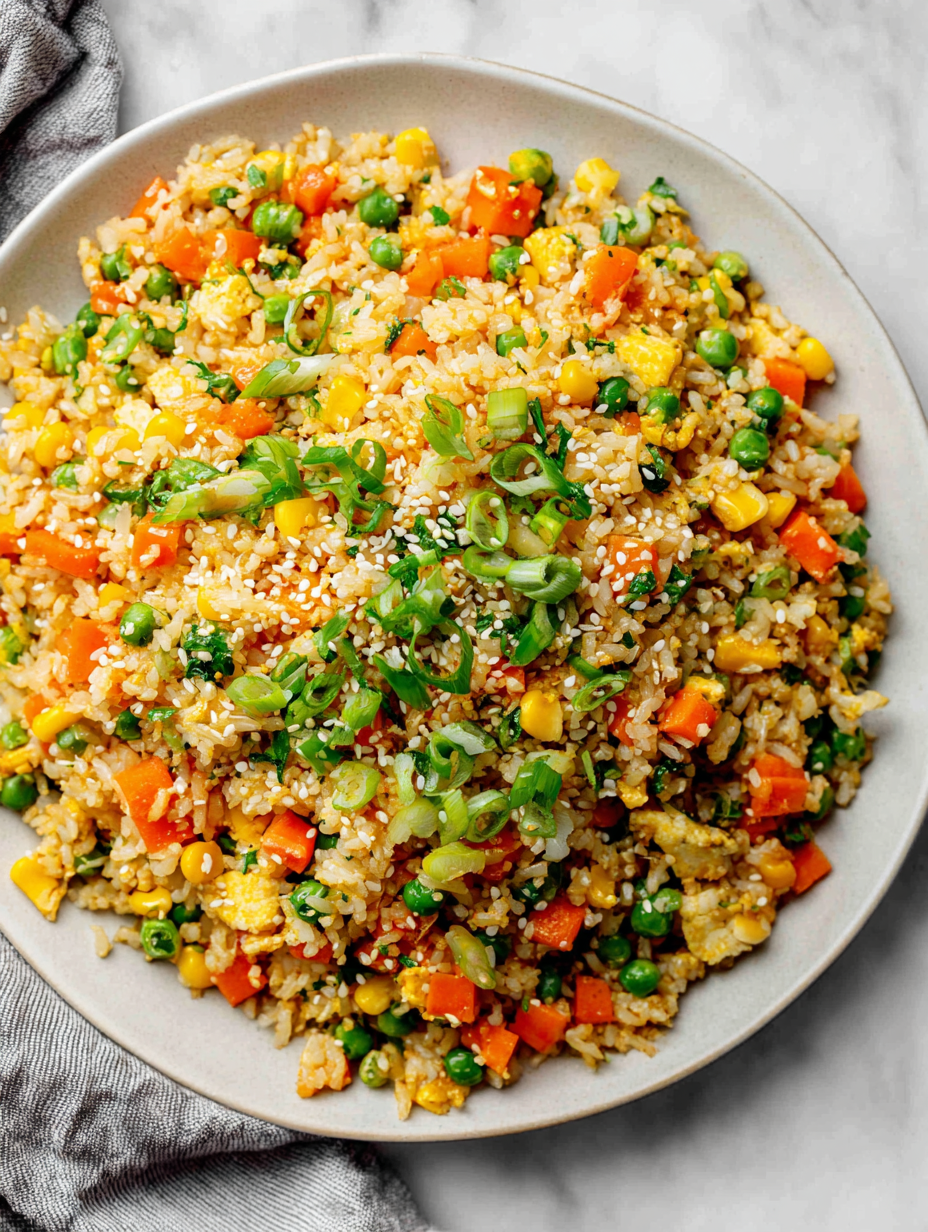
Vegetable Fried Rice
Ingredients
Equipment
Method
- Heat your wok or large frying pan over high heat and add vegetable oil, swirling to coat the surface. When the oil shimmers and feels hot, add the chopped vegetables. Stir-fry for about 2 minutes until they become fragrant and slightly tender, with vibrant colors.
- Push the vegetables to one side of the pan, then pour the beaten eggs into the empty side. Let them sit undisturbed for a few seconds until they start to set, then scramble gently and mix with the vegetables. Cook for another 30 seconds until the eggs are just cooked through.
- Add the chilled, cooked rice to the pan, breaking up any clumps with the back of your spatula. Stir vigorously to combine everything evenly, spreading the rice out so it heats through and begins to fry slightly, around 3-4 minutes. You should hear a gentle sizzling and see the rice start to crisp at the edges.
- Pour the soy sauce evenly over the rice and vegetables, then toss everything together quickly and vigorously to coat all the ingredients. Continue stir-frying for another minute until the rice is hot, fragrant, and slightly crispy in spots.
- Remove the pan from the heat and drizzle the sesame oil over the fried rice. Toss gently to distribute the aroma and flavor. Garnish with sliced green onions for a fresh, crisp finish.
- Serve immediately while hot, enjoying the combination of crispy vegetables, fluffy rice, and savory aroma. Dig in and savor this resourceful, satisfying dish that comes together in just minutes!
Pro tips for perfect vegetable fried rice
- Use high heat to sizzle vegetables quickly, preserving their color and crunch.
- Toss ingredients constantly to prevent sticking and ensure even frying.
- Sear rice in the pan until slightly crispy for added texture and flavor.
- Add soy sauce gradually, tasting as you go to avoid oversalting.
- Finish with a drizzle of sesame oil off heat to keep its aroma vibrant.
- Keep rice grains separate by breaking clumps before mixing into the wok.
- Incorporate green onions just before serving for a fresh, crisp burst.
Common mistakes and how to fix them
- FORGOT to heat the pan: Always preheat to avoid soggy rice or sticking.
- DUMPED too much soy: Use less initially; adjust to taste to prevent oversalting.
- OVER-TORCHED the vegetables: Stir constantly and reduce heat if they brown too quickly.
- MISSED resting time: Let fried rice sit for a minute after cooking to meld flavors.
Quick fixes and pantry swaps
- When rice clumps, splash a little water and stir vigorously to loosen grains.
- If veggies burn, reduce heat immediately and add a splash of broth or water.
- Dumped too much soy? Rinse the rice briefly or add a squeeze of lemon to balance saltiness.
- Over-torched vegetables? Remove from heat, toss with a splash of sesame oil, and start fresh in a new pan.
- Splash a few drops of water on crispy rice edges to soften and refresh texture.
Prep, store, and reheat tips
- Prep your vegetables and rice a day in advance; store in airtight containers in the fridge for up to 24 hours. The flavors meld better and it saves time during cooking, with a slightly firmer texture that crisps up nicely in the wok.
- Cooked rice keeps well in the fridge for 1-2 days. Be sure to let it cool completely before refrigerating to prevent clumping and sogginess. Reheat it in a hot pan or microwave until steaming hot for best results.
- Leftover fried rice can be refrigerated for 2-3 days. Reheat thoroughly, aiming for a sizzling, fragrant dish with a slight crisp on the edges. A quick toss in the pan with a splash of oil revives the texture and aroma.
- For freezing, pack cooled rice and vegetables in a sealed freezer bag or container. It’s good for up to a month. Reheat directly from frozen in a hot pan, stirring frequently, until piping hot and slightly crispy. Expect a slightly softer bite after freezing but still delicious.
Top questions about vegetable fried rice
1. Can I use fresh rice for fried rice?
Use day-old rice if possible; it fries better because it’s drier and less sticky, giving you that perfect crispy texture.
2. Will freshly cooked rice work?
Absolutely, but fresh rice tends to be more moist and sticky, which can make your fried rice soggy. Try to spread and cool it first.
3. How do I prepare fresh rice for frying?
Yes, just spread it out on a tray and let it cool completely in the fridge for at least an hour before frying.
4. How do I keep vegetables from overcooking?
Add vegetables in stages—harder ones first, softer ones later—to ensure everything cooks evenly and retains a good texture.
5. What oil is best for stir-frying vegetables?
Use a high-smoke-point oil like canola or vegetable oil to prevent burning and achieve that quick, crisp fry.
6. How much soy sauce should I add?
Soy sauce adds salt and umami, but too much can overpower. Start with a little and adjust to taste near the end.
7. Can I add acidity to the dish?
Yes, try adding a splash of rice vinegar or a squeeze of lemon at the end to brighten the flavors and cut richness.
8. Should I add sesame oil during cooking or at the end?
Yes, adding a teaspoon of sesame oil at the end gives a toasty aroma, but don’t cook it at high heat or it’ll lose flavor.
9. What temperature should I cook fried rice at?
Cooking on high heat is key. It helps to quickly sear veggies, keep them vibrant, and avoid sogginess.
10. Why is my fried rice mushy?
If your rice is too sticky, rinse it in cold water before cooking or use less water when boiling to keep grains separate.
Cooking this vegetable fried rice reminds me how simple ingredients can come together into something unexpectedly satisfying. It’s a dish I turn to when I want a quick, no-fuss meal that still feels hearty and full of flavor.
In times when the fridge is half-empty, this recipe saves the day—turning scraps into a colorful, warm bowl that’s perfect for any season or mood. It’s a small reminder that good food often comes from resourcefulness and a bit of improvisation.

Hi there! I’m Himani and welcome to Val’s Recipe Box. This little corner of the internet didn’t begin with me. It began with Val my neighbourhood aunt whose kitchen held more warmth than any fireplace ever could.


 This little corner of the internet didn’t begin with me.
It began with Val my neighbourhood aunt whose kitchen held more warmth than any fireplace ever could.
She was more of a friend and I’ve come to know her in the most unexpected way.
This little corner of the internet didn’t begin with me.
It began with Val my neighbourhood aunt whose kitchen held more warmth than any fireplace ever could.
She was more of a friend and I’ve come to know her in the most unexpected way.