
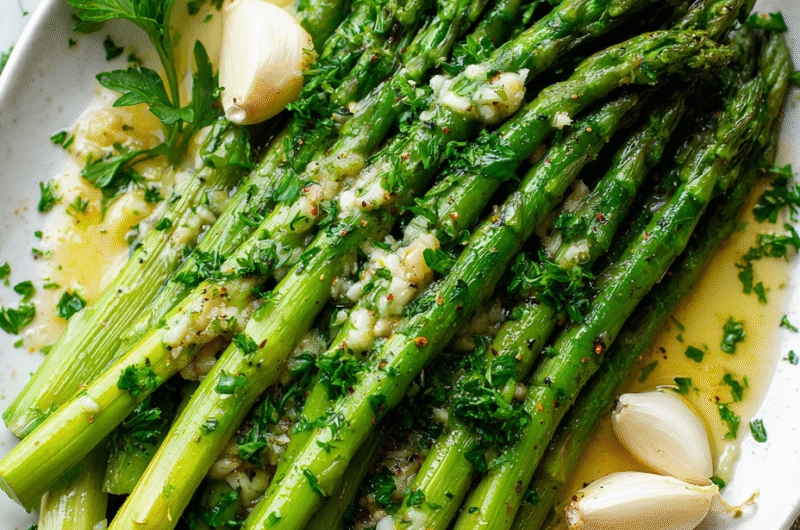
It’s the way garlic butter clings to each slender spear that makes this dish stand out. That glossy, fragrant coating transforms simple asparagus into a rich, sensory experience that feels indulgent but is surprisingly quick to pull together. I’ve always loved how a humble vegetable can be elevated with just a few honest ingredients, turning a side dish into a small celebration.
This recipe is about appreciating the overlooked magic of a well-made garlic butter. It’s not just about flavor—though that’s a big part—it’s about the way it coats, melts, and seeps into every fiber of the asparagus. It’s a reminder that sometimes, the simplest things, done right, can be surprisingly satisfying, especially when you want something quick, warm, and full of honest flavor.
Focusing on the overlooked importance of the garlic butter coating in elevating simple asparagus, making it a rich, sensory experience that transforms a humble side into something unexpectedly indulgent.
The story behind this recipe
- I first stumbled upon this combo during a chaotic family dinner where I needed quick greens that didn’t compromise on flavor. The butter was bubbling over, releasing a nutty, garlic aroma that seemed to calm everyone down. That moment made me realize how a simple veggie can be transformed with just a handful of honest ingredients into something special.
- Years later, I still turn to this recipe when I want a reliable side that feels indulgent but is really just about respecting the natural sweetness of asparagus, enhanced by garlic and butter. It’s my go-to for busy weeknights or when I want to impress without fuss. Each time, I’m reminded that sometimes, simplicity is enough to bring a little joy to the table.
- heading: ‘The story behind this recipe’
Ingredient breakdown
- Asparagus: I prefer thick, firm spears that give a satisfying bite, and I love the way they turn a vibrant green when sautéed just right. If yours are thinner or older, adjust cooking time accordingly.
- Garlic: Fresh garlic cloves are key—they release a sweet, pungent aroma that’s almost intoxicating as they cook. If you want a milder garlic flavor, roast the cloves first or use less.
- Butter: I use unsalted butter for control over salt, and I love how it melts into the garlic, creating a rich, velvety coating. For a dairy-free version, olive oil adds a lighter, slightly grassy note.
- Olive oil: A splash helps prevent burning and adds a fruity depth. If you’re out, any neutral oil like grapeseed works; just watch the heat so it doesn’t smoke.
- Lemon juice: A squeeze brightens everything up with a burst of citrus that cuts through the richness. If you want it more subtle, add less or skip for a purely savory experience.
- Salt & pepper: I season generously at the end—coaxing out the natural sweetness of the asparagus. Taste as you go to avoid over-salting, especially if your butter is salted.
- Optional chili flakes: A pinch adds a subtle heat that lingers, making the dish feel a little more alive. Use sparingly if you’re sensitive to spice.
Spotlight on key ingredients
Asparagus:
- I prefer thick, firm spears that give a satisfying bite, and I love the way they turn a vibrant green when sautéed just right. If yours are thinner or older, adjust cooking time accordingly.
- Garlic: Fresh garlic cloves are key—they release a sweet, pungent aroma that’s almost intoxicating as they cook. If you want a milder garlic flavor, roast the cloves first or use less.
Garlic & Butter:
- Garlic: Fresh garlic cloves are key—they release a sweet, pungent aroma that’s almost intoxicating as they cook. If you want a milder garlic flavor, roast the cloves first or use less.
- Butter: I use unsalted butter for control over salt, and I love how it melts into the garlic, creating a rich, velvety coating. For a dairy-free version, olive oil adds a lighter, slightly grassy note.
Notes for ingredient swaps
- Dairy-Free: Swap butter for olive oil or coconut oil for a lighter, plant-based finish that still offers richness and a glossy coat.
- Low-Sodium: Use unsalted butter and skip added salt; rely on fresh lemon juice and pepper for flavor punch.
- Vegan: Replace butter with a plant-based butter or a good drizzle of olive oil—both melt well and keep that luscious feel.
- Herb Variations: Toss in fresh herbs like dill or thyme instead of garlic for a different aromatic profile, especially if garlic isn’t your thing.
- Spice It Up: Add a pinch of red pepper flakes or a dash of smoked paprika to introduce a smoky or spicy kick to the tender asparagus.
- Acid Twist: Swap lemon juice for a splash of balsamic vinegar or sherry vinegar for a deeper, sweeter acidity that contrasts the butter.
- Extra Crunch: Finish with toasted pine nuts or chopped almonds for a contrasting crunch, especially if serving cold or at room temp.
Equipment & Tools
- Large skillet: To sauté the asparagus evenly without overcrowding.
- Tongs: To turn and handle the asparagus safely.
- Sharp knife: To trim and mince garlic.
Step-by-step guide to sautéed asparagus
- Equipment ready: Use a large skillet—preferably cast iron or stainless steel—to ensure even heat distribution. Have a sharp knife and tongs handy for handling the asparagus.
- Trim the asparagus: Snap or cut off the woody ends, about 2-3 inches from the bottom. Rinse thoroughly and pat dry.
- Heat the skillet: Place over medium-high heat; aim for about 180°C (355°F). Add 2 tablespoons of butter and a splash of olive oil, allowing the butter to melt fully and foam.
- Add asparagus: Arrange spears in a single layer; don’t overcrowd to ensure even cooking. Sauté for about 3-4 minutes, turning occasionally with tongs.
- Incorporate garlic: Mince 3 garlic cloves. When the asparagus starts to turn vibrant green and edges are slightly blistered, add garlic to the skillet. Cook for 30 seconds until fragrant—avoid burning.
- Adjust heat if necessary: If garlic begins to brown too quickly, lower heat slightly to prevent bitterness. The garlic should turn golden and release a sweet aroma.
- Finish with seasoning: Season with salt and freshly cracked black pepper. Squeeze a little lemon juice over the asparagus for brightness. Toss gently to coat evenly.
- Check for doneness: The asparagus should be tender but still crisp, with a glossy, slightly caramelized surface and a fragrant garlic butter coating.
- Remove from heat: Transfer asparagus to a serving plate. Let rest for a minute to allow flavors to settle and butter to thicken slightly.
- Serve immediately: The asparagus should be hot, fragrant, and glistening with garlic butter—perfect for a quick, flavorful side.
Transfer to a plate, sprinkle with a little extra salt if needed, and serve immediately while hot and fragrant.
How to Know It’s Done
- The asparagus edges are lightly blistered and vibrant green.
- Garlic is golden and fragrant, not burnt or bitter.
- The butter is glossy and coats each spear evenly.
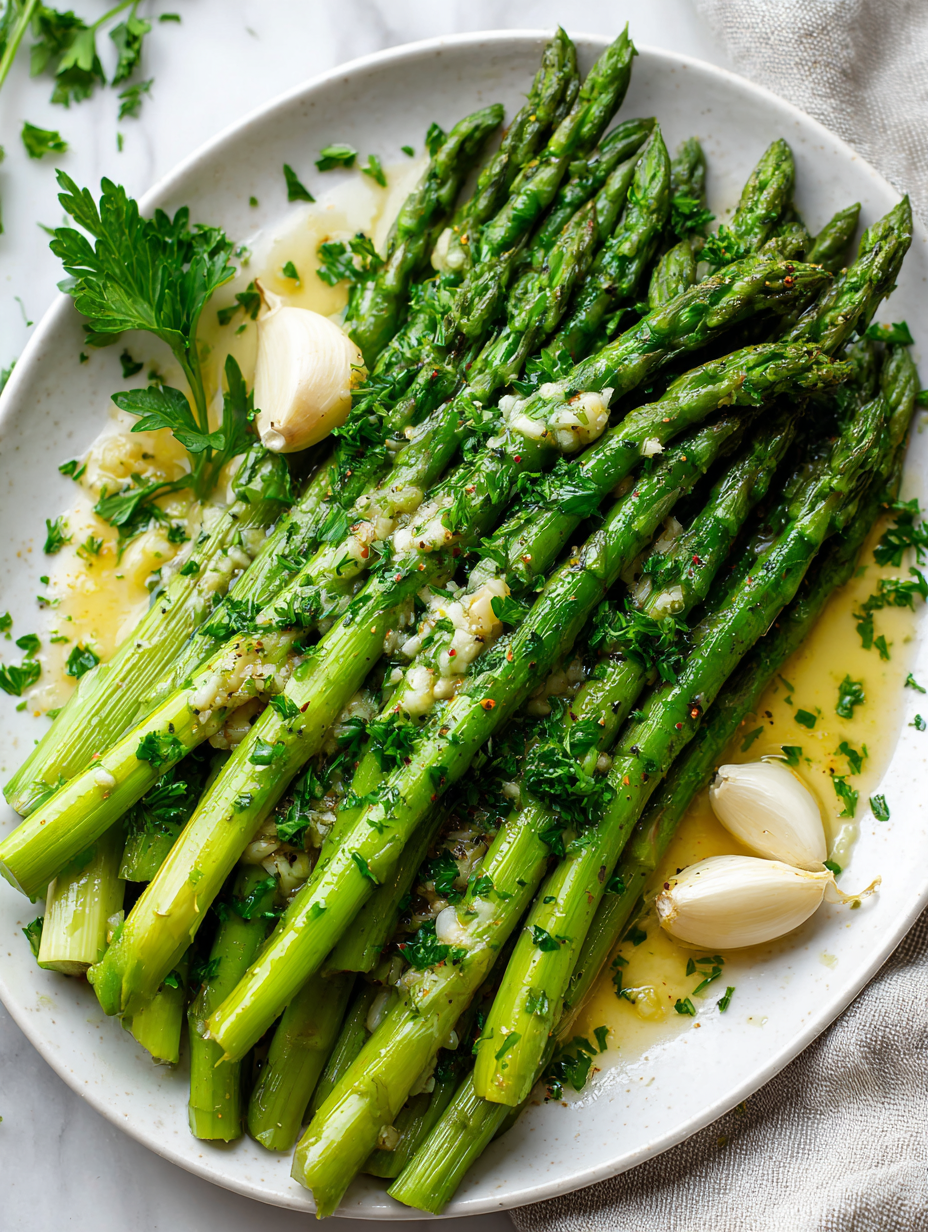
Garlic Butter Sautéed Asparagus
Ingredients
Equipment
Method
- Trim the woody ends off the asparagus and rinse thoroughly under cold water. Pat dry with a towel.
- Heat a large skillet over medium-high heat, then add the butter and olive oil. Let the butter melt completely until it starts to foam and smell nutty.
- Arrange the asparagus spears in a single layer in the hot skillet, pressing them down gently. Sauté for about 3-4 minutes, turning occasionally with tongs, until they begin to blister and turn a vibrant green.
- Add the minced garlic to the skillet, spreading it evenly among the spears. Cook for about 30 seconds, until fragrant and golden, making sure not to burn the garlic.
- Sprinkle a pinch of chili flakes if using, and then squeeze fresh lemon juice over the asparagus. Toss everything gently with tongs to coat evenly with the garlic butter and distribute the flavors.
- Cook for another 1-2 minutes until the asparagus is tender yet crisp, with a glossy, slightly caramelized surface and a fragrant garlic aroma.
- Remove the skillet from heat and transfer the asparagus to a serving plate. Drizzle any remaining garlic butter from the pan over the top, and season with salt and freshly cracked black pepper to taste.
- Serve immediately while hot, enjoying the tender-crisp texture and the rich, aromatic coating of garlic butter.
Pro tips for perfect sautéed asparagus
- Bolded garlic: Mince garlic finely to ensure it releases a fragrant, even aroma without burning.
- Sizzle check: Add asparagus in a single layer and resist stirring immediately—let them develop a slight char for flavor.
- Butter timing: Add butter after the asparagus starts to turn vibrant green to prevent burning and maximize gloss.
- Color cue: Look for lightly blistered edges and a deep green hue as signals to add garlic and finish.
- Taste test: Adjust salt and lemon juice at the end—your nose should catch a fragrant, bright aroma before serving.
- Pan control: Keep heat at medium to medium-high—too hot and garlic burns, too low and asparagus steams instead of sautés.
- Quick fix: If garlic browns too fast, lower heat immediately and add a splash of water to keep cook time gentle.
Common mistakes and how to fix them
- FORGOT to monitor heat: asparagus burns or steams if heat is too high or too low.
- DUMPED garlic early: add garlic later to prevent burning and bitterness.
- OVER-TORCHED butter: lower heat if butter browns too quickly to avoid a bitter taste.
- MISSED timing: overcooked asparagus turns mushy; remove when tender yet crisp.
Quick fixes and pantry swaps
- When garlic burns quickly, splash a bit of water to cool the pan.
- If asparagus turns mushy, remove from heat immediately and serve.
- Splash soy sauce or balsamic vinegar as a quick flavor boost if out of lemon.
- Patch over overcooked asparagus with a quick squeeze of fresh lemon and a pinch of salt.
- Shield garlic from direct heat with a spoon or lid to prevent burning and release aroma.
Prep, store, and reheat tips
- Trim and rinse the asparagus ahead of time; store in an airtight container in the fridge for up to 24 hours, keeping them crisp and fresh.
- Mince garlic the day before; keep in a small sealed container in the fridge to preserve its pungency and save time during cooking.
- Make the garlic butter in advance, refrigerate for up to 2 days; reheat gently to melt without browning, releasing a warm, fragrant aroma.
- Reheat leftovers in a skillet over low heat, swirling to recoat the spears with warm, melted garlic butter—aim for a glossy, fragrant finish.
- Freshness diminishes after a day, so aim to serve within 24 hours for the best snap, aroma, and vibrant color. The garlic flavor softens slightly over time.
Frequently Asked Questions
1. How do I tell when asparagus is done?
Look for bright green, slightly tender spears when you bite—crisp yet cooked through.
2. How can I tell if garlic is cooked properly?
The garlic should turn golden and fragrant, not dark brown or bitter, which indicates burning.
3. Can I use pre-minced garlic?
Use fresh garlic for the best flavor; pre-minced garlic can be a bit milder and less fragrant.
4. Can I substitute butter with oil?
Yes, olive oil works well; it adds a grassy note and prevents burning at high heat.
5. How can I add some heat to this dish?
Yes, you can add chili flakes, red pepper, or a dash of smoked paprika for extra spice.
6. When should I add lemon juice?
Add lemon juice just before serving to keep it bright and fresh, enhancing the garlic butter coating.
7. Why is my asparagus soggy or unevenly cooked?
Overcrowding the pan causes uneven cooking; sauté in batches if needed for crisp, blistered spears.
8. What temperature should I sauté the asparagus at?
Use a large skillet over medium-high heat—about 180°C (355°F)—to get that perfect sizzle and caramelization.
9. What do I do if garlic starts to burn?
If garlic burns quickly, lower the heat immediately and add a splash of water or oil to cool the pan.
10. Can I prepare asparagus ahead of time?
Store trimmed, unwashed asparagus in the fridge for up to 24 hours for maximum freshness before cooking.
This simple sautéed asparagus with garlic butter is a reminder that the best flavors often come from straightforward techniques and honest ingredients. It’s perfect for those nights when you want something warm, fragrant, and satisfying without fuss.
Whenever I make this, I’m struck by how a handful of ingredients can turn a humble vegetable into something that feels indulgent and bright. It’s a dish that’s quick to come together but leaves a lasting impression on the senses.

Hi there! I’m Himani and welcome to Val’s Recipe Box. This little corner of the internet didn’t begin with me. It began with Val my neighbourhood aunt whose kitchen held more warmth than any fireplace ever could.


 This little corner of the internet didn’t begin with me.
It began with Val my neighbourhood aunt whose kitchen held more warmth than any fireplace ever could.
She was more of a friend and I’ve come to know her in the most unexpected way.
This little corner of the internet didn’t begin with me.
It began with Val my neighbourhood aunt whose kitchen held more warmth than any fireplace ever could.
She was more of a friend and I’ve come to know her in the most unexpected way.