
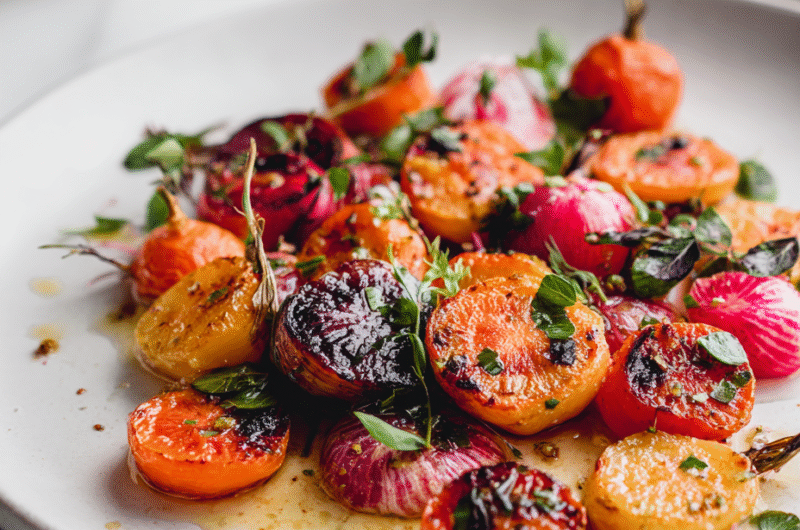
Radishes and carrots are often overlooked, kept as simple sides or raw snacks. But when you roast them, something quiet happens—those sharp radish bites mellow into a sweet, earthy glow, and carrots become tender with a caramelized edge that’s almost velvety. It’s a humble dish, yes, but a surprisingly rewarding one, especially when you crave something straightforward but full of flavor.
I like to toss these root vegetables in a bit of olive oil and sprinkle them with coarse salt, then let their natural sugars do the work in the oven. The aroma that drifts through the kitchen while they roast is just enough to make you forget about complicated sides. This recipe is my go-to when I want to keep things simple but still need that cozy, satisfying flavor in my weeknight dinner.
Turning humble radishes and carrots into a cozy, unexpectedly sweet side that highlights their natural earthiness through roasting.
The story behind this recipe
- This recipe came together on a rainy afternoon when I was knee-deep in my vegetable drawer, feeling like I needed something cozy and honest. I had a bunch of radishes that looked a little tired and some carrots that needed using up, so I threw them in the oven on a whim. The smell that filled the kitchen—sweet, earthy, with a hint of smoky—made me realize how underestimated these humble roots are, especially roasted.
- It’s funny how a simple mistake can spark something new. I once left the radishes too long, and they turned a bit too mushy, but that actually made me see that roasting isn’t just about crisp edges—it’s about transforming texture and flavor altogether.
- Now, I always keep a stash of radishes and carrots ready for roasting. There’s a quiet satisfaction in turning everyday vegetables into something unexpectedly sweet and tender, especially when I’m short on time but craving real comfort.
Component-wise Breakdown
- Radishes: I love their peppery snap, but slicing them thin helps tame their bite—try a mandoline for even, delicate rounds.
- Carrots: Their sweet earthiness comes alive when roasted, but peeling isn’t necessary unless they’re rough-skinned—just scrub well.
- Olive oil: I drizzle generously for a crispy, golden exterior, but a good splash of avocado oil works just as well if you want a milder flavor.
- Salt: Coarse sea salt adds a satisfying crunch and enhances sweetness, but if you prefer a milder finish, reduce it or use flaky finishing salt.
- Optional herbs: A sprinkle of thyme or rosemary can boost aroma, but I often skip them for a pure vegetable flavor—your call, really.
- Pepper or chili flakes: A pinch adds a subtle kick, but I recommend tasting first—sometimes a gentle smoky paprika complements the earthiness better.
- Vinegar or lemon: Just a splash after roasting brightens everything up with a lively zing—skip if you want a more rustic, earth-focused profile.
Spotlight on key ingredients
Radishes:
- I love their peppery snap, but slicing them thin helps tame their bite—try a mandoline for even, delicate rounds.
- Carrots: Their sweet earthiness comes alive when roasted, but peeling isn’t necessary unless they’re rough-skinned—just scrub well.
Olive oil and salt:
- Olive oil: I drizzle generously for a crispy, golden exterior, but a good splash of avocado oil works just as well if you want a milder flavor.
- Salt: Coarse sea salt adds a satisfying crunch and enhances sweetness, but if you prefer a milder finish, reduce it or use flaky finishing salt.
Notes for ingredient swaps
- Dairy-Free: Swap butter for olive oil or coconut oil. Keeps things light and lets the veggies shine without added richness.
- Vegan: Use a splash of maple syrup mixed with oil for a hint of sweetness and caramelization, skipping any animal-derived ingredients.
- Herb Variations: Fresh thyme, rosemary, or sage can replace dried herbs. Just a few sprigs or leaves, chopped fine, add fresh aroma.
- Salt Alternatives: Sea salt or flaky finishing salt add crunch and flavor; if you need low sodium, reduce but don’t skip entirely.
- Acid Boost: Lemon juice or vinegar brightens the dish. If you don’t have lemon, a splash of apple cider vinegar works well.
- Spicy Kick: Chili flakes or a dash of cayenne spice up the natural sweetness. For milder heat, skip or use smoked paprika instead.
- Sweetener: A drizzle of honey or agave can add extra caramel notes if you like a more pronounced sweetness.
Equipment & Tools
- Baking sheet: To hold the vegetables for roasting in a hot oven.
- Mixing bowl: To toss vegetables with oil and seasoning evenly.
- Knife: To trim and cut vegetables into uniform pieces.
- Spatula: To toss and turn vegetables during roasting.
Step-by-step guide to roasting vegetables
- Preheat your oven to 200°C (390°F).
- Gather your equipment: a baking sheet, a mixing bowl, a knife, and a spatula for tossing.
- Trim the radishes and carrots, then cut them into similar-sized pieces—about 1-inch chunks for even roasting.
- In the mixing bowl, toss the vegetables with 2-3 tablespoons of olive oil until well coated. Add a generous pinch of coarse salt.
- Arrange the veggies in a single layer on the baking sheet, leaving space between pieces for proper caramelization.
- Roast in the oven for 25-30 minutes. Halfway through, toss them gently with a spatula. Look for a golden, slightly charred edge.
- Check for doneness: radishes should be tender and slightly caramelized, carrots soft with a smoky edge, and the smell should be sweet and earthy.
- Once done, remove from oven. Let them rest for 5 minutes to settle flavors and cool slightly.
- Finish with a squeeze of lemon or a sprinkle of fresh herbs if desired. Serve warm or at room temperature.
Let the roasted vegetables sit for 5 minutes off the oven to settle. Finish with a squeeze of lemon or a sprinkle of herbs if you like. Serve warm or at room temperature, straight from the baking sheet or plated nicely.
How to Know It’s Done
- Vegetables are golden and slightly charred around the edges.
- Radishes are tender when pierced with a fork.
- Carrots are soft and sweet-smelling, with a smoky aroma.
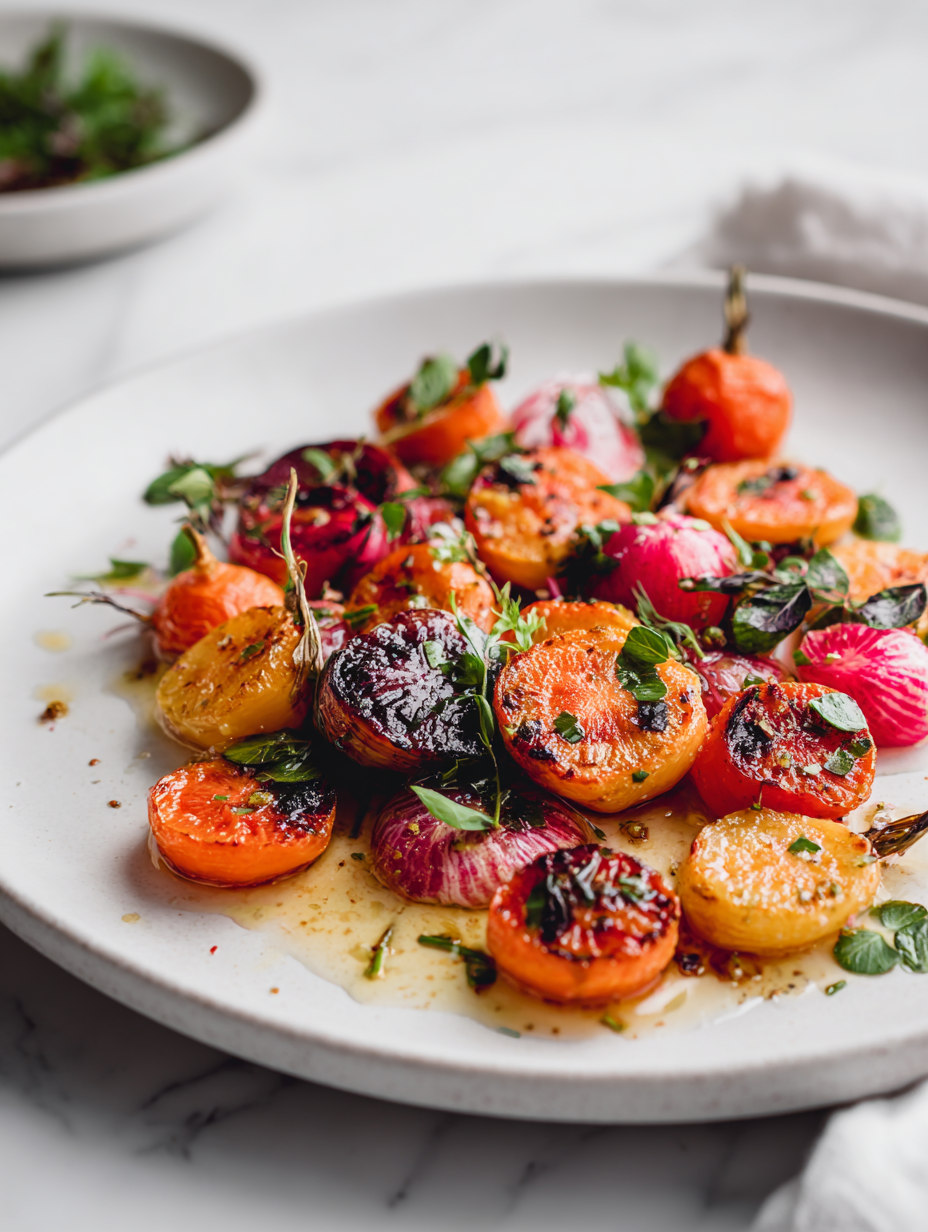
Roasted Radishes and Carrots
Ingredients
Equipment
Method
- Preheat your oven to 200°C (390°F) and line a baking sheet with parchment paper for easy cleanup.
- Using a sharp knife, thinly slice the radishes into delicate rounds, about 1/8 inch thick, revealing a crisp, peppery interior.
- Peel the carrots if needed, then cut them into approximately 1-inch chunks for even roasting.
- Place the sliced radishes and carrot chunks into a mixing bowl, drizzle with olive oil, and sprinkle with coarse sea salt.
- Toss everything gently with a spatula until the vegetables are evenly coated with oil and salt.
- Spread the vegetables out in a single layer on the prepared baking sheet, making space between pieces for even caramelization.
- Roast in the oven for about 25-30 minutes, flipping the vegetables halfway through, until they are golden around the edges and tender when pierced with a fork.
- Once roasted, remove the vegetables from the oven and let them rest for 5 minutes, allowing flavors to settle and slightly cool.
- Squeeze fresh lemon juice over the vegetables or sprinkle with chopped herbs if desired, to brighten the earthy sweetness.
- Serve warm or at room temperature, enjoying the tender, caramelized texture and mellowed flavors of the roasted radishes and carrots.
Notes
Pro tips for roasting vegetables
- Bolded mini-head: Use a mandoline to slice radishes thin—ensures even cooking and a delicate texture.
- Bolded mini-head: Toss vegetables in oil while still slightly damp—this helps the oil cling better and promotes crispness.
- Bolded mini-head: Roast at 200°C (390°F) for 25-30 minutes—look for golden edges and tender insides.
- Bolded mini-head: Flip or stir vegetables halfway—this promotes even caramelization and prevents sticking.
- Bolded mini-head: If edges burn before veggies are tender, lower the oven temperature slightly or shorten roasting time.
- Bolded mini-head: Finish with a squeeze of lemon or a drizzle of vinegar—brightens flavors and enhances earthiness.
- Bolded mini-head: Let the roasted vegetables rest for 5 minutes before serving—this allows flavors to settle and enhances texture.
Common mistakes and how to fix them
- FORGOT to dry radishes before roasting → they steam instead of crisping.
- DUMPED too much oil → use just enough to coat evenly, prevents soggy veggies.
- OVER-TORCHED carrots → reduce oven time or lower temperature if edges burn.
- FAILED to flip vegetables halfway → ensure even caramelization and prevent sticking.
Quick fixes and pantry swaps
- When veggies burn quickly, splash a little water to cool and prevent further charring.
- If radishes are too sharp, toss with a pinch of sugar before roasting for mellow sweetness.
- Patch soggy vegetables by roasting at a higher temperature for crisp edges—try 220°C (430°F).
- Splash lemon juice after roasting to brighten earthy flavors and add a fresh shimmer.
- Shield delicate carrots from over-torching by tenting with foil halfway through roasting.
Prep, store, and reheat tips
- Prep the vegetables: Trim and cut radishes and carrots into uniform pieces a day ahead. Store in an airtight container in the fridge—freshness stays crisp for up to 2 days.
- Oiling and seasoning: Toss the cut vegetables with oil and salt just before roasting to ensure maximum crunch and flavor.
- Shelf life: Roasted radishes and carrots can be kept in the fridge for up to 3 days. They gently soften, but still hold good flavor and aroma.
- Reheating: Warm in a 180°C (350°F) oven for 8-10 minutes until heated through and slightly crispy around the edges; smell should be sweet and earthy, with a hint of caramel.
- Sensory note: Reheated veggies develop a softer texture, but the caramelized notes deepen, making them feel cozy and familiar again.
Top questions about roasted radishes and carrots
1. What do roasted radishes and carrots taste like?
Radishes have a peppery bite that mellows out when roasted, becoming sweet and earthy. Carrots turn tender with a caramelized edge, offering a velvety texture. The aroma is warm and subtly smoky.
2. Can I substitute other root vegetables?
You can use regular carrots or even parsnips if you want a different sweetness. For radishes, try watermelon radishes for a milder, milky flavor, but their bite is sharper raw.
3. How long do I roast the vegetables?
Roast at 200°C (390°F) for about 25-30 minutes. Look for golden edges and tender insides. Flip halfway to promote even caramelization.
4. What tools are best for preparation?
Use a sharp knife or mandoline for even slices. Toss vegetables in a good amount of olive oil and coarse salt for crispy edges.
5. Are roasted radishes and carrots healthier than raw?
Yes, roasting enhances their natural sweetness and softens any sharp bite. The smell of caramelized vegetables is warm and inviting.
6. How should I store leftovers?
Store leftovers in an airtight container in the fridge for up to 3 days. Reheat in a warm oven for best texture and flavor.
7. Should I add anything after roasting?
Adding a squeeze of lemon or a splash of vinegar after roasting brightens the dish and enhances the earthy sweetness.
8. What if my vegetables burn or get soggy?
If vegetables burn or char too quickly, lower the oven temperature or tent with foil. For soggy veggies, increase oven temp slightly or spread them out more.
9. Any tips for even roasting?
Make sure to cut vegetables into similar-sized pieces for even roasting. Toss them halfway through roasting for uniform color and texture.
10. When is the best time to make this dish?
Roasted radishes and carrots are perfect as a side dish for fall dinners, or when you want a cozy vegetable that’s quick to prepare.
Roasted radishes and carrots are a quietly satisfying dish that reminds me how simple ingredients can reveal new flavor depths. Their earthy sweetness and tender texture make them a versatile side, especially in these transitional seasons. I find myself coming back to this recipe when I want comfort without fuss, the aroma alone enough to evoke a sense of home.
In the end, it’s about appreciating the humble root and letting its natural charm shine—no fancy tricks needed. Whether served alongside a hearty meal or enjoyed on their own, these roasted vegetables bring a subtle joy that’s hard to beat.

Hi there! I’m Himani and welcome to Val’s Recipe Box. This little corner of the internet didn’t begin with me. It began with Val my neighbourhood aunt whose kitchen held more warmth than any fireplace ever could.


 This little corner of the internet didn’t begin with me.
It began with Val my neighbourhood aunt whose kitchen held more warmth than any fireplace ever could.
She was more of a friend and I’ve come to know her in the most unexpected way.
This little corner of the internet didn’t begin with me.
It began with Val my neighbourhood aunt whose kitchen held more warmth than any fireplace ever could.
She was more of a friend and I’ve come to know her in the most unexpected way.