
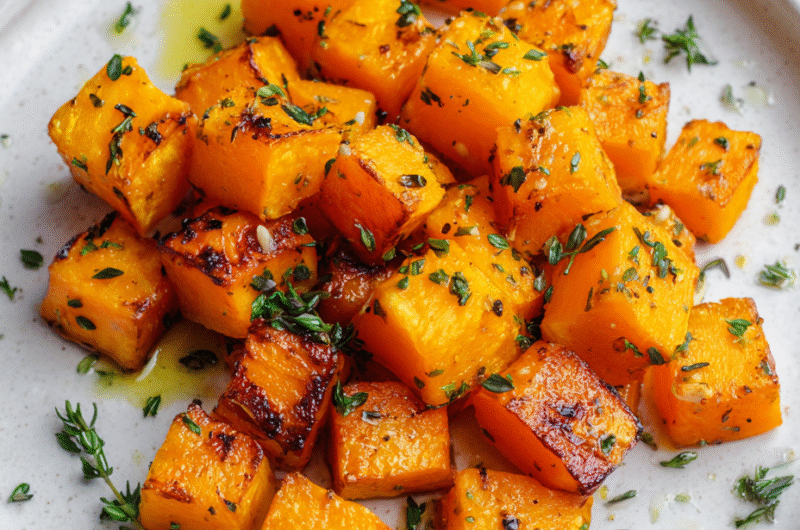
Roasted butternut squash is one of those side dishes I lean on all fall and winter long. It’s simple, comforting, and incredibly reliable. I usually make it on nights when I want something warm and familiar in the oven while the rest of dinner comes together. It doesn’t need much—just good squash, a little oil, and the right amount of heat.
Table of Contents
This recipe came from wanting roasted squash that actually caramelizes instead of steaming. After a few pans that came out soft but pale, I learned that spacing and heat matter just as much as seasoning. Once I nailed that, this became my go-to version—the one that works whether I’m serving it as a side or building a bowl around it.
Recipe Origin or Trivia
Butternut squash is a type of winter squash that became widely popular in home cooking because of its naturally sweet flavor and smooth texture. Roasting is one of the most common preparation methods because it concentrates flavor and enhances caramelization.
Why You’ll Love This Recipe
- Naturally sweet: No added sugar needed
- Simple ingredients: Pantry staples only
- Great texture: Tender inside with browned edges
- Versatile: Side dish or base ingredient
- Hands-off cooking: Oven does the work
- Seasonal favorite: Perfect for cooler months
- Easy to scale: Works for small or large batches
Chef’s Pro Tips for Perfect Results
- Cut evenly: Ensures consistent roasting
- Use high heat: Encourages caramelization
- Don’t overcrowd the pan: Prevents steaming
- Season after roasting: Enhances sweetness
Kitchen Tools You’ll Need
- Sharp knife: Squash is dense
- Cutting board: Stable surface
- Vegetable peeler: For removing skin
- Large bowl: Tossing squash
- Sheet pan: Enough space matters
Ingredients in This Recipe
- Butternut squash: Sweet, nutty, and tender when roasted
- Olive oil: Helps browning and flavor
- Salt: Brings out natural sweetness
- Black pepper: Adds gentle warmth
- Optional herbs or spices: Thyme, rosemary, paprika, or cinnamon
Ingredient Substitutions
- Olive oil → avocado oil: Higher smoke point
- Black pepper → chili flakes: Adds heat
- Fresh herbs → dried herbs: Use sparingly
- Butternut squash → acorn or delicata squash: Similar results
Ingredient Spotlight
- Butternut squash: Creamy texture and mild sweetness
- Olive oil: Helps achieve golden edges
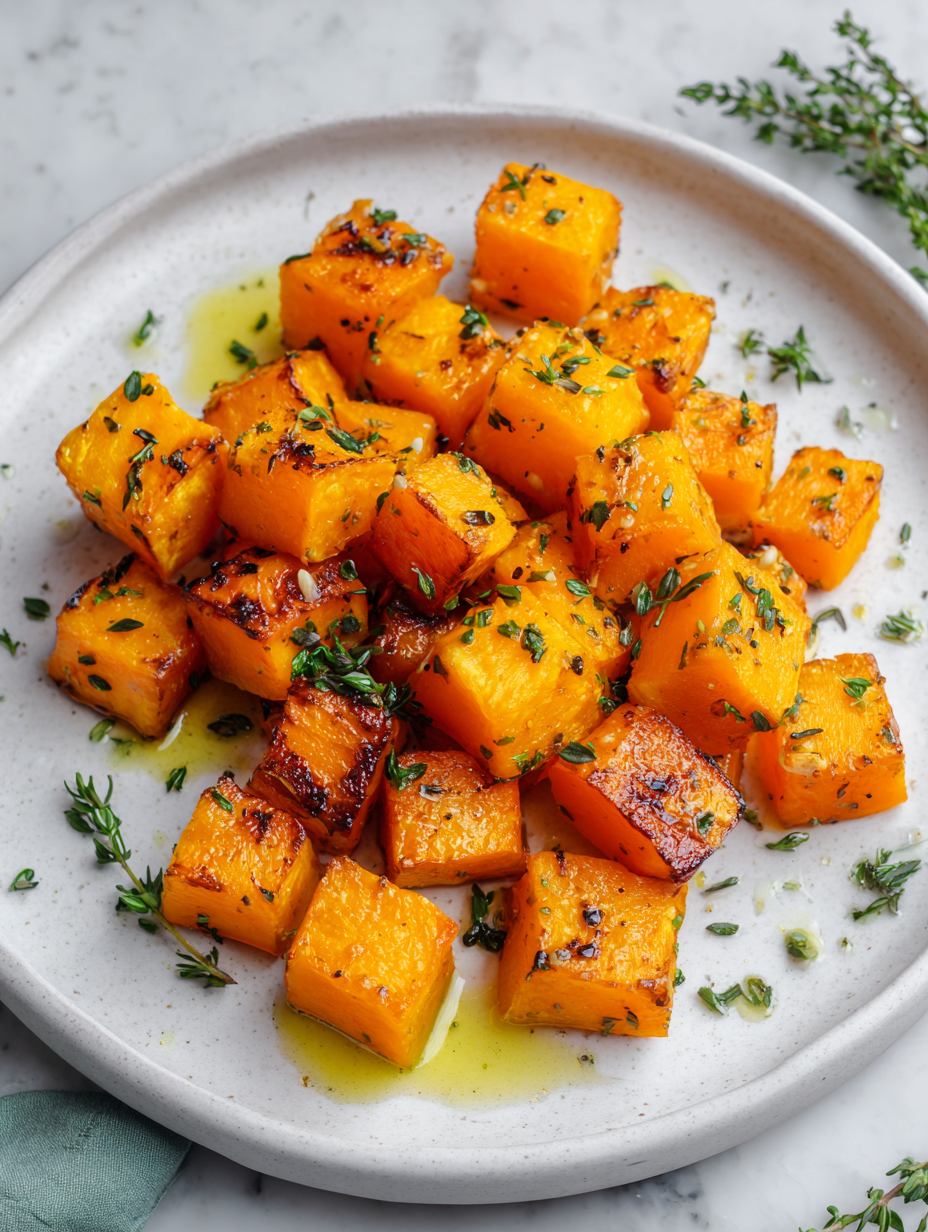
Roasted Butternut Squash
Ingredients
Equipment
Method
- Preheat oven: Set to 425°F (220°C)
- Prepare squash: Peel, seed, and cube evenly
- Season: Toss with olive oil, salt, and pepper
- Arrange: Spread in a single layer on a sheet pan
- Roast: Cook until tender and browned, stirring once
- Finish: Taste and adjust seasoning
Notes
Roasted Fall Vegetable Soup Recipe
Make-Ahead and Storage Tips
- Refrigerate leftovers: Store up to 4 days
- Reheat in oven: Best texture
- Avoid microwaving: Softens edges
How to Serve This Dish
- As a side: With chicken, pork, or fish
- In bowls: Add grains and greens
- With pasta: Toss lightly
Creative Leftover Transformations
- Squash mash: Lightly mash with butter
- Soup base: Blend with stock
- Salad add-in: Toss with greens
Additional Tips
- Choose firm squash: Avoid soft spots
- Season lightly first: Adjust later
- Serve warm: Best flavor and texture
Make It a Showstopper
- Finish with herbs: Fresh thyme or rosemary
- Add a drizzle: Balsamic or honey
- Serve on a warm platter: Keeps it cozy
Variations to Try
- Garlic roasted squash: Add minced garlic
- Spiced version: Add cumin or paprika
- Sweet-savory: Add maple syrup and chili flakes
- Herb-forward: Roast with rosemary
- Citrus finish: Add orange zest
FAQ’s
- Do I need to peel the squash?: Yes
- Can I roast ahead?: Yes
- Why isn’t it browning?: Pan is overcrowded
- Can I freeze roasted squash?: Yes, texture softens
- Is this vegan?: Yes
- Can I add cheese?: Parmesan works well
- What temperature is best?: High heat
- Does it reheat well?: Best in oven
- Can I double the recipe?: Use two pans
- How do I know it’s done?: Fork-tender with browned edges

Hi there! I’m Himani and welcome to Val’s Recipe Box. This little corner of the internet didn’t begin with me. It began with Val my neighbourhood aunt whose kitchen held more warmth than any fireplace ever could.


 This little corner of the internet didn’t begin with me.
It began with Val my neighbourhood aunt whose kitchen held more warmth than any fireplace ever could.
She was more of a friend and I’ve come to know her in the most unexpected way.
This little corner of the internet didn’t begin with me.
It began with Val my neighbourhood aunt whose kitchen held more warmth than any fireplace ever could.
She was more of a friend and I’ve come to know her in the most unexpected way.