
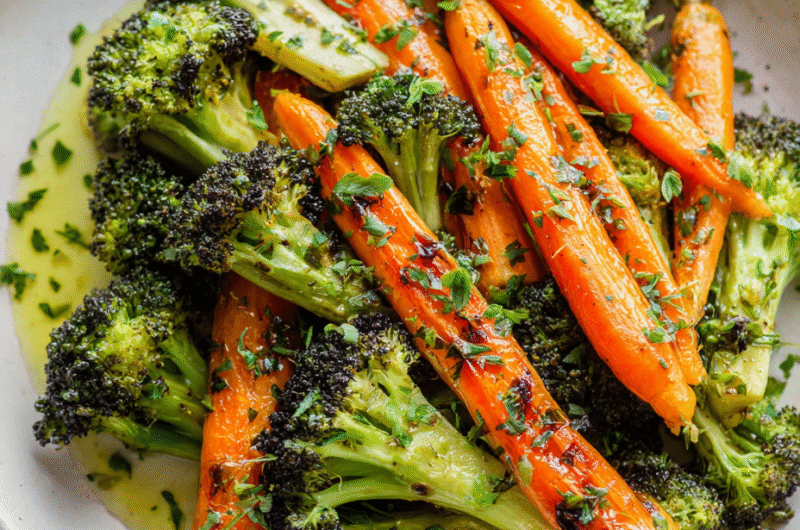
There’s something almost magical about how roasting transforms humble vegetables into something deeper and more complex. Broccoli and carrots, when roasted, develop this smoky sweetness that can turn a simple dinner into a memorable moment without much fuss. It’s about letting the heat do the work and trusting those natural flavors to shine through.
This recipe is a go-to for me when I want a side that feels both familiar and unexpectedly special. It’s perfect for those nights when I want something quick, but also crave that bit of caramelized richness that only roasting can deliver. Plus, it’s a great way to get more veggies into the mix without turning on the stove or fussing with complicated techniques.
The beauty is in its simplicity—just a sprinkle of seasoning and a hot oven, and suddenly, everyday vegetables become something you actually look forward to eating. It’s honest, straightforward, and a little bit transformative, making even the most modest ingredients feel like a treat.
Focusing on how roasting enhances the natural sweetness and smoky depth of broccoli and carrots, creating a simple yet transformative side that elevates everyday meals.
The story behind this recipe
- This recipe grew out of a night when I was tired but still wanted something nourishing and easy. I remember peeling carrots while the oven preheated, thinking about how roasting transforms everyday ingredients into something more memorable. It’s the kind of dish that makes me nostalgic for simple family dinners, yet feels fresh and new every time I make it.
- I often forget how much I rely on roasting to amp up the natural sweetness of vegetables. One evening, I tossed broccoli and carrots together on a whim, seasoned them lightly, and let the oven do its thing. The smoky aroma filling the kitchen was a reminder that sometimes, the simplest methods yield the most satisfying results.
- heading
- story_type
Key Ingredients Breakdown
- Broccoli: I love how it turns deeply green and slightly charred, with a smoky aroma that’s almost addictive. If you prefer more bite, roast it for less time.
- Carrots: Their natural sweetness intensifies and becomes caramelized—look for that golden, shiny glaze. For a softer texture, slice them thinner before roasting.
- Olive oil: I use a generous splash to help vegetables crisp up and develop flavor. For a lighter finish, reduce the oil, but expect less crispness.
- Salt: I always sprinkle generously—you’ll notice it pulls out the sweetness and heightens the smoky notes. For a milder taste, cut back a bit.
- Black pepper: Freshly cracked adds a subtle heat and depth. For a more pronounced spice, toss in a pinch of chili flakes or smoked paprika.
- Lemon juice: A squeeze right after roasting brightens everything up with a zing. Skip it if you prefer a more mellow, roasted flavor.
- Garlic (optional): Minced garlic adds a fragrant punch. For a mellow undertone, roast garlic cloves alongside or use garlic powder for convenience.
Spotlight on key ingredients
Broccoli:
- It turns deeply green and slightly charred, developing a smoky aroma that’s almost addictive. If you prefer more crunch, roast it for less time.
- Carrots: Their natural sweetness intensifies, becoming caramelized with a shiny, golden glaze. Slice thinner for a softer, more tender bite.
Olive oil & Salt:
- Olive oil: I use a generous splash that helps vegetables crisp and develop flavor. A lighter drizzle yields less crunch but still adds richness.
- Salt: It pulls out the natural sweetness and enhances smoky flavors. Too much can overpower; sprinkle evenly and taste.
Notes for ingredient swaps
- Dairy-Free: Skip butter or creamy dressings—use olive oil or tahini for richness, though the texture will be lighter.
- Vegan: Replace honey with maple syrup or agave nectar for a touch of sweetness without animal products.
- Gluten-Free: Ensure your seasonings are gluten-free; most spices are, but double-check if using pre-mixed blends.
- Low-Sodium: Cut back on salt and use herbs like thyme or rosemary to boost flavor without extra sodium.
- Extra-Virgin Olive Oil: Use a high-quality oil for a fruity, peppery note that amplifies the smoky sweetness.
- Lemon Juice: Swap with lime or vinegar for a different bright, acidic finish that still cuts through the richness.
- Carrots: Swapping for parsnips or sweet potatoes adds a different sweetness and slightly different texture, but still roasts beautifully.
Equipment & Tools
- Baking sheet: To hold the vegetables during roasting, ensuring even heat exposure.
- Parchment paper: For easy cleanup and prevent sticking.
- Mixing bowl: To toss vegetables with oil and seasonings evenly.
- Tongs or spatula: To flip and turn vegetables for uniform roasting.
- Lemon squeezer or hand: To add fresh lemon juice for brightness after roasting.
Step-by-step guide to roasting vegetables
- Preheat your oven to 220°C (430°F). Line a baking sheet with parchment paper for easy cleanup.
- Prepare the vegetables: Cut broccoli into bite-sized florets, about 2-3 cm (1 inch). Peel carrots and slice them diagonally into 1 cm (0.4 inch) thick pieces.
- In a large bowl, toss the broccoli and carrots with 2-3 tablespoons of olive oil until evenly coated. Sprinkle generously with salt and freshly cracked black pepper.
- Spread the vegetables in a single layer on the prepared baking sheet. Ensure they are not overcrowded to allow proper roasting.
- Roast in the oven for 20-25 minutes. After 10 minutes, shake the pan or flip the vegetables with tongs for even browning.
- Check for doneness: The broccoli should be deeply green with some charred edges, and carrots should be caramelized and tender. The aroma should be smoky and sweet.
- If the vegetables are not yet charred enough, roast for an additional 3-5 minutes, watching closely to prevent burning.
- Remove from oven and immediately squeeze fresh lemon juice over the hot vegetables. Toss gently to coat and brighten the flavors.
- Let rest for 2 minutes. Transfer to a serving dish and sprinkle with a pinch of flaky sea salt if desired.
- Serve warm, enjoying the crispy edges, smoky aroma, and sweet, tender vegetables.
Let the vegetables rest for a couple of minutes to settle their flavors. Serve directly from the baking sheet or transfer to a platter. Finish with a sprinkle of flaky sea salt or a drizzle of extra virgin olive oil for added richness.
How to Know It’s Done
- Vegetables are deeply browned and slightly charred in spots.
- Carrots are caramelized and tender when pierced with a fork.
- Broccoli has a vibrant green color with crispy edges and smoky scent.
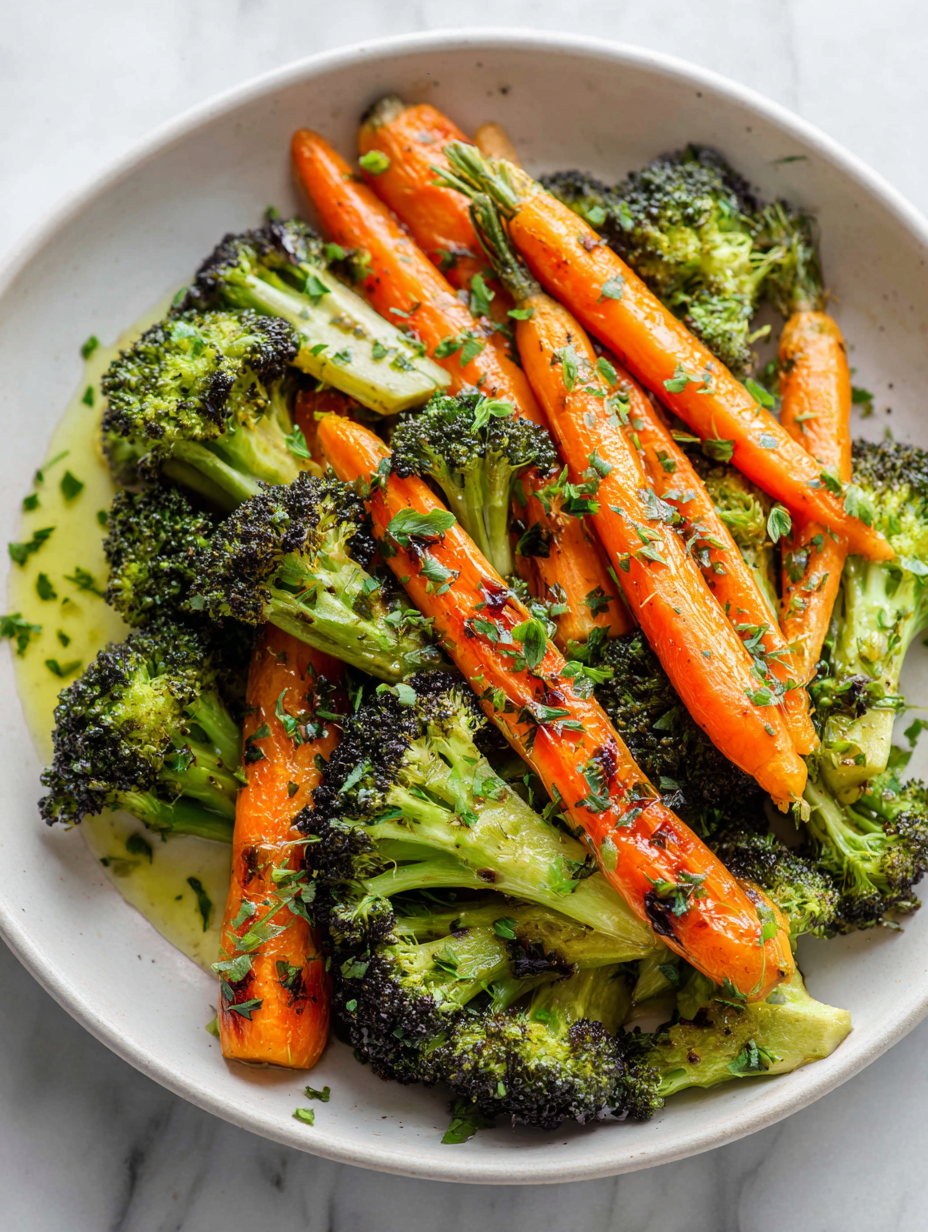
Roasted Broccoli and Carrots
Ingredients
Equipment
Method
- Preheat your oven to 220°C (430°F) and line a baking sheet with parchment paper to keep things tidy.
- Prepare the vegetables by cutting the broccoli into bite-sized florets and peeling the carrots before slicing them diagonally into 1 cm thick pieces.
- In a large mixing bowl, toss the broccoli and carrots with the olive oil until everything is evenly coated. This helps them crisp and caramelize nicely.
- Season generously with salt and freshly cracked black pepper, then toss again to distribute the seasonings evenly.
- Spread the vegetables in a single layer on the prepared baking sheet, making sure they aren’t crowded so they roast evenly and get crispy edges.
- Roast in the oven for 20-25 minutes. At the halfway point, shake the pan or use tongs to flip the vegetables for uniform browning and caramelization.
- Check for doneness: the broccoli should be deep green with some charred edges, and the carrots should be caramelized and tender when pierced with a fork.
- Once out of the oven, cut the lemon in half and squeeze fresh juice over the hot vegetables. Toss gently to combine, adding brightness and enhancing the smoky sweetness.
- Let the vegetables rest for 2 minutes to settle their flavors, then transfer to a serving dish or serve directly from the baking sheet.
- Finish with an extra sprinkle of flaky sea salt or a drizzle of olive oil if desired, and enjoy the crispy, smoky, sweet vegetables while warm.
Pro tips for perfect roasting
- Bolded Mini-Head: Use a high-smoke point oil like avocado or grapeseed to prevent burning and achieve crisp edges.
- Bolded Mini-Head: Toss vegetables thoroughly with oil and seasonings to ensure even caramelization and flavor.
- Bolded Mini-Head: Spread vegetables in a single layer, leaving space to allow hot air to circulate, for maximum crispness.
- Bolded Mini-Head: Flip or shake the pan halfway through roasting to promote uniform browning and prevent sticking.
- Bolded Mini-Head: Keep an eye on the vegetables after 20 minutes; they can go from perfect to burnt quickly.
- Bolded Mini-Head: Squeeze lemon immediately after roasting to lock in brightness and enhance smoky sweetness.
- Bolded Mini-Head: For extra char, broil the vegetables for the last 2 minutes, watching carefully to avoid flare-ups.
Common roasting mistakes and how to fix them
- FORGOT to preheat oven → Always preheat to ensure even roasting and proper browning.
- DUMPED vegetables on pan → Spread vegetables in a single layer to prevent steaming and promote crispness.
- OVER-TORCHED edges → Check at 20 minutes; reduce time if edges burn or blacken excessively.
- MISSED flipping halfway → Turn vegetables at the 10-minute mark for even caramelization.
Quick fixes and pantry swaps
- When vegetables look a little pale, splash with lemon juice to brighten and revive flavor.
- If edges burn quickly, patch with a sprinkle of fresh herbs for a fresh burst.
- Splash a bit of water if vegetables are too dry or start to char too early.
- When in doubt, shield with foil to prevent over-torching while keeping heat in.
- Dumped too much oil? Rescue with a paper towel to soak up excess oil and crisp up again.
Prep, store, and reheat tips
- prepping the vegetables can be done a day ahead; keep them in an airtight container in the fridge, crispy and fresh.
- Roasted vegetables stay good for up to 3 days in the fridge; reheat in a 180°C (350°F) oven until warmed through and slightly crispy, about 10 minutes, smell should be smoky and sweet.
- For longer storage, freeze roasted vegetables for up to a month; thaw and reheat in the oven for best texture, with a fragrant, caramelized aroma.
- Reheating may soften the edges; to regain crunch, broil for 2-3 minutes, watching for that slight charriness and sizzling crackle.
Top questions about roasted veggies
1. How do I know when the vegetables are perfectly roasted?
Look for bright green florets with some charred spots, and tender, caramelized carrots. The smell should be smoky and sweet, not raw or burnt.
2. What’s the visual cue for doneness?
The broccoli should be deeply green with crispy edges, and the carrots golden and tender when pierced. The aroma should smell smoky and sweet.
3. Can I use regular olive oil or butter?
Use a high-smoke point oil like grapeseed or avocado. It helps vegetables crisp without burning and adds a subtle fruity flavor.
4. Can I substitute olive oil with something else?
Yes, but butter can burn at high heat. If using, add it after roasting for flavor or lightly brush it on hot vegetables.
5. Should I add lemon before or after roasting?
A quick squeeze of lemon brightens the dish immediately after roasting, enhancing smoky and sweet flavors with fresh zing.
6. Can I prep this in advance?
You can prepare chopped vegetables a day ahead, store them in the fridge, and roast when needed. Reheat in the oven for best crispness.
7. How long do leftovers keep?
Roasted vegetables can last up to 3 days in the fridge. Reheat at 180°C (350°F) until just warmed with a slight crackle.
8. What if my vegetables burn or get soggy?
If edges burn, quickly shield with foil or lower oven temperature. To fix soggy veg, re-roast for a few minutes to crisp up.
9. What tools make roasting easier?
Use a large, rimmed baking sheet for even roasting. Toss vegetables halfway through to promote uniform caramelization and prevent steaming.
10. How do I finish the dish for best flavor?
For extra flavor, sprinkle with flaky sea salt or fresh herbs right before serving to add texture and aroma.
Roasted broccoli and carrots aren’t just a side; they’re a reminder that simple ingredients, when treated right, can reveal deep, smoky sweetness. This dish feels like a quiet victory—something you make when you want to nourish and satisfy without fuss.
In a time when quick, honest food is what we crave most, this recipe offers that perfect balance. It’s not flashy, but it’s honest, and sometimes, that’s exactly what hits the spot after a long day.

Hi there! I’m Himani and welcome to Val’s Recipe Box. This little corner of the internet didn’t begin with me. It began with Val my neighbourhood aunt whose kitchen held more warmth than any fireplace ever could.


 This little corner of the internet didn’t begin with me.
It began with Val my neighbourhood aunt whose kitchen held more warmth than any fireplace ever could.
She was more of a friend and I’ve come to know her in the most unexpected way.
This little corner of the internet didn’t begin with me.
It began with Val my neighbourhood aunt whose kitchen held more warmth than any fireplace ever could.
She was more of a friend and I’ve come to know her in the most unexpected way.