
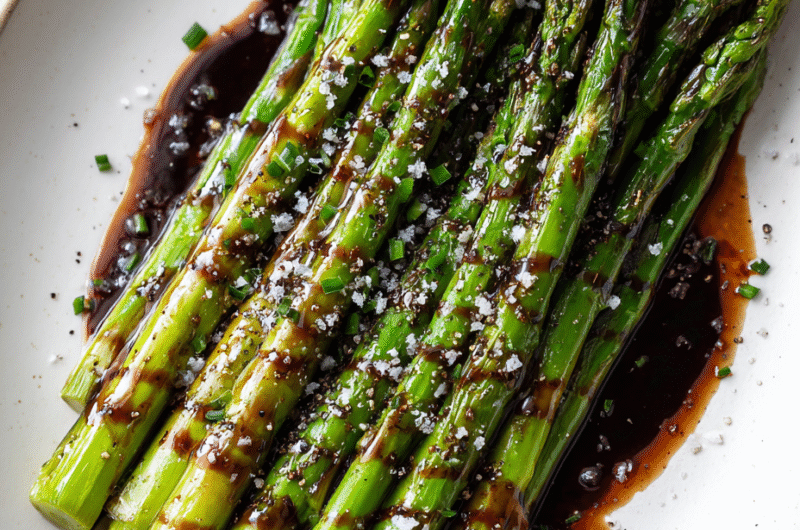
Sometimes, I think about how simple veggies like asparagus can surprise you when you give them just a little attention. Roasting transforms their grassy bite into something tender and slightly smoky, but it’s that drizzle of balsamic glaze that really makes it sing. It’s a small, humble dish that feels like a little celebration of spring’s fleeting bounty.
This recipe is about balancing flavors—bitterness, sweetness, and a touch of acidity—all in one bite. I love how the balsamic reduction adds a glossy, tangy punch that cuts through the natural earthiness of the asparagus. It’s perfect for when you want something straightforward but with a bit of an elegant twist, no fuss required.
Plus, it’s a reminder that you don’t need a long list of ingredients to make a memorable side. Just a handful of pantry staples, a hot oven, and a few minutes of patience. Sometimes, the simplest dishes turn out to be the ones you crave most.
This recipe focuses on the overlooked magic of balancing the slight bitterness of asparagus with the rich sweetness of balsamic glaze, creating a harmony that elevates a humble vegetable into a sophisticated side.
The story behind this recipe
- I first stumbled upon this combo after a rushed farmers’ market trip. I was craving something quick but flavorful, and the idea of roasting asparagus with a sweet-tangy glaze hit me right then. That day, I realized how a simple drizzle could elevate a humble vegetable into something special, almost like a little culinary wink.
- Every time I make this, I think of how my grandmother used to roast veggies with just a splash of balsamic she kept on hand. It’s a nod to those rustic, no-fuss days, but with a modern twist. It’s my go-to when I want something that feels fancy but is really just about honest, straightforward flavors.
- heading: The story behind this recipe
Key Ingredients & Tips
- Asparagus: I love how the fresh, grassy aroma intensifies when roasted until just tender. If yours turns too limp, try a shorter cook time or higher heat for more snap.
- Balsamic glaze: Its sweet, tangy complexity really ties the dish together. If you prefer less sweetness, dilute it with a splash of water while simmering to balance the intensity.
- Olive oil: I use a good extra virgin for that fruity, peppery punch. If you’re out, a neutral oil works, but the flavor won’t be as vibrant.
- Salt: I sprinkle just enough to enhance, not mask, the natural flavors. If your asparagus is particularly bitter, a pinch of flaky sea salt can mellow it out.
- Black pepper: Freshly cracked adds a subtle heat and depth. For a smoky twist, toss in a pinch of smoked paprika before roasting.
- Optional garlic: I sometimes toss in thin slices of garlic before roasting for a fragrant, mellow layer. Skip if you prefer a pure veggie focus.
- Lemon zest (if using): Brightens the whole dish with a zing. If you’re out, a squeeze of lemon juice right before serving works too.
Spotlight on key ingredients
Asparagus:
- I love how the fresh, grassy aroma intensifies when roasted until just tender. If yours turns too limp, try a shorter cook time or higher heat for more snap.
- Balsamic glaze: Its sweet, tangy complexity really ties the dish together. If you prefer less sweetness, dilute it with a splash of water while simmering to balance the intensity.
Balsamic vinegar:
- It transforms into a glossy, slightly sweet drizzle that clings to the asparagus, adding depth and brightness. If too sharp, a quick simmer mellows the acidity.
- Olive oil: I use a good extra virgin for that fruity, peppery punch. If you’re out, a neutral oil works, but the flavor won’t be as vibrant.
Notes for ingredient swaps
- Dairy-Free: Skip butter or cheese—this dish doesn’t rely on dairy, so the flavors stay pure and bright.
- Vinegar Alternatives: Apple cider or red wine vinegar can replace balsamic, but will alter the sweetness and depth.
- Oil Swap: Avocado or grapeseed oil can stand in for olive oil—both have high smoke points and neutral flavors.
- Sweetener Adjustments: Honey or maple syrup can mimic the glaze’s sweetness if you prefer a different nuance.
- Herb Boost: Fresh thyme or oregano brighten the dish with herbal notes, especially good if you want extra aroma.
- Salt Variants: Use flaky sea salt for crunch and flavor or skip if you’re watching sodium—just taste before serving.
- Pepper Options: White pepper offers a milder heat, while smoked paprika adds a smoky depth if you crave more complexity.
Equipment & Tools
- Baking sheet: To roast the asparagus evenly
- Parchment paper: To prevent sticking and ease cleanup
- Small saucepan: To reduce balsamic vinegar into glaze
- Silicone spatula or spoon: To stir and coat the glaze
- Tongs or a fork: To handle and arrange the asparagus
Step-by-step guide to roasted asparagus
- Preheat your oven to 220°C (430°F). Line a baking sheet with parchment paper for easy cleanup.
- Trim the woody ends off a bunch of asparagus, about 1-2 inches. Toss them lightly with 1-2 tbsp olive oil, ensuring even coverage.
- Arrange the asparagus in a single layer on the prepared baking sheet. Spread out for even roasting.
- Roast in the oven for 10-12 minutes. Check for tender-crisp texture and slightly caramelized tips. If too limp, roast a minute longer.
- Meanwhile, in a small saucepan, pour ½ cup balsamic vinegar. Bring to a simmer over medium heat. Reduce by half until thick and syrupy, about 8-10 minutes. Watch for a glossy, dark glaze.
- Once asparagus is roasted, transfer to a serving platter. Drizzle generously with the warm balsamic glaze, allowing it to pool slightly.
- Optional: sprinkle with flaky sea salt or freshly cracked black pepper for added flavor. Toss gently to coat evenly.
- Let sit for 2-3 minutes to allow flavors to meld and glaze to set. Serve immediately for best texture and shine.
Let the asparagus rest for 2 minutes after drizzling with glaze to allow flavors to settle. Serve immediately with a final sprinkle of salt or pepper if desired.
How to Know It’s Done
- Asparagus tips are golden and slightly caramelized, with a vibrant green hue.
- Balsamic glaze is thick, shiny, and coats a spoon without running too quickly.
- Asparagus feels tender but still has a slight snap when pierced with a fork.
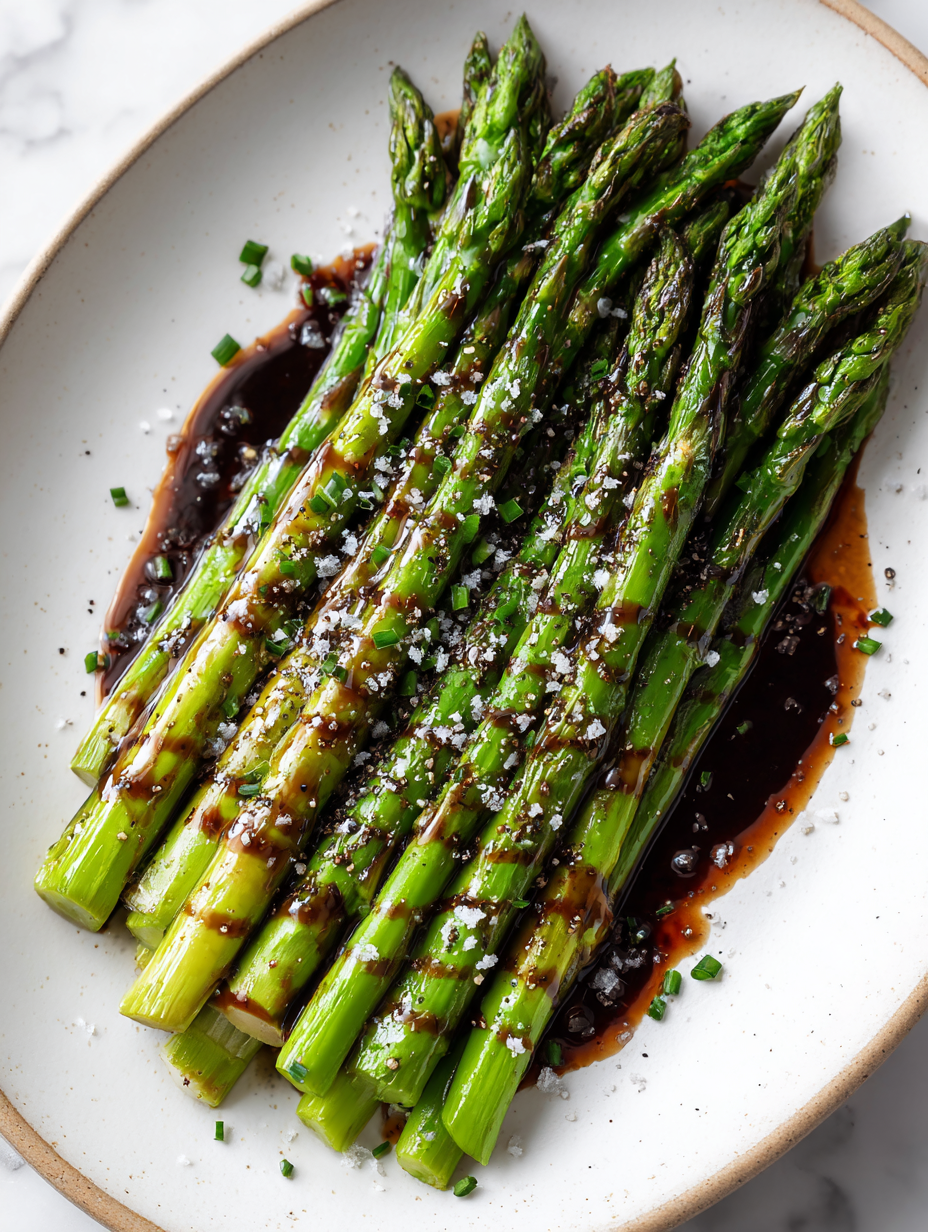
Roasted Asparagus with Balsamic Glaze
Ingredients
Equipment
Method
- Preheat your oven to 220°C (430°F). Line a baking sheet with parchment paper for easy cleanup.
- Trim the woody ends off the asparagus, about 1-2 inches from the bottom, and toss them with 2 tablespoons of olive oil until evenly coated.
- Arrange the asparagus in a single layer on the prepared baking sheet, spreading them out to ensure even roasting.
- Roast in the oven for 10-12 minutes, until the tips are golden and slightly caramelized, and the stalks are tender but still have a slight crunch.
- While the asparagus roasts, pour the balsamic vinegar into a small saucepan and bring it to a simmer over medium heat. Reduce the vinegar by half, stirring occasionally, until it thickens into a glossy, syrupy glaze, about 8-10 minutes.
- Once the asparagus is done roasting, transfer it to a serving platter. Drizzle the warm balsamic glaze generously over the top, allowing it to pool slightly and coat each spear beautifully.
- Finish by sprinkling with flaky sea salt and freshly cracked black pepper to taste. Serve immediately while still warm to enjoy the full flavor and shine.
Notes
Pro tips for perfect roasted asparagus
- Bolded mini-head: Use high heat → Ensures quick caramelization and vibrant color on the asparagus tips.
- Bolded mini-head: Don’t overcrowd the pan → Roast in a single layer for even cooking and crispy edges.
- Bolded mini-head: Watch the glaze → Simmer until thick enough to coat the back of a spoon, avoiding runny drips.
- Bolded mini-head: Adjust asparagus size → Uniform thickness guarantees even roasting and consistent texture.
- Bolded mini-head: Taste before serving → Correct seasoning with a pinch of salt or a squeeze of lemon for brightness.
- Bolded mini-head: Use fresh balsamic → Enhances sweetness and reduces the need for additional sugar or sweeteners.
- Bolded mini-head: Rest briefly after drizzling → Allows flavors to meld and the glaze to set for a glossy finish.
Common mistakes and how to fix them
- FORGOT to check asparagus size → Cut uniformly for even roasting.
- DUMPED the glaze too early → Let it cool slightly to thicken before drizzling.
- OVER-TORCHED the asparagus → Roast at a slightly lower temp if tips brown too fast.
- SPLASHED vinegar without reduction → Reduce balsamic to a syrupy consistency for better flavor.
Quick Fixes and Pantry Swaps
- When asparagus tips are too limp → Splash with lemon juice to brighten and revive texture.
- If glaze is too thin → Patch with a quick boil, stirring until thickened and glossy.
- Splash oil if asparagus sticks to the pan → prevents sticking and ensures even roasting.
- When asparagus burns too quickly → Shield with foil or reduce oven temperature slightly.
- DUMPED too much balsamic → Rescue by mixing in a splash of water or broth to mellow acidity.
Prep, store, and reheat tips
- Trim and prepare the asparagus a day in advance; store in an airtight container in the fridge to keep it fresh and crisp, sensory-wise it stays bright green and firm.
- Reduce the balsamic glaze ahead of time; keep it in a jar or small container in the fridge for up to 2 weeks. Reheat gently until warm, watching for gloss and syrupy texture.
- Roast the asparagus just before serving for maximum crunch and vibrancy. If making earlier, reheat in a 180°C (350°F) oven for 3-4 minutes until heated through and slightly crispy on edges.
- The flavors mellow slightly after storage, so a quick reheat helps revive the aroma of roasted asparagus and the tang of the glaze, ensuring it tastes fresh and lively.
- Avoid refrigerating the glazed asparagus directly; keep separately and assemble just before serving to maintain texture and shine.
Top questions about roasted asparagus with balsamic glaze
1. How do I pick the best asparagus?
Look for firm, bright green spears with tight tips. They should snap easily when bent. If they’re limp or yellowish, they’re past their prime.
2. When is asparagus perfectly roasted?
Roast until tips are golden and slightly caramelized, about 10-12 minutes at 220°C (430°F). They should be tender but still have a slight crunch.
3. How do I make balsamic glaze?
Reduce balsamic vinegar in a small saucepan until thick and syrupy, about 8-10 minutes. It should coat the back of a spoon with a shiny finish.
4. Can I use a different oil?
Use high-quality extra virgin olive oil for a fruity, peppery note. If you only have neutral oil, it’s still fine but won’t add as much flavor.
5. Can I make this in advance?
Yes, you can prepare the trimmed asparagus a day ahead. Store in an airtight container in the fridge to keep it crisp and fresh.
6. What if the glaze or asparagus isn’t right?
If the glaze is too runny, simmer it a few more minutes until thickened. If asparagus overcooks, lower oven temp or shorten roasting time next round.
7. How can I customize the flavor?
Add a splash of lemon juice or zest just before serving to brighten flavors. For a smoky touch, sprinkle with smoked paprika before roasting.
8. How do I prevent burning?
When asparagus tips turn too brown or black, remove from oven immediately. To prevent this, keep an eye on the roasting time and temperature.
9. How do I fix a too-thick glaze?
Splash a little water or broth into the balsamic pan if it thickens too much or sticks, to loosen it without losing flavor.
10. How do I reheat leftovers?
If the asparagus is limp after reheating, give it a quick blast in the oven at 180°C (350°F) for 3-4 minutes, watching for crispness and aroma.
This roasted asparagus with balsamic glaze feels like a little escape, even on busy nights. The smell of caramelized tips and tangy drizzle makes everything feel just a bit more special, no fuss required. It’s one of those dishes that sneaks into regular rotation because it’s honest, simple, and unexpectedly elegant.
Whenever I make it, I’m reminded that the best flavors often come from just a handful of good ingredients. It’s a reminder to slow down and savor the little moments in the kitchen, even if it’s just a quick side. That glossy balsamic and tender asparagus somehow always leave me feeling a bit more grounded.

Hi there! I’m Himani and welcome to Val’s Recipe Box. This little corner of the internet didn’t begin with me. It began with Val my neighbourhood aunt whose kitchen held more warmth than any fireplace ever could.


 This little corner of the internet didn’t begin with me.
It began with Val my neighbourhood aunt whose kitchen held more warmth than any fireplace ever could.
She was more of a friend and I’ve come to know her in the most unexpected way.
This little corner of the internet didn’t begin with me.
It began with Val my neighbourhood aunt whose kitchen held more warmth than any fireplace ever could.
She was more of a friend and I’ve come to know her in the most unexpected way.