
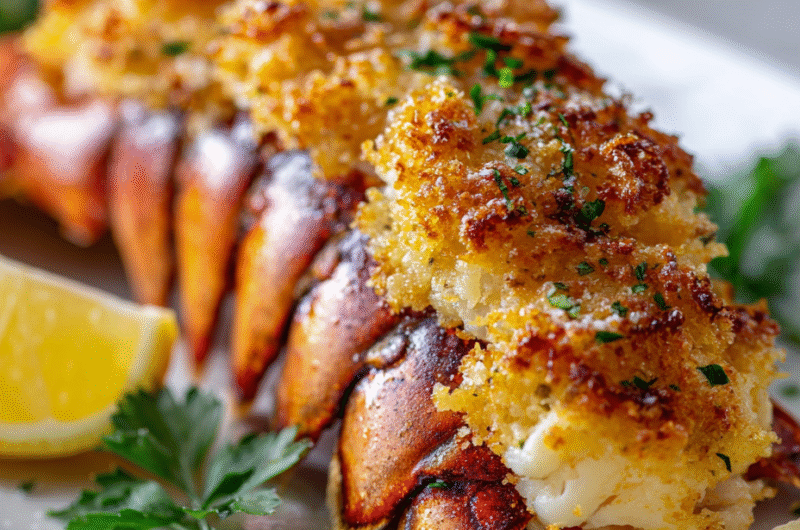
This Parmesan Crusted Lobster Tail is a little indulgence that balances elegance with a satisfying crunch. I love how the crispy parmesan layer creates a savory contrast to the tender, sweet lobster meat inside. It’s a dish that feels special but doesn’t require fancy tricks—just good ingredients and a bit of patience.
What got me hooked on this recipe is how easily the crust transforms the lobster into something unexpectedly crispy and cheesy without overpowering that natural sweetness. It’s a simple upgrade that makes a dinner feel like a celebration, whether for a quiet weekend or a small gathering. Plus, the aroma of melting parmesan and toasted breadcrumbs pulls you right into the kitchen.
Focusing on the crispy parmesan crust as a contrast to the succulent lobster meat, highlighting texture and flavor balance.
The story behind this recipe
- I first tasted a lobster dish that had a crispy parmesan topping at a tiny seaside bistro. The contrast between the crunchy cheese crust and the tender lobster stuck with me for ages. I kept thinking about how I could recreate that balance at home, without overcomplicating things.
- This recipe came together after a few failed attempts—burnt cheese, soggy crust, you name it. When I finally nailed that perfect golden crust with a cheesy, crispy bite, I knew this was something worth sharing. It’s a reminder that simple ingredients—lobster, parmesan, breadcrumbs—can surprise you with their elegance when handled right.
- heading
- story_type
Key Ingredients Breakdown
- Parmesan cheese: I prefer using freshly grated Parmesan for that sharp, nutty flavor. It melts beautifully and forms a golden crust. Skip pre-grated cheese if you want a more intense cheesy aroma.
- Breadcrumbs: I go for toasted panko breadcrumbs—they add a light crunch and stay crisp longer. You can swap in crushed Ritz crackers for a richer, buttery texture, but keep an eye on the toastiness.
- Lobster tail: Fresh, wild-caught lobster is ideal—sweet, firm, with a slight briny scent. If frozen, ensure it’s fully thawed and patted dry to get that crust to stick well.
- Butter: Use unsalted butter, melted until just golden and fragrant. It helps the crust adhere and adds richness. For a dairy-free version, try coconut oil, but it’ll bring a different aroma and flavor.
- Garlic powder: I love a pinch of garlic powder in the crust for depth. Fresh minced garlic can work, but it risks burning if added directly. Keep it light—overpowering the lobster’s sweetness is easy.
- Lemon zest: Brightens the whole dish with a pop of citrus. I use a microplane to get fine zest that melts into the crust. You can substitute with lime zest for a different zing, but lemon feels classic here.
- Herbs (parsley, thyme): A sprinkle of fresh herbs adds freshness and color. Dry herbs work in a pinch but won’t give the same vibrant aroma. Don’t skip the parsley—it’s the finishing touch that lifts everything.
Spotlight on key ingredients
Parmesan cheese:
- I prefer using freshly grated Parmesan for that sharp, nutty flavor. It melts beautifully and forms a golden crust. Skip pre-grated cheese if you want a more intense cheesy aroma.
- Breadcrumbs: I go for toasted panko breadcrumbs—they add a light crunch and stay crisp longer. You can swap in crushed Ritz crackers for a richer, buttery texture, but keep an eye on the toastiness.
Lobster tail:
- Fresh, wild-caught lobster is ideal—sweet, firm, with a slight briny scent. If frozen, ensure it’s fully thawed and patted dry to get that crust to stick well.
- Lemon zest: Brightens the whole dish with a pop of citrus. I use a microplane to get fine zest that melts into the crust. You can substitute with lime zest for a different zing, but lemon feels classic here.
Notes for ingredient swaps
- Dairy-Free: Use nutritional yeast instead of Parmesan for a cheesy umami boost, though it lacks the melt and richness.
- Breadcrumbs: Swap panko for crushed cornflakes for extra crunch and a slightly sweeter note, but expect a coarser texture.
- Lobster Tail: Frozen lobster works fine if fully thawed and patted dry, but fresh lobster offers a brighter sweetness and firmer bite.
- Butter: Olive oil can replace butter for a lighter, slightly fruitier flavor, but it won’t provide the same richness or browning.
- Herbs: Fresh thyme or basil can substitute parsley for a different aromatic profile—use sparingly for balance.
- Lemon Zest: Lime zest adds a tangy twist and a more floral aroma, ideal if you want a slightly different citrus punch.
- Garlic Powder: Minced fresh garlic can be used instead, but keep it small to prevent burning and bitterness during baking.
Equipment & Tools
- Boning knife: To carefully cut and pry open the lobster shell.
- Baking sheet with parchment: To hold the lobster during baking and prevent sticking.
- Small mixing bowl: To combine the parmesan crust ingredients.
- Silicone brush: To brush melted butter evenly over the lobster.
- Oven thermometer: To ensure accurate oven temperature.
Step-by-step to Parmesan Crusted Lobster
- Equipment & Tools: Gather a sharp boning knife, baking sheet with parchment, small bowl for cheese, silicone brush, and oven thermometer.
- Preheat your oven to 200°C (392°F). Position the rack in the middle. Pat lobster tails dry with paper towels to remove excess moisture.
- a. With your boning knife, carefully cut down the top of the lobster shell, from the fan end to the tail base, avoiding the meat. b. Gently lift the shell apart and loosen the meat from the shell, keeping the tail attached at the end. c. Rest the lobster meat on top of the shell, draping it slightly over the edges.
- Prepare the crust: In a small bowl, mix grated Parmesan, toasted panko breadcrumbs, a pinch of garlic powder, lemon zest, and chopped parsley. Melt butter and brush it generously over the lobster meat and shell.
- a. Spread the parmesan crust mixture evenly over the lobster meat, pressing gently to ensure adhesion. b. Use the silicone brush to apply a final layer of melted butter over the crust. c. Place the lobster tails on the prepared baking sheet, shell side down or flat, depending on your presentation preference.
- Bake for 12-15 minutes. The crust should turn golden brown, and the lobster meat should be opaque and firm. The aroma of toasted parmesan and buttery lobster will fill your kitchen.
- a. Check the internal temperature with a probe; it should read 60–62°C (140–145°F). b. The crust should be crisp and golden. c. The lobster meat should be opaque and slightly springy when pressed.
- Remove from oven and let rest for 2 minutes. Serve immediately, garnished with extra parsley and lemon wedges for squeezing. Plate with a drizzle of melted butter if desired.
Let the lobster rest for 2 minutes out of the oven. Serve immediately, garnished with parsley and lemon wedges, with extra melted butter on the side for dipping.
How to Know It’s Done
- Crust is golden and crispy, not burnt.
- Lobster meat is opaque and firm, not translucent.
- Internal temp reaches 60°C (140°F).
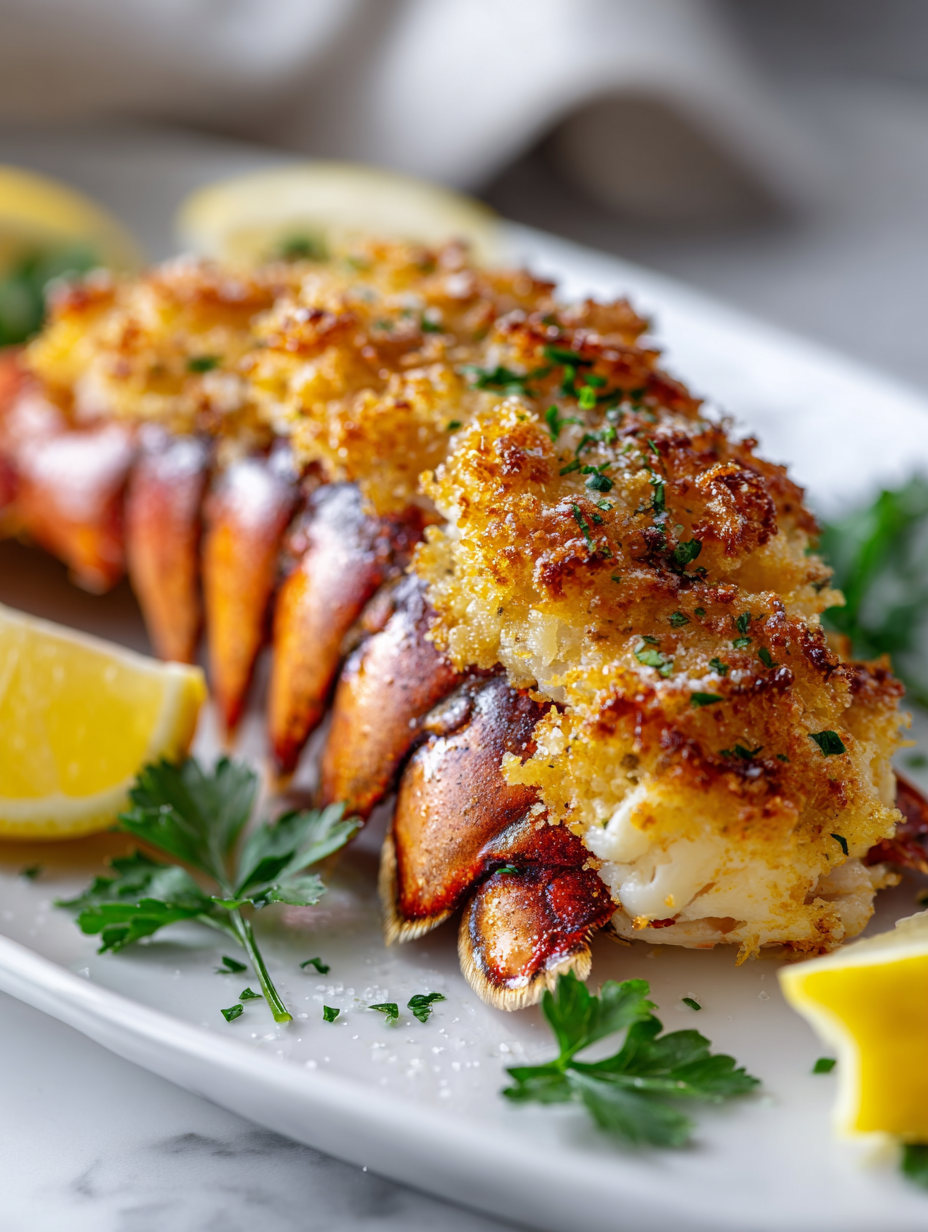
Parmesan Crusted Lobster Tail
Ingredients
Equipment
Method
- Preheat your oven to 200°C (392°F). Pat the lobster tails dry to ensure the crust adheres well.
- Using a boning knife, carefully cut down the top of each lobster shell from the fan end to the tail base, avoiding the meat. Gently lift the shell apart and loosen the meat from the shell, keeping it attached at the tail end, then rest the lobster meat on top of the shell.
- In a small bowl, mix the grated Parmesan, toasted panko breadcrumbs, garlic powder, lemon zest, and chopped parsley until well combined. Melt the butter until fragrant and slightly golden.
- Brush the lobster meat generously with the melted butter, ensuring all surfaces are coated evenly. This helps the crust stick and gives the lobster richness.
- Sprinkle the parmesan mixture evenly over the lobster meat, pressing gently to help it adhere. Use a silicone brush to brush more melted butter over the crust for extra flavor and browning.
- Place the lobster tails on a parchment-lined baking sheet, shell side down or flat for stability. Bake in the preheated oven for 12-15 minutes, until the crust turns golden and crispy, and the lobster meat is opaque and firm.
- Check the internal temperature with a probe; it should read around 60°C (140°F). The crust should be bubbling and golden brown, and the lobster should be tender and opaque when poked gently.
- Remove from the oven and let rest for 2 minutes. Garnish with extra parsley and lemon wedges for squeezing, then serve immediately to enjoy the crispy crust and succulent lobster meat.
Tips for Perfect Parmesan Crust
- Use room temperature butter to ensure an even, golden crust without burning.
- Mix the Parmesan with toasted panko thoroughly for a crispy, cheesy crust that sticks well.
- Apply the crust mixture gently and evenly, pressing it onto the lobster for maximum adhesion.
- Bake at 200°C (392°F) until the crust is golden and bubbly—about 12-15 minutes—watch for color cues.
- Use a probe thermometer to check that lobster meat hits 60°C (140°F) for perfect doneness without overcooking.
- Broil for the last minute if you want a more deeply browned, crispy Parmesan topping—keep a close eye to prevent burning.
- Rest the lobster for 2 minutes after baking; it helps juices settle and preserves that crispy crust.
Common mistakes and how to fix them
- FORGOT to preheat the oven → Always preheat for even baking and crust formation.
- DUMPED cheese mixture directly on lobster → Press gently for better crust adhesion.
- OVER-TORCHED crust → Reduce oven temp or cover with foil if crust browns too fast.
- MISSED resting time → Rest lobster 2 minutes to keep juices in and crust crisp.
Quick fixes and pantry swaps
- When sauce shimmers and smells toasted, it’s ready—don’t rush the sautéing process.
- Splash a little lemon juice to brighten and mask any lingering fishy smell if lobster seems off.
- Patch a soggy crust by broiling for 30 seconds—keep a close eye to prevent burning.
- Shield crust from over-browning by tenting foil if it turns too dark before lobster is cooked.
- DUMPED too much salt? Rinse lobster briefly, then pat dry before reapplying crust for better adhesion.
Prep, store, and reheat tips
- Prep the lobster tails: Cut and clean them a day ahead, then keep covered in the fridge to prevent drying out, ensuring they stay fresh and firm.
- Make the parmesan crust mixture: Prepare and store in an airtight container for up to 24 hours; keep in the fridge to maintain freshness and prevent moisture absorption.
- Refrigerate baked lobster: Once cooked, leftovers can be stored in an airtight container for up to 2 days. Reheat gently to preserve texture and flavor.
- Reheating tips: Warm in a 180°C (350°F) oven for 5-7 minutes, until heated through and crust is crisp again. Avoid microwave reheating to prevent sogginess.
Top questions about Parmesan Crusted Lobster
1. How do I know when the lobster is cooked?
A quick way to check is the lobster meat should be opaque and firm, not translucent or rubbery.
2. Can I use pre-grated cheese?
Use freshly grated Parmesan for the best flavor and melting, which creates that golden, crispy crust.
3. What’s the ideal oven temperature and time?
Bake at 200°C (392°F) for about 12-15 minutes until the crust is golden and lobster is opaque.
4. Can I use frozen lobster tails?
Yes, frozen lobster thawed completely and patted dry works well, but fresh lobster has a brighter sweetness.
5. How do I ensure the crust stays on?
Apply the crust mixture gently, pressing it onto the lobster meat to help it stick during baking.
6. Can I brown the crust more?
Broiling for an extra minute can deepen the browning, but watch closely to prevent burning.
7. Should I rest the lobster before serving?
Rest the lobster for 2 minutes after baking to let juices settle and keep the crust crispy.
8. What can I substitute for breadcrumbs?
Use toasted panko breadcrumbs for crunch, or crushed Ritz crackers for a richer flavor—both work well.
9. Can I omit the lemon zest?
Lemon zest brightens the dish with citrus aroma and flavor; lime zest adds a slightly different zing.
10. How do I prevent the crust from being soggy?
Mix the parmesan with toasted breadcrumbs thoroughly for even cheese distribution and crust adhesion.
This dish is a reminder that simple ingredients like parmesan and lobster can create something unexpectedly special. The crispy crust paired with tender meat makes for a memorable meal, even on a busy weeknight. It’s a little indulgence that feels both luxurious and accessible, right in your own kitchen.
Cooking this lobster tail gives me a sense of satisfaction — it’s honest, straightforward, and incredibly tasty. Sharing it with someone who appreciates that crispy, cheesy bite makes all the effort worth it. Sometimes, it’s the simplest pleasures that stay with you long after the last bite.

Hi there! I’m Himani and welcome to Val’s Recipe Box. This little corner of the internet didn’t begin with me. It began with Val my neighbourhood aunt whose kitchen held more warmth than any fireplace ever could.


 This little corner of the internet didn’t begin with me.
It began with Val my neighbourhood aunt whose kitchen held more warmth than any fireplace ever could.
She was more of a friend and I’ve come to know her in the most unexpected way.
This little corner of the internet didn’t begin with me.
It began with Val my neighbourhood aunt whose kitchen held more warmth than any fireplace ever could.
She was more of a friend and I’ve come to know her in the most unexpected way.