
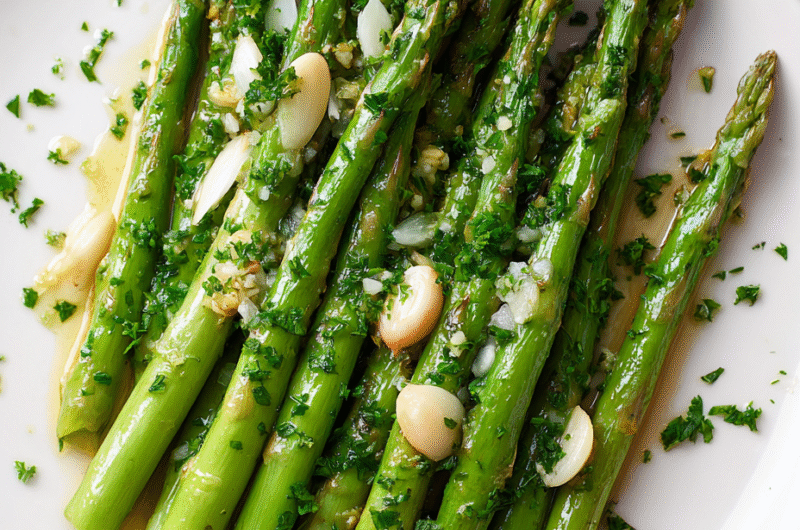
This oven roasted asparagus isn’t about perfect uniformity or pristine presentation. It’s about embracing the slightly charred tips, the wilted stems, and the honest beauty of simple, imperfectly cooked vegetables. Sometimes, the best way to appreciate a vegetable is to let it get a little wild in the heat, turning smoky and tender in its own time.
The garlic and olive oil don’t just flavor—they transform the humble spear into something with depth and a whisper of richness. It’s the kind of dish that feels like a quiet nod to home cooking, where the focus is on honest flavors and textures that remind you of lazy weekend mornings or spontaneous dinners with friends. No fuss, just good, straightforward food that celebrates the season’s best.
Focusing on the overlooked beauty of simple, imperfectly roasted asparagus, celebrating the charred tips and slightly wilted stems as a testament to honest home cooking, rather than pristine restaurant plating.
The story behind this recipe
I first discovered this recipe during a chaotic week when I needed something quick, honest, and flavorful. Roasting asparagus with garlic and olive oil became my go-to because it’s forgiving—no fuss, just heat and patience. It reminds me of those evenings when I just want a vegetable that’s rich in flavor but feels like a treat, not a chore. Over time, I’ve tweaked it to get that perfect balance of smoky edges and tender stems, always returning to the simplicity that makes it special.
Key ingredients and tips
- Asparagus: I look for firm, bright green stalks with tight tips—anything limp or pale needs to be tossed. You want that crisp snap and vibrant color, especially after roasting, when the green deepens and the tips char slightly.
- Olive oil: I use a good extra-virgin because it brings a rich, fruity aroma that turns almost nutty when roasted. If you prefer a milder flavor, skip the robust varieties and opt for something lighter, but don’t skimp on quality—your nose will thank you.
- Garlic: I prefer thinly sliced cloves because they toast evenly and release a fragrant, golden aroma. For a subtler garlic flavor, dice it smaller, but watch carefully to prevent burning—burnt garlic turns bitter fast.
- Salt: I pinch sea salt generously to enhance the natural sweetness of the asparagus. If you’re watching your sodium, sprinkle a light pinch and add more after roasting if needed—flavor builds as it rests.
- Black pepper: I like freshly cracked black pepper for a bit of bite. Grind just before roasting for the sharpest, freshest flavor—coarse is best for that rustic look and texture.
- Lemon zest (optional): I sometimes add a tiny sprinkle of lemon zest after roasting for brightness. If you want a citrus kick, squeeze a little lemon juice just before serving—brightens everything up.
- Parmesan (optional): I sprinkle a little grated Parmesan right after roasting for a salty, umami finish. If you’re dairy-free, a sprinkle of nutritional yeast adds that cheesy vibe without the dairy—still delicious.
Spotlight on key ingredients
Olive oil:
- Asparagus: I look for firm, bright green stalks with tight tips—anything limp or pale needs to be tossed. You want that crisp snap and vibrant color, especially after roasting, when the green deepens and the tips char slightly.
- I use a good extra-virgin because it brings a rich, fruity aroma that turns almost nutty when roasted. If you prefer a milder flavor, skip the robust varieties and opt for something lighter, but don’t skimp on quality—your nose will thank you.
- Garlic: I prefer thinly sliced cloves because they toast evenly and release a fragrant, golden aroma. For a subtler garlic flavor, dice it smaller, but watch carefully to prevent burning—burnt garlic turns bitter fast.
Garlic:
- Thin slices of garlic toast quickly, releasing a warm, fragrant aroma. Watch for golden edges—burnt garlic ruins the flavor fast.
- Asparagus: During roasting, the tips develop a smoky char that intensifies their flavor, while the stems soften but retain a slight resistance if cooked right.
Notes for ingredient swaps
- Dairy-Free: Nutritional yeast can replace Parmesan for a cheesy flavor, but it won’t melt or have the same salty richness.
- Oil Variations: Avocado or grapeseed oil can be used instead of olive oil, offering a mild flavor but less fruity aroma.
- Garlic Alternatives: Shallots or garlic powder can work if fresh garlic isn’t available; use half as much to avoid overpowering.
- Salt Options: Kosher salt or sea salt are best, but table salt works in a pinch—just use less to prevent over-salting.
- Herb Boost: Fresh thyme or rosemary can add herbal notes—add near the end to keep their brightness intact.
- Citrus Swap: Lemon zest or juice brightens the dish; lime or orange zest can offer a different but complementary citrus note.
- Add-Ons: Red pepper flakes or smoked paprika can introduce heat or smoky depth—use sparingly to avoid overpowering the asparagus.
Equipment & Tools
- Baking sheet: To roast the asparagus evenly in a hot oven.
- Parchment paper or silicone mat: Prevent sticking and make cleanup easier.
- Sharp knife: Trim woody ends and slice garlic thinly.
- Large mixing bowl: Toss asparagus with oil and seasonings.
Guide to oven roasted asparagus
- Preheat your oven to 220°C (430°F). Line a baking sheet with parchment paper or a silicone mat for easy cleanup.
- Trim the woody ends off the asparagus, about 1-2 inches, and discard or save for stock. Keep the spears uniform for even roasting.
- Place the asparagus in a large bowl. Drizzle generously with about 2 tablespoons of good-quality olive oil. Toss to coat evenly.
- Slice 3-4 garlic cloves thinly. Scatter over the asparagus. Add a pinch of sea salt and freshly cracked black pepper. Toss again until everything is well coated.
- Arrange the asparagus in a single layer on the prepared baking sheet. Spread them out so they aren’t crowded—this helps them char and roast evenly.
- Roast in the oven for 12-15 minutes. Check after 10 minutes—look for deepening color, especially at the tips, and a slight wilt in the stems.
- a. When the tips are nicely charred and the stems are tender but still have a slight resistance, they’re done.
- b. The garlic should be fragrant and golden, not burnt. If it starts to blacken too much, pull the pan earlier.
- c. The asparagus should have a smoky aroma, with edges that look slightly crispy. If not, give them a few more minutes, watching carefully.
- Remove from oven and transfer to a serving dish. Let sit for 2 minutes—this allows the flavors to settle and makes plating easier.
- Finish with a light drizzle of olive oil or a squeeze of lemon juice if desired. Serve warm, ideally with a sprinkle of Parmesan or nutritional yeast for extra flavor.
Let the roasted asparagus rest for 2 minutes. Finish with a squeeze of lemon or a drizzle of olive oil. Serve directly on the platter, garnished with cheese or herbs if desired.
How to Know It’s Done
- Deep green color with charred tips
- Tender yet still firm stems
- Aromatic garlic and smoky aroma
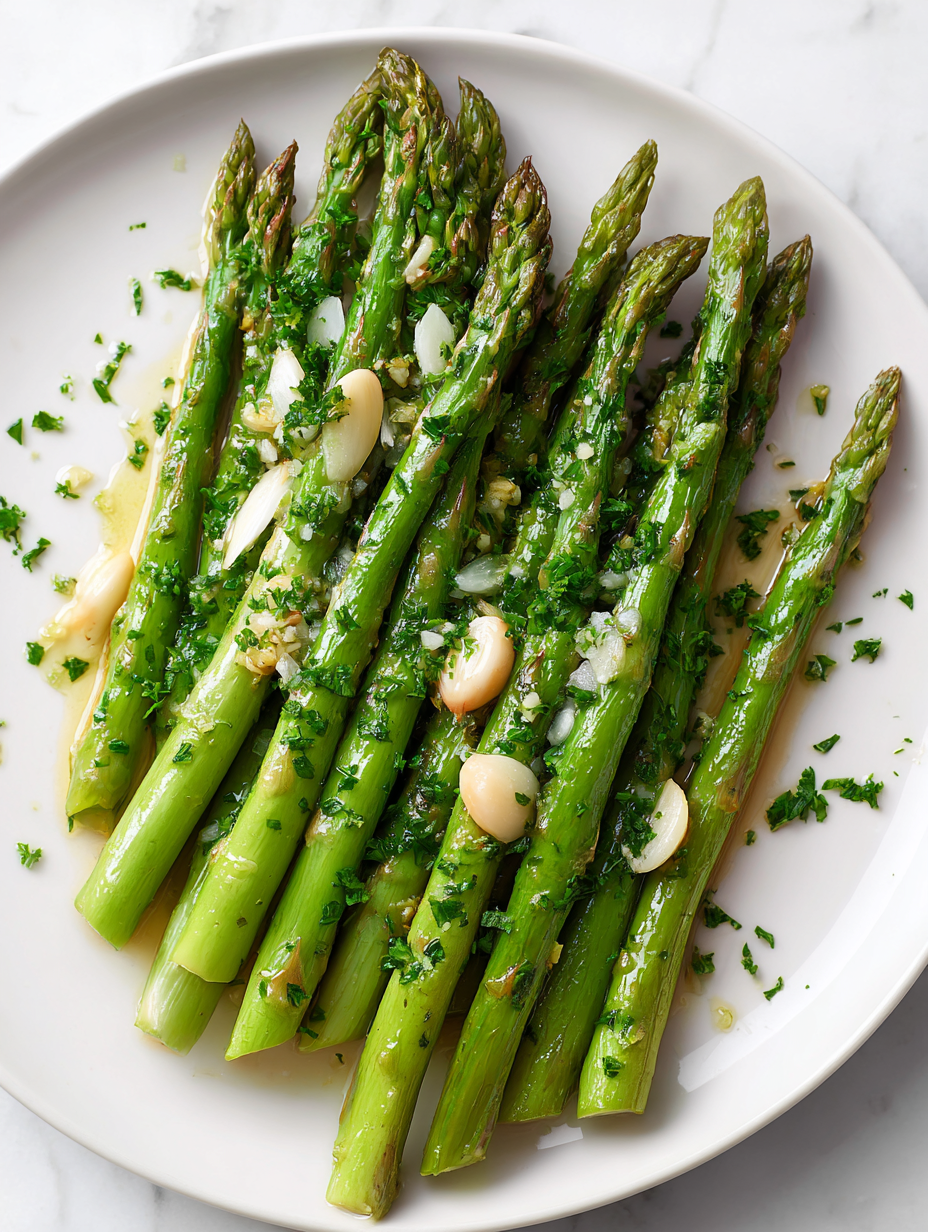
Oven Roasted Asparagus with Garlic and Olive Oil
Ingredients
Equipment
Method
- Preheat your oven to 220°C (430°F). Line a baking sheet with parchment paper or a silicone mat to keep things tidy and prevent sticking.
- Trim the woody ends off the asparagus, about 1-2 inches from the bottom. Keep the spears uniform in size for even roasting and a consistent look.
- Place the asparagus in a large mixing bowl. Drizzle generously with the olive oil and toss to coat all the spears evenly—this helps them roast with a beautiful, even color.
- Thinly slice the garlic cloves and scatter them over the coated asparagus. Sprinkle with a pinch of sea salt and some freshly cracked black pepper for seasoning.
- Arrange the asparagus in a single layer on the prepared baking sheet, spreading them out so they aren’t crowded. This allows the edges to char slightly and ensures even roasting.
- Roast in the oven for about 12-15 minutes, until the tips are deeply charred and the stems are tender but still hold a slight resistance when poked with a fork.
- Check the asparagus after 10 minutes—look for smoky, charred tips and tender stems. If the garlic slices are golden and fragrant, the dish is nearly ready. If the tips need more color, leave it for a few more minutes, but keep an eye to prevent burning.
- Remove the asparagus from the oven and transfer to a serving dish. Let it rest for a couple of minutes; this helps the flavors settle and makes it easier to serve.
- If desired, zest a little lemon over the hot asparagus or squeeze a splash of lemon juice for added brightness. Finish with a sprinkle of Parmesan or nutritional yeast for a savory touch.
- Serve warm, enjoying the smoky tips, tender stems, and fragrant garlic. This dish pairs beautifully with everything from grilled meats to simple grains for a wholesome, satisfying meal.
Pro tips for perfect oven roasted asparagus
- Bolded garlic slices: Arrange garlic evenly for uniform toasting and fragrant aroma.
- High heat: Roast at 220°C (430°F) to achieve smoky charred tips without overcooking stems.
- Even spacing: Spread asparagus in a single layer; crowding causes steaming instead of roasting.
- Check early: Start checking at 10 minutes for deep green color and slight char, avoid burning garlic.
- Finish with zest: A squeeze of lemon brightens flavors just after roasting, adding a fresh zing.
- Use quality oil: Good extra-virgin olive oil will deepen in flavor and contribute to crispy edges.
- Adjust timing: Thinner spears roast faster; thicker ones may need an extra minute for perfect tenderness.
Common mistakes and how to fix them
- FORGOT to trim asparagus ends → Trim woody ends for even roasting and better texture.
- DUMPED oil directly on asparagus → Toss thoroughly to coat evenly, preventing uneven charring.
- OVER-TORCHED garlic → Keep a close eye; remove early if garlic turns black and bitter.
- MISSED preheating oven → Always preheat to ensure proper roasting and caramelization.
Quick fixes and pantry swaps
- When asparagus is limp, splash with cold water and give a gentle bend to check freshness.
- If garlic burns quickly, patch with a sprinkle of fresh slices and reduce oven temperature slightly.
- DUMPED oil makes asparagus greasy—spread out more and toss again before roasting.
- Over-torched tips? Shield with foil or remove early to prevent bitterness.
- Splash lemon juice after roasting for bright flavor and to reduce any lingering smoky scent.
Prep, store, and reheat tips
- Trim and prep the asparagus a few hours ahead; keep chilled in a paper towel-lined container for crispness.
- Roasted asparagus keeps well in the fridge for up to 2 days; reheat in a warm oven until just heated through, watching for loss of crispness.
- Refrigerated asparagus may lose some of its smoky aroma but still retains the tender, flavorful quality if stored properly.
- Reheat by spreading on a baking sheet and warming in a 180°C (350°F) oven for 5-8 minutes until fragrant and warm, with a slight shimmer of oil reappearing.
Top questions about oven roasted asparagus
1. How do I pick the best asparagus?
Look for firm, bright green stalks with tight tips. Limp or pale asparagus won’t roast well and can turn soggy.
2. What kind of olive oil works best?
Use a good-quality extra-virgin olive oil for depth of flavor. It adds a fruity aroma and helps the garlic toast nicely.
3. Should I chop or slice the garlic?
Slice garlic thinly so it roasts evenly and releases a fragrant aroma without burning. Keep an eye on it in the oven.
4. How long should I roast the asparagus?
Roast at 220°C (430°F) for about 12-15 minutes until tips are charred and stems are tender. Check after 10 minutes for your preferred doneness.
5. What if the tips burn?
If the tips burn too quickly, cover with foil or remove early. For uneven cooking, spread asparagus in a single layer.
6. Can I make this dairy-free?
You can substitute nutritional yeast for Parmesan if dairy-free. It offers a cheesy flavor but won’t melt or be as salty.
7. How do I add brightness to the dish?
Add a squeeze of lemon juice or zest right after roasting for brightness. It enhances the smoky, tender flavor beautifully.
8. How long does roasted asparagus last?
Refrigerate roasted asparagus in an airtight container for up to 2 days. Reheat in a warm oven until fragrant and slightly shimmering.
9. How do I fix overcooked or limp asparagus?
If the asparagus is limp, splash with cold water and give a gentle bend. For burnt garlic, patch with fresh slices and lower the oven temperature.
10. Any quick tips for better roasting?
Always preheat your oven for even roasting. Use a baking sheet lined with parchment for easy cleanup and crisp edges.
This roasted asparagus recipe is a reminder that simplicity often yields the most satisfying flavors. The smoky tips and tender stems come together with just garlic and good olive oil, making it a perfect side or snack. Sometimes, the best dishes are the ones that let the natural beauty of ingredients shine through.
In a world of complex recipes, this one keeps it honest and straightforward. It’s a dish that welcomes spontaneous tweaks—more garlic, a squeeze of lemon, or a sprinkle of cheese. And in those quiet moments of roasting, I find a little pause of appreciation for humble, honest home cooking.

Hi there! I’m Himani and welcome to Val’s Recipe Box. This little corner of the internet didn’t begin with me. It began with Val my neighbourhood aunt whose kitchen held more warmth than any fireplace ever could.


 This little corner of the internet didn’t begin with me.
It began with Val my neighbourhood aunt whose kitchen held more warmth than any fireplace ever could.
She was more of a friend and I’ve come to know her in the most unexpected way.
This little corner of the internet didn’t begin with me.
It began with Val my neighbourhood aunt whose kitchen held more warmth than any fireplace ever could.
She was more of a friend and I’ve come to know her in the most unexpected way.