
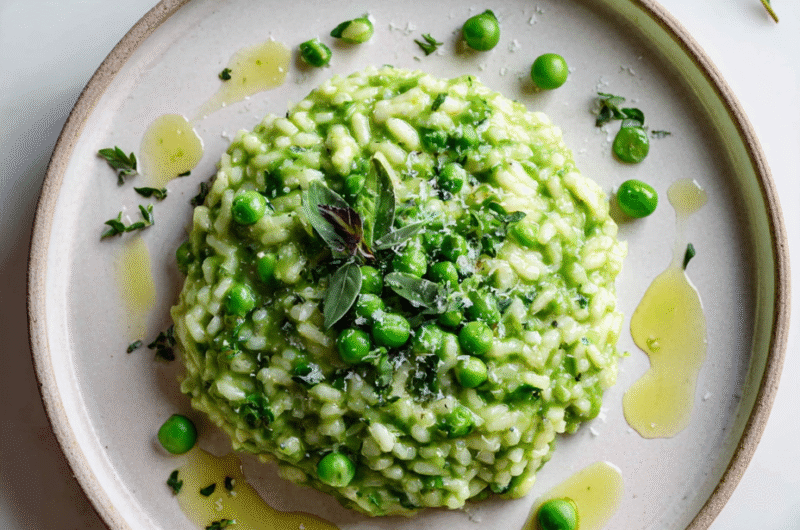
Green peas might seem like a humble ingredient, but when they’re at their peak—bright, slightly sweet, and bursting with grassy freshness—they can elevate a simple risotto to something unexpectedly vibrant. I love making this dish in early spring, when the garden is just waking up and those tiny pods are at their sweetest. There’s a real magic in turning fresh, almost raw-tasting peas into a creamy, cheesy comfort that feels like a warm hug on a cool day.
This recipe started as a way to use up excess peas from my garden, but it quickly became a go-to for its lively flavor and ease. The trick is not to overcook the peas—just a quick blanch to preserve their color and crunch—then fold them into the risotto at the very end. The result? A dish that’s creamy, with bursts of sweetness in every bite, and a whisper of spring freshness that’s hard to beat.
Focusing on the surprising sweetness of fresh green peas and how their vibrant, slightly grassy flavor transforms a simple risotto into something unexpectedly bright and comforting, especially during early spring when peas are at their peak.
The story behind this recipe
- This dish grew out of a lazy Sunday afternoon when I had a handful of fresh peas and a craving for something bright and comforting. I remember the moment I tasted the first spoonful—the sweet, grassy freshness of the peas paired with the rich, cheesy risotto—telling me I’d stumbled on something special. It’s become a little ritual for me, a reminder that simple ingredients can surprise you when handled with patience and care.
- The idea for this recipe was born from a desire to capture that fleeting peak of spring peas, with their vivid color and sweet snap. I love how they add a natural sweetness that balances the creamy Parmesan and the gentle bite of the rice. It’s a dish rooted in the season’s fleeting magic, made more meaningful by the memories of early mornings and garden harvests.
- heading
- story_type
Ingredient breakdown
- Fresh green peas: I love popping the bright, slightly sweet peas into boiling water for just a minute—preserves their vivid color and snap. Skip this step if your peas are very tender already, but don’t overcook, or they’ll turn mushy and dull.
- Parmesan cheese: I use a good aged Parmesan, the kind that’s sharp and crumbly. Grate it finely so it melts smoothly into the risotto. If you want to skip dairy, nutritional yeast adds a cheesy note but lacks that oily richness.
- Arborio rice: The classic choice, starchy and creamy when cooked right. Don’t rinse it; that starchy surface is what gives risotto its velvety texture. For an extra nutty flavor, try a splash of toasted rice flour in the broth.
- Vegetable broth: Use a homemade or good-quality store-bought broth. Keep it hot on the stove; hot liquid is key to a creamy, evenly cooked risotto. If it cools, the rice can seize up and turn gummy.
- Onion and garlic: These form the flavor base. Sweat them gently in butter or oil until translucent. If you rush this step, the risotto can taste flat—patience here yields depth.
- Butter: Adds richness and gloss. I toss in a dollop at the end for a shiny finish. If you want a vegan version, try coconut oil for a subtle sweetness and richness.
- Olive oil: I use a good extra virgin for sautéing—brings a fruity note that brightens the whole dish. Skip this if you’re aiming for a lighter version, but don’t skimp on flavor here.
Spotlight on key ingredients
Green peas:
- Fresh green peas: I love their bright, slightly sweet burst when cooked just until tender—preserves their lively color and crunch. If you skip the blanching, they might turn dull and mushy.
- Parmesan cheese: I prefer a sharp, aged Parmesan that melts smoothly into the risotto, creating that irresistible savory goo. Using a pre-grated kind can sometimes be grainy, so grate just before adding.
Arborio rice:
- Its starchy nature is what makes the risotto creamy. When properly cooked, the grains are tender yet still have a slight bite, almost velvety but not mushy.
- Olive oil: I use a good extra virgin for sautéing, which adds a fruity depth. During cooking, it shimmers and infuses the rice with flavor—skimping on this can leave the dish flat.
Notes for ingredient swaps
- Dairy-Free: Nutritional yeast can replace Parmesan, adding a cheesy flavor without the richness. It’s a bit nuttier and less oily, but still satisfying.
- Vegan: Coconut oil or vegan butter for sautéing instead of butter and olive oil. It’ll add a subtle sweetness and a different aroma but keeps things rich.
- Gluten-Free: Arborio rice is naturally gluten-free, but if you want a different texture, try Carnaroli or Vialone Nano—similar creaminess, slightly different bite.
- Fresh Peas: Frozen peas work in a pinch; just thaw and drain well. They tend to be softer, so add a minute earlier to ensure they stay bright and slightly firm.
- Cheese: Pecorino Romano can be a sharper alternative to Parmesan. Use the same amount, but expect a saltier, more pungent profile.
- Broth: Vegetable broth can be swapped for chicken broth for a richer depth. Keep in mind, it will alter the flavor slightly—more savory and hearty.
- Onion & Garlic: Shallots make a milder, sweeter base if you prefer less pungency. Adjust cooking time slightly, as they caramelize quicker.
Equipment & Tools
- Wide pan: Ensure even heat and space for stirring the risotto.
- Wooden spoon: Gentle stirring to release starch and prevent sticking.
- Small pot: Blanching peas quickly while preserving their brightness.
- Ladle: Adding hot broth gradually for controlled cooking.
Step-by-step guide to green pea risotto
- Equipment & Tools: Gather a wide, heavy-bottomed pan for even heat; a wooden spoon for stirring; a small pot for boiling peas; and a ladle for adding broth. Have your cheese grated and peas blanched before starting.
- Heat 1 tbsp olive oil and 1 tbsp butter over medium heat (about 160°C/320°F). Add finely chopped onion. Cook gently, stirring often, until translucent and fragrant, about 5 minutes. The onion should be soft and slightly shimmering.
- Add 200g Arborio rice to the pan. Stir for 1-2 minutes until the grains are well-coated and slightly translucent at the edges. You should smell a toasty note, like popcorn, and see a gentle crackle.
- Pour in 250ml hot vegetable broth. Stir until mostly absorbed, then add another ladleful. Maintain a simmer, adding broth gradually. Keep stirring frequently to release starch, creating a creamy texture. When the rice looks milky and the edges are just tender, about 15 minutes, check the texture.
- Meanwhile, blanch 150g fresh peas in boiling water for 1 minute until bright green and tender. Drain and set aside. Taste to ensure they still have a slight crunch, with a fresh, sweet aroma.
- As the risotto nears doneness, start tasting. When rice is tender but still has a slight bite (al dente), and the mixture is creamy but not soupy, it’s time to fold in peas and cheese. Remove from heat.
- Gently fold in the blanched peas, 50g grated Parmesan, and a small knob of butter for shine. Stir until cheese melts and peas are evenly distributed. Adjust seasoning with salt and pepper to taste. The risotto should be bright green speckled with cheese and smell savory.
- Rest for 2 minutes. Serve immediately, garnished with additional Parmesan if desired. The texture should be rich and velvety, with bursts of sweet pea flavor and a cheesy, salty finish.
Let the risotto rest for 2 minutes off heat, then serve immediately. Finish with a sprinkle of Parmesan and a drizzle of olive oil if desired. The dish should be velvety, with a slight bite to the rice and bursts of sweet pea flavor in every spoonful.
How to Know It’s Done
- Rice is al dente, with a slight bite and creamy consistency.
- Color is vibrant green with peas visibly bright and fresh.
- Aroma is rich with hints of Parmesan, butter, and fresh peas.
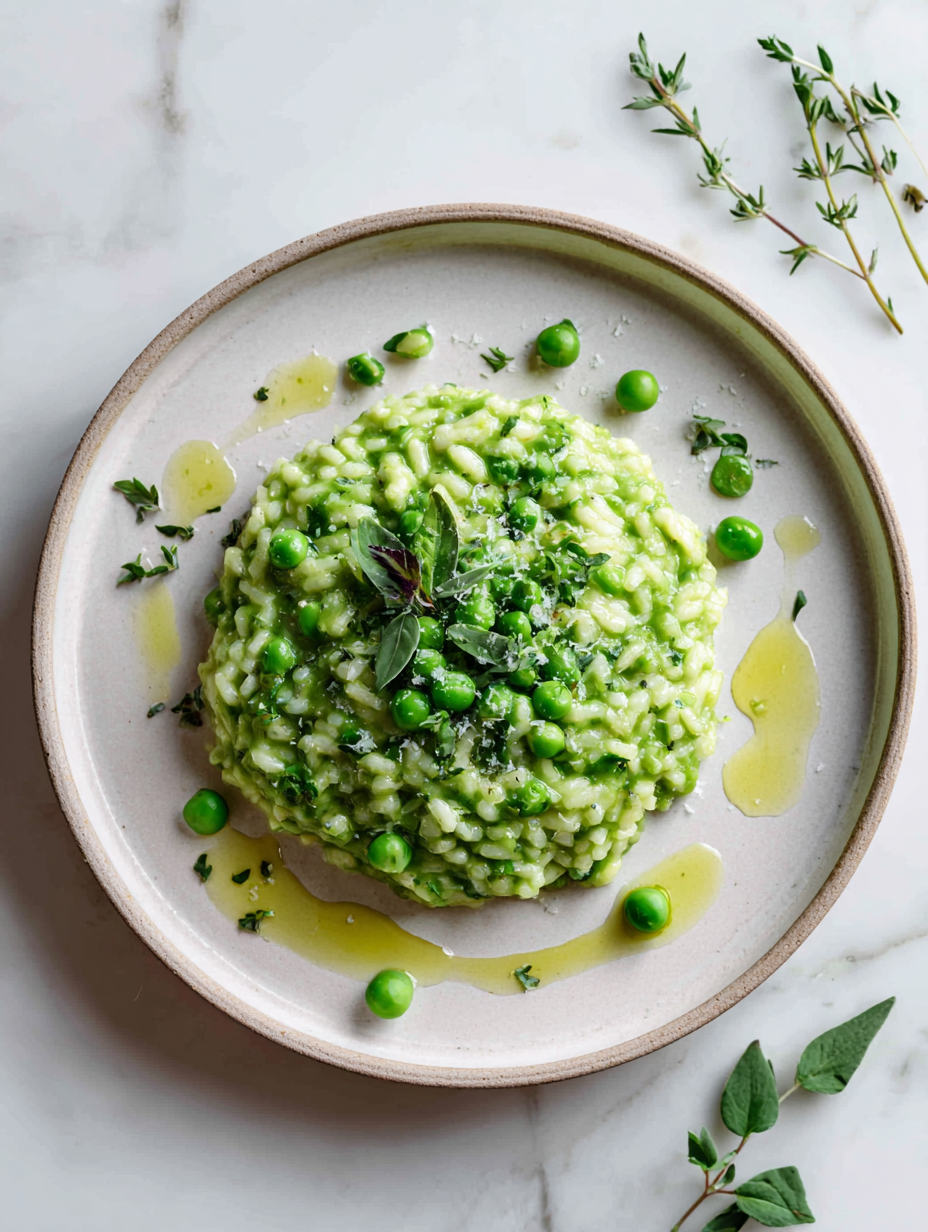
Spring Green Pea Risotto
Ingredients
Equipment
Method
- Heat the olive oil and butter together in a wide pan over medium heat until shimmering and fragrant.
- Add the finely chopped onion and cook, stirring often, until translucent and soft, about 5 minutes. The onion should smell sweet and look slightly glossy.
- Stir in the arborio rice, cooking for 1-2 minutes until the grains are well coated and start to look slightly translucent at the edges with a faint toasty aroma filling the air.
- Pour in a ladleful of hot vegetable broth, stirring constantly until mostly absorbed. Continue adding broth, one ladle at a time, allowing each addition to be absorbed before adding the next, maintaining a gentle simmer.
- After about 15 minutes, when the rice is tender but still has a slight bite and the mixture is creamy, start preparing the peas.
- Meanwhile, blanch the green peas in boiling water for 1 minute until bright green and tender. Drain and set aside.
- Gently fold in the blanched peas, grated Parmesan, and a small knob of butter, stirring until the cheese melts and peas are evenly distributed, creating a vibrant, fragrant mixture.
- Remove from heat and let sit for 2 minutes, allowing the flavors to meld and the risotto to settle into a luscious, velvety consistency.
- Serve immediately, garnished with extra Parmesan if desired, and enjoy the bright, comforting flavors of this spring-inspired risotto.
Pro tips for perfect green pea risotto
- Bold flavors early: Start with a hot pan and fragrant onion to build a savory base from the get-go.
- Stir often: Keep the rice moving gently to release starch and achieve that signature creamy texture.
- Gradual broth addition: Add hot broth in small ladles, stirring constantly, to coax out maximum creaminess.
- Peas at the end: Briefly blanch peas separately; fold them in at the last step to keep their bright color and crunch.
- Taste as you go: Check the rice for al dente texture and adjust liquid or cooking time as needed.
- Finish with richness: Off heat, stir in Parmesan and butter to melt into the risotto and add a glossy sheen.
- Serve immediately: Risotto waits for no one—best enjoyed velvety, warm, with a burst of green freshness.
Common mistakes and how to fix them
- FORGOT to watch rice; overcooked rice turns mushy and loses texture.
- DUMPED in broth too quickly; slow addition keeps risotto creamy and controlled.
- OVER-TORCHED peas; blanch briefly and add at the end to avoid dull color and mush.
- MISSED stirring; frequent stirring releases starch for that velvety finish.
Quick fixes and pantry swaps
- When peas turn dull, splash them with lemon juice for a bright shimmer.
- If risotto is too thick, stir in a splash of hot broth to loosen texture.
- DUMPED in too much broth? Quickly add more Parmesan and stir vigorously.
- Overcooked peas? Rescue with a quick rinse in cold water and fold into risotto.
- Splash a little olive oil if risotto crackles as you stir—silky finish guaranteed.
Prep, store, and reheat tips
- Prep the broth and grate cheese ahead; store in airtight containers for up to 2 days in the fridge. The aroma will be rich and cheesy when you start cooking.
- Blanch peas in boiling water for 1 minute, then shock in ice water. Keep in the fridge for up to 24 hours; they’ll stay bright and crisp.
- Chop onions and garlic in advance; store in a small container. Their pungent aroma will be fresh and ready to sauté.
- Cook and cool the risotto slightly before refrigerating; it will thicken, so add a splash of hot broth when reheating to loosen it up.
- Reheat gently in a pan over low heat, stirring often. Expect the texture to be slightly firmer but still creamy, with the sweet aroma of peas filling the kitchen.
Top questions about green pea risotto
1. Can I use frozen peas instead of fresh?
Fresh green peas give the risotto a bright, sweet flavor and a slight crunch that frozen peas can’t quite match. Blanch them briefly to preserve their vibrant color and texture.
2. How do I keep the peas from turning dull or mushy?
Yes, but add frozen peas a minute or two earlier than fresh to ensure they stay bright and don’t turn mushy. Thaw and drain well first.
3. Can I skip Parmesan or use a different cheese?
Use a good quality Parmesan that smells nutty and tastes sharp. Grate it just before adding to ensure it melts smoothly into the risotto.
4. What if I want a dairy-free version?
Absolutely. Nutritional yeast adds a cheesy note without dairy, but it lacks the oily richness of Parmesan. You might need a splash of olive oil to compensate.
5. How do I know when to add the broth?
Cook the onions gently until translucent and fragrant, about 5 minutes. This builds a savory base that balances the sweetness of the peas.
6. How do I get that perfect creamy texture?
Add the broth gradually, a ladleful at a time, stirring constantly. When the rice looks creamy and is just tender, it’s ready.
7. How do I know when the risotto is done?
Taste the rice for al dente—slightly firm but tender. The color should be vibrant green, and the mixture creamy and fragrant.
8. What if my risotto turns out too thick or gloopy?
If risotto thickens too much, stir in a splash of hot broth to loosen it up and bring back creaminess.
9. How should I reheat leftover risotto?
Reheat leftovers gently over low heat, stirring often. Add a little broth if it thickens or loses its creaminess during reheating.
10. Can I cook this ahead of time?
Risotto is best served immediately for that velvety, hot texture. If needed, keep it warm in a low oven until ready to plate.
Making this green pea risotto with Parmesan feels like capturing a fleeting slice of spring. Each bite delivers a gentle sweetness balanced by cheesy richness, reminding me why simple ingredients can surprise us when treated with care.
It’s a dish that celebrates freshness and patience, perfect for a quiet moment in the kitchen when you want something comforting yet lively. No matter the season, it’s a reminder that good food is often about highlighting what’s at its peak right now.

Hi there! I’m Himani and welcome to Val’s Recipe Box. This little corner of the internet didn’t begin with me. It began with Val my neighbourhood aunt whose kitchen held more warmth than any fireplace ever could.


 This little corner of the internet didn’t begin with me.
It began with Val my neighbourhood aunt whose kitchen held more warmth than any fireplace ever could.
She was more of a friend and I’ve come to know her in the most unexpected way.
This little corner of the internet didn’t begin with me.
It began with Val my neighbourhood aunt whose kitchen held more warmth than any fireplace ever could.
She was more of a friend and I’ve come to know her in the most unexpected way.