
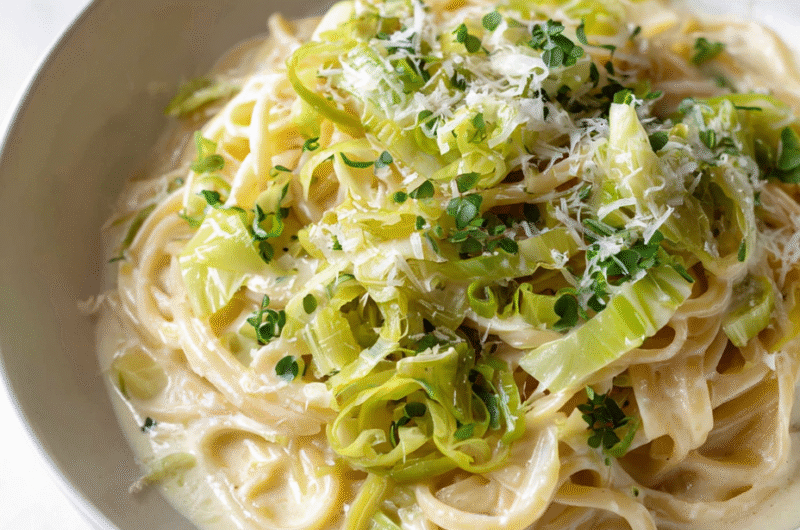
Leeks often get overshadowed by more glamorous vegetables, but when cooked slowly until golden and sweet, they reveal a depth of flavor that’s surprisingly rich. This creamy leek pasta is my ode to that overlooked vegetable, turning simple ingredients into something deeply satisfying without fuss.
There’s a quiet pleasure in watching leeks caramelize in butter, their gentle aroma filling the kitchen with a nostalgic warmth. Tossed with al dente pasta and finished with a splash of cream, this dish feels like a cozy secret — one I keep tucked away for those quiet nights when comfort is all I crave.
What I love about this recipe is how it transforms humble, everyday ingredients into a dish that feels special, yet effortless. It’s a reminder that sometimes the simplest flavors, treated with patience and care, make the most memorable meals.
Focusing on the overlooked beauty of gently caramelized leeks, this recipe elevates humble ingredients into a rich, comforting pasta that celebrates slow cooking and the subtle sweetness of leeks.
The story behind this recipe
- This recipe grew out of a need to make something cozy and honest after a long, busy week. Leeks always reminded me of my grandmother’s kitchen—slow, gentle, filled with the smell of butter and caramelizing onions. I wanted to capture that warmth in a pasta dish, something simple but layered with flavor.
- One particularly chilly evening, I threw some leeks into a pan with butter, letting them soften and turn golden. The smell was so inviting I couldn’t resist adding a splash of cream and some pasta. It felt like a small act of comfort, a reminder that humble ingredients can create something special when treated with care.
- heading: The story behind this recipe
Key ingredient insights
- Leeks: I love the way their gentle sweetness develops as they slowly caramelize, filling the kitchen with a buttery aroma. Skip the slow cook if you’re in a rush; you’ll miss that depth of flavor.
- Heavy cream: It’s the creamy backbone of this dish, but if you want a lighter version, try Greek yogurt or coconut milk. Just add a splash at the end and stir gently.
- Pasta: I prefer al dente, with a slight chew, but feel free to cook a minute longer if you like it softer. Use a good quality pasta for better texture and flavor.
- Butter: It’s what makes the leeks shine, lending a rich, velvety feel. For a dairy-free version, olive oil works but won’t have quite the same lusciousness.
- Salt: I season gradually, tasting as I go. Too much early on can turn the dish salty, so add in stages and finish with a pinch of pepper for balance.
- Lemon juice: A splash brightens everything and cuts through the richness. Don’t skip it, even if you’re hesitant—just a squeeze at the end for a vibrant lift.
- Parmesan: I like the salty, nutty flavor it adds, but for a dairy-free twist, nutritional yeast can provide that cheesy note without the dairy.
Spotlight on key ingredients
Leeks:
- I love how their gentle sweetness develops as they slowly caramelize, filling the kitchen with a buttery aroma. They soften into tender, sweet strands that add depth to the dish.
- During cooking, they behave slowly, turning from crisp and raw to silky, golden, and fragrant. If they cook too fast or burn, lower the heat and stir more often for even caramelization.
Heavy cream:
- It’s the silky backbone that binds everything together, adding richness and a velvety texture. It thickens slightly as it warms, creating that luscious coating on the pasta.
- When heated gently, it shouldn’t curdle or split. If it starts to boil vigorously, turn down the heat immediately to keep it smooth and creamy.
Notes for ingredient swaps
- Dairy-Free: Swap heavy cream for coconut milk or cashew cream. It adds richness, but with a slightly different texture and flavor.
- Gluten-Free: Use gluten-free pasta instead of traditional wheat. The texture remains satisfying, though it may cook a tad differently.
- Vegan: Omit butter and cheese; replace cream with silken tofu blended with a splash of plant-based milk for creaminess.
- Sweet Onions: Replace leeks with caramelized shallots or sweet onions for a more pungent, slightly sharper flavor.
- Lemon Juice: Use vinegar or skip entirely if you prefer a less bright, more mellow dish.
- Parmesan: Swap for nutritional yeast or a dairy-free cheese alternative for similar cheesy flavor without dairy.
- Butter: Use olive oil or vegan butter to keep it dairy-free, though it will lack the same velvety richness.
Equipment & Tools
- Large skillet: To cook the leeks and pasta in one pan.
- Sharp knife: To slice the leeks evenly.
- Wooden spoon: For gentle stirring without damaging the pan.
- Measuring jug: To measure cream and reserved pasta water.
- Colander: To drain the pasta efficiently.
Step-by-step guide to creamy leek pasta
- Gather your equipment: a large skillet, a sharp knife, a wooden spoon, a measuring jug, and a colander. Set everything within reach.
- Slice the leeks thinly, about 0.5 cm wide. Rinse them well under cold water to remove any grit, then drain.
- Bring a large pot of salted water to a boil. Add your pasta and cook until just al dente, about 8-10 minutes. Drain, reserving a cup of pasta water.
- While pasta cooks, melt 2 tbsp butter in the skillet over medium-low heat (around 160°C/320°F). Add the sliced leeks and a pinch of salt.
- Cook the leeks slowly, stirring occasionally, until they are golden and soft, about 15-20 minutes. They should smell sweet and buttery, with edges caramelized.
- Turn the heat down to low. Pour in 1/2 cup heavy cream, stirring to combine. Let it warm through, about 2-3 minutes, until slightly thickened.
- Add the cooked pasta to the skillet. Toss gently to coat the noodles with the leek and cream mixture. If it feels too thick, loosen with a splash of reserved pasta water.
- Grate a generous handful of Parmesan cheese over the pasta. Stir until melted and integrated. Taste and adjust salt or add a squeeze of lemon if desired.
- Remove from heat. Let sit for 1-2 minutes to allow flavors to meld. Taste again, adjusting seasoning if needed.
- Plate the pasta, garnish with a little extra cheese or fresh herbs if you like. Serve immediately while warm and creamy.
Let the dish rest for 1-2 minutes after removing from heat. Finish with a sprinkle of cheese or herbs if desired. Serve immediately for the best creamy texture.
How to Know It’s Done
- Leeks are tender and golden, with a sweet aroma.
- Cream is slightly thickened and coats the pasta evenly.
- Pasta is cooked to al dente, with a slight bite.
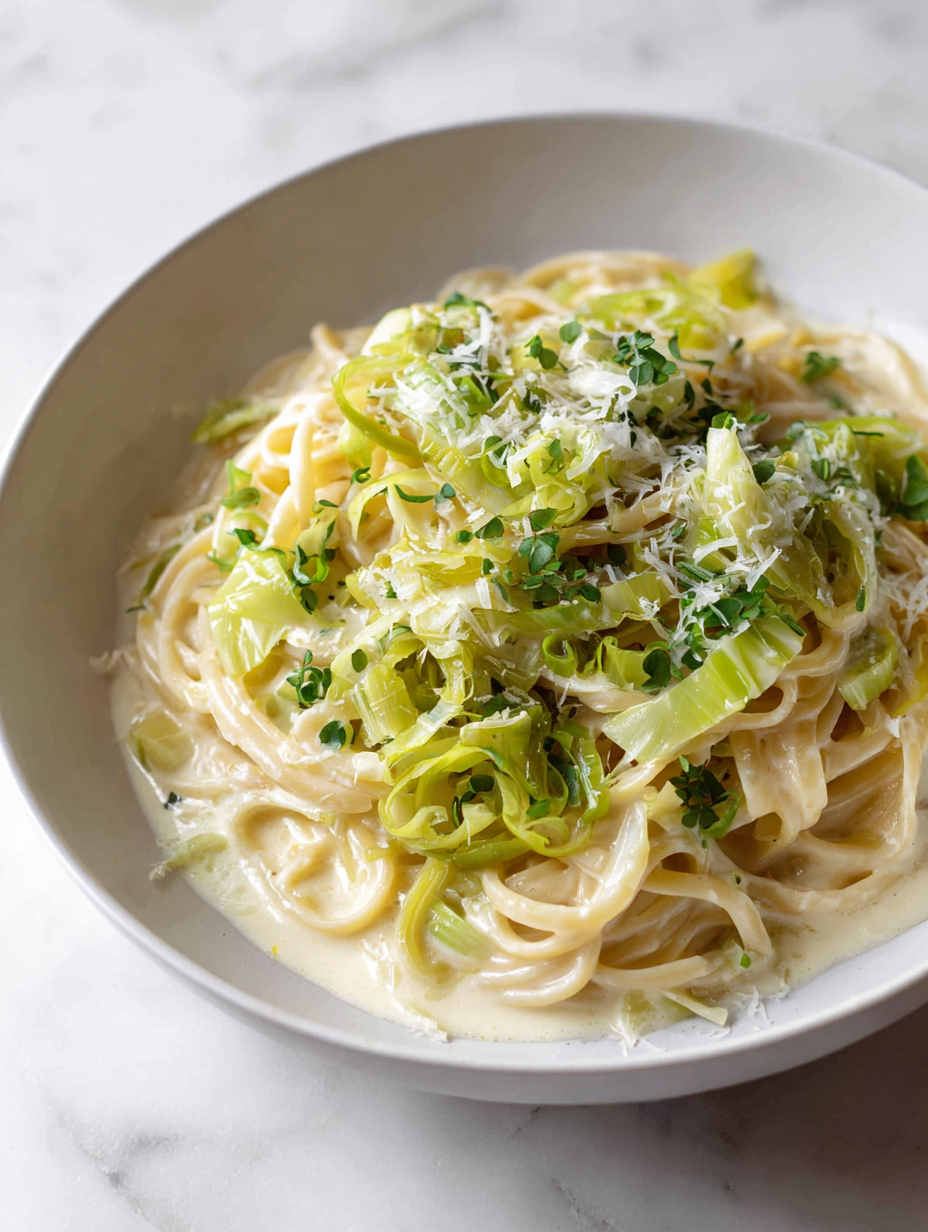
Creamy Leek Pasta
Ingredients
Equipment
Method
- Slice the leeks thinly, about 0.5 cm wide, and rinse them thoroughly under cold water to remove any grit. Drain well.
- Bring a large pot of salted water to a boil, then add the pasta. Cook until al dente, about 8-10 minutes, then drain, reserving a cup of pasta water.
- While the pasta cooks, melt the butter in a large skillet over medium-low heat. Add the sliced leeks and a pinch of salt, stirring gently.
- Cook the leeks slowly, stirring occasionally, until they turn golden and soft, about 15-20 minutes. The aroma will become sweet and buttery, and the leeks will soften into tender strands.
- Reduce the heat to low, then pour in the heavy cream. Stir to combine, letting it warm through and slightly thicken, about 2-3 minutes.
- Add the cooked pasta to the skillet with the leeks and cream. Toss gently to coat the noodles evenly, adding a splash of reserved pasta water if needed to loosen the sauce.
- Grate Parmesan cheese over the pasta and stir until melted into the sauce. Squeeze in lemon juice and season with salt and black pepper to taste.
- Remove from heat and let sit for a minute to allow flavors to meld. Taste again and adjust seasoning if necessary.
- Serve immediately, garnished with extra Parmesan or herbs if desired. Enjoy the creamy, fragrant pasta while warm.
Top tips for perfect leek pasta
- Use medium-low heat when caramelizing leeks to develop their sweet, buttery flavor without burning.
- Stir the leeks gently but frequently in the last stages to ensure even caramelization and prevent sticking.
- When adding cream, do so off the heat or on very low to avoid curdling; stir constantly for smoothness.
- Reserve some pasta water before draining; a splash helps loosen the sauce and enhances creaminess.
- Grate cheese directly into the skillet off the heat for better melting and flavor integration.
- Finish with a squeeze of lemon to brighten the richness and add a fresh, citrusy note.
- Let the pasta rest for a minute after mixing; this helps the sauce thicken slightly and cling better.
Common mistakes and how to fix them
- FORGOT to stir leeks often → stir gently and regularly to prevent burning.
- DUMPED all the cream at once → add cream gradually, watching for proper thickening.
- OVER-TORCHED the butter → keep heat low to avoid browning or burning the butter.
- SKIPPED tasting and adjusting salt → taste often and adjust seasoning as needed.
Quick fixes and pantry swaps
- When sauce is too thick, splash in hot pasta water and stir to loosen.
- If leeks burn, reduce heat immediately and add a splash of water to deglaze.
- Splash vinegar or lemon juice if the dish tastes flat or dull.
- Patch over a curdled cream by stirring in a spoonful of warm milk or more cream gently.
- Shield a pan with a lid if the leeks start to brown too quickly, preserving their gentle sweetness.
Prep, store, and reheat tips
- Pre-chop leeks and store in an airtight container in the fridge for up to 2 days; they’ll stay fresh and ready to caramelize.
- You can cook the pasta ahead and keep it in a sealed container for up to 1 day; toss with a little oil to prevent sticking.
- Cream-based sauces can be made a few hours in advance, then refrigerated for up to 24 hours. Reheat gently, stirring to bring back creaminess.
- Reheat the dish on low heat, adding a splash of reserved pasta water or cream to restore silky texture and aroma.
- For best sensory experience, reheat just until warmed through—avoid boiling to prevent separation or curdling.
Top questions about creamy leek pasta
1. What do leeks taste like in this pasta?
Leeks have a mild, sweet onion flavor and become tender and buttery when caramelized, releasing a fragrant aroma. They add a gentle sweetness and depth to the dish.
2. Why add lemon to the pasta?
Adding a splash of lemon juice brightens the creamy sauce, balancing richness with a fresh, citrusy zing that enhances flavor.
3. How do I caramelize leeks properly?
Use medium-low heat when caramelizing leeks to develop their sweetness without burning. Stir frequently for even color and flavor.
4. Why save pasta water?
Reserve some pasta water before draining; it’s starchy and helps loosen the sauce, making it silkier and more cohesive.
5. Can I make this dish dairy-free?
For a dairy-free version, swap heavy cream for coconut milk or blended cashews. It adds richness, but with a different texture and flavor.
6. How cooked should the pasta be?
Ensure the pasta is cooked al dente—firm to the bite—so it holds up well when coated with the creamy sauce.
7. How do I melt cheese smoothly?
Add cheese off the heat and stir until melted. If the sauce looks grainy, gently warm and stir again to smooth it out.
8. What if the sauce curdles?
If the sauce curdles, remove from heat immediately, add a splash of cold cream or milk, and stir gently to fix it.
9. Should I let the pasta rest before serving?
Let the finished pasta rest for a minute; this helps the sauce thicken slightly and cling better to the noodles.
10. How do I reheat leftover pasta?
Reheat gently on low heat, stirring in a bit of reserved pasta water or cream to restore its silky texture and flavor.
This dish is a gentle reminder that simplicity, when handled with care, can create something truly satisfying. It’s perfect for those quiet nights when you need a bit of comfort that doesn’t demand too much fuss.
Sharing a bowl of this creamy leek pasta feels like a little act of kindness—simple, honest, and deeply nourishing. Sometimes, the best moments come from humble ingredients cooked with patience and a bit of love.

Hi there! I’m Himani and welcome to Val’s Recipe Box. This little corner of the internet didn’t begin with me. It began with Val my neighbourhood aunt whose kitchen held more warmth than any fireplace ever could.


 This little corner of the internet didn’t begin with me.
It began with Val my neighbourhood aunt whose kitchen held more warmth than any fireplace ever could.
She was more of a friend and I’ve come to know her in the most unexpected way.
This little corner of the internet didn’t begin with me.
It began with Val my neighbourhood aunt whose kitchen held more warmth than any fireplace ever could.
She was more of a friend and I’ve come to know her in the most unexpected way.