
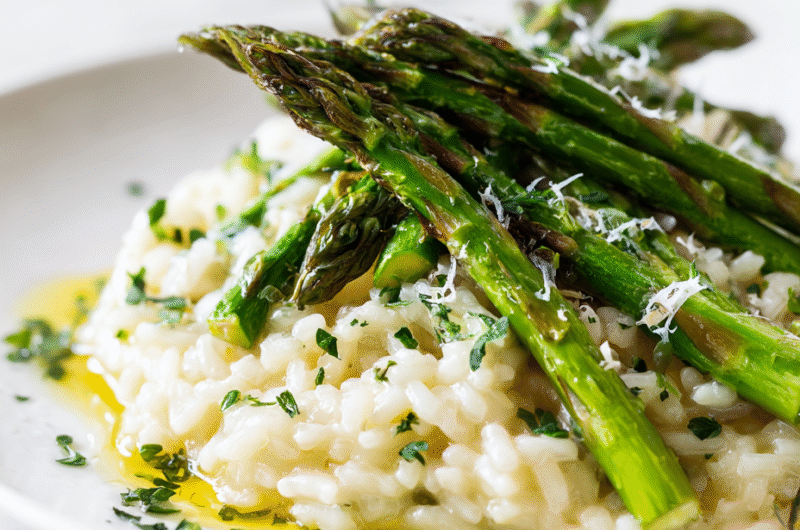
This creamy asparagus risotto isn’t just about comfort food; it’s a little celebration of spring’s fleeting bounty. I love how the tender, slightly sweet asparagus brightens up the rich, cheesy rice—like a fresh garden walk in every bite. It’s the kind of dish that feels fancy enough for guests but easy enough to whip up on a busy weeknight.
There’s a quiet pleasure in stirring risotto—watching it transform from simple rice to a velvety, golden heap. This recipe tweaks that familiar process by highlighting the asparagus’s earthy freshness, balancing it with the nutty kiss of Parmesan. It’s honest food, made with a little love, a lot of stirring, and a pinch of patience.
Once you get the hang of the gentle simmer and taste that first bright zing of lemon-y Parmesan, it’s hard to go back to plain risotto. It’s a dish that feels like a warm hug but makes you feel just a little more connected to the season. Perfect for those days when you want something nourishing but not heavy, with a touch of elegance.
This recipe explores the unexpected joy of pairing the earthiness of fresh asparagus with the creamy richness of risotto, elevating simple ingredients into a comforting yet sophisticated dish.
The story behind this recipe
- This dish started as a way to use up the last of the spring asparagus, but it became something more—a reminder that simple ingredients, treated with patience, can turn into something special. I remember the first time I made it, the way the asparagus’s bright green color contrasted with the creamy rice, felt like spring in a bowl.
- There’s a memory of a lazy Sunday afternoon, chopping asparagus in my grandmother’s kitchen, the air thick with the scent of fresh greenery and Parmesan. That moment of quiet, focused chopping, made me realize the magic in everyday cooking—how it can pause time and bring a little joy.
- Now, whenever I make this risotto, I think about those small, unspoken lessons—about patience, about savoring the little things, and about how a simple meal can carry a story. It’s become a comfort, a tradition, and a chance to slow down and enjoy the process.
Key ingredients and their quirks
- Asparagus: I love how fresh asparagus smells when you cut into it—bright, grassy, almost like spring waking up. You can swap in green beans if you want a milder, less earthy flavor, but don’t skip the crunch and color.
- Arborio rice: It’s got that perfect starchy bite, creamy when cooked right. If you only have sushi rice, give it a rinse and cook it a little longer—just expect a slightly different texture.
- Parmesan: The salty, nutty burst of Parmesan really lifts the dish. Pecorino can stand in if you want a sharper edge, but skip the pre-grated stuff for best flavor—grate fresh, that’s the secret.
- Vegetable broth: I prefer homemade if I have time—more depth, less salt. Store-bought works fine—just taste and adjust the seasoning at the end. Keep it warm so it absorbs smoothly.
- Butter and olive oil: I use a combo to get that rich, silky base—smells like toast and herbs. If you’re dairy-free, coconut oil works, but it adds a coconut note, so use sparingly.
- Lemon juice: A squeeze at the end brightens everything—fresh, zingy, almost like spring air. Skip it if you prefer a richer, more subdued flavor, but it really lifts the dish.
- Salt & pepper: Season gradually—tastes change as the risotto thickens. Go easy at first, then adjust—over-salting is a quick way to ruin the balance.
Key Ingredients and Their Quirks
Asparagus:
- I love how fresh asparagus smells when you cut into it—bright, grassy, almost like spring waking up. You can swap in green beans if you want a milder, less earthy flavor, but don’t skip the crunch and color.
- Arborio rice: It’s got that perfect starchy bite, creamy when cooked right. If you only have sushi rice, give it a rinse and cook it a little longer—just expect a slightly different texture.
- Parmesan: The salty, nutty burst of Parmesan really lifts the dish. Pecorino can stand in if you want a sharper edge, but skip the pre-grated stuff for best flavor—grate fresh, that’s the secret.
Parmesan:
- Its rich, nutty aroma intensifies as it melts, creating that irresistible umami. Keep some aside for finishing—improves every time.
- Arborio rice: During cooking, it releases a milky, starchy cream. Stir gently and patiently—this is where the magic thickens.
- Lemon juice: Brightens the dish with a clean, citrus zing that cuts through the richness—don’t skip the squeeze at the end.
Notes for ingredient swaps
- Dairy-Free: Coconut milk can replace Parmesan for creaminess, but it will add a subtle coconut flavor. Use a mild one to keep the dish fresh.
- Vegan: Nutritional yeast offers a cheesy, nutty taste—great as a Parmesan substitute. Keep in mind, it won’t melt like cheese but adds umami.
- Rice: If Arborio isn’t available, Carnaroli or Vialone Nano work well for that starchy, creamy texture. Sushi rice can be a backup, just cook it longer.
- Broth: Vegetable broth is ideal, but chicken broth adds richer umami. For a lighter touch, dilute with water if needed.
- Oil & Butter: Swap olive oil for avocado oil for a milder flavor. For dairy-free, use a light touch of coconut oil—be mindful of scent.
- Lemon: Lime juice can brighten the dish similarly, or skip citrus altogether for a richer, more subdued flavor profile.
- Herbs & Seasoning: Fresh thyme or basil can enhance herbal brightness. If you prefer less salt, go easy on the cheese and season gradually.
Equipment & Tools
- Large heavy-bottomed pan: For even heat and slow cooking of risotto
- Ladle: To add warm broth in stages
- Wooden spoon: For gentle stirring without damaging the rice
- Sharp knife and cutting board: Prepping asparagus and aromatics
- Fine grater: Grating fresh Parmesan
- Small saucepan: Warming broth
Guide to Making Creamy Asparagus Risotto
- Equipment & Tools: Gather a large heavy-bottomed pan for sautéing, a ladle for adding broth, and a wooden spoon for stirring. Have a sharp knife and cutting board ready for prepping the asparagus. Use a fine grater for Parmesan and a small saucepan for warming broth.
- Start by warming the vegetable broth in a small saucepan over low heat; keep it simmering but not boiling.
- Trim the tough ends off the asparagus and cut into 1-inch pieces. Set aside a few tips for garnish. Blanch the tips in boiling water for 1 minute, then transfer to ice water. Drain and set aside.
- In the large pan, heat 2 tablespoons of olive oil over medium heat (about 160°C/320°F). Add 1 small chopped onion and cook, stirring, until translucent—about 5 minutes. Add the asparagus pieces (not the tips) and cook for another 2-3 minutes, just until they start to soften and smell fresh and green.
- Add 1 cup of Arborio rice to the pan. Stir well to coat each grain in oil. Cook for about 2 minutes until the rice turns slightly translucent around the edges and smells toasty.
- Begin adding the warm broth, one ladleful (about ½ cup), stirring constantly. Wait until the liquid is mostly absorbed before adding the next ladleful. Continue this process, stirring gently, for about 20 minutes. The rice should be tender but still have a slight bite (al dente).
- After about 15 minutes, when the rice is nearly cooked, stir in the blanched asparagus tips. Keep stirring to distribute evenly. Check the texture; it should be creamy and the rice tender but not mushy.
- Once the rice is cooked to your liking, remove from heat. Quickly stir in ¼ cup grated Parmesan, 1 tablespoon of butter, and a squeeze of lemon juice. Taste and adjust seasoning with salt and pepper.
- Let the risotto rest for 2 minutes. Serve immediately, topped with a little extra Parmesan and the reserved asparagus tips for color and texture.
Serve immediately while hot, garnished with extra Parmesan and asparagus tips. Resting isn’t necessary; enjoy the creamy texture right away for best flavor and consistency.
How to Know It’s Done
- The risotto should be creamy with each grain slightly firm in the center.
- The asparagus tips should be vibrant green and tender but not mushy.
- The Parmesan should be melted and integrated, giving a nutty aroma.
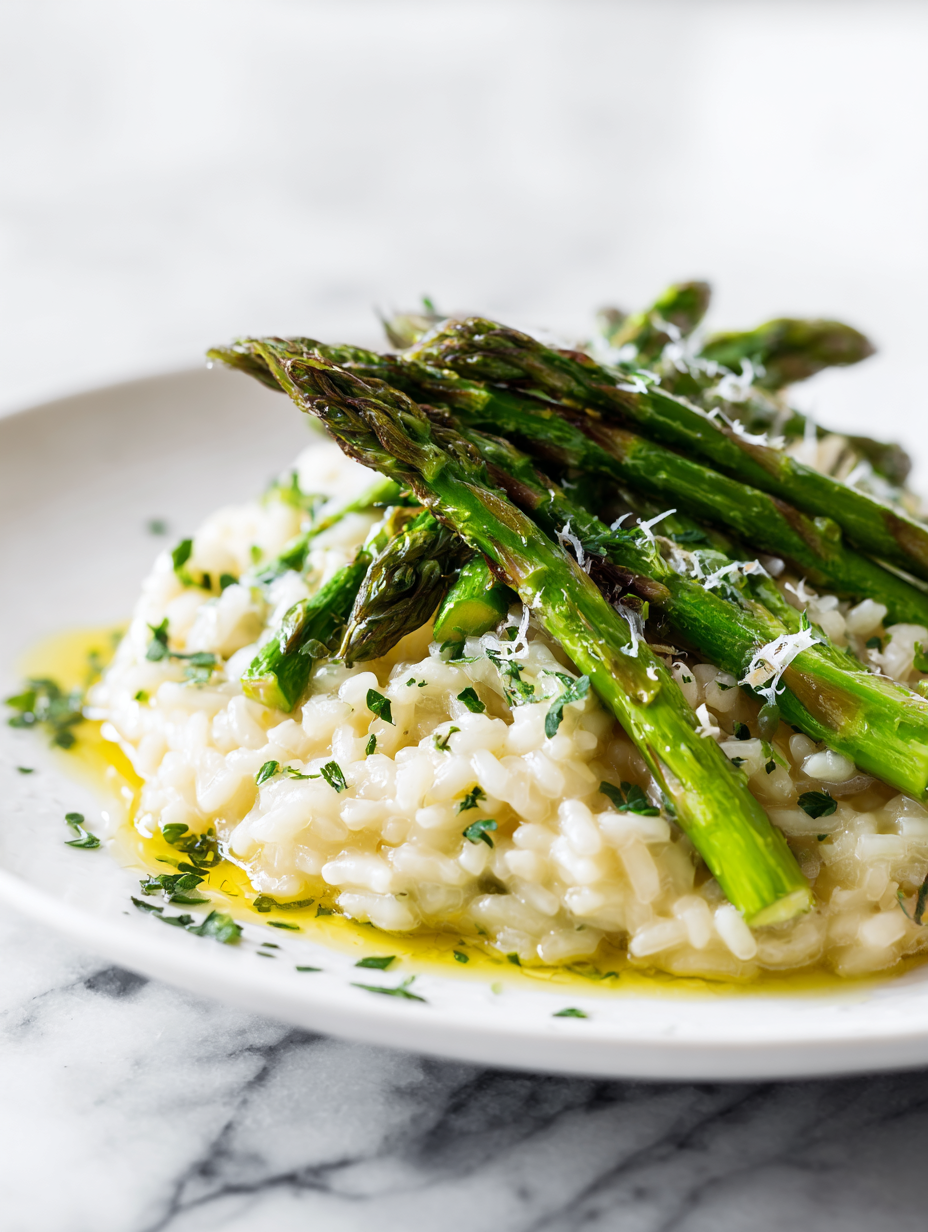
Creamy Asparagus Risotto
Ingredients
Equipment
Method
- Warm the vegetable broth in a small saucepan over low heat until simmering; keep it gently bubbling throughout cooking.
- Trim the tough ends off the asparagus, then cut into 1-inch pieces. Blanch the tips in boiling water for 1 minute, then transfer to an ice bath to stop the cooking and preserve their bright green color. Drain and set aside.
- In a large heavy-bottomed pan, heat 2 tablespoons of olive oil over medium heat until it shimmers and you hear a gentle sizzle. Add the finely chopped onion and cook, stirring often, until translucent and fragrant—about 5 minutes.
- Add the asparagus pieces (not the tips) to the pan and sauté for 2-3 minutes, just until they start to soften and release their fresh aroma.
- Stir in the rinsed Arborio rice, coating each grain in the oil and aromatics. Cook for about 2 minutes until the rice turns slightly translucent around the edges and begins to toast, filling the kitchen with a toasty aroma.
- Start adding the warm broth, one ladleful (about ½ cup) at a time, stirring constantly. Wait until most of the liquid is absorbed before adding the next ladleful. Continue this process, stirring gently, for about 20 minutes, until the rice is tender yet still a little firm in the center.
- When the rice is nearly done, fold in the blanched asparagus tips and cook for another 2 minutes, stirring gently to distribute evenly.
- Remove the pan from heat and stir in the grated Parmesan cheese, butter, and a squeeze of lemon juice. Taste and season with salt and freshly ground pepper as needed.
- Let the risotto rest for a minute, then serve immediately, topped with extra Parmesan and a few asparagus tips for a pop of color and freshness.
Pro tips for creamy risotto
- Bold flavors early: Add a splash of broth when sautéing the asparagus tips to boost their green brightness and aroma.
- Gentle stirring: Keep a steady, gentle stir when adding broth to release the rice’s starch without breaking the grains.
- Taste as you go: Adjust salt and Parmesan gradually; the dish develops flavor as it thickens, don’t overdo it initially.
- Monitor texture: The risotto should be creamy yet each grain slightly firm—use a taste test and visual cues to judge doneness.
- Finish with zing: A quick squeeze of lemon just before serving brightens the whole bowl—don’t skip this step for that fresh lift.
- Keep broth warm: Maintain the broth at a simmer so it absorbs smoothly into the rice, preventing it from cooling and slowing cooking.
- Use the right cheese: Grate Parmesan fresh for optimal melt and flavor—pre-grated can be dry and lack depth.
Common mistakes and how to fix them
- FORGOT to stir constantly → Stir frequently to prevent sticking and ensure creaminess.
- DUMPED all broth at once → Add broth gradually, allowing absorption for silky texture.
- OVER-TORCHED the rice → Cook on medium heat, adjust as needed, avoid burning or sticking.
- USED pre-grated Parmesan → Grate fresh cheese for maximum flavor and meltability.
Quick fixes and pantry swaps
- When risotto is too thick, splash in warm broth and stir gently to loosen texture.
- If asparagus tips turn mushy, remove early and add at the end for freshness.
- Splash a bit of lemon juice when risotto seems dull—brightens flavors instantly.
- Patch over a burnt bottom by transferring unburned risotto to a new pan, avoiding charred bits.
- When short on Parmesan, sprinkle nutritional yeast for cheesy flavor and umami boost.
Prep, store, and reheat tips
- Prepare all ingredients ahead: trim and blanch asparagus, grate Parmesan, and warm broth. Have everything ready for quick assembly.
- Store chopped asparagus in an airtight container in the fridge for up to 1 day. Keep it crisp and bright green.
- Refrigerate leftover risotto in an airtight container for up to 2 days. It will thicken and the flavors may deepen slightly.
- Reheat gently over low heat, stirring constantly. Add a splash of warm broth or water to loosen the texture and restore creaminess. Expect a slightly firmer, less velvety dish upon reheating.
Top questions about creamy asparagus risotto
1. Can I use frozen asparagus?
Use fresh, firm asparagus for the best flavor and texture. Frozen can work in a pinch, but fresh is ideal.
2. How important is stirring during cooking?
Stir the risotto constantly when adding broth to release enough starch, making it creamy without becoming mushy.
3. Can I swap out the cheese?
Yes, you can substitute Parmesan with Pecorino or Grana Padano for different salty, nutty notes.
4. When should I add lemon juice?
Add the lemon juice at the end to brighten the dish; too early can dull the fresh flavor.
5. Should I keep the broth hot while cooking?
Keep the broth warm on low heat; cold broth will slow down cooking and affect the creaminess.
6. Can I use a different rice variety?
Use Arborio rice for the best creaminess. Other short-grain rice may work but won’t be as velvety.
7. How do I prevent the risotto from sticking?
A gentle simmer and constant stirring are key to avoiding sticking and achieving that silky texture.
8. How should I reheat leftovers?
Reheat risotto slowly over low heat, stirring in a splash of broth or water to restore creaminess.
9. Can I prepare this dish in advance?
Yes, you can make the base ahead, but add asparagus and finish with cheese just before serving.
10. How do I season the risotto properly?
Taste frequently during cooking; season gradually to avoid over-salting, especially if using salty broth or cheese.
Cooking this risotto feels like a small act of patience and attention—each stir, each addition, reveals more of its creamy, vibrant soul. It’s a dish that’s rooted in seasonality and simple pleasures, perfect for when you want something honest yet special.
And honestly, there’s a quiet satisfaction in watching it come together—green asparagus brightening the pot, Parmesan melting into that velvety rice. It’s unpolished, real food, made to be enjoyed with a little mess and a lot of love.

Hi there! I’m Himani and welcome to Val’s Recipe Box. This little corner of the internet didn’t begin with me. It began with Val my neighbourhood aunt whose kitchen held more warmth than any fireplace ever could.


 This little corner of the internet didn’t begin with me.
It began with Val my neighbourhood aunt whose kitchen held more warmth than any fireplace ever could.
She was more of a friend and I’ve come to know her in the most unexpected way.
This little corner of the internet didn’t begin with me.
It began with Val my neighbourhood aunt whose kitchen held more warmth than any fireplace ever could.
She was more of a friend and I’ve come to know her in the most unexpected way.