
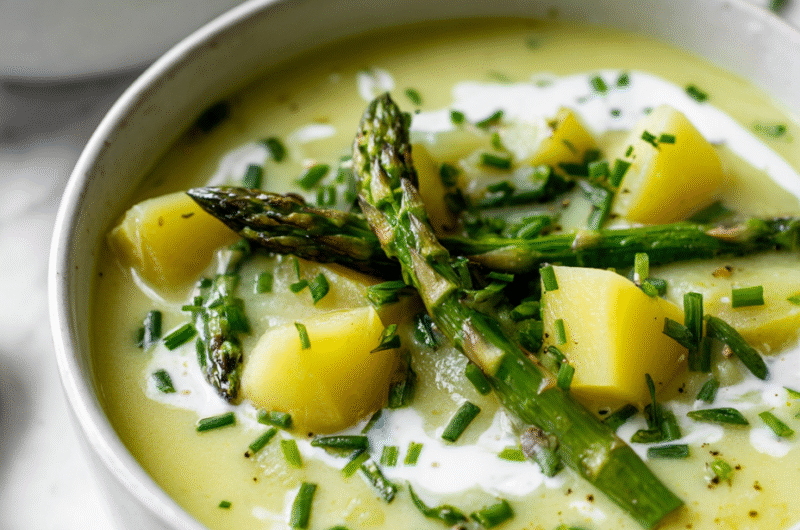
This asparagus potato soup is all about celebrating the quiet beauty of simple ingredients. I love how humble potatoes and fresh asparagus, when paired together, create a soup that feels both nourishing and lively. It’s the kind of dish that makes you appreciate what’s in season and reminds you that good cooking doesn’t have to be complicated.
I first made this soup on an early spring afternoon, when the asparagus was just starting to appear at the market. The aroma of sautéing garlic and onion filled the kitchen, while the vibrant green of the asparagus peeked through the simmering broth. It’s that perfect combination of comfort and freshness, a dish that feels like a gentle hug after a busy day.
Focusing on the overlooked beauty of humble ingredients, this soup showcases how asparagus and potatoes can transform into a comforting, vibrant dish that celebrates seasonal simplicity and honest cooking.
The story behind this recipe
- One spring, I was wandering through the market and found a small bunch of asparagus that looked almost too delicate to buy. It reminded me of childhood mornings when my mom would cook something simple, like boiled potatoes with a splash of lemon, and I’d wish for a bit of that fresh green sweetness. That day, I started thinking about how humble ingredients can really shine if treated right.
- This soup came together when I wanted something that combined the earthiness of potatoes with the bright, grassy flavor of asparagus—kind of like spring on a spoon. It’s a dish I make when I need a gentle reminder that the simplest ingredients, prepared honestly, can be truly satisfying.
- heading: The story behind this recipe
Ingredient breakdown
- Asparagus: I love the snap and grassy aroma when I cut into fresh asparagus. For a more tender bite, trim and simmer until just bright green; skip overcooking or it turns mushy, losing that lively freshness.
- Potatoes: Starchy potatoes like Russets give the soup a velvety texture, but if you want it lighter, try Yukon Golds—they add a buttery richness without overpowering. Always peel if you prefer a smoother finish, but leaving skin on adds texture and nutrients.
- Garlic & Onion: These aromatics form the flavor base. I sauté until they smell sweet and slightly caramelized—about 5 minutes at medium heat. If they burn or turn bitter, lower the heat or add a splash of water and stir to deglaze.
- Vegetable Broth: Use a good-quality store-bought or homemade broth. I prefer one with a deep, umami flavor—look for a richer stock or add a splash of soy sauce for depth. Keep it simmering gently to preserve clarity and freshness.
- Cream or Milk: I add a splash at the end for creaminess, but coconut milk works beautifully for dairy-free. Add gradually and taste—stop once it feels rich but not heavy. The scent of dairy melting in should be inviting, not overwhelming.
- Lemon or Vinegar: A squeeze of lemon brightens the whole bowl. I prefer fresh lemon juice just before serving—skip if you want a more subdued flavor, but it really elevates the asparagus’s grassy notes.
- Herbs (like tarragon or chives): Fresh herbs are my finishing touch. Snip them right before serving for maximum aroma and color. They add a fresh, slightly oniony or anise note that lifts the whole dish.
Spotlight on key ingredients
Asparagus:
- I love the snap and grassy aroma when I cut into fresh asparagus. For a more tender bite, trim and simmer until just bright green; skip overcooking or it turns mushy, losing that lively freshness.
- Potatoes: Starchy potatoes like Russets give the soup a velvety texture, but if you want it lighter, try Yukon Golds—they add a buttery richness without overpowering. Always peel if you prefer a smoother finish, but leaving skin on adds texture and nutrients.
Potatoes:
- I prefer Russets for their creamy, starchy quality that makes the soup luxuriously smooth. If you’re after a lighter feel, Yukon Golds bring a buttery touch that’s softer on the palate. Keep the skins on for extra fiber and a rustic look, or peel for a refined finish.
- ingredient
Notes for ingredient swaps
- Dairy-Free: Coconut milk as a creamy alternative, adds a slight tropical sweetness but can alter the richness.
- Vegan Broth: Use a homemade vegetable broth or store-bought with no animal products for a more vibrant, plant-based flavor.
- Potatoes: Sweet potatoes can add a natural sweetness and extra creaminess, but change the earthy tone slightly.
- Herbs: Fresh tarragon or dill provide a different herbal note—use dried if fresh isn’t available, but reduce the quantity.
- Lemon Juice: Lime juice offers a zesty, slightly different citrus brightness, ideal if you prefer a sharper finish.
- Garlic & Onion: Shallots or leeks can be swapped in for a milder, sweeter profile—adjust cooking time slightly.
- Olive Oil: Avocado oil or a neutral oil like grapeseed can replace olive oil, with subtle flavor differences.
Equipment & Tools
- Large pot: Cook and simmer the vegetables and broth.
- Sharp knife: Prepare vegetables cleanly and precisely.
- Cutting board: Provide a stable surface for chopping.
- Immersion blender or blender: Puree the soup until smooth.
- Ladle: Serve the hot soup into bowls.
Step-by-step guide to asparagus potato soup
- Equipment & Tools: Gather a large pot (to hold enough soup), a sharp knife (for clean cuts), a cutting board, a blender or immersion blender (for smooth texture), and a ladle (for serving).
- Prep the vegetables: Snap the woody ends off the asparagus, chop into 2-inch pieces. Peel and dice potatoes into 1-inch chunks. Finely chop onion and garlic.
- Sauté aromatics: Heat a splash of olive oil in the pot over medium heat, about 3 minutes. Add onion and garlic, cook until fragrant and translucent, about 5 minutes. Stir occasionally.
- Add potatoes and broth: Toss in the potato chunks, pour in 4 cups (1 liter) of vegetable broth. Bring to a gentle boil, then reduce heat to simmer at 90°C (195°F). Cook for 10 minutes.
- Incorporate asparagus: Add the asparagus pieces. Simmer until the potatoes and asparagus are tender, about 8-10 minutes. Check with a fork or skewer—potatoes should be soft, asparagus bright green and tender.
- Blend the soup: Use an immersion blender directly in the pot, blend until smooth. Or transfer in batches to a blender, then return to the pot. Be cautious of hot splashes. Blend until velvety and uniform.
- Finish with cream and lemon: Stir in ¼ cup of cream or milk, heat gently for 2 minutes. Squeeze in fresh lemon juice, stir, and taste. Adjust seasoning with salt and pepper if needed.
- Rest and serve: Let the soup sit for a minute to meld flavors. Ladle into bowls, garnish with chopped herbs like chives or tarragon. Serve hot, with crusty bread if you like.
- Checkpoints & Doneness: The soup should be bright green and vibrant. When blended, it should feel silky on the tongue. The aroma should be fresh and slightly sweet. The asparagus tips should hold their shape but be tender.
Let the soup rest for a minute off the heat. Finish with a squeeze of lemon and fresh herbs. Serve immediately for the best flavor and texture.
How to Know It’s Done
- Soup is velvety and bright green after blending.
- Asparagus is tender but not mushy, with a fresh aroma.
- Soup smells fragrant with garlic, onion, and lemon.
Asparagus Potato Soup
Ingredients
Equipment
Method
- Gather all your ingredients and prep the vegetables: trim the woody ends from the asparagus and chop into 2-inch pieces; peel and dice the potatoes; finely chop the onion and mince the garlic.
- Heat a splash of olive oil in a large pot over medium heat. Add the chopped onion and cook, stirring occasionally, until translucent and fragrant, about 5 minutes. The kitchen should fill with a sweet aroma as the onions soften.
- Add the diced potatoes to the pot and pour in the vegetable broth. Bring to a gentle simmer and cook for 10 minutes, or until the potatoes begin to soften.
- Stir in the asparagus pieces and continue simmering until both the potatoes and asparagus are tender, about 8-10 minutes. The asparagus should turn a vibrant green and be just tender when pierced with a fork.
- Use an immersion blender directly in the pot to puree the soup until completely smooth and velvety. Alternatively, carefully transfer the soup in batches to a blender, then return it to the pot.
- Stir in the cream or milk for added richness. Warm the soup gently over low heat for a couple of minutes, then squeeze in fresh lemon juice to brighten the flavor. Taste and adjust with salt and pepper as needed.
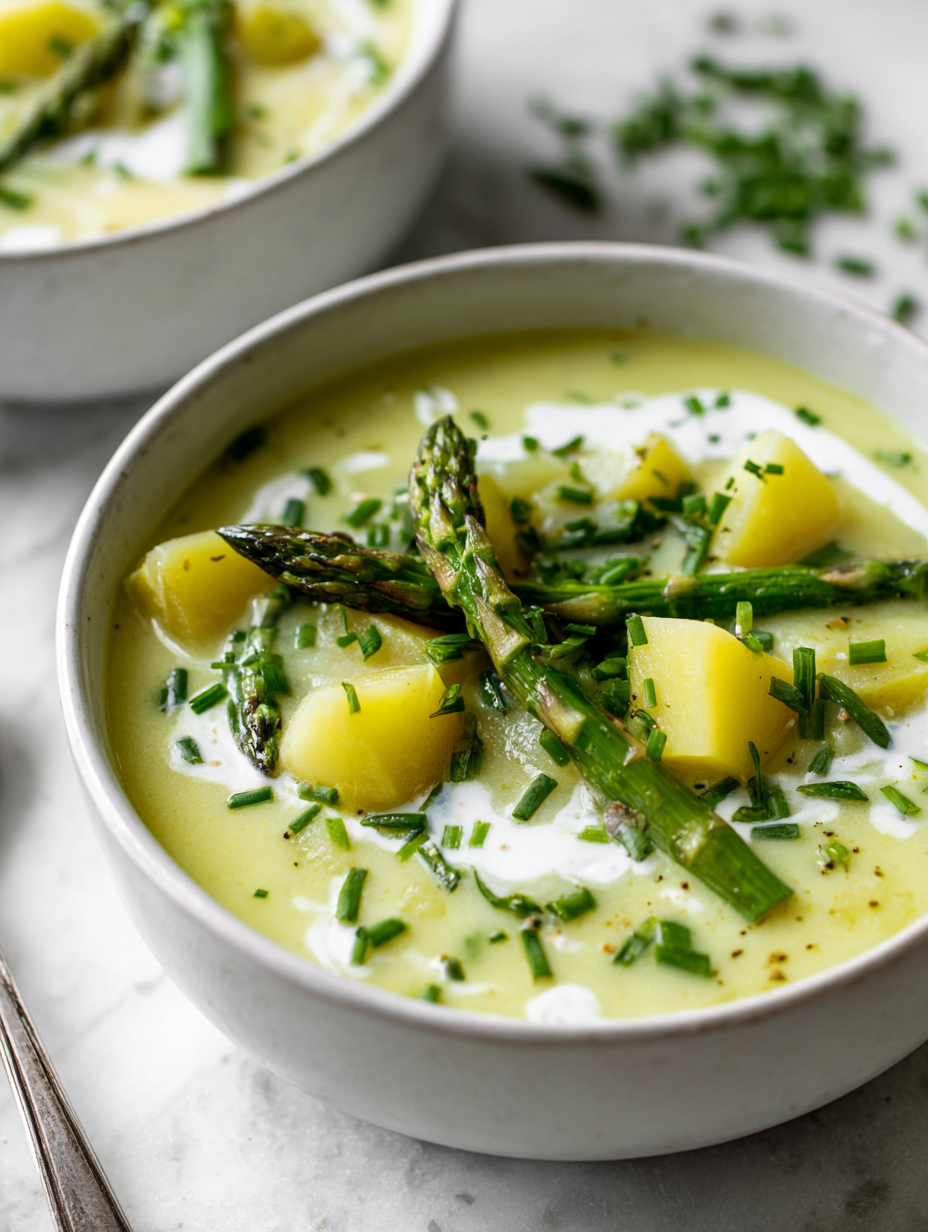
- Pour the hot soup into bowls, garnish with chopped herbs like chives or tarragon, and serve immediately. The soup should be velvety, vibrant green, and fragrant with fresh citrus and herbs.
Pro tips for perfect asparagus potato soup
- Sauté with care: Keep the onion and garlic moving in the pan to prevent burning and develop a sweet aroma.
- Trim asparagus perfectly: Snap the woody ends naturally—they’ll break where the tough part ends, for tender, bright spears.
- Blend for silkiness: Use an immersion blender directly in the pot for a smooth, velvety texture without transferring hot liquid.
- Adjust seasoning last: Add lemon juice and herbs at the end; they lose brightness if cooked too long, so taste and tweak just before serving.
- Simmer gently: Keep the broth at a gentle simmer (about 90°C/195°F) to preserve clarity and prevent cloudiness or overcooked vegetables.
- Watch the potatoes: Cook until just tender—overcooked potatoes turn mushy and dull, ruining the soup’s texture and appearance.
- Use fresh herbs: Snip herbs right before serving; they release vibrant aroma and add a fresh pop that brightens the soup.
Common mistakes and how to fix them
- FORGOT to trim asparagus: trim woody ends thoroughly to avoid bitterness and stringiness.
- DUMPED broth too early: simmer gently to develop flavor, avoid boiling rapidly to prevent cloudiness.
- OVER-TORCHED potatoes: cook at gentle simmer, overcooking causes mushy texture and dull color.
- MISSED blending: blend until completely smooth for silky texture, or leave some chunks for texture.
Quick Fixes and Pantry Swaps
- When asparagus turns limp, splash with lemon juice to revive its bright aroma.
- If soup is too thick, add a splash of hot broth and blend again gently.
- Splash a little vinegar when the soup tastes flat—brightens flavors instantly.
- Patch overcooked potatoes with a swirl of cream or a pat of butter to restore silkiness.
- Shield delicate asparagus tips from overcooking by adding them in last; they cook in 2 minutes.
Prep, store, and reheat tips
- Chop asparagus and potatoes the day before to save time; keep them submerged in water in the fridge to prevent browning and preserve freshness.
- You can prepare and sauté the aromatics ahead, then cool and store in an airtight container for up to 24 hours; reheat gently before blending.
- Store leftover soup in an airtight container in the fridge for up to 3 days; the flavors deepen slightly, and the soup remains vibrant if reheated gently.
- Reheat soup on low heat, stirring frequently, until steaming hot—aim for about 75°C (165°F)—and check for seasoning before serving again.
- For longer storage, freeze in portions up to 2 months; thaw overnight in the fridge, then reheat slowly, watching for separation or thickening, adding a splash of broth if needed.
Top questions about asparagus potato soup
1. How do I pick the best asparagus?
Fresh asparagus should be bright green, firm, with closed tips. Look for spears that snap easily when bent. Avoid dull or limp stalks, as they won’t hold their shape or flavor well.
2. Should I peel the potatoes?
Peel the potatoes if you want a super smooth soup, but leaving skins on adds texture and nutrients. Russets give a creamier result, Yukon Golds add richness, and red potatoes make it a bit chunkier.
3. How smooth should the soup be?
Use a blender or immersion blender to puree until silky, about 1-2 minutes. Check the consistency—if it’s too thick, add a splash of broth and blend again until smooth.
4. When should I add lemon juice?
Add lemon juice just before serving to brighten the flavors. Start with a teaspoon, taste, and add more if needed. It enhances the fresh green aroma of the asparagus.
5. How do I reheat leftovers?
Reheat gently over low heat, stirring often. If the soup thickens too much, stir in a little hot broth or water. Avoid boiling vigorously to keep it silky.
6. Can I prep this in advance?
You can prepare most ingredients a day ahead. Chop vegetables and store in airtight containers in the fridge for up to 24 hours. Reheat and blend just before serving.
7. What if the soup is too thick?
If the soup turns out too thick, splash in hot broth and blend briefly. For a thinner texture, add a bit more broth or water during reheating.
8. How do I avoid overcooking asparagus?
Overcooking asparagus makes it mushy and dull in color. Cook just until vibrant green and tender—about 8-10 minutes after adding to the broth.
9. When should I add herbs?
Use fresh herbs like chives or tarragon for finishing; they add aroma and brightness. Add them right before serving to keep their vibrant flavor.
10. How do I fix bland soup?
If the soup tastes flat, splash in a little vinegar or lemon juice to lift the flavors. A pinch of salt can also enhance overall taste without overpowering.
This soup feels like a quiet celebration of spring, with each spoonful carrying the fresh, grassy aroma of asparagus and the comforting creaminess of potatoes. It’s the kind of dish that invites you to slow down and savor honest, simple ingredients. Sometimes, that’s all you need to remind yourself why cooking at home matters.
In a season full of fleeting moments, making this soup offers a small ritual—an act of kindness to your own kitchen. It’s not flashy, but it’s honest, nourishing, and a gentle way to welcome what’s in season with open arms and a warm bowl.

Hi there! I’m Himani and welcome to Val’s Recipe Box. This little corner of the internet didn’t begin with me. It began with Val my neighbourhood aunt whose kitchen held more warmth than any fireplace ever could.


 This little corner of the internet didn’t begin with me.
It began with Val my neighbourhood aunt whose kitchen held more warmth than any fireplace ever could.
She was more of a friend and I’ve come to know her in the most unexpected way.
This little corner of the internet didn’t begin with me.
It began with Val my neighbourhood aunt whose kitchen held more warmth than any fireplace ever could.
She was more of a friend and I’ve come to know her in the most unexpected way.