
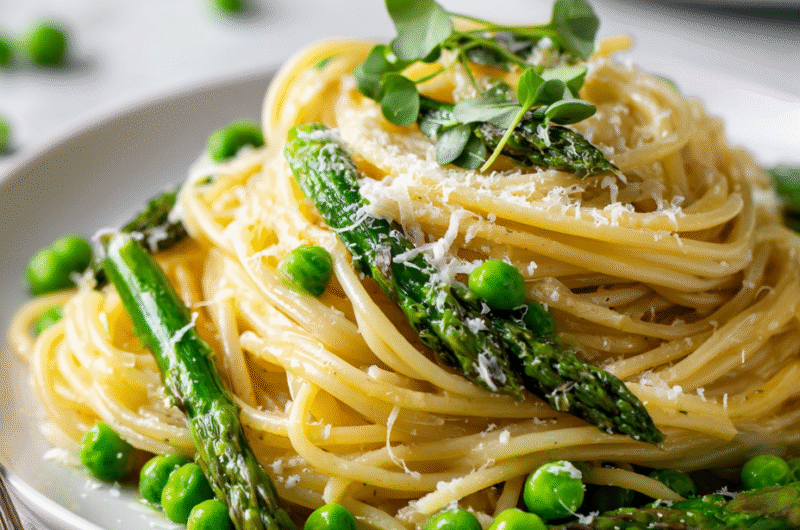
This asparagus and pea pasta is my go-to when I want something bright and cheerful, especially on days when everything feels a bit gray. The vibrant green of those tender stalks and sweet little peas somehow lifts my mood even before the first bite. It’s simple, yes, but that punch of freshness makes it feel like a celebration, even if I’m just cooking for myself after a long day.
I love how this dish encourages me to use what’s in season—really letting those fresh vegetables shine. It’s a reminder that even the simplest ingredients, treated well, can create something that tastes like a little burst of spring. Plus, it’s quick enough to whip up on busy nights, but special enough to serve when friends drop by unexpectedly.
Focusing on how the vibrant green of asparagus and peas can brighten up a simple pasta, making it feel fresh and celebratory, even on the dullest days.
The story behind this recipe
- This recipe sprouted from a craving for something truly fresh, something that feels like a breath of spring in the middle of a hectic week. I remember wandering through the farmers’ market, eyes catching on the bright green spears of asparagus and the tiny, sweet peas, and thinking, why not combine these in a simple pasta? It’s wild how a quick toss of these ingredients can turn a regular meal into a little celebration of seasonality.
- I’ve always loved dishes that remind me of the garden—vibrant, unpretentious, and full of life. Making this pasta became a ritual for me during spring, a way to reconnect with the fleeting beauty of fresh vegetables. It’s one of those meals that tastes like a small victory, especially when I want something honest and alive on my plate.
- story_type
Key ingredients and tips
- Asparagus: I love the snap and grassy aroma of fresh asparagus, especially when it’s just cooked to tender-crisp. Skip the woody ends and trim generously for a more refined bite, but don’t discard those tough bits—they make great veggie stock.
- Peas: Sweet, tiny peas burst with freshness, especially if you catch them early in their season. Fresh is best, but frozen peas work beautifully—just toss them in frozen to keep their vibrant color and sweetness intact.
- Pasta: I prefer a sturdy shape like pappardelle or orecchiette that can hold onto the sauce and bits of veg. Cook it al dente—think a slight bite—so it doesn’t turn mushy when mixed. Save some salty pasta water, it’s magic for cohesion.
- Olive oil: Use good-quality extra virgin—its grassy, peppery notes really lift the dish. Warm it gently before tossing in the veggies; you’ll smell that fragrant, fruity aroma that signals it’s ready for action.
- Lemon: Brightens everything up, especially when zesting or squeezing fresh juice over just before serving. Go for a lemon with a thick, fragrant zest—it’s a game-changer for that zingy pop.
- Garlic: Fresh and minced, it adds a warm, pungent depth. Sauté gently until golden; burnt garlic turns bitter fast, so keep a close eye and stir often.
- Parmesan: Freshly grated, it’s the finishing touch that adds salt, umami, and a slightly nutty aroma. Don’t skip it, even if you’re watching your salt—just use a light hand.
Spotlight on key ingredients
Asparagus and Peas:
- Asparagus: I love the snap and grassy aroma of fresh asparagus, especially when it’s just cooked to tender-crisp. Skip the woody ends and trim generously for a more refined bite, but don’t discard those tough bits—they make great veggie stock.
- Peas: Sweet, tiny peas burst with freshness, especially if you catch them early in their season. Fresh is best, but frozen peas work beautifully—just toss them in frozen to keep their vibrant color and sweetness intact.
Notes for ingredient swaps
- Dairy-Free: Use nutritional yeast instead of Parmesan for a cheesy flavor with a nutty, slightly cheesy taste. It melts into the sauce smoothly.
- Vegan: Swap out Parmesan for a flavorful plant-based cheese or a splash of soy or coconut cream for richness. Keep in mind, the flavor will be a bit different.
- Gluten-Free: Choose a gluten-free pasta, like chickpea or rice noodles. These hold up well and absorb flavors just as nicely.
- Fresh Herbs: Replace basil or parsley with mint or chives for a different, fresh herbal note that brightens the dish.
- Lemon: Use lime or vinegar (a splash of apple cider) if lemon isn’t available. It’ll add acidity, but the lemon zest really lifts the dish best.
- Peas: Frozen peas are a perfect stand-in for fresh—they’re sweet and bright, just add a minute longer to cook through if needed.
- Olive Oil: Any good-quality vegetable or avocado oil can replace olive oil, but you’ll lose that grassy, fruity aroma that makes this dish special.
Equipment & Tools
- Large pot: To boil the pasta efficiently and evenly.
- Skillet: For sautéing the vegetables and combining flavors.
- Tongs or slotted spoon: To toss and serve the pasta without breaking it.
- Grater or zester: To add fresh lemon zest for brightness.
- Measuring cups and spoons: For precise ingredient addition, especially liquids.
Step-by-step guide to asparagus and pea pasta
- Gather your equipment: a large pot for boiling pasta, a skillet for sautéing, and tongs or a slotted spoon for tossing. Have a bowl ready with reserved pasta water.
- Bring a large pot of salted water to a rolling boil, about 100°C / 212°F. Add the pasta and cook until al dente, about 8 minutes. Stir occasionally to prevent sticking.
- While pasta cooks, trim the woody ends off the asparagus. Cut into 2-inch pieces. Mince 2 cloves of garlic. Measure out frozen peas or fresh if available.
- In a skillet over medium heat, warm 2 tablespoons of good-quality olive oil. Add the garlic, sauté until fragrant, about 30 seconds. Be careful not to burn it—look for a golden hue and smell that grassy aroma.
- Add asparagus to the skillet. Cook for 3-4 minutes, stirring occasionally, until just tender but still vibrant green. It should crackle slightly and turn a bright, lively color.
- Drain the pasta, reserving about half a cup of pasta water. Add the pasta directly to the skillet with asparagus. Toss well to coat in the oil and garlic.
- Stir in the peas. If the mixture seems dry, add a splash of reserved pasta water to loosen. Cook for another minute, just until peas are heated through and bright.
- Zest a lemon over the pasta, then squeeze in half the juice. Toss everything together, allowing the flavors to meld for 1-2 minutes. The aroma should be fresh, lemony, and inviting.
- Finish with a generous sprinkle of grated Parmesan. Toss again, tasting and adjusting with more lemon or salt if needed. The final dish should look glossy, with vibrant greens and a slight sheen from the oil and cheese.
- Serve immediately, garnished with a little extra lemon zest or Parmesan if desired. Enjoy the bright, fresh flavors that celebrate the season.
Toss the pasta with a little extra olive oil before serving. Plate immediately, garnished with optional extra Parmesan and lemon zest for a fresh finish. Serve hot, straight from the pan for maximum flavor and texture.
How to Know It’s Done
- Pasta is al dente, with a slight bite when tested against the package instructions.
- Vegetables are tender but still vibrant green, not limp or overcooked.
- The sauce is glossy and coats the pasta evenly, with a fresh lemon aroma.
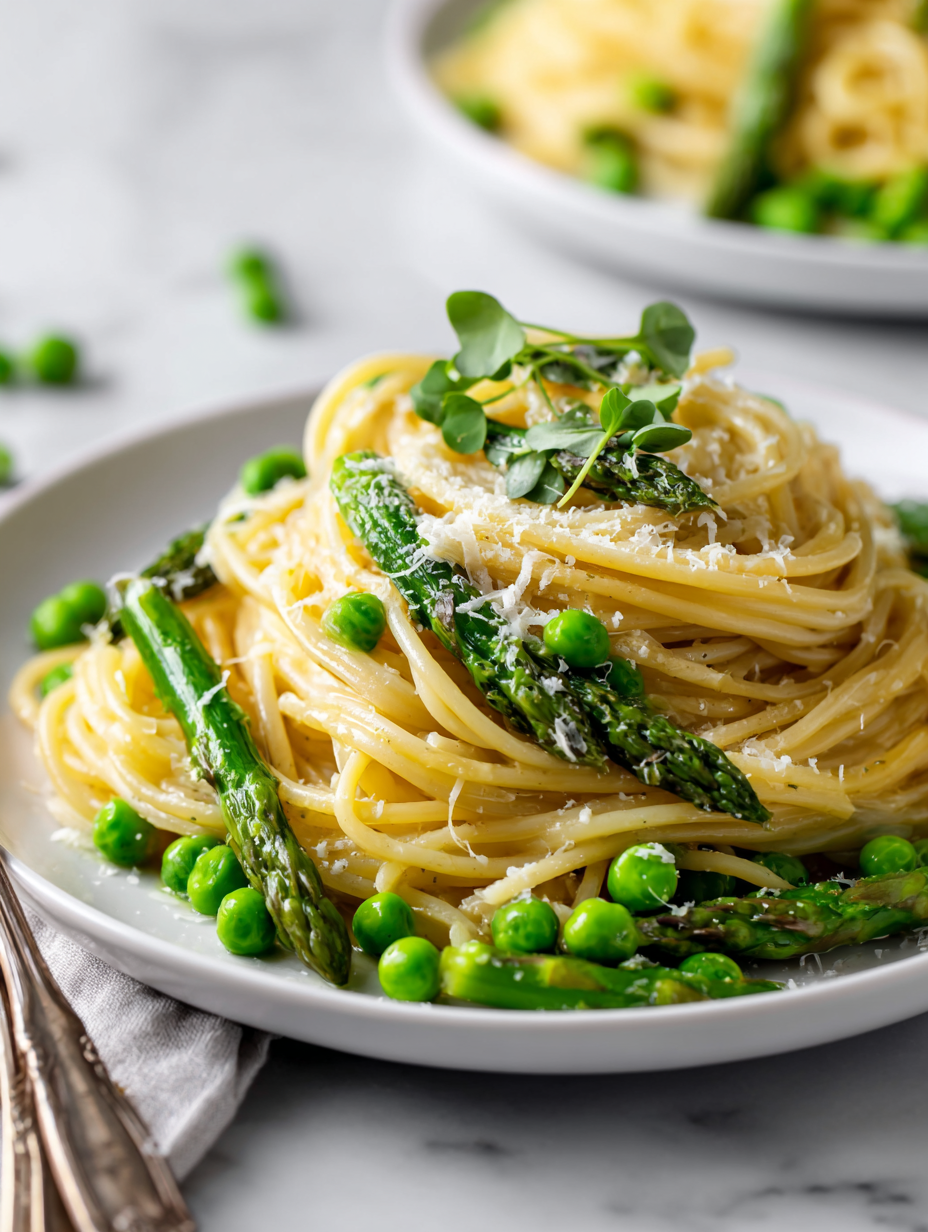
Asparagus and Pea Pasta
Ingredients
Equipment
Method
- Bring a large pot of salted water to a rolling boil, then add the pasta. Cook until just al dente, about 8 minutes, stirring occasionally. Drain, reserving about half a cup of pasta water.
- While the pasta cooks, trim the woody ends from the asparagus and cut into 2-inch pieces. Mince the garlic cloves and prepare the peas if fresh.
- Heat the olive oil in a skillet over medium heat. Add the minced garlic and sauté until fragrant and golden, about 30 seconds, releasing a grassy aroma.
- Add the asparagus pieces to the skillet and cook for 3-4 minutes, stirring occasionally, until tender yet still vibrant green and slightly crisp.
- Stir in the cooked pasta directly into the skillet with the asparagus. Toss gently to coat in the fragrant oil and garlic mixture.
- Add the peas to the skillet and cook for 1-2 minutes, just until heated through and bright in color. If the mixture seems dry, add a splash of the reserved pasta water.
- Zest the lemon over the pasta, then squeeze in half of its juice. Toss everything well to combine, allowing the fresh citrus to brighten the flavors.
- Sprinkle the grated Parmesan cheese over the pasta and toss again until melted and glossy. Taste and adjust seasoning with salt or more lemon juice if needed.
- Serve the pasta immediately, garnished with additional lemon zest or Parmesan if desired. Enjoy the vibrant, spring-inspired flavors and tender textures.
Top tips for perfect asparagus and pea pasta
- Sizzle, don’t burn: Warm the olive oil gently until fragrant, then add garlic; it should turn golden and smell grassy in 30 seconds.
- Snap the asparagus: Trim the woody ends and cut into uniform pieces. The crisp-tender bite is key, so don’t overcook.
- Save pasta water: Before draining, scoop out a cup of starchy water; it’s perfect for loosening and glossying the sauce.
- Brighten with zest: Add lemon zest just before serving for an intense, fragrant citrus punch that lifts all flavors.
- Cook peas last: Toss frozen peas into the skillet at the end; they only need a minute to stay vibrant and sweet, avoid overcooking.
- Taste as you go: Check seasoning after mixing; a squeeze more lemon or a pinch of salt can make all the difference in freshness.
- Finish with cheese: Grate Parmesan right before serving; it melts beautifully if added hot, adding depth and nutty aroma.
Common mistakes and how to fix them
- FORGOT to adjust heat → The pan may smoke; lower heat if garlic or vegetables brown too fast.
- DUMPED water too soon → Save some pasta water; it’s key to a silky sauce and better emulsification.
- OVER-TORCHED garlic → Reduce heat and stir constantly; burnt garlic turns bitter and ruins flavor.
- MISSED the tender-crisp test → Taste a piece of asparagus; it should be bright green and just tender.
Quick fixes and pantry swaps
- If the pasta clumps, splash in more hot water and toss vigorously to loosen.
- When sauce is too thick, add a splash of reserved pasta water for a silky sheen.
- Splash some lemon juice if the dish feels dull or flat in flavor.
- Patch burnt garlic by removing it immediately and adding fresh garlic; smell for grassy aroma.
- Shield overcooked peas with a quick squeeze of lemon and a drizzle of olive oil to revive vibrancy.
Prep, store, and reheat tips
- You can blanch the asparagus and peas ahead—blanch in boiling salted water for 1-2 minutes, then shock in ice water to preserve color and texture. Keep refrigerated for up to 24 hours.
- Cook the pasta until al dente, drain, and toss with a teaspoon of olive oil to prevent sticking. Store in an airtight container in the fridge for up to 2 days.
- Prepare the garlic and keep it minced in a small container with a drizzle of oil; it’s ready to sauté straight from the fridge, saving time during assembly.
- The assembled dish is best enjoyed fresh, but leftovers can be stored in an airtight container for up to 1 day. Reheat gently in a skillet over low heat, adding a splash of pasta water to revive the sauce and bring back the gloss and flavor.
- For reheating, smell for a fresh, bright aroma—if it’s dull or off, add a squeeze of lemon or a drizzle of fresh oil to perk it up.
Top questions about asparagus and pea pasta
1. How do I choose the best asparagus and peas?
Fresh asparagus should be firm and bright green, with tight tips. Peas should be plump and sweet, not shriveled. If they’re dull or limp, they might be past their prime.
2. How long should I cook the vegetables?
Cook the asparagus until just tender and vibrant green, about 3-4 minutes. Peas need only 1-2 minutes to stay sweet and bright.
3. What’s the best olive oil for this dish?
Use a good-quality olive oil with grassy or fruity notes. It’s essential for flavor; a cheap oil can taste flat or rancid.
4. Why should I save pasta water?
Reserve a cup of starchy pasta water before draining. It helps loosen the sauce and adds a glossy finish to your pasta.
5. When should I add lemon to the pasta?
Add lemon zest and juice just before serving. It brightens the dish with a lively citrus aroma and flavor.
6. Can I use frozen peas?
If using frozen peas, add them directly from the freezer. They’ll cook quickly, maintaining their sweetness and color.
7. How do I know when the pasta is done?
Cook the pasta al dente—still firm to bite. Overcooked pasta turns mushy and loses its texture quickly.
8. Can I omit cheese?
Finish with freshly grated Parmesan for depth and nuttiness. It melts into the hot pasta, creating a silky sauce.
9. How should I toss the pasta?
Stir the vegetables and pasta gently to avoid breaking the pasta. Use tongs or a slotted spoon for best results.
10. How do I reheat this dish without losing flavor?
Reheat leftovers gently in a skillet with a splash of water or olive oil. Taste and adjust with lemon or salt as needed.
This simple pasta reminds me how bright and lively spring ingredients can be, even when life feels busy. The fresh aroma of lemon and the snap of tender asparagus make it feel like a small celebration on a plate. It’s honest, quick, and a reminder to savor the fleeting freshness of the season.
Whenever I make this dish, I’m reminded that good ingredients don’t need fuss—just a little care and sharp timing. It’s one of those meals that feels like a breath of fresh air, even in the chaos of a weeknight. Honestly, it’s the kind of thing I’ll keep coming back to, season after season.

Hi there! I’m Himani and welcome to Val’s Recipe Box. This little corner of the internet didn’t begin with me. It began with Val my neighbourhood aunt whose kitchen held more warmth than any fireplace ever could.


 This little corner of the internet didn’t begin with me.
It began with Val my neighbourhood aunt whose kitchen held more warmth than any fireplace ever could.
She was more of a friend and I’ve come to know her in the most unexpected way.
This little corner of the internet didn’t begin with me.
It began with Val my neighbourhood aunt whose kitchen held more warmth than any fireplace ever could.
She was more of a friend and I’ve come to know her in the most unexpected way.