

The sound of lentils hitting the hot oil is a steady, almost soothing crackle that fills the kitchen. I like to keep a close eye on them, listening for that first gentle pop of the spices as I stir to coat everything evenly.
Chopping the vegetables is a mess — carrots and bell peppers scatter across the cutting board, and I often end up with more scraps than pieces. Still, those vibrant colors and fresh smells of onion and garlic sizzling in the pan make the chaos worthwhile.
The satisfying thud of the lentils hitting the pot, followed by that initial crackle of cumin seeds in hot oil.
Essential ingredients and swaps
- Red lentils: I like the way they soften quickly and turn buttery, but if you prefer a firmer bite, swap half for green lentils—they hold shape better and add a different color contrast.
- Carrots: I chop them small so they melt into the curry, but chunky pieces give a nice bite and look prettier; just adjust cooking time accordingly.
- Bell peppers: The bright, juicy crunch adds contrast, but if you want more smoky flavor, char them first on the grill or under the broiler before chopping.
- Canned tomatoes: I go for the pureed kind for a smooth base, but chopped fresh tomatoes add a brighter, more acidic punch if you prefer fresh flavors.
- Curry powder: I keep it simple with store-bought, but a mix of turmeric, coriander, and cumin toasted briefly before adding liquids boosts depth and aroma.
- Coconut milk: I use full-fat for richness, but light coconut milk keeps it less creamy if you’re watching calories—just expect a less velvety texture.
- Fresh cilantro: I toss it in at the end for brightness, but if you dislike it, a squeeze of lemon or a handful of spinach can add freshness without the herbaceous punch.
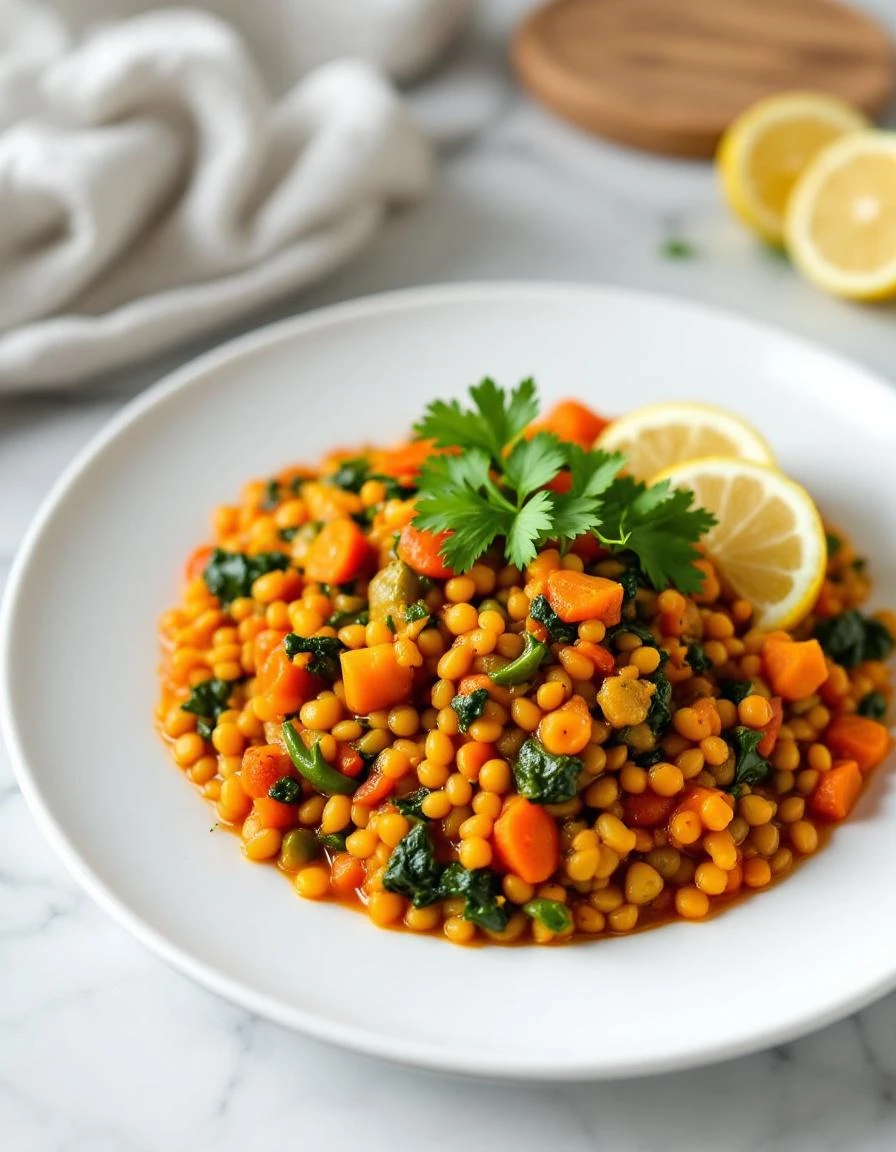
Lentil Vegetable Curry
Ingredients
Equipment
Method
- Heat the oil in a large pot over medium heat until shimmering. Add cumin seeds and cook for about 30 seconds until fragrant and slightly toasted, releasing a warm aroma.
- Add the chopped onion and minced garlic to the pot. Sauté, stirring often, until the onion becomes translucent and starts to turn golden, about 5 minutes. The kitchen will fill with a sweet, savory smell.
- Stir in the curry powder and cook for another minute, allowing the spices to toast lightly and release their aroma, making the oil fragrant and redolent of warm spices.
- Pour in the canned tomatoes and stir well, scraping up any browned bits from the bottom of the pot. Let the mixture simmer gently for 5 minutes until it thickens slightly and the flavors meld together.
- Add the rinsed red lentils, chopped carrots, and bell peppers to the pot. Stir to coat everything evenly with the tomato-spice mixture, then pour in the coconut milk and stir again.
- Bring the mixture to a gentle boil, then reduce the heat to low. Cover partially and let simmer for about 20-25 minutes, stirring occasionally, until the lentils are tender and the sauce has thickened to a creamy consistency. Check and season with salt to taste.
- Once the lentils are soft and the flavors have melded, remove the pot from heat. Taste and adjust salt or spice if needed, then sprinkle with chopped fresh cilantro for a burst of herbal freshness.
- Serve the vibrant, creamy curry hot over rice or with warm naan bread for a complete, satisfying meal. Enjoy the comforting aroma and rich flavors in every spoonful.
Common mistakes and how to fix them
- FORGOT to check lentil doneness, resulting in mushy texture — fix by testing early and often.
- DUMPED too much water, diluting flavors — fix by simmering uncovered to reduce and concentrate.
- OVER-TORCHED spices, leading to bitterness — fix by lowering heat and stirring constantly.
- MISSED salt at the start, making the curry bland — fix by tasting and adjusting seasoning before serving.
Make-Ahead and Storage Tips
- Chop all vegetables the day before; store in an airtight container in the fridge for up to 24 hours. The colors fade slightly, but the flavors stay fresh.
- Cook the lentils and prepare the curry base a day ahead. Keep in the fridge for up to 2 days; flavors meld more deeply overnight.
- Refrigerated curry will thicken; stir in a splash of water or broth when reheating to loosen it up and refresh the texture.
- Freeze leftovers in airtight containers for up to 3 months. Thaw in the fridge overnight, then reheat thoroughly, smelling for that aromatic warmth and tasting for seasoning balance.
- The curry’s flavor intensifies after resting, so taste and adjust salt or spice before serving if reheated. The aroma gets richer, less fresh but more comforting.
FAQs
1. How do I know when lentils are done?
The lentils should be tender but not mushy, with a slight bite. You can tell by pressing a few against the spoon—if they mash easily, they’re ready. The aroma will be warm and earthy, with hints of spice.
2. What if the curry is too thick or too thin?
If the curry is too thick, stir in a splash of water or broth and simmer for a few minutes. Watch for the sauce to loosen and become glossy, smelling fragrant and inviting. If too thin, simmer uncovered to reduce.
3. How do I fix bland curry?
Taste before serving; the flavors should be balanced—spicy, savory, with a touch of brightness from the tomato. Adjust salt or acidity by adding a squeeze of lemon or a pinch more salt. The curry should smell rich and layered.
4. What if I over-toast the spices?
If you notice a burnt smell, lower the heat immediately and stir. To prevent burning spices, toast them briefly and add liquids quickly. A quick fix can salvage the flavor, leaving a smoky aroma instead of bitterness.
5. How should I reheat leftovers?
Reheat gently on the stove, stirring often. Let it simmer until it’s hot through and smells aromatic—like toasted spices and cooked vegetables melding. You might need to add a splash of water if it thickens too much.

Hi there! I’m Himani and welcome to Val’s Recipe Box. This little corner of the internet didn’t begin with me. It began with Val my neighbourhood aunt whose kitchen held more warmth than any fireplace ever could.


 This little corner of the internet didn’t begin with me.
It began with Val my neighbourhood aunt whose kitchen held more warmth than any fireplace ever could.
She was more of a friend and I’ve come to know her in the most unexpected way.
This little corner of the internet didn’t begin with me.
It began with Val my neighbourhood aunt whose kitchen held more warmth than any fireplace ever could.
She was more of a friend and I’ve come to know her in the most unexpected way.