
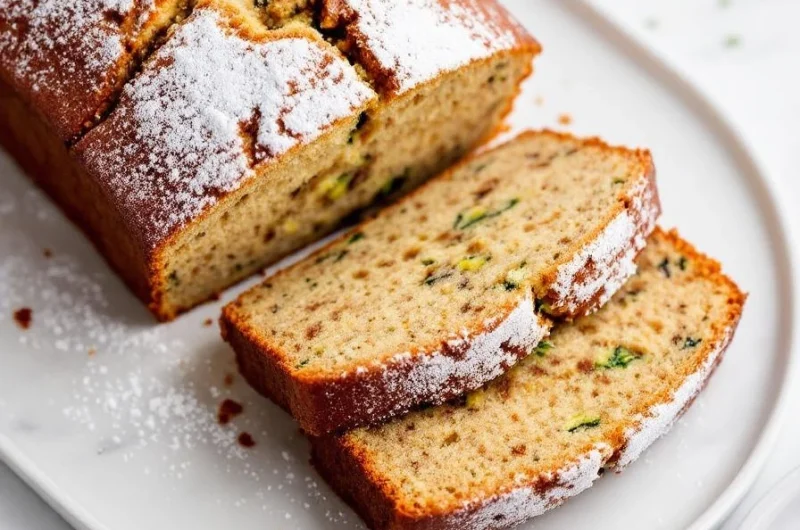
Making zucchini bread means grating the squash directly into the mixing bowl, watching the shreds turn from firm to oozy as you squeeze out excess water. It’s a mess that’s worth it, squishing and wringing until the moisture stops dripping. The smell of wet zucchini, slightly grassy, fills the air as you proceed.
Once the zucchini is squeezed dry, it joins the batter with a faint squish, mixing into the flour and sugar. You’ll fold in nuts or seeds last, trying not to crush the shreds, all while the oven heats up, ready to turn that batter into something sturdy and fragrant.
The way the grated zucchini squeaks as you squeeze out excess moisture, a faint squish and pop that signals readiness before mixing.
What goes into this dish
- Zucchini: I grate it fresh, feeling the shreds slip through my fingers, then squeeze out the water—watch it ooze and glisten. If you skip squeezing, your bread turns dense and wet, so don’t skip this step.
- All-purpose flour: I stick to plain flour for structure, but whole wheat flour adds nuttiness—just expect a denser crumb. Skip the fancy blends unless you want a more rustic vibe.
- Sugar: Granulated is my go-to; I like the crisp sweetness it imparts. Brown sugar makes it richer and moister, with hints of caramel—swap if you want a deeper flavor.
- Eggs: I beat these in, they help bind everything; a flaxseed substitute works if you’re vegan, but the texture might be a tad denser. Don’t skip eggs unless you want a very crumbly loaf.
- Oil: Neutral vegetable or canola keeps it moist without interfering with flavor. Use melted butter if you want a richer taste—just watch the smokiness in the oven. Skip oil for a healthier, but drier, version.
- Vanilla extract: Adds a subtle aroma that blossoms as it bakes—don’t skip if you want that warm, cozy scent. Almond extract works for a different twist, but use less since it’s stronger.
- Baking powder: The leavening that lifts the batter—without it, your bread is flat and dense. Slightly more can give a bigger rise, but don’t overdo it or it’ll taste bitter.
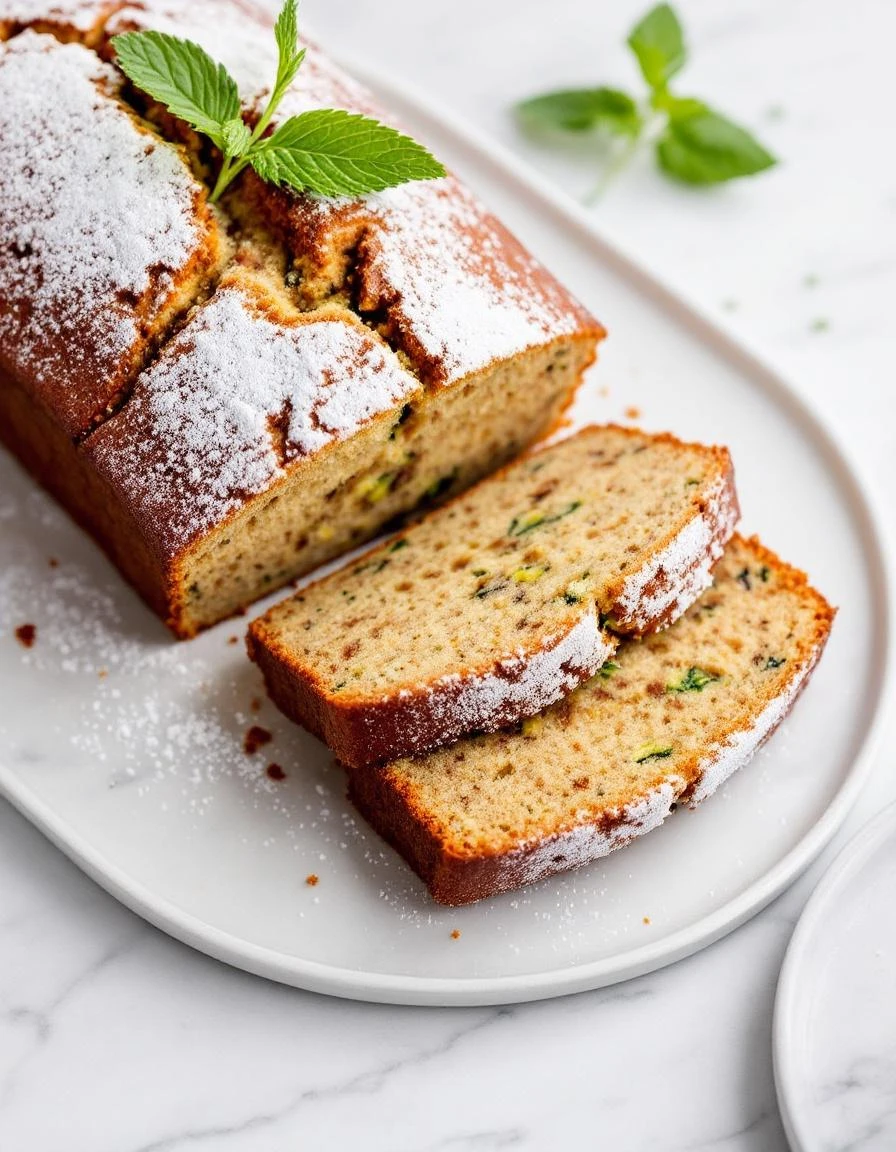
Zucchini Bread
Ingredients
Equipment
Method
- Start by grating fresh zucchini using a fine grater, then transfer it to a clean kitchen towel and squeeze out as much moisture as possible until the shreds feel firm and look glistening.
- In a large mixing bowl, whisk together the eggs, oil, and vanilla extract until well combined and slightly frothy, filling your kitchen with a warm aroma.
- Add the granulated sugar to the wet mixture and stir until the sugar dissolves and the mixture appears smooth and slightly shiny.
- Gently fold in the grated zucchini, allowing its moisture to meld into the batter as you stir softly to distribute evenly.
- Sift the all-purpose flour and baking powder together, then gradually add the dry ingredients into the wet, stirring gently until just combined—avoid overmixing to keep the bread tender.
- If using nuts or seeds, fold them into the batter now, being careful not to crush the shreds or overmix.
- Pour the batter into a greased loaf pan, smoothing the top with a spatula to ensure even baking and a neat appearance.
- Bake in a preheated oven at 350°F (175°C) for about 50 minutes, or until the top is golden brown and a toothpick inserted into the center comes out clean.
- Remove the bread from the oven and let it cool in the pan for 10 minutes, then transfer to a wire rack and allow it to cool completely—this helps set the crumb.
- Slice the cooled zucchini bread and enjoy its moist, tender crumb with a fragrant aroma, perfect for a cozy snack or breakfast.
Common Mistakes and How to Fix Them
- FORGOT to squeeze excess water: It leaves the batter too wet—wring out zucchini thoroughly.
- DUMPED in too much flour: Measure carefully; too much makes bread dense and crumbly.
- OVER-TORCHED the edges: Keep an eye on oven; edges burn quickly, ruining texture and flavor.
- SCOOPED batter unevenly: Use a spoon for uniform portions, ensuring even baking and consistent texture.
Make-Ahead and Storage Tips
- You can grate and squeeze the zucchini a day ahead; keep it in an airtight container in the fridge for up to 24 hours. It saves time and mess on baking day.
- The batter can be mixed and stored in the fridge for up to 12 hours; just cover tightly and stir gently before baking to redistribute moisture.
- The baked zucchini bread keeps well for 2-3 days at room temperature wrapped in foil, or up to a week in the fridge. Its flavor mellows slightly, becoming more homely and comforting.
- For longer storage, freeze slices in an airtight container for up to 3 months. Thaw at room temperature or warm gently in the microwave, listening for that soft, steamy smell and checking for even warmth.
FAQs
1. How do I know if my zucchini is fresh?
The zucchini should feel heavy and slightly damp, with a fresh, grassy aroma. If it’s too dry or moldy, it won’t add moisture or flavor.
2. What texture should grated zucchini have?
Look for shiny, firm shreds that squeak when squeezed. If they’re slimy or limp, it’s best to start with fresher squash.
3. What type of grater works best?
Use a fine grater for delicate shreds or a box grater for chunkier bits. The smaller the shred, the more even the bake, but coarser adds texture.
4. Why is my zucchini bread too dense?
If your bread turns out dense or wet, it likely means you didn’t squeeze out enough water. Squeeze until the shreds stop releasing moisture and feel firm.
5. How should I store leftover zucchini bread?
Wrap cooled slices tightly in plastic or foil, then store at room temp for 2 days or in the fridge up to a week. For longer, freeze slices and reheat briefly in the microwave.

Hi there! I’m Himani and welcome to Val’s Recipe Box. This little corner of the internet didn’t begin with me. It began with Val my neighbourhood aunt whose kitchen held more warmth than any fireplace ever could.


 This little corner of the internet didn’t begin with me.
It began with Val my neighbourhood aunt whose kitchen held more warmth than any fireplace ever could.
She was more of a friend and I’ve come to know her in the most unexpected way.
This little corner of the internet didn’t begin with me.
It began with Val my neighbourhood aunt whose kitchen held more warmth than any fireplace ever could.
She was more of a friend and I’ve come to know her in the most unexpected way.