
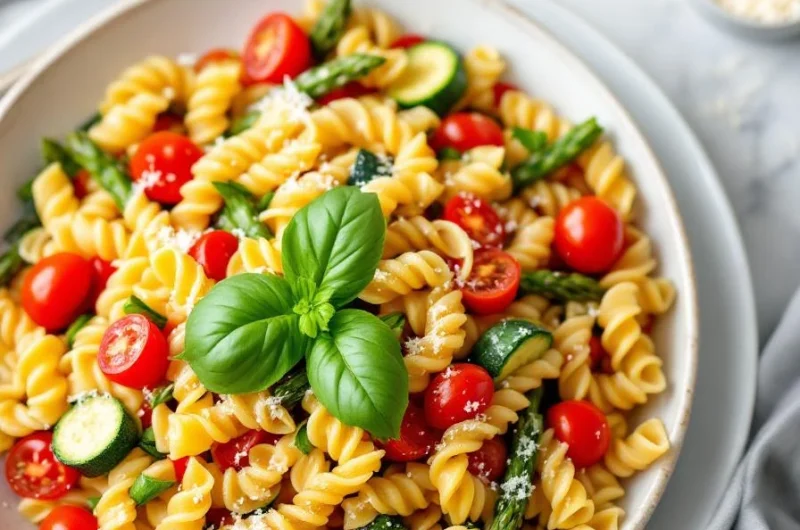
Cooking Pasta Primavera means dealing with a jumble of fresh vegetables and boiling water, often splashing as you stir or drain. You’ll be chopping peppers, zucchini, and tomatoes with a bit of a mess, but that’s part of the process.
As you sauté the veggies, they crackle and soften, releasing a bright, vegetal smell that fills the kitchen. Tossing everything with hot pasta, you’ll notice the steam and vibrant colors blending into a chaotic, flavorful mess.
The gentle simmering of vegetables releases a soft, savory aroma that fills the kitchen, reminding you of spring’s quiet bloom. As you toss the pasta and veggies together, the slight sizzle and the vibrant colors melding create a satisfying, messy dance of textures and smells.
What goes into this dish
- Bell peppers: I like the crunch of red and yellow peppers, bright and sweet. Skip if you prefer softer veggies or use frozen peppers for convenience, but you’ll lose some of that vibrant snap.
- Zucchini: Sliced zucchini adds a tender, slightly grassy flavor. You can swap with yellow squash or cucumber, but they won’t hold up as well during sautéing and will release more water.
- Cherry tomatoes: Oozing with juicy, tangy flavor, they burst in your mouth. If out of season, canned diced tomatoes give a similar brightness, but you’ll miss the fresh pop.
- Garlic and shallots: They form the aromatic base with a warm, savory smell. Use onion if needed, but shallots or garlic give that specific sweet and pungent punch that’s essential.
- Parmesan cheese: I grate it fresh for a nutty, salty finish. Pecorino works too, or skip cheese altogether for a dairy-free version, but you’ll lose that creamy, umami layer.
- Olive oil: Extra virgin for that fruity, peppery note that ties everything together. You can try avocado oil for a milder taste, but it won’t have that distinctive olive aroma.
- Fresh herbs: Basil and parsley brighten the dish with herbal freshness. Dried herbs can be used in a pinch, but they won’t provide the same vibrant, aromatic lift.
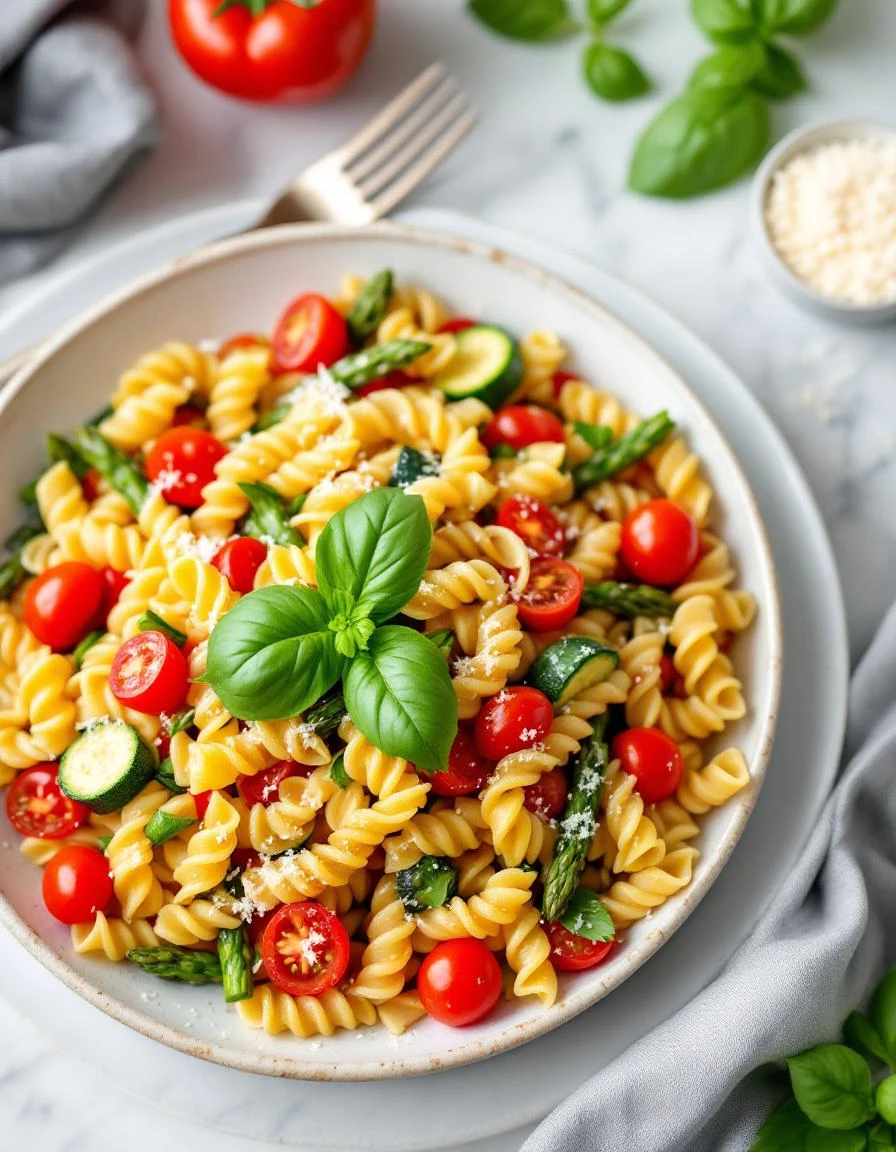
Pasta Primavera
Ingredients
Equipment
Method
- Bring a large pot of salted water to a boil, then add the pasta and cook until just al dente, following package instructions. Drain the pasta, reserving about 1/2 cup of the starchy cooking water, and set aside.
- While the pasta cooks, chop the bell peppers into thin strips and slice the zucchini into half-moons. Halve the cherry tomatoes and set all aside.
- Heat the olive oil in a large skillet over medium heat until shimmering. Add the chopped shallots and cook until translucent and fragrant, about 2 minutes, with a gentle sizzle.
- Add the minced garlic to the skillet and sauté for about 30 seconds until aromatic, being careful not to burn it. The mixture should smell fragrant and slightly nutty.
- Stir in the sliced bell peppers and zucchini, cooking for about 5-7 minutes until the vegetables are tender but still retain some crunch, and their colors brighten.
- Add the cherry tomatoes to the skillet and cook for another 2 minutes until they just start to burst and release their juices, filling the pan with a fresh, tangy aroma.
- Reduce the heat to low and add the cooked pasta to the skillet, tossing gently to combine everything. If the mixture seems dry, stir in a splash of the reserved pasta water to loosen it and create a light sauce.
- Sprinkle the grated Parmesan cheese over the pasta and vegetables, tossing again to evenly distribute the cheesy goodness and melt slightly into the mixture.
- Finish by stirring in the chopped fresh basil and parsley, adding salt and freshly ground black pepper to taste. The dish should be vibrant, aromatic, and just slightly saucy with the starchy pasta water.
- Serve immediately while hot, garnished with extra herbs or Parmesan if desired, and enjoy the lively, colorful flavors of this fresh Pasta Primavera.
Common mistakes and how to fix them
- FORGOT to salt the pasta water, resulting in bland noodles. Always salt generously to flavor the pasta itself.
- DUMPED all the vegetables in at once, causing uneven cooking. Sauté in batches for better texture and color.
- OVER-TORCHED the garlic, turning it bitter. Keep the heat moderate and add garlic later to avoid burning.
- FORGOT to reserve pasta water, missing out on starchy liquid that helps sauce cling better.
Make-Ahead and Storage Tips
- Chop all vegetables a day early; store in airtight containers in the fridge for up to 24 hours, retaining freshness and crunch.
- Cook pasta ahead; drain, toss with a little olive oil, and keep in the fridge for up to 24 hours to prevent sticking.
- Prepare herb and garlic mixture in advance; refrigerate for up to 1 day, but add fresh herbs just before serving for maximum brightness.
- Freezing cooked vegetables is possible but may soften textures; best for up to 2 months, then reheat gently to avoid mushiness.
- Flavors meld and intensify overnight in the fridge, but the veggies can become slightly softer; reheat with a splash of water or broth.
- Reheat pasta primavera in a skillet over medium, stirring often, until steaming hot and fragrant—look for vibrant colors and aromatic steam.
FAQs
1. How should pasta Primavera smell while cooking?
The pasta and vegetables crackle and release steam as you stir, creating a lively, aromatic kitchen. Feel the heat and smell the sweet and savory notes intensify as they cook together.
2. What is the smell of a good Pasta Primavera?
The vibrant aroma of fresh herbs mingles with garlic and roasted veggies, filling the air with a bright, slightly smoky scent. The veggies should be tender but still have a slight crunch.
3. How do I know if my ingredients are fresh enough?
Use fresh ingredients for the brightest flavor. If the tomatoes are dull or the herbs wilt, the dish will lose its lively, fresh character.
4. How can I tell if my pasta or veggies are cooked properly?
Overcooked pasta turns mushy and limp, losing its bite. Undercooked veggies stay too crunchy and raw. Aim for a slight resistance when tasting.
5. How do I reheat Pasta Primavera without losing texture?
Reheat gently in a skillet with a splash of water or broth until steaming and vibrant. The colors should brighten, and the aroma will rekindle with a fresh, vegetal scent.

Hi there! I’m Himani and welcome to Val’s Recipe Box. This little corner of the internet didn’t begin with me. It began with Val my neighbourhood aunt whose kitchen held more warmth than any fireplace ever could.


 This little corner of the internet didn’t begin with me.
It began with Val my neighbourhood aunt whose kitchen held more warmth than any fireplace ever could.
She was more of a friend and I’ve come to know her in the most unexpected way.
This little corner of the internet didn’t begin with me.
It began with Val my neighbourhood aunt whose kitchen held more warmth than any fireplace ever could.
She was more of a friend and I’ve come to know her in the most unexpected way.