
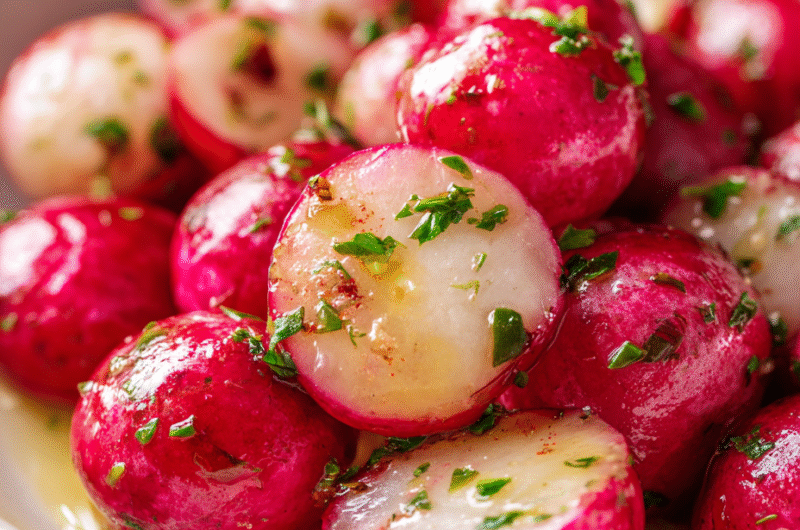
Radishes often get a bad rap as just crunchy raw snacks or simple garnishes, but I’ve found they shine in transformation. Sautéing them in butter unlocks a surprising sweetness and tender, silky texture that makes them feel like a whole new veggie. It’s a humble method, but one that turns radishes into a comforting side that’s rich and satisfying, not just sharp and peppery.
This recipe is perfect for those days when you want to elevate something simple without fuss. The butter caramelizes slightly, coating each radish with a glossy sheen and a mellow depth of flavor. It’s a quick, honest way to enjoy a seasonal vegetable without any fancy ingredients—just radishes, butter, and a little patience.
I see radishes not just as crunch or garnish, but as a delicate vegetable that benefits from gentle transformation. Sautéing them with butter unlocks a surprising sweetness and tender texture, making radishes a star side rather than just a raw bite. It’s a way to elevate a humble root into something comforting and unexpectedly rich, perfect for when you want simple but memorable.
The story behind this recipe
- I first stumbled upon sautéed radishes during a chaotic weekend cooking for friends. I was out of the usual ingredients but had a bunch of radishes that needed using up. I threw them in a pan with butter, not expecting much, but the gentle sizzle and the aroma of melting butter transforming the radishes into something tender and sweet made me stop in my tracks. It reminded me how simple ingredients, when treated with care, can surprise you.
- Ever since that day, I keep a stash of radishes in the fridge, ready for a quick sauté when I want something honest and warm. It’s become my fallback for lazy nights, a dish that’s humble but feels special enough for guests. There’s a quiet pleasure in watching those raw bites soften and take on a glossy, caramelized coat—like a little magic in the kitchen.
- heading
- The story behind this recipe
Key ingredients and tips
- Radishes: I love how their peppery bite softens into a gentle sweetness when sautéed. For a milder flavor, try slicing them thin; if you want more punch, keep them thicker.
- Butter: I use good-quality unsalted butter for richness and a nutty aroma that elevates the radishes. Swap with ghee for a slightly smoky note, but skip the dairy if you prefer a neutral profile.
- Salt: A pinch of flaky sea salt at the end enhances the natural flavors and adds a slight crunch. Adjust based on your taste—less for delicate balance, more for a savory punch.
- Pepper: Freshly cracked black pepper adds a hint of spice and aroma. For a different twist, try a dash of white pepper for a subtler heat or red pepper flakes for heat.
- Optional herbs: A sprinkle of chopped chives or dill adds freshness. For a more earthy flavor, toss in a bit of thyme or rosemary during cooking, being careful not to overpower.
- Lemon juice: A squeeze at the end brightens the dish with a zesty brightness. If you want a milder tang, a splash of apple cider vinegar works well too.
- Additional toppings: Crumbled feta or toasted nuts can add texture and depth. Use these sparingly to keep the focus on the tender radishes and buttery glaze.
Spotlight on key ingredients
Radishes:
- I love how their peppery bite softens into a gentle sweetness when sautéed. For a milder flavor, try slicing them thin; if you want more punch, keep them thicker.
- Butter: I use good-quality unsalted butter for richness and a nutty aroma that elevates the radishes. Swap with ghee for a slightly smoky note, but skip the dairy if you prefer a neutral profile.
Butter:
- I use good-quality unsalted butter for richness and a nutty aroma that elevates the radishes. Swap with ghee for a slightly smoky note, but skip the dairy if you prefer a neutral profile.
- Radishes: I love how their peppery bite softens into a gentle sweetness when sautéed. For a milder flavor, try slicing them thin; if you want more punch, keep them thicker.
Notes for ingredient swaps
- Dairy-Free: Swap butter for olive oil or coconut oil. You’ll miss some nutty richness, but it still caramelizes nicely.
- Vegan: Use vegan butter or a splash of good olive oil. Expect a slightly lighter flavor but still deliciously tender radishes.
- Salt Alternatives: Sea salt gives a nice crunch and flavor; for reduced sodium, try a pinch of smoked salt for depth.
- Pepper Variations: White pepper blends in smoother, less visible; red pepper flakes add a gentle heat if you like a kick.
- Herb Boosts: Chives and dill are classic, but thyme or rosemary add an earthy note that complements the radishes’ sweetness.
- Acid Brightener: Lemon juice is bright and zesty; apple cider vinegar brings a softer, more mellow tang.
- Toppings: Feta cheese adds creaminess, toasted nuts give crunch—use sparingly so radishes remain the star.
Equipment & Tools
- Large skillet: To cook the radishes evenly and allow space for caramelization.
- Spatula: To flip and move the radishes without breaking them.
- Small bowl: To hold and melt the butter.
Step-by-step guide to sautéed radishes
- Gather your equipment: a large skillet (preferably non-stick), a spatula, and a small bowl for melting butter.
- Rinse and dry the radishes thoroughly to remove any dirt. Trim the tops and tails, then slice them in half or quarters depending on size.
- Heat the skillet over medium heat until hot, about 2 minutes. Add a generous knob of butter (about 2 tablespoons) and let it melt, bubbling gently.
- Once the butter is bubbling and fragrant, add the radishes cut-side down in a single layer. Don’t overcrowd the pan; cook in batches if needed.
- Cook the radishes undisturbed for 3-4 minutes until they develop a light golden crust. Shake the pan gently to move them around occasionally.
- Flip the radishes with the spatula and cook for another 3-4 minutes, until they are tender when pierced with a fork and have a glossy, caramelized surface.
- Taste and season with a pinch of flaky sea salt and freshly cracked black pepper. For brightness, squeeze a little lemon juice over the radishes just before removing from heat.
- Remove from heat and let the radishes rest in the pan for 1-2 minutes. Transfer to a serving plate, drizzle with any remaining butter, and garnish with herbs if desired.
Let the radishes rest in the pan for a minute to settle their flavors. Serve warm, drizzled with any leftover butter and garnished with herbs or a squeeze of lemon.
How to Know It’s Done
- Radishes are golden and slightly caramelized on the edges.
- They are tender but still hold their shape when pierced.
- Butter has melted and created a glossy coating on the radishes.
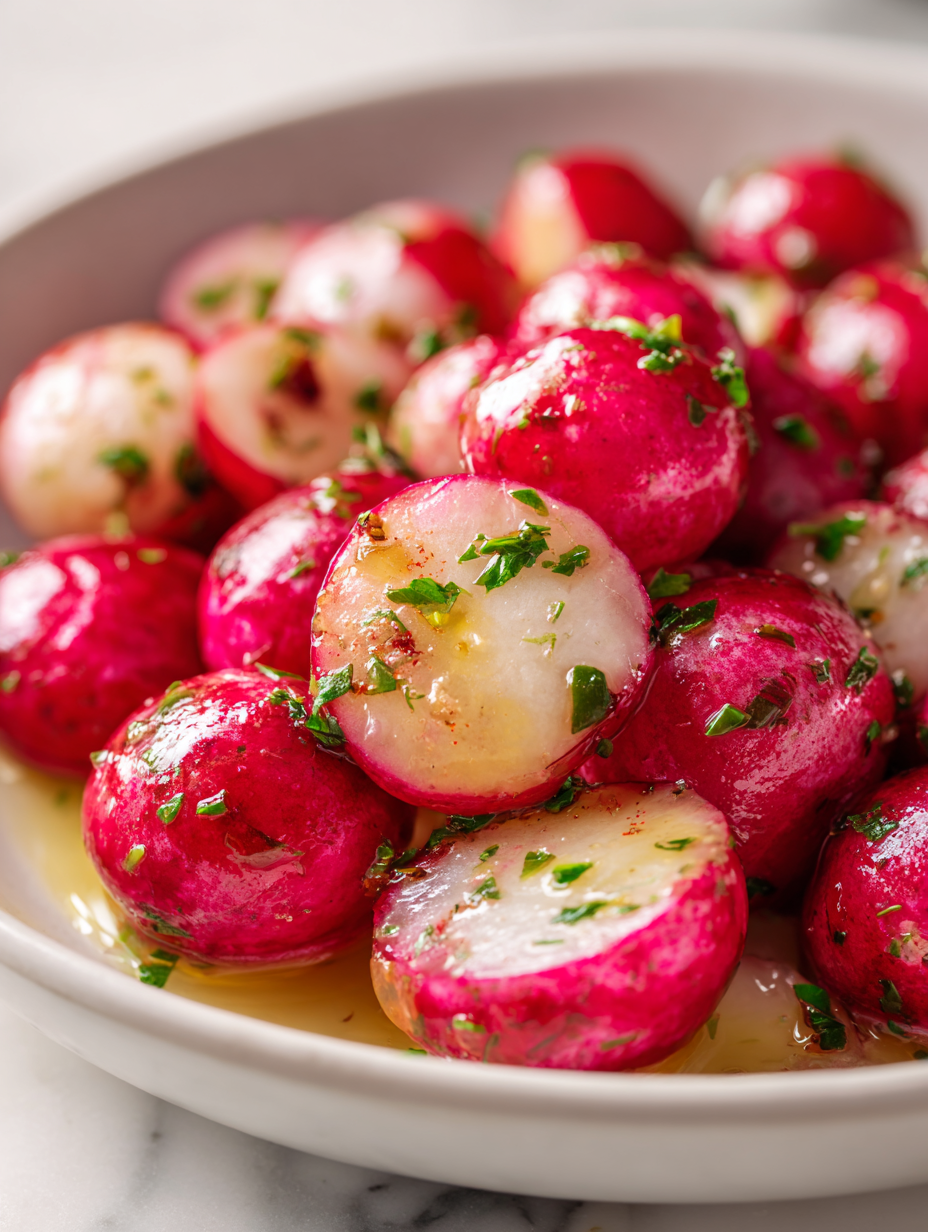
Sautéed Radishes in Butter
Ingredients
Equipment
Method
- Rinse the radishes thoroughly and pat them dry. Trim off the tops and tails, then slice each radish in half or quarters depending on their size.
- Place a large skillet over medium heat and add the butter. Let it melt and bubble gently, filling the kitchen with a nutty aroma.
- Add the sliced radishes cut-side down in a single layer. Let them cook undisturbed for about 3-4 minutes until they develop a light golden crust.
- Gently flip the radishes using a spatula and cook for another 3-4 minutes, stirring occasionally. They should become tender, glossy, and slightly caramelized on the surface.
- Sprinkle with flaky sea salt and freshly cracked black pepper, then squeeze a bit of lemon juice over the radishes if using. Stir gently to combine and distribute the seasoning.
- Cook for another minute until all flavors meld and the radishes are tender yet hold their shape. Remove from heat and transfer to a serving dish.
- Garnish with chopped fresh herbs if desired and serve warm as a comforting, buttery side dish.
Pro tips for perfect sautéed radishes
- Bolded mini-head: Use medium heat → Ensures gentle caramelization without burning the butter.
- Bolded mini-head: Cut radishes evenly → Promotes uniform cooking and consistent tenderness.
- Bolded mini-head: Add butter early → Creates a rich, glossy coating and encourages gentle browning.
- Bolded mini-head: Shake the pan → Prevents sticking and helps radishes cook evenly.
- Bolded mini-head: Watch for color → Aim for a light golden hue indicating perfect caramelization.
- Bolded mini-head: Finish with acid → Brightens flavors; lemon juice is best added just before serving.
- Bolded mini-head: Rest briefly after cooking → Allows flavors to settle and radishes to firm up slightly.
Common mistakes and how to fix them
- FORGOT to watch heat: high heat burns butter; keep it gentle and watch for bubbling.
- DUMPED radishes in cold: hot pan is key for caramelization, so heat skillet before adding radishes.
- OVER-TORCHED butter: reduce heat if butter turns dark; aim for golden, not burnt, butter.
- MISSED seasoning at end: sprinkle salt and lemon immediately after cooking for full flavor.
Quick fixes and pantry swaps
- When butter smokes, splash cold water to stop burning quickly.
- If radishes stick, add a splash of water and cover briefly to loosen.
- Splash vinegar or lemon if radishes turn bitter or dull in flavor.
- Patch over overcooked radishes with a dollop of fresh butter for extra shine and moisture.
- Shield radishes from direct heat if they shimmer too quickly, preventing burning.
Prep, store, and reheat tips
- Radishes can be sliced and prepped a day ahead; store in an airtight container in the fridge, crisp and ready to cook.
- Cooked radishes keep well for up to 2 days in the fridge; reheat gently in a warm skillet until just warmed through, watching for a glossy sheen and tender texture.
- Reheating may soften the radishes further and diminish some of their initial bite, so expect a slightly mellower flavor and softer texture.
- For best sensory results, reheat on low heat, stirring occasionally, until they shimmer slightly and smell warm and buttery.
- Avoid freezing cooked radishes—they become mushy and lose their delicate texture when thawed.
Top questions about sautéed radishes
1. How do I pick good radishes for sautéing?
Look for firm radishes with unblemished skin. Smaller ones tend to be sweeter and more tender when cooked.
2. How should I prepare radishes before cooking?
Slice radishes evenly to ensure uniform cooking. Thinner slices will soften faster, thicker slices keep some bite.
3. What heat setting is best for sautéing radishes?
Use medium heat to prevent burning the butter and ensure gentle caramelization of the radishes.
4. How do I know when the radishes are done?
Cook until radishes are tender when pierced and have a light golden edge. They should shimmer with a buttery glaze.
5. Should I add acid during cooking or at the end?
Adding lemon juice or vinegar brightens the dish and balances the earthy sweetness of the radishes.
6. Can I make this recipe dairy-free or vegan?
You can swap butter with olive oil, ghee, or coconut oil. Each will alter the flavor slightly but still cook well.
7. What if my radishes stick to the pan?
If radishes burn or stick, splash a bit of water and cover briefly. Lower the heat and scrape up browned bits.
8. How should I reheat cooked radishes?
Reheat gently in a skillet over low heat until they shimmer and smell warm and buttery. They soften further but remain tasty.
9. Can I freeze sautéed radishes?
Avoid freezing cooked radishes—they become mushy and lose their delicate texture. Store in an airtight container in the fridge.
10. What’s a common mistake when sautéing radishes?
Overcooking makes radishes mushy and dulls their flavor. Cook just until tender and caramelized for best texture.
Sautéed radishes with butter aren’t just a side; they’re a reminder that simple ingredients can surprise you with warmth and flavor. This dish quietly elevates a humble vegetable, making it perfect for cozy, honest meals or unexpected moments of culinary calm.
Whenever I cook this, it feels like a small act of care—watching radishes soften and glaze, filling the kitchen with a faint buttery aroma. It’s a straightforward pleasure, a little ritual that keeps me grounded and grateful for everyday ingredients.

Hi there! I’m Himani and welcome to Val’s Recipe Box. This little corner of the internet didn’t begin with me. It began with Val my neighbourhood aunt whose kitchen held more warmth than any fireplace ever could.


 This little corner of the internet didn’t begin with me.
It began with Val my neighbourhood aunt whose kitchen held more warmth than any fireplace ever could.
She was more of a friend and I’ve come to know her in the most unexpected way.
This little corner of the internet didn’t begin with me.
It began with Val my neighbourhood aunt whose kitchen held more warmth than any fireplace ever could.
She was more of a friend and I’ve come to know her in the most unexpected way.