
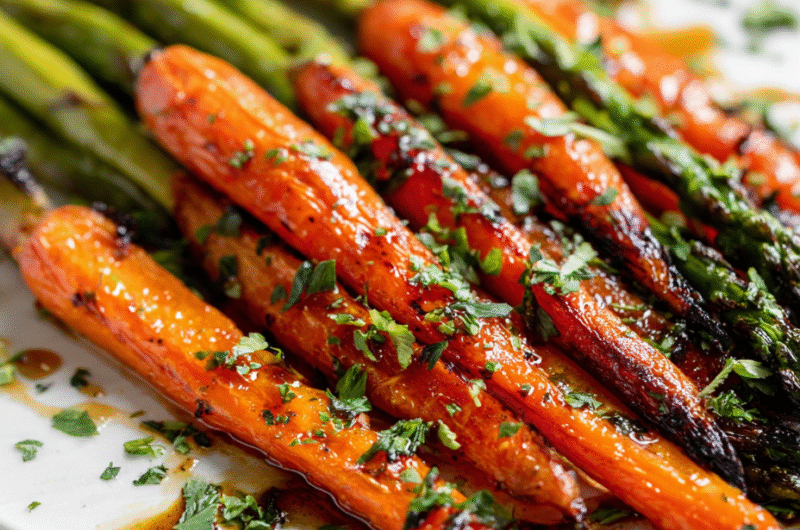
This roasted carrots and asparagus recipe isn’t about perfection or fancy techniques. It’s about embracing the rustic charm of simple vegetables, caramelized at the edges, smoky and tender. Perfect for those nights when you want something honest, quick, and a little messy in the best way.
I started making this dish years ago, kind of on a whim, when I had a bunch of carrots and asparagus that needed using. It became a go-to for casual dinners, a way to turn everyday ingredients into something that feels like a small celebration. It’s simple, but the flavors—sweet, earthy, with a hint of char—keep surprising me every time.
This dish is right in the season’s heart, when fresh, vibrant vegetables are at their peak. It’s a reminder that good food doesn’t need complicated steps—just a hot oven, a little oil, and the patience to let those edges get crispy and caramelized.
This recipe focuses on the overlooked beauty of turning simple vegetables into a shared, family-style dish that feels like a spontaneous feast, emphasizing the imperfect, rustic charm of caramelized edges and smoky hints, perfect for cozy nights or casual gatherings.
The story behind this recipe
- This dish came together one lazy weekend when I was rummaging through the fridge, trying to use up a bunch of carrots and a lonely bunch of asparagus. I didn’t want anything fussy, just something that could bake itself and still taste like I put effort in. The smell of roasting veggies, a little smoky, a little sweet, always pulls me back to my childhood kitchen, where simplicity reigned.
- Years ago, I stumbled on the idea of roasting these two together after a dinner at a friend’s place. The way the caramelized edges caught the light, the natural sweetness of carrots contrasting with the grassy sharpness of asparagus—something about that combo felt like a little celebration of spring, even in the middle of winter.
- heading: ‘The story behind this recipe’
Ingredient breakdown
- Carrots: I love their natural sweetness and the way they become tender and sticky, caramelized around the edges. If yours are thick, cut them in halves or quarters to ensure even roasting.
- Asparagus: Its grassy, slightly bitter snap contrasts beautifully with the carrots. Thinner spears roast faster; snap off the woody ends and keep the tips whole for crunch and visual appeal.
- Olive oil: Use a good-quality extra virgin for that fruity, smoky aroma. Don’t skimp—enough to coat the veggies well, but not so much that they sit in oil.
- Salt & pepper: I prefer flaky sea salt for that gentle crunch and pepper for a mild kick. Adjust to taste—don’t be shy, salt helps bring out the sweetness.
- Lemon zest or balsamic vinegar: Just a touch after roasting adds brightness or depth—think of it as the finishing sparkle. Skip if you prefer a pure, smoky veggie flavor.
- Garlic (optional): Smashed cloves tossed in before roasting infuse a mellow, roasted garlic aroma. If you love garlic, add a little more for an extra punch, but be careful not to burn it.
- Herbs (like thyme or rosemary): Fresh herbs sprinkled on hot from the oven offer a fragrant, herby top note. Dried herbs work too, just use a little less to avoid overpowering the natural sweetness.
Spotlight on key ingredients
Carrots:
- Their natural sweetness intensifies when roasted, developing a tender, caramelized exterior that’s almost jammy in texture. Thick carrots should be cut into uniform pieces to ensure even cooking.
- Asparagus: The grassy aroma and crisp-tender bite become more pronounced with roasting. Thin spears crisp up faster, so snap off the woody ends and keep the tips whole for crunch and visual contrast.
Olive oil and seasonings:
- Olive oil: I prefer a fruity, slightly smoky extra virgin that coats the veggies evenly, helping them caramelize beautifully. Too much oil can make them greasy—use just enough for a thin, even layer.
- Salt and pepper: Flaky sea salt adds a subtle crunch, while freshly ground pepper boosts the smoky, earthy flavors. Be generous but balanced—these seasonings highlight the natural sweetness.
Notes for ingredient swaps
- Dairy-Free: Skip butter or cheese—these veggies are sweet enough on their own, but a drizzle of olive oil keeps them rich.
- Vegan: Use olive oil or avocado oil instead of butter—still gives that lush, roasted finish without animal fats.
- Herb Variations: Swap thyme or rosemary for basil or parsley—each adds a different fragrant note and freshness.
- Salt Alternatives: Sea salt is my go-to, but you could try smoked salt for a deeper, smoky flavor—or skip salt altogether if watching sodium.
- Acid Boost: Lemon juice or vinegar can be added after roasting for brightness—skip if you prefer the pure, caramelized taste.
- Sweeteners: A drizzle of honey or maple syrup before roasting can enhance caramelization—use sparingly to avoid overly sticky veggies.
- Veggie Swaps: Broccoli or Brussels sprouts roast well too—just adjust cooking time and cut into similar sizes for even roasting.
Equipment & Tools
- Baking sheet: Provides a flat surface for even roasting
- Mixing bowl: Toss vegetables with oil and seasonings
- Sharp knife: Cuts carrots and trims asparagus
- Tongs or spatula: Turns vegetables during roasting
Step-by-step guide to roasting
- Preheat your oven to 220°C (430°F). Gather a large baking sheet—something with a rim helps keep everything contained.
- Peel carrots if they’re thick or rough-skinned. Cut them into uniform sticks about 1 inch wide for even roasting.
- Snap off the woody ends of the asparagus, then cut thicker spears in half lengthwise if needed. Keep the tips whole for crunch.
- In a big bowl, toss carrots and asparagus with 3 tablespoons olive oil—enough to coat but not drown. Add a pinch of salt and pepper.
- Spread the vegetables in a single layer on the baking sheet. Don’t crowd—give them space to caramelize properly.
- Roast in the oven for 20-25 minutes. Shake the pan or turn halfway through. Look for deep golden edges and tender tips.
- Check for doneness: carrots should be tender and slightly caramelized, asparagus crisp-tender with browned edges, and smell smoky and sweet.
- If the veggies look burnt or the edges are blackened, reduce the heat or lower the oven rack. If they’re too soft, pull them sooner.
- Remove from oven, sprinkle with lemon zest or a splash of balsamic vinegar while still hot. Toss gently to coat.
- Let rest for 2 minutes. Plate on a warm dish, drizzle with a little more olive oil, and finish with fresh herbs if you like.
Let the vegetables rest for 2 minutes post-oven. Finish with a drizzle of olive oil, lemon zest or balsamic, and fresh herbs if desired. Serve warm, straight from the pan.
How to Know It’s Done
- Carrots are tender and caramelized, with a deep amber hue.
- Asparagus tips are crispy and browned, not burnt.
- Vegetables emit a smoky, sweet aroma and have a slight bounce when poked.
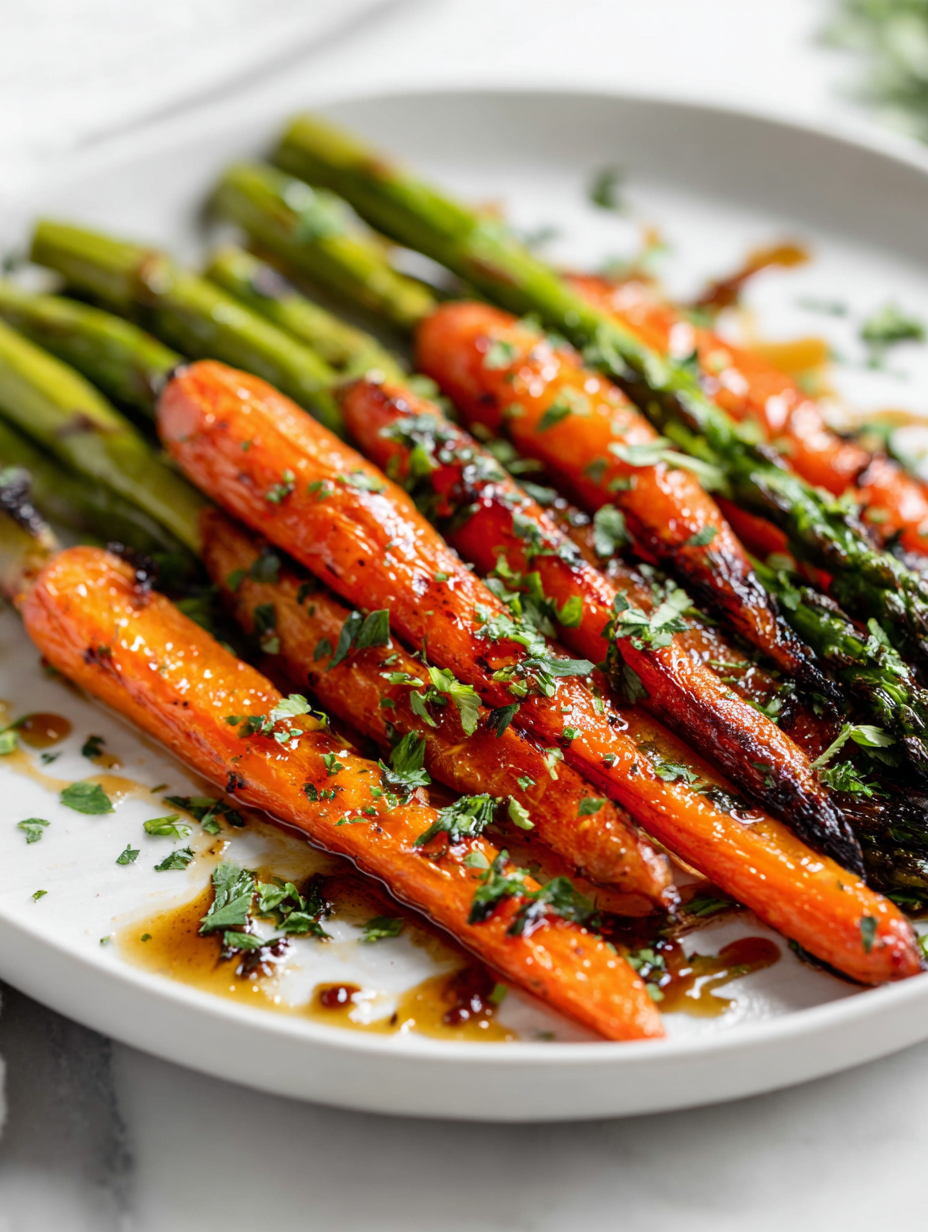
Roasted Carrots and Asparagus
Ingredients
Equipment
Method
- Preheat your oven to 220°C (430°F). Gather a baking sheet and line it with parchment or lightly oil it to prevent sticking.
- Peel the carrots if they’re thick or have rough skins, then cut them into uniform sticks about 1 inch wide. This helps them roast evenly and develop caramelized edges.
- Snap off the woody ends of the asparagus, then cut any thicker spears in half lengthwise to ensure even cooking. Keep the tips whole for a crisp texture and visual contrast.
- In a large mixing bowl, toss the carrot sticks and asparagus with about 3 tablespoons of olive oil, making sure they’re well coated. Sprinkle with a generous pinch of salt and freshly ground pepper.
- Spread the vegetables out in a single layer on the prepared baking sheet, giving them space to caramelize properly. Avoid overcrowding to prevent steaming.
- Roast in the oven for about 20-25 minutes, shaking the pan or turning the vegetables halfway through. Look for deep golden caramelized edges and tender tips.
- Check for doneness: the carrots should be tender and sticky at the edges, while the asparagus tips are crisp-tender with browned, smoky edges. The aroma should be sweet and smoky.
- Once done, remove from the oven and immediately sprinkle with lemon zest or a splash of balsamic vinegar for brightness. Toss gently to distribute the flavors evenly.
- Let the vegetables rest for a couple of minutes, then transfer to a serving dish. Garnish with fresh herbs if you like, and serve warm for maximum flavor and texture.
Pro tips for perfect roasted veggies
- Bolded mini-head: Use high heat → Ensures vegetables caramelize quickly and develop smoky edges.
- Bolded mini-head: Even cuts → Cut carrots into uniform sticks so they roast evenly and stay tender at the same time.
- Bolded mini-head: Don’t overcrowd → Spread vegetables in a single layer to promote crispiness and prevent steaming.
- Bolded mini-head: Shake the pan → Turn veggies halfway through roasting for uniform caramelization and color.
- Bolded mini-head: Watch for blackening → Reduce oven temperature if edges turn too dark, to keep flavor balanced.
- Bolded mini-head: Finish with acid → A splash of lemon or vinegar brightens the roasted sweetness and adds zing.
- Bolded mini-head: Rest briefly → Let veggies sit for a minute after coming out of the oven to settle flavors and texture.
Common mistakes and how to fix them
- FORGOT to check oven temp → Ensure oven is fully preheated before roasting.
- DUMPED the vegetables too close → Spread veggies in a single layer, avoid crowding.
- OVER-TORCHED edges → Reduce heat slightly or check earlier for doneness.
- MISSED flipping halfway → Turn vegetables at 10-15 minutes for even caramelization.
Quick fixes and pantry swaps
- When vegetables burn, splash with a little water and lower oven temperature.
- If vegetables are soggy, increase oven heat and give them a quick blast to crisp.
- DUMPED too much oil? Pat with paper towels, then roast again at higher heat.
- If you forget to flip, do so as soon as you smell caramelizing edges for even color.
- Splash with lemon or vinegar after roasting to rescue dull flavors and add brightness.
Prep, store, and reheat tips
- You can roast the carrots and asparagus a day ahead. Let cool, then store in an airtight container in the fridge. The aroma intensifies overnight, and leftovers develop a slightly richer flavor.
- Stored in the fridge, these vegetables stay good for up to 2 days. The edges might soften a bit, but the smoky sweetness remains intact. Reheat in a hot oven or skillet for best texture.
- Reheating: spread on a baking sheet and warm at 180°C (350°F) for 8–10 minutes. Look for a shimmer of oil and a slight crackle as they reheat, with edges getting crisp again.
- For the best sensory experience, avoid microwaving — it can make the veggies soggy and dull their smoky aroma. Instead, a quick re-toast keeps the texture lively and flavors bright.
- If the veggies seem a little dried out after storage, toss them with a splash of olive oil before reheating to revive their richness and prevent sticking.
Questions About Roasted Veggies
1. How do I know when the roasted carrots and asparagus are done?
The carrots and asparagus should be tender with slightly crispy edges, and smell smoky and sweet. The tips should be crisp and browned, not burnt. The vegetables should bounce slightly when pressed, and the aroma should be rich and caramelized.
2. What are signs that my roasted vegetables are perfectly cooked?
Use a fork or skewer to check if the carrots are tender all the way through. The asparagus tips should be crisp-tender with a slight char. The vegetables will emit a smoky, sweet smell when ready. Look for caramelized edges and a slight jiggle in the thicker parts.
3. What if my veggies are overcooked or burnt?
If the edges are blackened or burnt, reduce the oven temperature or check earlier to prevent overcooking. If the vegetables are soggy, spread them out more or roast at a higher temperature briefly. For underdone veggies, give them a few more minutes, watching closely.
4. How long and at what temperature should I roast them?
Roasting at 220°C (430°F) for about 20-25 minutes usually works well. Flip or shake the pan halfway through to promote even caramelization. Use your senses—smell the sweet, smoky aroma and watch for deep golden edges. The vegetables should be tender and slightly crispy.
5. How should I store and reheat leftovers?
Store leftovers in an airtight container in the fridge for up to 2 days. Reheat in a hot oven or skillet until they shimmer with oil and the edges crackle. Avoid microwaving, which can make them soggy. Reheating restores some crispness and intensifies the smoky flavor.
6. Can I substitute other vegetables?
Yes, you can swap carrots for parsnips or sweet potatoes, and asparagus for green beans or broccoli. Adjust roasting time as needed. Keep in mind that root vegetables may take a little longer, and thicker cuts may need extra minutes.
7. What ingredients are essential for flavor?
Use good-quality extra virgin olive oil for its fruity, smoky aroma. Flaky sea salt adds crunch and enhances sweetness. Fresh herbs like thyme or rosemary bring fragrant notes. A splash of lemon or balsamic vinegar after roasting brightens the dish. Adjust seasonings to your taste.
8. What makes these ingredients special when roasted?
Carrots become sweet and tender with caramelized, slightly sticky edges. Their natural sugars intensify, creating a jammy texture. Asparagus tips crisp up with a smoky char, balancing the sweetness of carrots with grassy, fresh notes. Both ingredients respond beautifully to high heat, developing complex flavors.
9. What are common mistakes and how do I fix them?
FORGOT to flip the vegetables? Turn them halfway through roasting for even caramelization. DUMPED too much oil? Pat with paper towels and roast again at a higher heat. OVER-TORCHED edges? Reduce oven temperature or check earlier. MISSED adding finishing vinegar? Drizzle after roasting for brightness.
10. What are tips for perfect roasting?
Use high heat to encourage caramelization. Keep cuts uniform for even roasting. Spread vegetables out to avoid steaming. Shake or turn midway for consistent browning. Watch for blackening and reduce heat if needed. Finish with a splash of acid for a bright finish. Rest briefly before serving.
Cooking this dish reminds me that simple ingredients, treated with a little patience and heat, can turn into something unexpectedly memorable. The smoky sweetness of roasted carrots paired with the crisp, grassy asparagus feels like a little celebration of seasonal produce. It’s honest food that quietly satisfies, especially when you need a reminder of how good simplicity can taste.
Even after years of cooking, I still find myself reaching for this recipe when I want something wholesome and effortless. It’s a no-fuss way to highlight fresh vegetables and make them feel special, whether for a busy weeknight or a casual weekend. Sometimes, the best meals are the ones that let ingredients speak for themselves.

Hi there! I’m Himani and welcome to Val’s Recipe Box. This little corner of the internet didn’t begin with me. It began with Val my neighbourhood aunt whose kitchen held more warmth than any fireplace ever could.


 This little corner of the internet didn’t begin with me.
It began with Val my neighbourhood aunt whose kitchen held more warmth than any fireplace ever could.
She was more of a friend and I’ve come to know her in the most unexpected way.
This little corner of the internet didn’t begin with me.
It began with Val my neighbourhood aunt whose kitchen held more warmth than any fireplace ever could.
She was more of a friend and I’ve come to know her in the most unexpected way.