
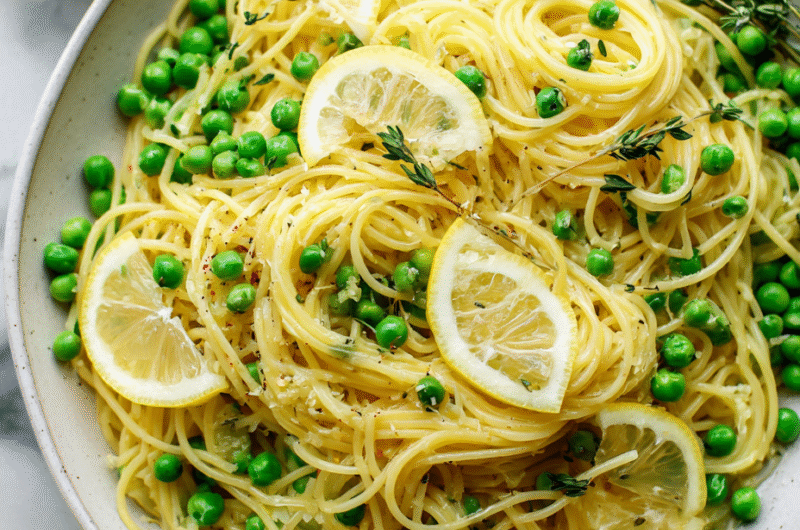
This lemon pea pasta came about during one of those hectic weeks when I needed something quick, bright, and satisfying. I love how the lemon’s zing turns sweet peas into a lively, almost springtime burst on the plate. It’s one of those dishes that feels fancy but is really just a handful of pantry staples and fresh produce.
What keeps me coming back to this recipe is how it balances simplicity with that unexpected pop of citrus. No heavy sauces or complicated steps—just a squeeze of lemon at the right moment, and suddenly everything feels more alive. It’s a dish that reminds me that sometimes, the simplest ingredients make the biggest impression.
Focusing on the surprising brightness that lemon brings to sweet, tender peas, this recipe elevates a simple pasta to something unexpectedly vibrant and fresh, perfect for spring or those days when you need a quick burst of sunshine on your plate.
The story behind this recipe
- This recipe was born out of a quiet afternoon at the market, when I grabbed a bunch of bright green peas and a lone lemon that smelled like summer. I wanted something fresh that didn’t require much fuss, just a quick flavor punch.
- I remember cooking it late one evening, the kitchen filled with the zesty aroma of lemon and the sweet scent of peas. It felt like a small celebration—something simple that made me smile, even after a long day.
- Over time, I’ve kept tweaking it—adding a splash more lemon, a sprinkle of cheese, but the core remains the same: bright, fresh, and honestly, a little unexpected for a pasta dish.
Ingredient breakdown: key components
- Lemon: I love how a good lemon adds a tangy brightness that cuts through the richness of the pasta. Use fresh lemons for that zesty, juicy punch—don’t skimp on the zest, it’s where the aroma lives.
- Peas: Fresh or thawed frozen peas bring a sweet, almost grassy freshness. I prefer fresh in spring, but frozen works well—just add them early enough so they get tender without losing their vibrant color.
- Pasta: I always go for a good quality, slightly rustic pasta—something with a bit of bite. Overcooked pasta just turns mushy, so cook it al dente, then quickly toss it in the sauce.
- Olive oil: A good drizzle of extra-virgin olive oil at the end really elevates the dish. It adds a fruity, rich undertone—use a decent one, not the cheapest bottle, for that lush finish.
- Garlic: I keep garlic minced fine for even distribution and a gentle, aromatic punch. Sauté until just golden—overcooking turns it bitter and loses that sweet, nutty aroma.
- Cheese: A sprinkle of Parmesan or Pecorino just before serving adds salt and umami. Freshly grated makes a difference—don’t skip this step for that cheesy, gooey texture.
- Herbs (optional): A handful of chopped fresh mint or basil can add a surprising herbal lift. I love how they bring a fresh note that complements the lemon perfectly—use sparingly if your herbs are strong.
Spotlight on key ingredients
Lemon:
- I love how a good lemon adds a tangy brightness that cuts through the richness of the pasta. Use fresh lemons for that zesty, juicy punch—don’t skimp on the zest, it’s where the aroma lives.
- Peas: Fresh or thawed frozen peas bring a sweet, almost grassy freshness. I prefer fresh in spring, but frozen works well—just add them early enough so they get tender without losing their vibrant color.
- Pasta: I always go for a good quality, slightly rustic pasta—something with a bit of bite. Overcooked pasta just turns mushy, so cook it al dente, then quickly toss it in the sauce.
Peas:
- Bright green and tender, they burst with sweet juice and a grassy aroma. During cooking, they soften quickly but should still hold some bite for that fresh contrast.
- Lemon: The zest is fragrant and slightly oily, adding a punch of citrus aroma that wakes up the dish. The juice brightens everything instantly, giving a fresh, zingy finish.
Notes for ingredient swaps
- Lemon: I prefer using fresh lemons for that bright, juicy punch—if you only have bottled lemon juice, use half to avoid overpowering the delicate peas. The zest is key for aroma, so skip that if you’re out.
- Peas: Frozen peas are a lifesaver—just thaw and drain well. If you want a slightly sweeter punch, fresh peas can be blanched quickly, but they can be a bit more delicate to handle.
- Pasta: Whole wheat or gluten-free options work here, but keep an eye on cooking times—they may need a minute less or more. The texture might shift slightly, but it’s still good.
- Olive oil: Use a good extra-virgin for richness, but if you’re out, a light vegetable oil won’t ruin the dish. You’ll miss the fruity aroma, though.
- Garlic: If fresh isn’t available, garlic powder works in a pinch—use about half the amount and add it early to release flavor. Fresh garlic gives a sweeter, more aromatic note.
- Cheese: Parmesan can be swapped for Pecorino Romano or skip cheese altogether for a dairy-free version—just add a pinch of salt for umami.
- Herbs: Fresh mint or basil add brightness, but if you’re out, a sprinkle of dried herbs can work—just use sparingly to avoid overpowering the lemon.
Equipment & Tools
- Large pot: To boil pasta efficiently
- Colander: To drain pasta without excess water
- Large skillet: To make the lemon pea sauce
- Microplane or zester: To zest lemon finely
- Knife and chopping board: To mince garlic and herbs
Step-by-step guide to lemon pea pasta
- Bring a large pot of salted water to a rolling boil—about 100°C (212°F). Add 200g of spaghetti or your preferred pasta. Cook until al dente, roughly 8 minutes. Drain, reserving a cup of pasta water.
- While pasta cooks, zest and juice one large lemon—set aside separately. Mince 2 garlic cloves finely.
- In a large skillet over medium heat (about 160°C/320°F), heat 2 tablespoons of olive oil. Add garlic; sauté until fragrant, about 30 seconds. Do not let it brown or turn bitter.
- Add 1 cup of fresh or thawed frozen peas to the skillet. Cook for 1-2 minutes until tender and bright green. If they start to brown slightly, reduce heat.
- Stir in the lemon zest and juice. Let the mixture simmer for 30 seconds to meld flavors. If the sauce seems too thick, add a splash of reserved pasta water to loosen.
- Toss the cooked pasta into the skillet. Mix well to coat evenly with the lemon-pea sauce. Adjust seasoning with salt and pepper as needed.
- Remove from heat. Drizzle with a little more olive oil or a small knob of butter if desired. Toss in a handful of grated Parmesan or Pecorino. Serve immediately, garnished with fresh herbs if using.
Serve immediately while hot. Optionally, sprinkle with extra herbs or cheese for presentation. No need for resting—pasta tastes best fresh.
How to Know It’s Done
- The sauce should be bright and slightly creamy, coating the pasta evenly.
- Peas should be tender but still vibrantly green, not mushy.
- Lemon flavor should be fresh and zesty, not overpowering or dull.
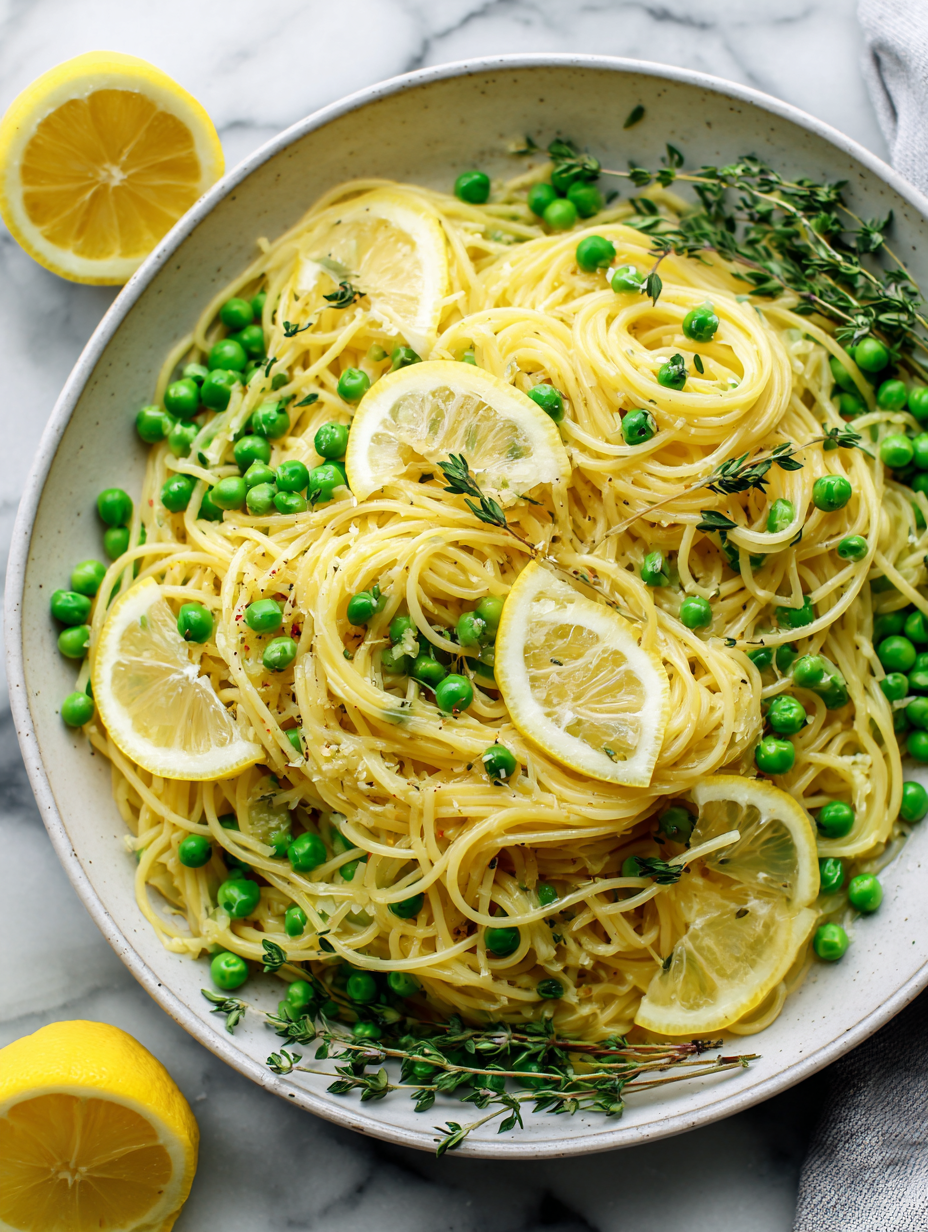
Lemon Pea Pasta
Ingredients
Equipment
Method
- Fill a large pot with salted water and bring it to a rolling boil. Add your pasta and cook until just al dente, about 8 minutes. Drain, reserving a small cup of pasta water, and set aside.
- While the pasta cooks, zest the lemon using a microplane, capturing the fragrant oils, then juice it to extract about 2 tablespoons of juice. Mince the garlic finely.
- Heat the olive oil in a large skillet over medium heat until shimmering. Add the minced garlic and sauté for about 30 seconds until fragrant, being careful not to brown it.
- Add the peas to the skillet and cook for 1-2 minutes, stirring gently, until they’re tender and bright green. If they start to brown, lower the heat slightly.
- Stir in the lemon zest and juice, letting the mixture simmer for about 30 seconds. If the sauce seems too thick, add a splash of the reserved pasta water to loosen it and create a silky coating.
- Add the drained pasta to the skillet and toss gently to coat each strand with the lemon-pea sauce. Season with salt and pepper to taste, adjusting as needed.
- Remove the skillet from heat, then sprinkle generously with freshly grated Parmesan or Pecorino cheese. Drizzle with a little more olive oil if desired, and toss again to combine.
- Garnish with chopped fresh herbs like basil or mint, if using, for a burst of herbal freshness. Serve immediately while hot, with extra lemon wedges if you like more zing.
Notes
Pro tips for perfect lemon pea pasta
- Use freshly grated lemon zest to unlock an intense citrus aroma that permeates the dish.
- Sauté garlic gently until fragrant—avoid browning to keep its sweet, nutty flavor intact.
- Cook peas just until tender and vibrantly green—overcooking dulls their freshness and texture.
- Reserve a splash of pasta water—it’s a starchy ally for loosening the sauce if it thickens too much.
- Toss the pasta in the sauce off heat—this preserves the bright lemon flavor and prevents overcooking.
- Finish with a drizzle of olive oil or a pat of butter—this adds a lush, glossy finish and deepens flavors.
- Serve immediately for best brightness—this dish loses some of its zing as it sits.
Common mistakes and how to fix them
- FORGOT to taste before serving → Adjust seasoning with salt and lemon for brightness.
- DUMPED pasta water too early → Save some for adjusting sauce consistency.
- OVER-TORCHED garlic → Sauté over medium heat until fragrant, not browned.
- MISSED lemon zest → Add zest early for aroma, not just juice for flavor.
Quick fixes and pantry swaps
- If sauce is too thick, splash in reserved pasta water and stir gently.
- When peas look dull, add a squeeze of lemon to brighten their color and flavor.
- Splash olive oil over pasta if it clumps—this restores shine and prevents sticking.
- Patch over overcooked garlic by adding a fresh squeeze of lemon for brightness.
- Shield the dish from bitterness by quickly sautéing garlic over medium heat, not high.
Prep, store, and reheat tips
- Prep the lemon zest and juice ahead—store in airtight container in the fridge for up to 2 days. Brightens the dish when added just before serving.
- Cook the pasta al dente in advance, drain, and toss with a little olive oil to prevent sticking. Keep in fridge for up to 1 day, reheating briefly in hot water or microwave.
- Blanch and cool peas if using fresh—store in an airtight container in the fridge for up to 1 day. Frozen peas can be thawed and kept similarly, ready to toss directly into the sauce.
- The lemon-pea mixture can be made a few hours ahead; keep refrigerated and bring to room temperature before combining with hot pasta for best flavor.
- Reheat leftovers gently in a skillet over low heat with a splash of pasta water or olive oil, just until warmed through. The flavors will mellow slightly but remain lively if refreshed with extra lemon zest before serving.
Top questions about lemon pea pasta
1. Can I use bottled lemon juice?
Fresh lemon juice adds a bright, sharp citrus flavor that wakes up the peas and pasta. Use freshly squeezed for the best aroma and zest for a fragrant punch.
2. Are frozen peas okay for this recipe?
Frozen peas are fine if fresh aren’t available. Just thaw and drain well. Fresh peas are a bit sweeter, but both work quickly and keep their bite.
3. How long should I cook the pasta?
Cook pasta al dente—about 8 minutes—so it stays firm enough to hold the sauce. Overcooked pasta turns mushy and loses bite.
4. When should I add lemon zest?
Add lemon zest early in the sauce to release its fragrant oils. It brightens the dish more than just squeezing lemon juice at the end.
5. Can I skip the olive oil?
Use good-quality extra-virgin olive oil for a fruity, rich finish. It enhances the aroma and depth of flavor, especially when drizzled at the end.
6. Can I make this vegan or dairy-free?
Yes, you can substitute dairy-free cheese or skip cheese altogether. The dish will still be vibrant, but you might lose some umami richness.
7. What herbs work best here?
Fresh herbs like basil or mint add a lively, herbal note. Dried herbs can be used sparingly if fresh aren’t on hand, but they won’t be quite as bright.
8. My sauce is too thick, what now?
If the sauce seems too thick, add a splash of reserved pasta water to loosen it. It helps keep the sauce glossy and smooth.
9. How should I reheat leftovers?
Reheat leftovers gently in a skillet with a splash of water or olive oil. Avoid microwave overheating to keep the flavors fresh and bright.
10. The dish tastes flat after storing, what can I do?
Adding a squeeze of lemon before serving boosts brightness if the dish feels dull after storing. It’s a quick fix for flavor loss.
This dish is a reminder that simplicity can surprise us with its brightness. The lemon and peas together create a fresh, almost uplifting flavor that feels perfect for spring or whenever you need a quick, lively meal.
It’s one of those recipes that tastes like a little celebration — no fuss, just good ingredients and a moment to enjoy the vibrant, zesty notes that make it stand out. Sometimes, the most unassuming dishes leave the best impressions.

Hi there! I’m Himani and welcome to Val’s Recipe Box. This little corner of the internet didn’t begin with me. It began with Val my neighbourhood aunt whose kitchen held more warmth than any fireplace ever could.


 This little corner of the internet didn’t begin with me.
It began with Val my neighbourhood aunt whose kitchen held more warmth than any fireplace ever could.
She was more of a friend and I’ve come to know her in the most unexpected way.
This little corner of the internet didn’t begin with me.
It began with Val my neighbourhood aunt whose kitchen held more warmth than any fireplace ever could.
She was more of a friend and I’ve come to know her in the most unexpected way.