
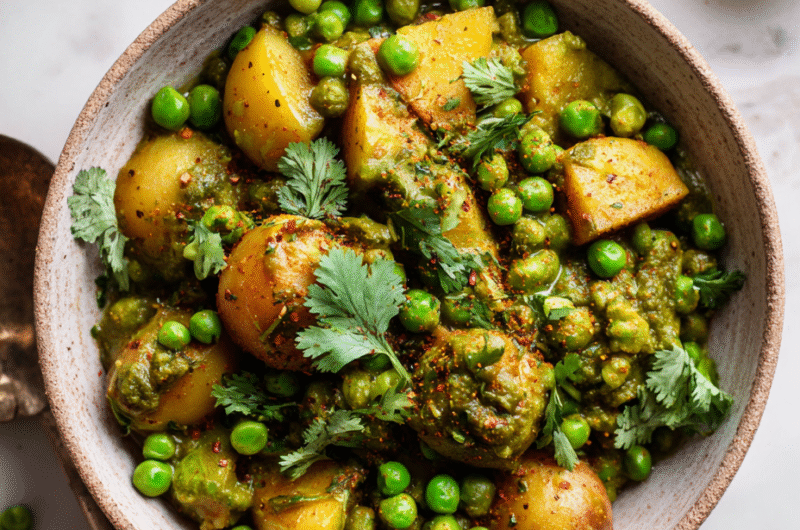
This pea and potato curry is more than just a simple weeknight meal; it’s a blank canvas for seasonal herbs and spice tweaks. I love how a handful of fresh cilantro or a pinch of cumin can totally shift the vibe of this dish, making it feel new each time I make it. It’s humble, sure, but with a little creativity, it always feels fresh and comforting in the best way.
What’s great about this curry is how adaptable it is. When spring arrives, I toss in some chopped mint or a squeeze of lemon for brightness. Come fall, I might stir in a dash of smoky paprika or a dash of cinnamon. It’s a reminder that even the simplest ingredients can become a showcase for whatever’s in season or what I’m craving that day.
This dish is my go-to for those moments when I want something cozy but don’t want to get stuck in a rut. It’s forgiving, flexible, and easy to throw together with whatever I have on hand. Plus, the aroma of simmering spices and tender potatoes fills the kitchen with a warmth that makes everything feel a little more manageable.
Focusing on how this humble pea and potato curry can be a canvas for seasonal herbs and spice adjustments, turning a simple dish into a versatile, ever-changing comfort food.
The story behind this recipe
- This recipe came from a rainy afternoon in my tiny kitchen, when I was rummaging through the fridge and found a bag of frozen peas and some old potatoes. I remembered how my grandmother used to toss similar ingredients into a pot without fuss, trusting the magic of simple spices to bring it all together. That nostalgic smell of cumin and fresh herbs always takes me back to those quiet, busy evenings in her kitchen.
- One day, I decided to play around with the idea, adding a splash of coconut milk and a squeeze of lemon, and suddenly it felt like a completely new dish. It’s become my little ritual—using whatever seasonal herbs I have on hand, turning humble ingredients into something comforting and bright. This dish isn’t just about flavor; it’s about capturing those small, honest moments in cooking that make you smile.
- heading
- story_type
Ingredient breakdown: key components
- Potatoes: I like using Yukon Gold for their creamy texture and buttery flavor; they become tender without falling apart. Feel free to swap in sweet potatoes for a sweeter, firmer bite.
- Green Peas: Fresh peas give a sweet, bright pop that’s unmistakable, but frozen work just fine when fresh aren’t available. Just make sure they’re defrosted and drained well.
- Onion: I always use yellow onion; it softens and caramelizes beautifully, adding depth. Red onion can work if you want a sharper bite, but skip the raw aftertaste.
- Garlic & Ginger: I crush mine together for a fragrant, spicy base. If you’re short on time, pre-minced jars are fine, but avoid overcooking to keep their punch.
- Spices: Cumin and turmeric are my go-tos—smoky and earthy. Toast them briefly in hot oil until fragrant for maximum flavor. Feel free to add coriander or chili powder for heat.
- Coconut Milk: I prefer full-fat for richness, but light coconut milk cuts calories and still adds a gentle sweetness. Watch out for splitting if simmering too long.
- Oil & Seasonings: A good splash of neutral oil like vegetable or canola helps the spices bloom. Finish with a pinch of salt and a squeeze of lemon to brighten the whole dish.
Spotlight on key ingredients
Potatoes & Peas:
- Potatoes: I prefer Yukon Gold for their creamy texture and buttery flavor; they soften beautifully without disintegrating. Feel free to try sweet potatoes for a sweeter, firmer bite.
- Green Peas: Fresh peas provide a bright, sweet burst when cooked, but frozen peas work just as well if they’re defrosted and drained thoroughly. Their slight pop adds a lovely texture contrast.
Notes for ingredient swaps
- Potatoes: I prefer starchy varieties like Russets for fluffiness; waxy potatoes stay firm, which can be good if you like more texture.
- Peas: Fresh peas add a sweet burst, but frozen peas are a reliable stand-in and save time. Just defrost thoroughly before adding.
- Coconut Milk: Use full-fat for creaminess, or swap with cashew cream for a dairy-free option that’s just as rich.
- Spices: If cumin isn’t your thing, try smoked paprika for a smoky twist or coriander for a citrusy note. Adjust quantities to taste.
- Oil & Seasonings: Neutral oils like vegetable or canola are best, but a splash of ghee can deepen the flavor and add a nutty aroma.
- Herbs & Acids: Fresh cilantro or mint brightens the dish, but dried herbs work in a pinch. Lemon juice can be replaced with lime or vinegar for acidity.
- Broth: Vegetable broth is classic, but mushroom or chicken broth can add extra depth. Adjust salt to compensate.
Equipment & Tools
- Large heavy-bottomed pot: For even heat distribution and to prevent sticking.
- Wooden spoon: To stir and scrape the bottom without damaging the pan.
- Measuring cup: To measure liquids accurately.
- Sharp knife: For dicing potatoes and mincing garlic.
Step-by-step guide to pea and potato curry
- Gather your equipment: a large heavy-bottomed pot, a wooden spoon, a measuring cup, and a sharp knife. The pot should be big enough to hold all ingredients comfortably.
- Heat about 2 tbsp of oil over medium heat (around 160°C / 320°F). Add 1 diced onion, cooking until translucent and fragrant, about 5 minutes. Stir occasionally to prevent sticking or burning.
- Add 3 cloves minced garlic and 1 tbsp grated ginger. Cook for another minute until the mixture smells spicy and pungent. If it starts to stick, splash in a little water or stock.
- Toss in 1 tsp cumin and ½ tsp turmeric. Toast the spices for 30 seconds, stirring constantly. The aroma should become warm and earthy; if it burns, remove from heat immediately.
- Add 2 peeled and diced potatoes (about 2cm / 0.8 inch cubes). Stir well to coat with spices. Cover and cook for 5 minutes, stirring occasionally. The potatoes should start to soften around the edges.
- Pour in 1 cup (240 ml) vegetable broth and bring to a simmer. Reduce heat to low (around 85°C / 185°F). Cover partially, cook for 15 minutes or until potatoes are tender but not falling apart. Check for doneness by piercing with a fork; it should slide in easily.
- Stir in 1 cup frozen peas (defrosted and drained). Cook uncovered for another 5 minutes, allowing flavors to meld. The peas should be bright green and tender, with a slight pop when bitten.
- Taste and adjust seasoning: add salt, pepper, and a squeeze of lemon juice. If too thick, stir in a splash more broth or water. If too thin, simmer uncovered for a few more minutes until slightly reduced.
- Remove from heat and let sit for 2 minutes. Resting allows flavors to settle. Serve hot, garnished with fresh herbs if desired. Pair with rice or bread for a complete meal.
Let the curry rest off heat for 2 minutes to deepen flavors. Serve hot, garnished with chopped cilantro or a squeeze of lemon for brightness. Pair with rice or flatbread to soak up the sauce.
How to Know It’s Done
- Potatoes are tender when pierced easily with a fork.
- The curry has a fragrant aroma of toasted spices and sautéed onions.
- The peas are bright and slightly plump, adding a pop of color and freshness.
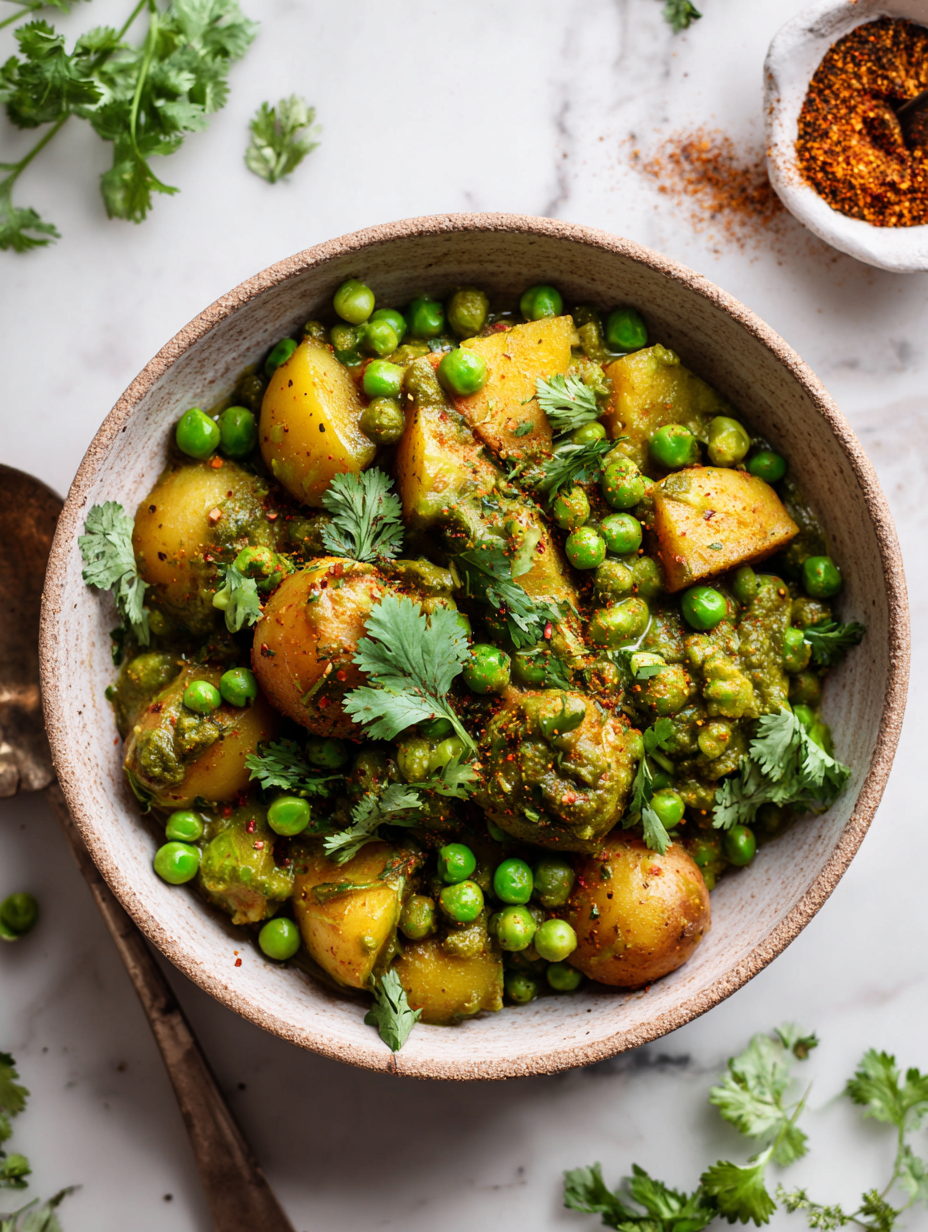
Pea and Potato Curry
Ingredients
Equipment
Method
- Heat the oil in a large heavy-bottomed pot over medium heat until shimmering and fragrant. Add the diced onion and cook, stirring occasionally, until translucent and soft, about 5 minutes.
- Add the minced garlic and grated ginger to the pot, cooking for about 1 minute until fragrant and slightly golden, stirring constantly to avoid burning.
- Toss in the cumin and turmeric, stirring constantly for about 30 seconds until the spices are toasted and fragrant. This enhances their flavor and aroma.
- Add the diced potatoes to the pot, stirring well to coat them with the spice mixture. Cook for about 5 minutes, stirring occasionally, until the potatoes start to soften and turn slightly golden around the edges.
- Pour in the vegetable broth, stirring to combine. Bring the mixture to a gentle simmer, then reduce the heat to low, cover partially, and cook for 15 minutes until the potatoes are tender when pierced with a fork.
- Uncover the pot and stir in the defrosted and drained peas. Cook uncovered for another 5 minutes, allowing the flavors to meld and the sauce to slightly thicken. The peas should be bright green and tender.
- Stir in the coconut milk, then season with salt to taste. Let the curry simmer gently for a few minutes to warm through and develop a creamy consistency.
- Remove the pot from heat, squeeze fresh lemon juice over the curry, and stir gently. Taste and adjust salt or acidity as needed.
- Garnish with chopped cilantro for a fresh burst of flavor. Serve hot over rice or with flatbread for a cozy, satisfying meal.
Pro tips for perfect curry
- Bolded mini-head: Toast your spices briefly in oil until fragrant to unlock deeper flavors.
- Bolded mini-head: Use a sharp knife to dice potatoes evenly for consistent cooking.
- Bolded mini-head: When adding peas, ensure they’re defrosted and drained to avoid excess water diluting the curry.
- Bolded mini-head: Keep the heat moderate when toasting spices; too high and they’ll burn quickly, turning bitter.
- Bolded mini-head: Stir the curry gently after adding liquids to prevent breaking the potatoes and peas.
- Bolded mini-head: Let the curry sit off heat for a couple of minutes before serving to deepen the flavors.
- Bolded mini-head: Adjust seasoning at the end—taste for salt, acidity, and spice balance before plating.
Common mistakes and how to fix them
- FORGOT to check spice levels → Taste and adjust seasoning before serving.
- DUMPED too much water → Keep an eye on the liquid; it should coat the ingredients lightly.
- OVER-TORCHED the spices → Toast spices gently until fragrant, not burnt, to prevent bitterness.
- MISSED the resting step → Let the curry sit for a couple of minutes for flavors to meld.
Quick fixes and pantry swaps
- If/When the curry is too thick, splash in hot water and stir until silky.
- When peas are dull, add a squeeze of lemon to brighten their color and flavor.
- Splash a little more oil if spices stick and burn; keeps flavors lively.
- Patch a burnt spice layer with a spoonful of coconut milk to mellow bitterness.
- Shield over-salted curry with a dollop of yogurt or coconut cream for creaminess.
Prep, store, and reheat tips
- You can prep the onion, garlic, and ginger up to a day in advance; store in an airtight container in the fridge for a fresh, pungent aroma when cooking.
- Peel and dice the potatoes ahead of time; keep in a bowl of water in the fridge to prevent browning. Use within 24 hours for best texture.
- Cook the curry fully, then let it cool before storing in an airtight container in the fridge for up to 3 days. The flavors deepen overnight, becoming more harmonious.
- Reheat gently on the stovetop over low heat, stirring occasionally. Expect the curry to thicken slightly—add a splash of water or broth to loosen it up and restore silky consistency. The aroma of spices will reawaken and fill the kitchen.
Pea and Potato Curry FAQs
1. Can I use frozen peas instead of fresh?
Fresh peas give a sweeter, brighter flavor and a slight pop, but frozen peas are a reliable, time-saving substitute, just defrost and drain well before adding.
2. Can I substitute sweet potatoes?
Yes, you can swap sweet potatoes for regular potatoes for a sweeter, firmer bite, but keep an eye on cooking time as they may cook faster.
3. How do I thicken the curry?
Cooking the curry uncovered at the end helps thicken the sauce, releasing excess moisture and intensifying flavors. Keep stirring gently to prevent breaking the potatoes.
4. How can I brighten the flavor?
Add a splash of lemon juice or vinegar at the end to brighten the dish, especially if you’ve used more earthy spices or want a fresh note.
5. How do I toast spices properly?
To prevent burning spices, toast them gently in hot oil until fragrant, around 30 seconds, stirring constantly. If they start to smell bitter, remove from heat immediately.
6. Can I customize the herbs and spices?
Yes, you can add other seasonal herbs like mint or cilantro near the end for extra freshness, or a pinch of cinnamon or smoked paprika for different flavor profiles.
7. What ingredients can I prep ahead?
You can prepare the onion, garlic, and ginger a day ahead and store in the fridge. Diced potatoes can also be kept submerged in water for up to 24 hours to prevent browning.
8. How should I reheat leftovers?
Reheat the curry gently on the stove over low heat, stirring occasionally. If it thickens, add a splash of water or broth and simmer until warmed through and fragrant again.
9. What if the curry is too salty?
If the curry becomes too salty, add a splash of coconut milk or a small dollop of yogurt to balance the flavor without overpowering it.
10. How do I know when it’s done?
When the potatoes are tender and the peas are bright green, the curry is done. It should have a fragrant aroma, a slightly thick sauce, and a vibrant color.
This humble pea and potato curry is a reminder that simple ingredients can become something comforting and adaptable. It’s a dish that feels like a warm hug, especially when seasoned thoughtfully and finished with a splash of lemon. In times when quick, honest cooking matters most, this recipe offers a cozy, versatile option that’s always satisfying. Enjoy making it your own, season by season, bite by bite.’] }\n
type

Hi there! I’m Himani and welcome to Val’s Recipe Box. This little corner of the internet didn’t begin with me. It began with Val my neighbourhood aunt whose kitchen held more warmth than any fireplace ever could.


 This little corner of the internet didn’t begin with me.
It began with Val my neighbourhood aunt whose kitchen held more warmth than any fireplace ever could.
She was more of a friend and I’ve come to know her in the most unexpected way.
This little corner of the internet didn’t begin with me.
It began with Val my neighbourhood aunt whose kitchen held more warmth than any fireplace ever could.
She was more of a friend and I’ve come to know her in the most unexpected way.