
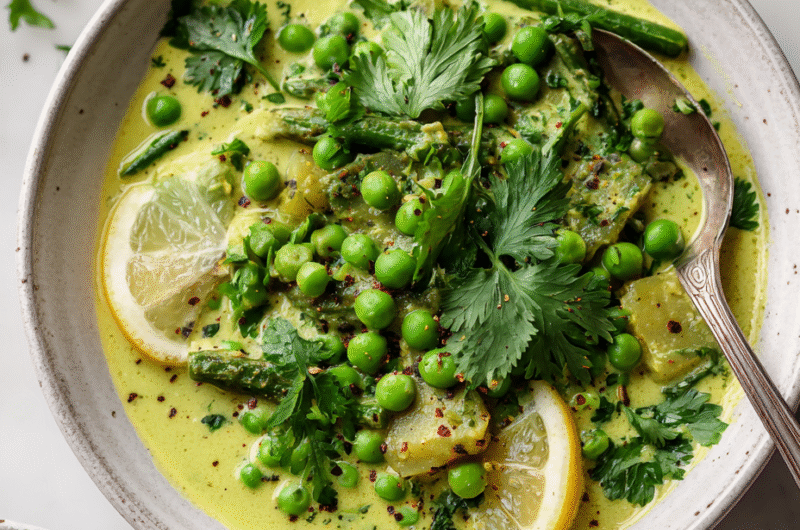
This green pea curry is one of those weeknight miracles—quick, cheap, and surprisingly satisfying. I love how it turns pantry staples into something bright and flavorful, especially when fresh veggies are scarce or the fridge feels empty. It’s a reminder that a good meal doesn’t need to be complicated or costly to be comforting.
I first made this when I was rushing home after a long day, and all I had were some frozen peas, coconut milk, and a few spices. That simple combination turned into a bowl of vibrant green goodness that made me pause. It’s become a go-to for those nights when I want something nourishing without the fuss or the extra trip to the store.
There’s something honest about a dish like this—meant to be thrown together with what’s on hand, yet still packed with flavor. It’s a reminder that simplicity can be beautiful, and that even in chaos, a little bit of spice and some green peas can save the day. No fancy ingredients, just honest cooking from the heart.
Focusing on how this green pea curry can be a quick, budget-friendly meal that transforms simple pantry ingredients into something vibrant and comforting, perfect for busy weeknights when you need a nourishing dish without fuss.
The story behind this recipe
- This green pea curry came about during a particularly chaotic week. I was digging through the freezer and pantry, trying to whip up something that felt comforting but didn’t require a trip to the store. The bright green of the peas caught my eye, and I started imagining how they could be transformed into something warm and satisfying with a few simple spices.
- I remember the smell of garlic and cumin filling the kitchen, the way the peas broke down slightly, turning into a vibrant green sauce that clung to rice like a hug. It’s one of those dishes that’s born from necessity but ends up feeling like a little victory—proof that you can make something special from very little.
- heading: ‘The story behind this recipe’
Key ingredients and tips
- Frozen green peas: I love the pop of sweetness and freshness they add—use fresh if you can, but the frozen kind saves time and still keeps that bright, vegetal punch.
- Coconut milk: It’s my secret to creaminess without heaviness—if you want a richer curry, go for full-fat, but light works just as well for everyday comfort.
- Spices (cumin, coriander, turmeric): I toast these first to unlock their fragrant oils—don’t skip this step or the flavor stays dull and flat, especially in a quick cook.
- Garlic & onion: They form the flavor foundation—sauté until golden and fragrant, then the whole dish blooms with savory depth. Overcooking makes them bitter, so keep an eye on the pan.
- Lemon juice or vinegar: Brightens everything up—add at the end, just enough to cut through the richness and bring that vibrant zing, like a breath of fresh air.
- Oil (vegetable or coconut): I use neutral oil for the base—if you want more flavor, a splash of ghee or toasted sesame oil adds a nutty, aromatic layer that makes the dish sing.
- Salt & pepper: Basic but essential—adjust at the end, tasting for balance. Too much salt dulls the green vibrancy, so go easy until the very last moment.
Spotlight on key ingredients
Green peas:
- Frozen green peas: I love the pop of sweetness and freshness they add—use fresh if you can, but the frozen kind saves time and still keeps that bright, vegetal punch.
- Coconut milk: It’s my secret to creaminess without heaviness—if you want a richer curry, go for full-fat, but light works just as well for everyday comfort.
- Spices (cumin, coriander, turmeric): I toast these first to unlock their fragrant oils—don’t skip this step or the flavor stays dull and flat, especially in a quick cook.
Coconut milk:
- It’s my secret to creaminess without heaviness—if you want a richer curry, go for full-fat, but light works just as well for everyday comfort.
- Lemon juice or vinegar: Brightens everything up—add at the end, just enough to cut through the richness and bring that vibrant zing, like a breath of fresh air.
- Oil (vegetable or coconut): I use neutral oil for the base—if you want more flavor, a splash of ghee or toasted sesame oil adds a nutty, aromatic layer that makes the dish sing.
Notes for ingredient swaps
- Frozen green peas: I love the pop of sweetness and freshness they add—use fresh if you can, but the frozen kind saves time and still keeps that bright, vegetal punch.
- Coconut milk: It’s my secret to creaminess without heaviness—if you want a richer curry, go for full-fat, but light works just as well for everyday comfort.
- Spices (cumin, coriander, turmeric): I toast these first to unlock their fragrant oils—don’t skip this step or the flavor stays dull and flat, especially in a quick cook.
- Garlic & onion: They form the flavor foundation—sauté until golden and fragrant, then the whole dish blooms with savory depth. Overcooking makes them bitter, so keep an eye on the pan.
- Lemon juice or vinegar: Brightens everything up—add at the end, just enough to cut through the richness and bring that vibrant zing, like a breath of fresh air.
- Oil (vegetable or coconut): I use neutral oil for the base—if you want more flavor, a splash of ghee or toasted sesame oil adds a nutty, aromatic layer that makes the dish sing.
- Salt & pepper: Basic but essential—adjust at the end, tasting for balance. Too much salt dulls the green vibrancy, so go easy until the very last moment.
Equipment & Tools
- Medium-sized heavy-bottomed pan: For even heat and preventing sticking.
- Wooden spoon: To stir and scrape bits without damaging the pan.
- Blender or immersion stick: To blend the curry for a smoother texture if desired.
Step-by-step guide to green pea curry
- Gather your equipment: a medium-sized heavy-bottomed pan, a wooden spoon, and a blender or immersion stick.
- Heat 1 tbsp oil over medium heat (about 160°C / 320°F). Add 1 chopped onion and cook until translucent, about 5 minutes. Stir often and watch for a golden hue.
- Add 2 minced garlic cloves and 1 tsp toasted cumin seeds. Cook for 30 seconds until fragrant, then toss in 1 tsp ground coriander and turmeric. Stir and smell for a warm, earthy aroma.
- Pour in 1 can (13.5 oz) coconut milk and 1/2 cup water. Bring to a gentle simmer, about 3-4 minutes, stirring occasionally. The mixture should look rich and slightly bubbly around the edges.
- Add 2 cups frozen green peas directly into the sauce. Stir well and cook for 5-7 minutes until peas are tender and bright green. If the sauce thickens too much, add a splash more water.
- Taste and adjust salt, adding about 1/2 tsp at a time. Squeeze in a little lemon juice or vinegar for brightness—start with 1 tsp and add more to your liking.
- For a smoother texture, blend the curry slightly with an immersion blender or transfer to a regular blender, then return to the pan. Be careful with hot liquids—cover loosely and blend slowly.
- Simmer for another 2 minutes, letting flavors meld and sauce thicken slightly. Check the color and aroma—should be vibrant and fragrant, with a slightly thickened consistency.
- Turn off heat and let the curry rest for 2-3 minutes. This helps the flavors settle and thickens the sauce just enough for serving.
- Serve hot over steamed rice or with crusty bread. Garnish with chopped fresh herbs if desired for an extra burst of freshness.
Let the curry sit off heat for a few minutes to deepen flavors. Serve warm, garnished with fresh herbs if you like. Pair with rice or bread for a complete meal.
How to Know It’s Done
- Peas are tender and vibrant green, not mushy.
- The sauce is creamy and coats the back of a spoon.
- A balanced aroma of garlic, spices, and coconut milk—no raw scents.
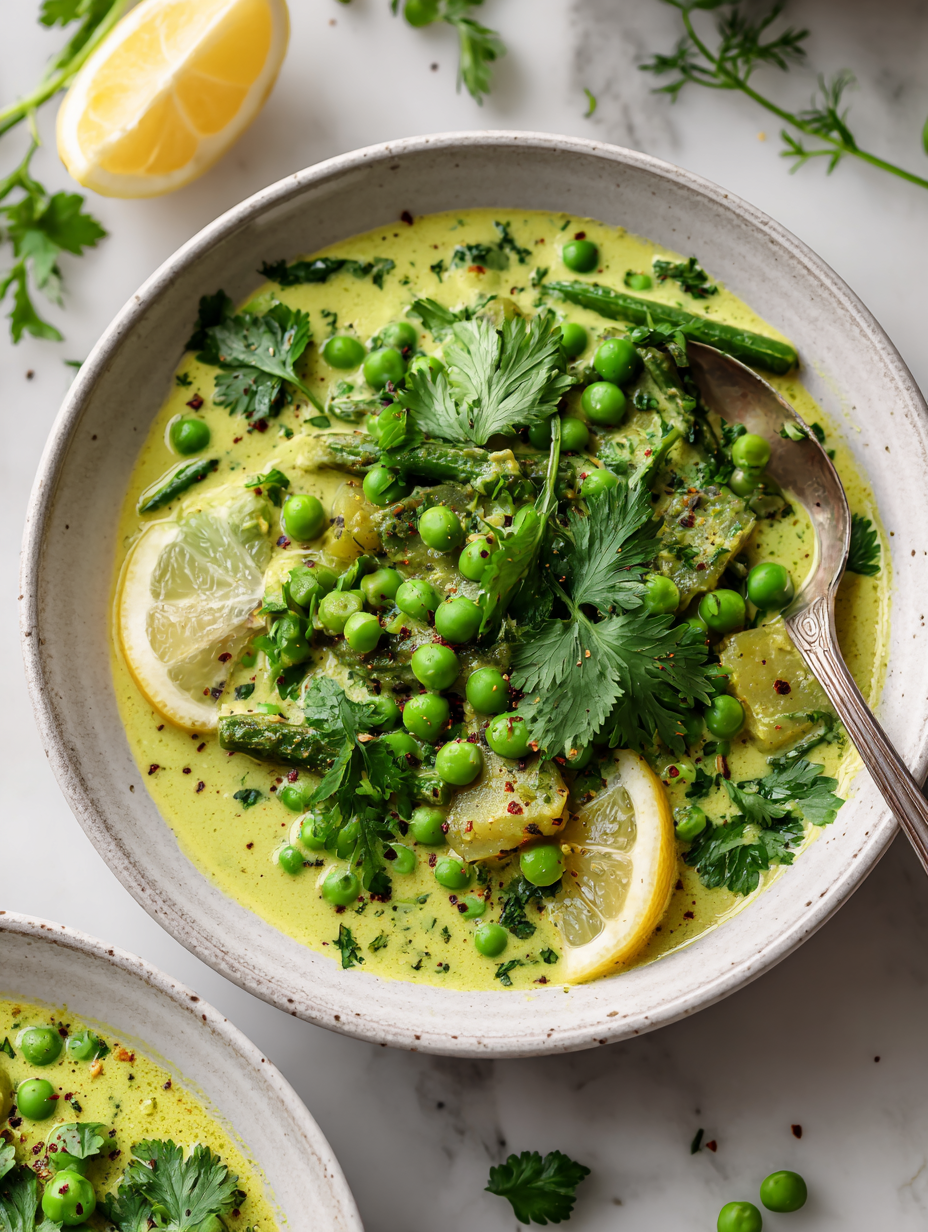
Quick Green Pea Curry
Ingredients
Equipment
Method
- Heat the oil in your pan over medium heat until it shimmers and starts to smell fragrant. Add the chopped onion and cook, stirring often, until translucent and lightly golden, about 5 minutes.
- Add the minced garlic and toasted cumin seeds to the pan. Cook for about 30 seconds, until the garlic is fragrant and the seeds release their aroma. Stir frequently to avoid burning.
- Stir in the ground coriander and turmeric powder, cooking for another 30 seconds. You'll notice the spices releasing their scent, filling the kitchen with warm, earthy aromas.
- Pour in the coconut milk along with water, stirring constantly to combine everything into a smooth, creamy sauce. Bring the mixture to a gentle simmer and let it bubble softly for 3–4 minutes, allowing the flavors to meld.
- Add the frozen green peas directly into the simmering sauce, stirring well. Cook for about 5–7 minutes, or until the peas are tender and vibrant green, and the sauce has thickened slightly.
- Taste the curry and season with salt and pepper gradually. Squeeze in lemon juice or vinegar to brighten the dish, stirring to incorporate.
- If you prefer a smoother curry, carefully blend it with an immersion blender or transfer it to a regular blender. Blend briefly until the sauce reaches your desired velvety consistency, then return to the pan.
- Let the curry simmer for another 2 minutes, allowing the flavors to deepen and the sauce to thicken just a bit more. The peas should be tender, and the aroma should be fragrant and inviting.
- Turn off the heat and let the curry rest for a couple of minutes. This helps the flavors settle and makes it even more delicious when served.
- Serve the green pea curry hot over steamed rice or with crusty bread. Garnish with fresh herbs if desired, and enjoy the bright, comforting flavors.
Pro tips for perfect green pea curry
- Bolded mini-head: Toast spices in oil → Releases essential oils, intensifying aroma and flavor.
- Bolded mini-head: Use frozen peas directly → No need to thaw; they pop with freshness as they cook.
- Bolded mini-head: Simmer gently → Keeps sauce creamy and prevents splitting or burning.
- Bolded mini-head: Adjust acidity last → Brighten with lemon or vinegar at the end to lift the flavors.
- Bolded mini-head: Blend for smoothness → Use an immersion blender to integrate peas into a velvety sauce without over-blending.
- Bolded mini-head: Taste and season early → Salt and acid build flavor; add gradually and taste often.
- Bolded mini-head: Rest before serving → Let the curry sit off heat for 2 minutes to deepen flavors and improve texture.
Common mistakes and how to fix them
- FORGOT to check peas for doneness → Test by pressing peas; they should be tender and bright green.
- DUMPED all spices at once → Toast spices first for maximum aroma and flavor.
- OVER-TORCHED the curry base → Keep heat moderate; stir constantly to prevent burning and bitterness.
- MISSED the seasoning balance → Taste and adjust salt and acidity before serving for optimal flavor.
Quick fixes and pantry swaps
- When in doubt, splash extra lemon to brighten dull flavors.
- If sauce is too thick, stir in warm water or coconut milk gently.
- When peas stay firm, extend cooking by 2 minutes for tenderness.
- Splash a bit of soy sauce or fish sauce for umami depth in a pinch.
- Patch over burnt spices with fresh coconut milk and a squeeze of lime.
Prep, store, and reheat tips
- Prep the curry ingredients: chop onions and garlic, measure spices, and portion peas. The vibrant green and fragrant spices make the final step quicker and more relaxed.
- Store leftover curry in an airtight container in the fridge for up to 3 days. The flavors deepen, and the sauce thickens slightly—expect a more intense, creamy bite upon reheating.
- Freeze leftovers in a freezer-safe container for up to 2 months. Thaw overnight in the fridge, then reheat gently, watching for a slight separation of coconut cream—stir well to revive creaminess.
- Reheat on the stove over low to medium heat until steaming, about 5-7 minutes. The aroma should lift, and the sauce should shimmer and coat the peas evenly. Add a splash of water or coconut milk if it thickens too much.
Top questions about green pea curry
1. Can I use fresh peas instead?
Use frozen peas straight from the freezer; no need to thaw. They keep their bright color and pop when cooked.
2. How do fresh peas affect the dish?
Yes, fresh peas work well and taste slightly sweeter. Just blanch them for a minute before adding.
3. When should I add acidity to the curry?
Stir in lemon juice or vinegar at the end to brighten the flavors and cut through the richness of the coconut milk.
4. What if the curry gets too thick?
If the sauce is too thick, stir in a little warm water or extra coconut milk until it reaches your desired consistency.
5. How do I know when the peas are perfectly cooked?
Overcooking peas makes them mushy and dull in color. Cook until tender but still vibrant, about 5-7 minutes.
6. Can I substitute coconut milk?
Use full-fat coconut milk for a richer, creamier sauce. Light coconut milk keeps it lighter but still flavorful.
7. Should I toast the spices first?
Toast your spices in oil at the start to unlock their full aroma, making the curry more fragrant and layered.
8. How long can I keep leftovers?
This dish is great for meal prep. Store leftovers in the fridge for up to 3 days or freeze for 2 months, then reheat gently.
9. How do I fix a watery curry?
If the curry looks watery after reheating, simmer on low heat until it thickens slightly and the flavors deepen.
10. Can I make it creamier?
For a smoother sauce, blend the curry briefly with an immersion or regular blender, but avoid over-blending to keep some texture.
This green pea curry isn’t just a quick fix; it’s a reminder that honest, simple ingredients can come together into something vibrant and satisfying. It’s perfect for those nights when time’s tight but you still crave something warm and nourishing.
Whenever I make this dish, I feel a little bit of that modest pride—knowing I’ve turned pantry staples into a bowl of bright, comforting goodness. It’s a dish that celebrates the beauty of straightforward cooking, even in chaos.

Hi there! I’m Himani and welcome to Val’s Recipe Box. This little corner of the internet didn’t begin with me. It began with Val my neighbourhood aunt whose kitchen held more warmth than any fireplace ever could.


 This little corner of the internet didn’t begin with me.
It began with Val my neighbourhood aunt whose kitchen held more warmth than any fireplace ever could.
She was more of a friend and I’ve come to know her in the most unexpected way.
This little corner of the internet didn’t begin with me.
It began with Val my neighbourhood aunt whose kitchen held more warmth than any fireplace ever could.
She was more of a friend and I’ve come to know her in the most unexpected way.