
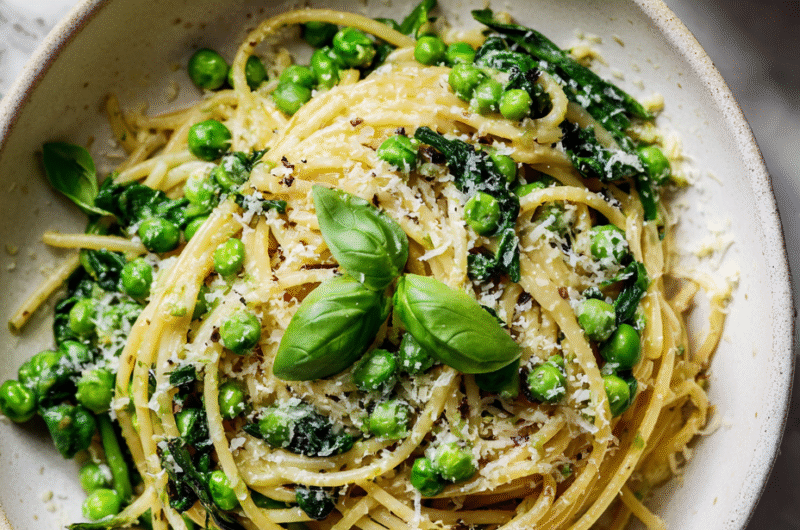
This pea and spinach pasta isn’t about reinventing the wheel, but about appreciating the quiet beauty in simple ingredients. When spring hits, I find myself craving dishes that celebrate fresh, green flavors without fuss. There’s something about the way those tiny peas and tender spinach leaves brighten up a plate, making even the most hurried dinner feel like a small celebration.
I started tossing these greens and peas together on busy weeknights when I needed quick comfort that didn’t skimp on flavor. The subtle sweetness of the peas and the vibrant freshness of the spinach transform a basic pasta into something more vibrant and satisfying. It’s a reminder that sometimes, the simplest things are the most memorable, especially when they come together in a bowl.
Focusing on the overlooked beauty of combining fresh peas and spinach in a pasta dish, highlighting how their delicate sweetness and vibrant green color can turn an everyday meal into a celebration of spring’s subtle flavors.
The story behind this recipe
- This dish came about during a particularly hectic spring when I needed something nourishing but quick. I was rummaging through my fridge and found a handful of peas and a bag of spinach that I almost forgot I had. The bright green colors and fresh smell sparked an idea: why not toss them with pasta and see what happens?
- It’s become a bit of a ritual now—whenever I want a reminder of spring’s gentle sweetness, I make this. No fuss, just a bowl full of vibrant, slightly sweet greens that somehow make everything feel lighter. It’s funny how a simple combination can lift the mood—like a quick breath of fresh air in the middle of a busy day.
- heading: The story behind this recipe
Ingredient breakdown: key components
- Fresh peas: I love the burst of sweetness they add, especially when they’re just barely cooked—bright, juicy, almost like biting into a tiny, fresh fruit. If they’re a little starchy, blanch them briefly before tossing in.
- Spinach: I prefer baby spinach for its tender texture and mild flavor, which wilts quickly and keeps that vibrant green. If you only have mature leaves, give them a quick chop and sauté longer to avoid bitterness.
- Pasta: I always go for a good-quality spaghetti or linguine—thick enough to hold the sauce but not too heavy. Cook it until just al dente, with a slight bite that adds to the freshness of the dish.
- Garlic: I crush mine to release that fragrant, almost nutty aroma—make sure not to burn it, or it turns bitter fast. Add it early in the sauté, just until it’s golden and fragrant.
- Olive oil: Use a good extra-virgin for that fruity, slightly peppery note that ties everything together. Warm it gently to prevent smoking, then toss in your greens and pasta for a silky finish.
- Lemon: I squeeze fresh lemon juice right before serving—bright, zesty, and cuts through the richness of the oil and greens. Skip it if you prefer a milder, earthier profile, but I find it lifts the whole dish.
- Parmesan: Freshly grated, it adds a salty, umami kick that rounds everything out. If you’re dairy-free, a sprinkle of nutritional yeast can offer a similar savory note—just not quite the same meltability.
Spotlight on key ingredients
Peas and Spinach:
- Fresh peas: I love their tiny burst of sweetness, juicy and bright, especially when just barely cooked—almost like biting into a sweet, green fruit. If they’re a bit starchy, blanch briefly before tossing in.
- Spinach: Baby spinach’s tender leaves wilt quickly and keep a vibrant green. If using mature leaves, chop and sauté longer to avoid any bitterness and ensure softness.
Notes for ingredient swaps
- Dairy-Free: Swap Parmesan for nutritional yeast. It won’t melt but adds a savory, cheesy flavor.
- Vegan: Use olive oil instead of butter and skip cheese or try a vegan cheese alternative.
- Gluten-Free: Choose a rice or corn-based pasta. Texture might be slightly different, but still tasty.
- Frozen Peas: Use thawed frozen peas if fresh aren’t available. They are equally sweet and juicy.
- Baby Spinach: Substitute with kale or Swiss chard, but cook longer to soften and mellow the bitterness.
- Lemon: Lime juice can replace lemon for a slightly different citrus brightness.
- Olive Oil: Avocado oil can be a good substitute, offering a milder fruitiness and high smoke point.
Equipment & Tools
- Large skillet: For sautéing greens and peas evenly.
- Large pot: To boil pasta efficiently.
- Colander: For draining pasta without excess water.
- Wooden spoon or tongs: To toss and combine ingredients gently.
- Grater: To freshly grate Parmesan cheese.
- Lemon squeezer: To extract bright lemon juice.
Step-by-step guide to pea and spinach pasta
- Equipment & Tools: Gather a large, deep skillet for sautéing; a pot for boiling pasta; a colander for draining; a wooden spoon or tongs for tossing; a grater for cheese; and a lemon squeezer for juice.
- Bring a large pot of salted water to a boil—about 4 liters (1 gallon), salt until it tastes like sea water. Drop in your pasta and cook until al dente, about 8 minutes. Drain, reserving a cup of pasta water.
- While the pasta cooks, heat the skillet over medium heat—about 160°C (320°F). Pour in 2 tablespoons of good olive oil. When shimmering, add 2 minced garlic cloves and cook until fragrant, about 30 seconds. Do not let it burn.
- Add 1 cup of fresh peas to the skillet. Sauté for 2-3 minutes, until they just start to pop and turn a brighter green. If peas are frozen, thaw first and adjust cooking time accordingly.
- Toss in 2 cups of baby spinach. Stir until wilted, about 1-2 minutes. Should look vibrant and slightly glossy. If it’s looking dry, splash a bit of reserved pasta water to loosen everything up.
- Add the drained pasta to the skillet. Toss everything together over low heat—about 2 minutes. If it feels too dry, add more pasta water a tablespoon at a time until silky. Squeeze in fresh lemon juice, about 1 tablespoon, for brightness.
- Finish with a generous handful of grated Parmesan—about 1/4 cup. Toss again, letting the cheese melt and coat the pasta. Adjust seasoning with salt and pepper if needed.
- Rest the pasta for a minute or two. Plate it up, drizzle with a little more olive oil if you like, and garnish with extra cheese or lemon zest. Serve immediately while greens are vibrant and peas juicy.
Toss the pasta in the skillet off heat. Rest for 1-2 minutes for flavors to meld. Finish with extra lemon zest or cheese if desired. Serve immediately, enjoying the vibrant greens and tender peas.
How to Know It’s Done
- Peas should be tender and bright green, not mushy.
- Pasta should be al dente with a slight bite.
- Greens are wilted but still vivid and glossy.
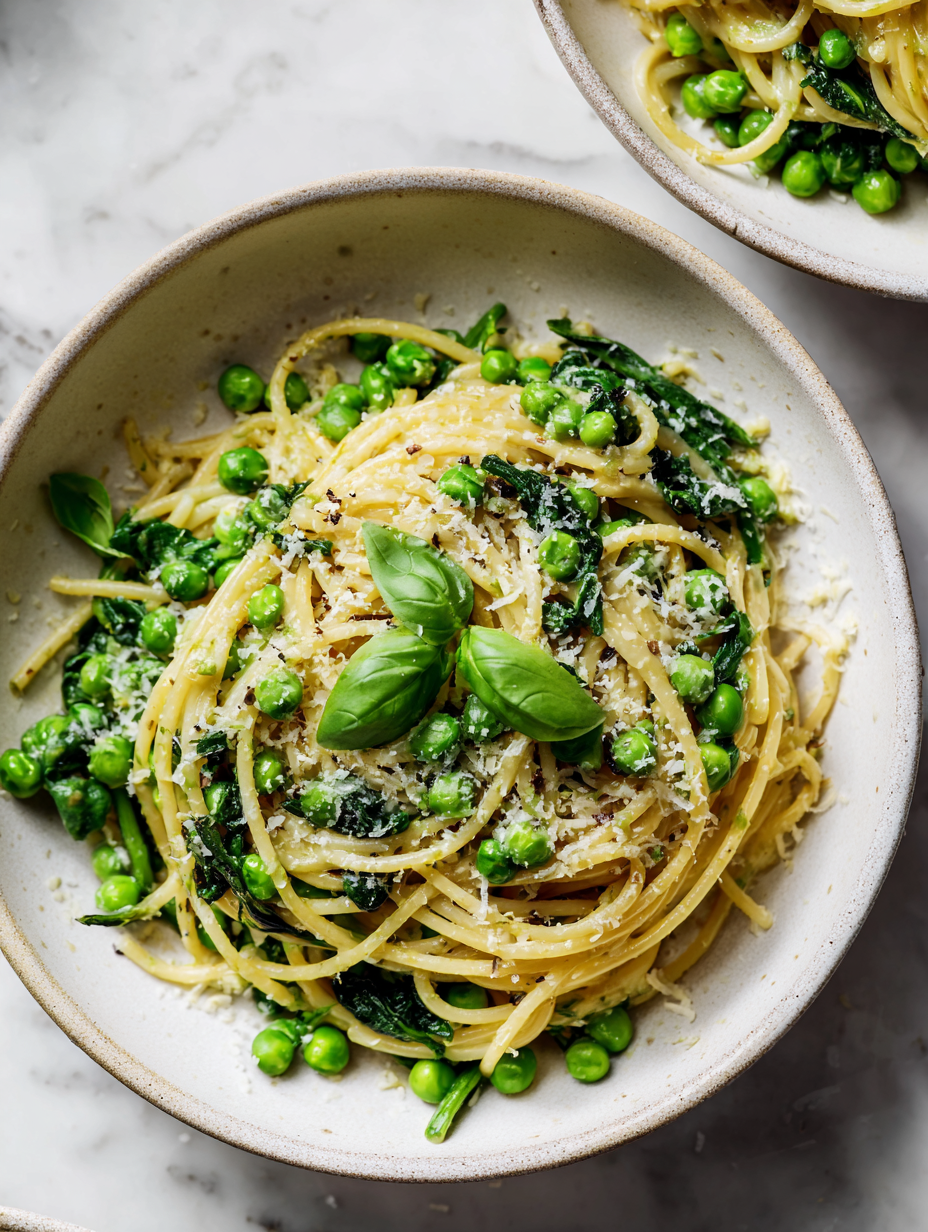
Pea and Spinach Pasta
Ingredients
Equipment
Method
- Bring a large pot of salted water to a rolling boil, adding enough salt to taste like the sea. Drop in your pasta and cook until just al dente—about 8 minutes—until it’s tender but still has a slight bite. Drain and set aside, reserving a cup of pasta water.
- While the pasta cooks, heat a large skillet over medium heat. Pour in the olive oil and let it shimmer, filling the kitchen with a fragrant, fruity aroma. Add the minced garlic and cook gently, stirring constantly, until it turns golden and fragrant, about 30 seconds—be careful not to burn it.
- Add the fresh peas to the skillet and sauté for 2-3 minutes, until they just start to pop and turn a brighter green. Their juicy, sweet aroma should fill the air, and they should look vibrant and fresh.
- Toss in the chopped baby spinach and stir until it wilts down, about 1-2 minutes. The greens should become glossy and vibrant, coating lightly with the oil and fragrant garlic.
- Add the drained pasta directly into the skillet with the greens and peas. Toss everything together gently over low heat, allowing the flavors to meld. If the mixture seems dry, splash in a little of the reserved pasta water, one tablespoon at a time, until the sauce becomes silky and coats the pasta evenly.
- Squeeze in the fresh lemon juice and toss again to brighten the dish with a zesty, fresh flavor. Sprinkle the grated Parmesan cheese over the pasta and toss to melt and evenly distribute, creating a creamy, savory coating.
- Season with salt and freshly ground black pepper to taste, then give everything one last gentle toss. Let the pasta rest for a minute to allow the flavors to meld further.
- Serve immediately, garnished with extra cheese or lemon zest if desired. The vibrant greens, juicy peas, and tender pasta make for a fresh, colorful dish that’s perfect for spring or a quick weeknight dinner.
Pro tips for pea and spinach pasta
- Use fresh peas for a juicy pop—avoid overcooking to keep that bright sweetness.
- Sauté spinach quickly over high heat—just until wilted and vibrant, to preserve flavor and color.
- Save pasta water—it’s starchy and perfect for loosening the sauce without watering it down.
- Mince garlic finely and add early—watch for fragrant, golden notes, not burnt bitterness.
- Toss ingredients gently but thoroughly—this helps greens wilt evenly and coat pasta nicely.
- Add lemon juice just before serving—brightens the entire dish and enhances fresh flavors.
- Finish with grated cheese off heat—allows it to melt smoothly and cling to every strand.
Common mistakes and how to fix them
- FORGOT to check pasta doneness → Taste test for al dente texture.
- DUMPED all water too quickly → Reserve some pasta water for sauce consistency.
- OVER-TORCHED garlic → Sauté on medium-low, 30 seconds until fragrant, not brown.
- MISSED stirring greens evenly → Toss frequently to prevent sticking and ensure even wilt.
Quick fixes and pantry swaps
- When sauce looks too thick → Splash in pasta water and stir until silky.
- If greens are wilted too much → Add a squeeze of lemon for fresh brightness.
- Splash olive oil if pasta sticks → Keeps strands separated and shiny.
- Patch over salty sauce → Stir in a bit of plain pasta water to dilute saltiness.
- Shield from burning garlic → Lower heat immediately if it turns brown and bitter.
Prep, store, and reheat tips
- Prep the peas and spinach by washing and chopping ahead of time; greens will stay vibrant in the fridge for up to 2 days, peas for 1 day. The fresh aroma of greens and the sweet smell of peas make the fridge smell slightly floral and green.
- Cook the pasta al dente and toss with a little oil to prevent sticking. Store in an airtight container for up to 24 hours; reheat gently to avoid mushiness, the aroma will be slightly muted but still fresh.
- To reheat, warm the pasta in a skillet with a splash of water or olive oil over low heat until just heated through. The greens will wilt further, and the peas will soften. Expect a warm, fragrant aroma and slightly softer texture.
- Leftovers can be stored in the fridge for up to 1 day. For best flavor, reheat gently, and add a squeeze of lemon or a drizzle of olive oil to refresh the dish before serving. The flavors will deepen and mellow after a day, with a slightly earthier aroma.
Top questions about pea and spinach pasta
1. Can I use frozen peas instead of fresh?
Fresh peas are sweet and juicy, adding a burst of flavor. Use frozen if fresh aren’t available, but thaw first.
2. Should I use baby or mature spinach?
Baby spinach wilts quickly and keeps its bright green color. Mature leaves need longer cooking and may be more bitter.
3. How do I know when the pasta is cooked properly?
Cooking pasta until just al dente keeps it firm enough to hold the sauce and greens without turning mushy.
4. When should I add lemon juice?
Add lemon juice right before serving to brighten the dish. It enhances the sweetness of peas and freshness of spinach.
5. Why should I save pasta water?
Reserve some pasta water before draining. It’s starchy and helps loosen the sauce if it gets too thick.
6. Can I substitute the olive oil?
Use good-quality olive oil for a fruity, peppery note that ties the greens and pasta together.
7. What cheese can I use if I’m vegan?
Grate Parmesan fresh for the best flavor and meltability. Nutritional yeast can replace cheese for a vegan option.
8. How do I prevent garlic from burning?
Cook garlic gently over medium heat until fragrant and golden, about 30 seconds. Burnt garlic turns bitter fast.
9. How do I keep greens from sticking?
Stir greens frequently while sautéing to ensure even wilt and prevent sticking or burning.
10. How should I reheat the pasta without ruining it?
Reheat leftovers gently in a skillet with a splash of water or olive oil to preserve texture and flavor.
This simple pasta dish, with its fresh peas and spinach, feels like a small breath of spring whenever I make it. It’s honest, quick to come together, and reminds me to savor the delicate sweetness of seasonal greens. Sometimes, those straightforward flavors are exactly what you need to lift a busy day.
It’s a reminder that good food doesn’t need to be complicated or fancy. Just good ingredients, a little heat, and a touch of lemon—those are the things that keep me coming back to this bowl, season after season.

Hi there! I’m Himani and welcome to Val’s Recipe Box. This little corner of the internet didn’t begin with me. It began with Val my neighbourhood aunt whose kitchen held more warmth than any fireplace ever could.


 This little corner of the internet didn’t begin with me.
It began with Val my neighbourhood aunt whose kitchen held more warmth than any fireplace ever could.
She was more of a friend and I’ve come to know her in the most unexpected way.
This little corner of the internet didn’t begin with me.
It began with Val my neighbourhood aunt whose kitchen held more warmth than any fireplace ever could.
She was more of a friend and I’ve come to know her in the most unexpected way.