
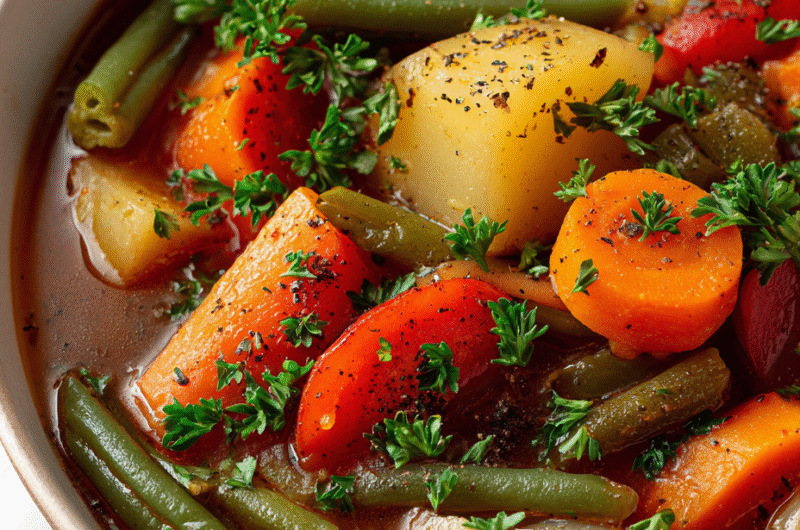
This crockpot vegetable stew is my go-to for busy weeks when I want something warm and satisfying without spending hours in the kitchen. It’s about trusting the slow cooker to do the work, transforming humble vegetables into a rich, flavorful broth that tastes like it simmered all day, even though I threw it together in the morning.
I love how this recipe can be thrown together with whatever vegetables I have on hand—carrots, potatoes, zucchini—and still turn out hearty and comforting. It’s a little chaotic, sure, but that’s part of the charm. Plus, the smell that fills the house as it cooks—sweet, smoky, with a hint of herbs—is enough to make any busy day better.
This recipe is inspired by the chaos of a busy weeknight, where I need something hearty without the fuss. It’s about leaning on the slow cooker to do the heavy lifting, turning simple vegetables into a comforting, nourishing stew that tastes like it simmered all day—without the actual day-long wait.
The story behind this recipe
This recipe came together one hectic afternoon when I rummaged through my fridge and saw a bunch of neglected vegetables. I needed a meal that could simmer away while I handled other chores, and the slow cooker was my saving grace. It’s funny how some of the best dishes are born out of chaos and necessity—this stew is proof that simplicity and patience can turn humble ingredients into something satisfying. Every time I make it, I remember those busy days when a warm bowl was all I needed to feel grounded again.
Ingredient breakdown: key components
- Carrots: I like their natural sweetness and how they soften into a tender, almost melting texture. For a subtler flavor, use parsnips instead—they add a gentle earthiness.
- Potatoes: They thicken the stew and add hearty substance, but if you’re watching carbs, cauliflower florets work well—just watch their cooking time so they don’t turn mushy.
- Zucchini: I toss these in near the end because they cook quickly and keep their shape, offering a slight bite. Skip if you prefer a creamier, more integrated texture.
- Vegetable broth: I prefer a rich, homemade broth to deepen the flavor, but store-bought works fine—just look for low-sodium versions to control salt. Add a splash of soy sauce or miso for extra umami.
- Herbs & spices: Fresh thyme and bay leaves are my go-to—they fill the house with a fragrant, herbal aroma. Dried herbs are fine, but add them earlier to let their flavors mellow and develop.
- Onions & garlic: Sauté them first if you have time—they bring out a sweet, caramelized aroma. If not, toss them in raw for a more pungent, raw flavor that mellows during cooking.
- Olive oil: I drizzle it in at the start to help soften the vegetables and add a subtle fruity note. For a richer stew, a splash of coconut milk or butter can add creaminess and depth.
Spotlight on key ingredients
Carrots & Potatoes:
- Carrots: I love their natural sweetness and how they soften into a tender, almost melting texture. For a subtler flavor, use parsnips instead—they add a gentle earthiness.
- Potatoes: They thicken the stew and add hearty substance, but if you’re watching carbs, cauliflower florets work well—just watch their cooking time so they don’t turn mushy.
Broth & Herbs:
- Vegetable broth: I prefer a rich, homemade broth to deepen the flavor, but store-bought works fine—just look for low-sodium versions to control salt. Add a splash of soy sauce or miso for extra umami.
- Herbs & spices: Fresh thyme and bay leaves are my go-to—they fill the house with a fragrant, herbal aroma. Dried herbs are fine, but add them earlier to let their flavors mellow and develop.
Notes for ingredient swaps
- Broth: I prefer homemade vegetable broth for deep, complex flavor, but store-bought low-sodium versions work well—just skip the added salt.
- Root Vegetables: Parsnips or sweet potatoes can replace carrots for a sweeter, earthier note. Adjust cook time accordingly.
- Potatoes: Cauliflower florets are a lighter alternative that won’t break down as much, ideal for a less starchy stew.
- Herbs & Spices: Fresh parsley or basil can brighten the stew at the end, while dried herbs work if added earlier for a mellow, cooked flavor.
- Oil & Fats: Use coconut oil or butter instead of olive oil for richer, slightly different flavor profiles—goes especially well with root veggies.
- Zucchini: Summer squash is a good swap if zucchini isn’t available, and it keeps the stew vibrant and fresh-tasting.
- Seasoning: A splash of soy sauce or miso paste can add umami depth if you want a richer, savory boost without extra salt.
Equipment & Tools
- Large slow cooker: Main cooking vessel to simmer the stew all day.
- Sharp knife: Chopping vegetables efficiently and safely.
- Cutting board: Providing a stable surface for prep work.
- Stirring spoon: Mixing ingredients during cooking and serving.
- Skillet or frying pan: Sauté aromatics for deeper flavor before slow cooking.
Step-by-step guide to vegetable stew
- Gather your equipment: a large slow cooker, a sharp knife, a cutting board, and a stirring spoon. The slow cooker is your main tool, so ensure it’s clean and ready.
- Prep the vegetables: peel and chop carrots, potatoes, and celery into bite-sized pieces. Cut zucchini into chunks near the end of cooking to keep their texture fresh.
- In a skillet over medium heat (around 150°C/300°F), sauté chopped onions and garlic in a splash of olive oil until fragrant and translucent, about 5 minutes. This step softens their raw punch and adds depth.
- Add the sautéed aromatics to the slow cooker. Toss in the carrots, potatoes, celery, and any other sturdy veg you like. Pour in 4 cups (1 liter) of vegetable broth. Stir to combine.
- Set the slow cooker to low and cook for 6-8 hours. During this time, the vegetables will soften and the flavors will meld. If you notice the broth evaporating too much, add a splash more during the last hour.
- About 30 minutes before serving, stir in the zucchini chunks and chopped herbs (thyme, bay leaves). Keep the lid on and let them cook until tender and fragrant. Taste and adjust salt and pepper.
- Check the stew: it should be thick, with vegetables easily pierced, and a rich aroma. If it’s too watery, turn the cooker to high with the lid off for 15 minutes to reduce slightly.
- Once done, turn off the heat. Let the stew rest for 10 minutes — this helps the flavors settle and the stew thicken a bit more. Remove bay leaves and herbs before serving.
- Ladle into bowls, maybe drizzle with a little olive oil or a squeeze of lemon for brightness. Serve hot, with crusty bread if you like. Clean-up is minimal, just the slow cooker and a few utensils.
Once cooked, turn off the slow cooker and let the stew rest uncovered for 10 minutes. Remove any bay leaves or sprigs of herbs. Taste and adjust seasoning if needed. Serve hot, garnished with fresh herbs or a drizzle of olive oil for extra richness.
How to Know It’s Done
- Vegetables are tender when pierced with a fork, with no raw crunch.
- The broth is thick and flavorful, not watery or bland.
- Aromatic herbs and garlic are fragrant, not burnt or overpowering.
Slow Cooker Vegetable Stew
Ingredients
Equipment
Method
- Start by peeling and dicing the onions, carrots, and potatoes, and chopping the zucchini into bite-sized pieces. Set everything aside for easy access.
- In a skillet over medium heat, warm the olive oil until it shimmers and begins to ripple. Add the diced onions and minced garlic, sautéing until fragrant and the onions become translucent, about 5 minutes. This deepens their sweetness and adds flavor.
- Transfer the sautéed aromatics from the skillet into your slow cooker. Add the chopped carrots, potatoes, and the sprigs of thyme, then pour in the vegetable broth. Stir gently to combine all the ingredients evenly.
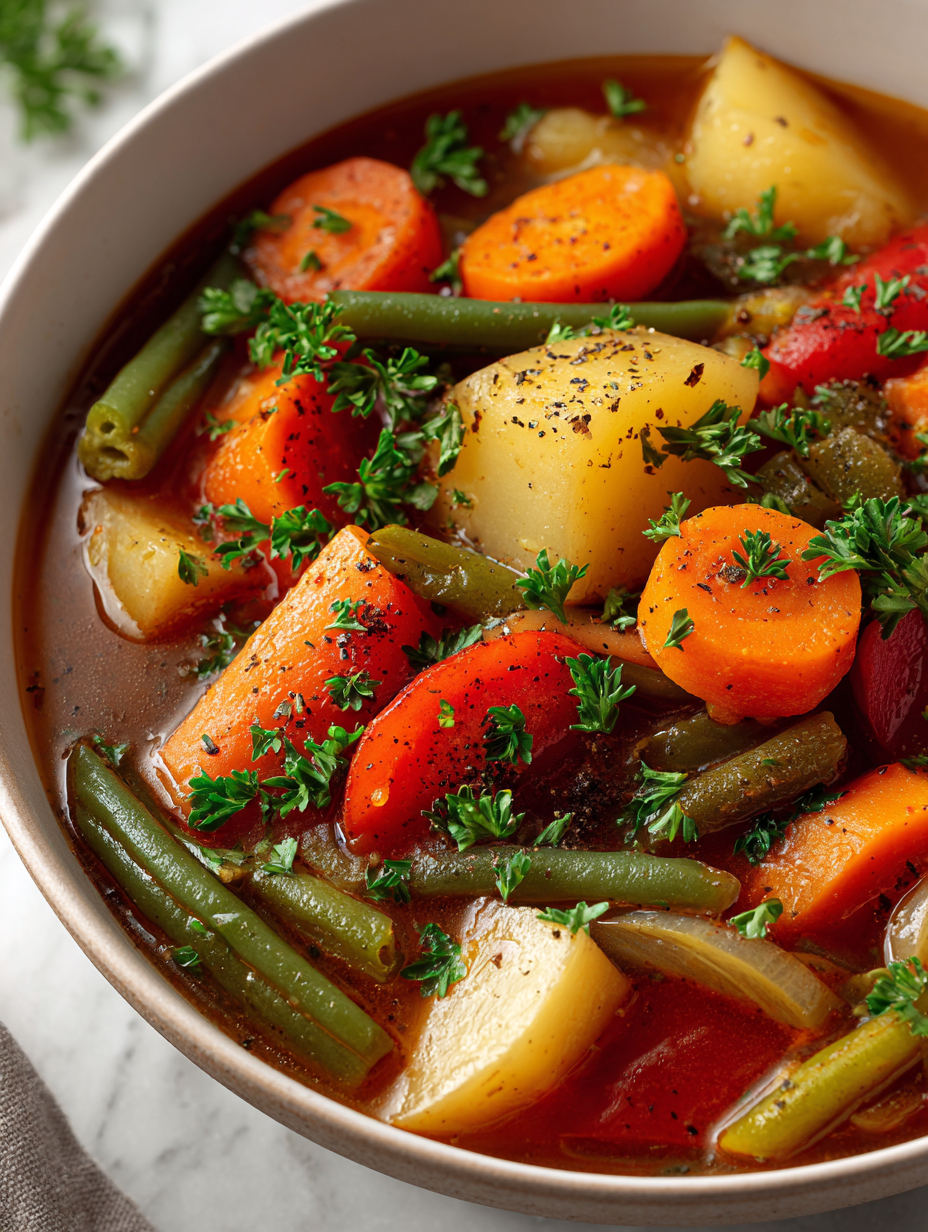
- Cover the slow cooker with the lid and set it to low. Let it cook for 6 to 8 hours, or until the vegetables are tender and the broth is rich and flavorful. During this time, the broth will develop a hearty, rustic appearance, and the vegetables will soften beautifully.
- About 30 minutes before serving, stir in the chopped zucchini and bay leaf. Keep the lid on and allow the zucchini to cook just until tender and vibrant, which takes about 20-30 minutes. This keeps their texture fresh and bright.
- Remove the thyme sprigs and bay leaf from the stew. Taste and season with salt and pepper as needed. The stew should be thick, with vegetables fully cooked and a fragrant aroma filling your kitchen.
- Ladle the steaming stew into bowls, making sure each serving has a hearty mix of vegetables and flavorful broth. Drizzle with a little olive oil or sprinkle fresh herbs if desired, then enjoy this comforting, rustic dish.
Notes
Tips & tricks for best results
- Bolded mini-head: Sear vegetables briefly before slow cooking to develop a richer, smoky flavor.
- Bolded mini-head: Layer tougher vegetables at the bottom for even, thorough cooking and softening.
- Bolded mini-head: Use a splash of hot broth to deglaze the pan, capturing all those flavorful browned bits.
- Bolded mini-head: Keep the lid slightly ajar during the last 15 minutes if stew is too thin—this helps reduce excess liquid.
- Bolded mini-head: Add delicate greens or herbs at the end to preserve their fresh aroma and color.
- Bolded mini-head: For deeper flavor, toss a smoked paprika or a pinch of cumin into the broth before cooking.
- Bolded mini-head: Always taste and adjust salt after cooking—vegetables can absorb salt and mellow the overall flavor.
Common mistakes and how to fix them
- FORGOT to brown vegetables → Sear in batches for richer flavor.
- DUMPED all ingredients at once → Layer vegetables for even cooking.
- OVER-TORCHED the stew → Reduce heat and stir to prevent burning.
- SKIPPED seasoning step → Taste and adjust salt near end for balanced flavor.
Quick fixes and pantry swaps
- When stew is too watery, splash in a cornstarch slurry and stir over high heat for 5 seconds.
- If vegetables are undercooked, turn to high for an hour, then check tenderness.
- Splash a bit of vinegar or lemon juice if flavors are dull or flat.
- Patch a burnt bottom by quickly transferring stew to a new pot, avoiding the burned bits.
- Shield the stew with foil if it’s over-torched on the edges, then continue cooking gently.
Prep, store, and reheat tips
- Chop vegetables the night before to save time and keep them fresh in an airtight container in the fridge, where they stay crisp and vibrant for up to 24 hours.
- Sauté aromatics ahead and refrigerate in a sealed jar; the fragrant smell of garlic and onions can be reheated quickly, adding depth to the stew when you’re ready.
- Store the cooked stew in an airtight container in the fridge for up to 3 days; the flavors will deepen and the texture will soften slightly, becoming even more comforting.
- For longer storage, freeze the stew in portions for up to 3 months. When reheating, expect the vegetables to be tender and the broth to be more concentrated, so adjust with a splash of hot water or broth.
- Reheat gently on the stove over medium heat, stirring occasionally. The stew should shimmer with steam and smell rich; avoid boiling to prevent mushy vegetables.
Top questions about vegetable stew
1. How do I prep the vegetables properly?
Use a sharp knife and cut vegetables into uniform pieces, about 1-inch chunks, for even cooking.
2. Can I use frozen vegetables instead of fresh?
Yes, you can substitute with frozen vegetables, but add them closer to the end to prevent over-softening.
3. What’s the ideal slow cooker setting and time?
Cook on low for 6-8 hours until vegetables are tender and the broth is rich and flavorful.
4. When should I add delicate ingredients?
Stir in fresh herbs and zucchini 30 minutes before serving to keep their bright flavor and texture.
5. What if my stew is too thick or too watery?
If the stew gets too thick, stir in a splash of hot broth or water. If too watery, cook uncovered for 15 minutes.
6. Can I use store-bought broth?
Use homemade broth for deeper flavor, but store-bought low-sodium broth is a fine shortcut.
7. How can I boost the flavor of the stew?
For a richer, smoky taste, add a pinch of smoked paprika or a splash of soy sauce during cooking.
8. How should I store and reheat leftovers?
Leftovers keep well in the fridge for up to 3 days; reheat gently over medium heat until steaming.
9. What do I do if my stew is burnt?
To fix over-torched stew, transfer to a new pot and avoid stirring the burnt bits back in.
10. When should I season the stew?
Taste and adjust salt and seasonings at the end, as vegetables can absorb salt during cooking.
This vegetable stew is a reflection of how I lean on simplicity during busy days. It’s honest, hearty, and fills the house with a comforting aroma that makes any chaos feel a little more manageable.
In the end, it’s not just about the ingredients, but the quiet satisfaction of knowing I’ve created something nourishing with minimal fuss. Sometimes, the best meals are the ones you throw together on a whim and still feel proud of.

Hi there! I’m Himani and welcome to Val’s Recipe Box. This little corner of the internet didn’t begin with me. It began with Val my neighbourhood aunt whose kitchen held more warmth than any fireplace ever could.


 This little corner of the internet didn’t begin with me.
It began with Val my neighbourhood aunt whose kitchen held more warmth than any fireplace ever could.
She was more of a friend and I’ve come to know her in the most unexpected way.
This little corner of the internet didn’t begin with me.
It began with Val my neighbourhood aunt whose kitchen held more warmth than any fireplace ever could.
She was more of a friend and I’ve come to know her in the most unexpected way.