
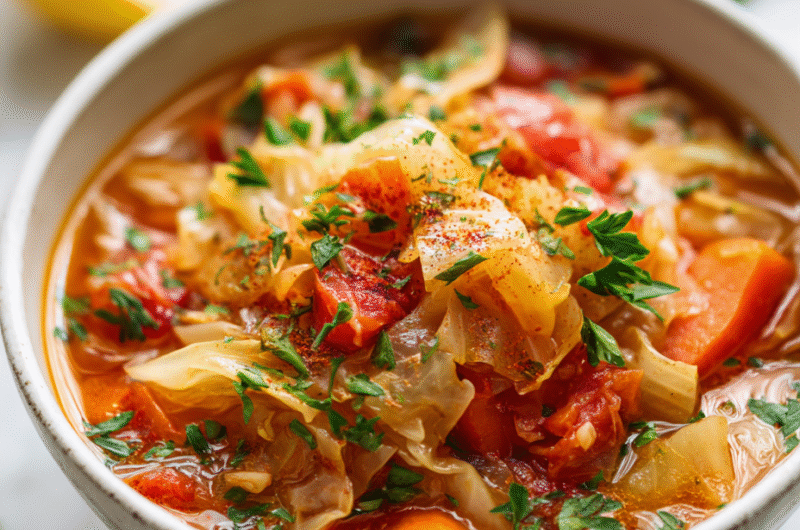
This crockpot cabbage soup is like a warm hug after a long day. It’s honest, forgiving, and really simple to throw together in the morning. I love that I can set it and forget it, knowing I’ll come home to a fragrant, filling bowl that’s perfect for chilly evenings or when I need something quick and nourishing.
What makes this soup stand out is its humble roots—just basic ingredients turned into something surprisingly satisfying. It’s not fancy, but it’s honest food. The slow cooker turns everything into a soft, melded goodness that feels like a little bit of comfort in every spoonful.
Plus, I find that the longer it simmers, the more the flavors deepen. It’s a recipe I turn to when I want a no-fuss meal that feels like a warm, familiar friend waiting for me at the end of a busy day.
This recipe is my go-to for busy weekdays when I need dinner to simmer itself while I focus on the chaos of the day. It’s a humble, forgiving dish that transforms simple ingredients into something warm and filling without much fuss. I love that I can toss everything in the crockpot in the morning and come home to a fragrant, ready-to-eat bowl of comfort.
The story behind this recipe
- This recipe came about during a particularly chaotic week when I needed something easy, nourishing, and forgiving. I remember rummaging through my fridge, throwing together whatever veggies I had, and letting the crockpot do its magic. That first bowl was a surprise—a simple, comforting mix that felt like a warm friend after a long day.
- Over time, I tweaked it to make it more flavorful, adding a bit of smoked paprika and a splash of vinegar. It’s become one of those dishes I turn to when I want honest food without the fuss. It’s funny how humble ingredients can turn into something so satisfying when given enough time and patience.
- heading
- story_type
Ingredient breakdown: key components
- Cabbage: I love how it becomes tender and almost melts into the broth, releasing a sweet, earthy aroma. If yours stays too firm, give it a little extra simmer.
- Carrots: Their natural sweetness brightens the soup and adds a slight crunch if not overcooked. Use thinly sliced or diced for even cooking and a softer texture.
- Onions: They add a foundational sweetness and depth. Sautéing them first can deepen flavor, but in the crockpot, they soften beautifully over time.
- Vegetable broth: I prefer homemade or low-sodium store-bought for control, but a good, rich broth makes the flavors pop. If it’s too bland, a squeeze of lemon or splash of vinegar helps.
- Tomatoes: Canned diced or fresh, they add a tangy brightness. For a smoky twist, try adding a dash of smoked paprika or chipotle powder.
- Garlic: It infuses the broth with a warm, pungent aroma. Mince well so it distributes evenly, but add it closer to the end if you want a milder, fresher punch.
- Seasonings: Salt, pepper, and a pinch of thyme or bay leaf are my staples. Adjust at the end—sometimes a touch more salt or a squeeze of lemon brightens everything.
Spotlight on key ingredients
Cabbage:
- I love how it becomes tender and almost melts into the broth, releasing a sweet, earthy aroma. If yours stays too firm, give it a little extra simmer.
- Carrots: Their natural sweetness brightens the soup and adds a slight crunch if not overcooked. Use thinly sliced or diced for even cooking and a softer texture.
Vegetable broth:
- Onions: They add a foundational sweetness and depth. Sautéing them first can deepen flavor, but in the crockpot, they soften beautifully over time.
- I prefer homemade or low-sodium store-bought for control, but a good, rich broth makes the flavors pop. If it’s too bland, a squeeze of lemon or splash of vinegar helps.
Notes for ingredient swaps
- Vegetable Broth: Swap for chicken or beef broth for richer flavor, or water with bouillon cubes for a lighter, saltier finish.
- Cabbage: Use kale or collard greens in a pinch; they hold up well and bring a slightly different earthy note.
- Carrots: Sweet potatoes or parsnips can replace carrots, adding natural sweetness and a tender texture.
- Tomatoes: Fresh tomatoes can be used instead of canned, but they may need a bit longer cooking to break down and release their juice.
- Onions: Shallots or leeks add a milder, sweeter aroma, while onion powder can work if you’re out of fresh.
- Garlic: Garlic powder or roasted garlic paste can substitute fresh, offering a different intensity and sweetness.
- Seasonings: Omit thyme or bay leaves if you don’t have them, but consider a pinch of smoked paprika or a splash of vinegar to boost flavor.
Equipment & Tools
- Large crockpot: To cook all ingredients slowly and evenly.
- Sharp knife: For chopping vegetables precisely.
- Cutting board: To provide a stable surface for chopping.
- Wooden spoon: For stirring and serving the soup.
Step-by-step guide to Crockpot Cabbage Soup
- Gather your equipment: a large crockpot, a sharp knife, a cutting board, and a wooden spoon for stirring. Ready your ingredients and set aside.
- Chop the cabbage: remove any tough outer leaves, then cut into roughly 1-inch pieces. Set aside for easy addition.
- Dice the carrots: peel if desired, then cut into small rounds or half-moons. This helps them cook evenly and meld into the soup.
- Dice the onion and garlic: onion into small cubes, garlic minced finely. These will soften and release aroma during cooking.
- Add ingredients to the crockpot: place the cabbage, carrots, onion, garlic, and a can of diced tomatoes into the pot. Pour in 4 cups (950 ml) of vegetable broth.
- Season generously: add salt, pepper, a teaspoon of thyme, and a bay leaf. Stir to distribute the seasonings throughout.
- Set the crockpot: cover and cook on low for 6-8 hours or on high for 3-4 hours. The soup should simmer gently, filling the house with a savory aroma.
- Check for doneness: after cooking, the cabbage should be tender and slightly translucent. The broth will be infused with the vegetables’ flavors and a hint of tomato.
- Adjust seasoning: taste and add more salt or a splash of vinegar if needed. Remove the bay leaf before serving.
- Finish and serve: ladle the hot soup into bowls, garnish with a sprinkle of fresh herbs if desired. Rest for 5 minutes before enjoying.
Once cooked, let the soup rest for 5 minutes. Remove the bay leaf, stir gently, then ladle into bowls. Serve hot, with crusty bread if desired.
How to Know It’s Done
- Cabbage is tender and slightly translucent, not firm.
- Broth is fragrant, slightly thickened, and rich in flavor.
- Vegetables are cooked through, with no raw edges or crunch.

Crockpot Cabbage Soup
Ingredients
Equipment
Method
- Begin by chopping the cabbage into roughly 1-inch pieces, removing any tough outer leaves. Dice the onion and peel and slice the carrots into small rounds. Mince the garlic finely.
- Add the chopped cabbage, sliced carrots, diced onion, and minced garlic into the crockpot. Pour in the can of diced tomatoes with their juice, and then add the vegetable broth.
- Sprinkle in the dried thyme, tuck in the bay leaf, and season generously with salt and pepper. Give everything a good stir to combine the flavors evenly.
- Cover the crockpot and set it on low for 6 to 8 hours, or on high for 3 to 4 hours. As it cooks, the vegetables will soften and the broth will turn fragrant and flavorful.
- Check the soup after the cooking time; the cabbage should be tender and slightly translucent, and the broth flavorful and fragrant. Remove the bay leaf.
- Taste the soup and adjust the seasoning with more salt and pepper if needed. For a bright note, stir in a teaspoon of vinegar or lemon juice.
- Give the soup a gentle stir, ladle it into bowls, and serve hot. Enjoy the comforting warmth and tender vegetables in every spoonful.
Pro tips for perfect crockpot cabbage soup
- BOLD UP THE VEGGIES: Chop the cabbage and carrots into uniform pieces for even cooking and a consistent texture.
- SAUTÉ THE ONIONS: Sauté onions first if you want a deeper, sweeter flavor that adds richness to the broth.
- LAYER FLAVORS: Add a splash of vinegar or lemon juice at the end to brighten and balance the earthy sweetness.
- AVOID OVERCOOKING: Check the cabbage for tenderness after 6 hours on low; it should be soft but not mushy.
- USE FROZEN VEGGIES: In a pinch, frozen cabbage or carrots work well—just add a bit more cooking time to soften.
- SEASON IN STAGES: Taste and adjust salt and pepper halfway through cooking; flavors deepen with time.
- SKIM THE FAT: If the soup looks greasy, a quick skim with a spoon helps keep it light and clear.
Common mistakes and how to fix them
- FORGOT to adjust seasoning? Add a splash of vinegar or lemon juice to brighten flavors.
- DUMPED too much broth? Thicken with a cornstarch slurry or let it reduce slightly uncovered.
- OVER-TORCHED the soup? Lower heat immediately and add a splash of cold water to stop cooking.
- MISSED the cabbage tenderness test? Extend cooking time or cut into smaller pieces for quicker softening.
Quick fixes and pantry swaps
- When soup is greasy, splash in cold water and skim the fat off the surface.
- If the cabbage stays tough, extend cooking time or chop smaller for quicker softness.
- Splash vinegar or lemon to fix bland flavors after cooking.
- Patch overburnt soup by adding a splash of broth and simmering gently.
- Shield delicate vegetables with a piece of foil if the soup crackles or overcooks.
Prep, store, and reheat tips
- Chop the cabbage, carrots, and onion the night before; store in airtight containers in the fridge. This keeps prep quick and ingredients fresh, with vibrant colors and crisp textures preserved.
- The soup can be made entirely a day ahead; refrigerate in an airtight container for up to 3 days. The flavors meld beautifully overnight, with a richer, more rounded taste that intensifies the aroma.
- For longer storage, freeze the cooled soup in freezer-safe containers for up to 3 months. Expect a slight change in texture—some vegetables may soften further, but the flavor remains hearty.
- Reheat gently on the stove over medium-low heat, stirring occasionally. The soup should shimmer gently, and the aroma will brighten as it warms, returning to a comforting, fragrant bowl.
Top questions about crockpot cabbage soup
1. What size crockpot works best?
Use a sturdy, medium-sized crockpot—around 6 quart capacity—so there’s enough room for ingredients to cook evenly without overflowing.
2. How should I prepare the cabbage?
Chop the cabbage into roughly 1-inch pieces; smaller pieces break down faster, giving a softer texture and melded flavors.
3. Should I cook on low or high?
A low setting cooks gently, allowing flavors to deepen over 6-8 hours; high is faster but can sometimes overcook vegetables.
4. Can I add extra protein?
Yes, you can add cooked beans or leftover cooked meat to make it heartier; just add in the last hour to prevent overcooking.
5. How do I enhance the flavor at the end?
Stir in a splash of vinegar or lemon juice at the end to brighten the flavors and cut through the earthy notes.
6. What if the soup is too thin?
If the soup is too watery, remove the lid during the last hour to help it reduce slightly and thicken.
7. How long does it keep?
Store leftovers in an airtight container in the fridge for up to 3 days. Reheat on the stove until steaming, about 5-7 minutes.
8. Can I freeze this soup?
You can freeze the soup for up to 3 months in freezer-safe containers. Expect some vegetables to soften further after thawing.
9. How should I reheat?
For best flavor, reheat slowly over low heat, stirring occasionally, until the soup shimmers and is hot throughout.
10. Can I spice it up?
Yes, adding a pinch of smoked paprika or a dash of hot sauce can add depth and a little kick to the broth.
This humble cabbage soup, cooked slowly, becomes a savory, tender bowl that feels like a quiet victory after a busy day. It’s a reminder that simple ingredients, treated kindly and given time, can turn into something unexpectedly satisfying.
In these hectic times, having a dish like this in the fridge assures me that nourishment doesn’t have to be complicated. It’s the kind of meal that’s easy to love, no matter how many times I make it.

Hi there! I’m Himani and welcome to Val’s Recipe Box. This little corner of the internet didn’t begin with me. It began with Val my neighbourhood aunt whose kitchen held more warmth than any fireplace ever could.


 This little corner of the internet didn’t begin with me.
It began with Val my neighbourhood aunt whose kitchen held more warmth than any fireplace ever could.
She was more of a friend and I’ve come to know her in the most unexpected way.
This little corner of the internet didn’t begin with me.
It began with Val my neighbourhood aunt whose kitchen held more warmth than any fireplace ever could.
She was more of a friend and I’ve come to know her in the most unexpected way.