
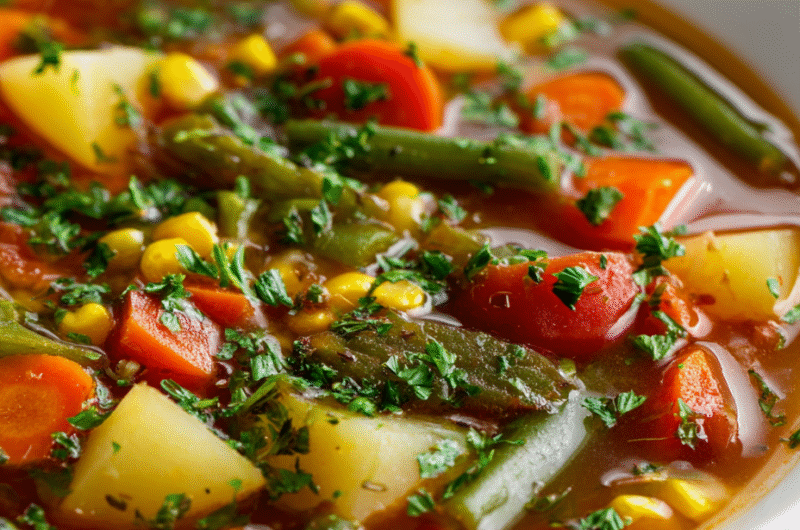
This crockpot vegetable soup is my secret weapon for busy days. It transforms simple, everyday vegetables into something warm and satisfying with hardly any effort. Just toss everything in and let the slow cooker do its magic while I get on with my day.
What I love most is how the slow cooker melds flavors into a rich, comforting broth that feels like a hug in a bowl. No stirring, no constant supervision—just a set-it-and-forget-it kind of meal that’s perfect after a long day or when friends drop by unexpectedly.
It’s a recipe that’s become my go-to for making use of whatever vegetables I have hanging around. It’s honest, practical, and honestly, a little bit forgiving—perfect for anyone who wants a nourishing meal without fuss.
This recipe focuses on how a slow cooker transforms humble vegetables into a rich, comforting soup with minimal fuss, perfect for busy weeknights or lazy weekends when you want something nourishing without the constant stirring.
Personal Inspiration for the Soup
- I came up with this recipe after a particularly hectic week when I realized I had a fridge full of leftover veggies and no energy to cook from scratch. The slow cooker seemed like a perfect way to meld flavors without much fuss, especially on days when I just wanted something warm and honest to eat.
- One chilly Saturday, I threw in a mix of carrots, potatoes, and some wilted kale I’d been meaning to use. The smell as it cooked—those earthy, sweet notes—made me realize how little effort it takes to turn humble ingredients into comfort food. That moment stuck with me and became the foundation of this recipe.
- heading: ‘The story behind this recipe’
Component-wise Breakdown
- Carrots: I like using bright orange carrots for their sweet, earthy flavor; they add a natural sweetness that balances the broth. Feel free to swap with parsnips for a milder, spiced note.
- Celery: I chop stalks into small pieces, their crispness and subtle bitterness lend depth. If you’re out, a handful of fennel fronds can offer a similar fresh aroma with a touch of anise.
- Onions: I prefer yellow onions—they caramelize slightly and bring a rich, savory base. Red onions work too, giving a sharper bite if you like a punch of flavor.
- Tomatoes: I use canned diced tomatoes for their juicy, tangy punch, which brightens the broth. Fresh tomatoes are fine in summer; just chop and add early for a mellow sweetness.
- Vegetable broth: I opt for homemade when I can, but store-bought works just fine. Look for low-sodium versions so you can control the saltiness, especially if adding salty ingredients later.
- Herbs & spices: I toss in a bay leaf and a few sprigs of thyme for earthy, aromatic notes. If you like a little heat, a pinch of red pepper flakes can give it a gentle kick.
- Extra veggies: I sometimes throw in zucchini or green beans—quick-cooking, fresh, and add a nice pop of color. If I want heartier, I’ll add potatoes or lentils early on.
Spotlight on key ingredients
Carrots:
- I like using bright orange carrots for their sweet, earthy flavor; they add a natural sweetness that balances the broth. Feel free to swap with parsnips for a milder, spiced note.
- Celery: I chop stalks into small pieces, their crispness and subtle bitterness lend depth. If you’re out, a handful of fennel fronds can offer a similar fresh aroma with a touch of anise.
- Onions: I prefer yellow onions—they caramelize slightly and bring a rich, savory base. Red onions work too, giving a sharper bite if you like a punch of flavor.
Tomatoes and Broth:
- Tomatoes: I use canned diced tomatoes for their juicy, tangy punch, which brightens the broth. Fresh tomatoes are fine in summer; just chop and add early for a mellow sweetness.
- Vegetable broth: I opt for homemade when I can, but store-bought works just fine. Look for low-sodium versions so you can control the saltiness, especially if adding salty ingredients later.
Notes for ingredient swaps
- Dairy-Free: Use coconut milk instead of cream for a rich, tropical flavor that adds creaminess without dairy.
- Low-Sodium: Opt for homemade broth or a low-sodium store-bought version to control salt levels, especially if adding salty seasonings.
- Gluten-Free: Ensure all seasonings and broths are gluten-free; most are, but check labels if sensitive.
- Herb Variations: Swap thyme for rosemary or oregano to change the herbal profile and add different aromatic notes.
- Vegetable Choices: Replace zucchini with green beans or add kale for a leafy, slightly bitter contrast that brightens the soup.
- Spice Level: Add a dash of smoked paprika or cayenne for smoky or spicy depth, adjusting to taste.
- Tomatoes: Use fresh summer tomatoes for a sweeter, juicier flavor or sun-dried tomatoes for concentrated umami.
Equipment & Tools
- Large slow cooker: To cook everything slowly and evenly without supervision.
- Cutting board: To safely chop vegetables into uniform pieces.
- Sharp knife: To precisely cut vegetables and herbs.
- Wooden spoon: To stir the ingredients gently during cooking.
- Ladle: To serve the soup easily and without mess.
Step-by-step guide to vegetable soup
- Gather your equipment: a large slow cooker, a cutting board, a sharp knife, a wooden spoon, and a ladle.
- Chop all vegetables into bite-sized pieces. Aim for uniformity so everything cooks evenly.
- Add the chopped vegetables to the slow cooker. Start with hearty ones like carrots and potatoes on the bottom.
- Pour in the vegetable broth, enough to cover the vegetables by about an inch. Usually, 4-6 cups depending on your cooker size.
- Add seasonings: a bay leaf, a few sprigs of thyme, salt, and pepper. Stir gently to combine.
- Set the slow cooker to low. Cover and cook for 6-8 hours. You’ll want the vegetables to be tender and the broth flavorful.
- Check halfway: if vegetables are soft but not breaking apart, you’re on track. If too thick, add a splash more broth.
- Towards the end, taste and adjust seasoning: more salt, pepper, or a squeeze of lemon if you like brightness.
- Once done, turn off the cooker. Remove the bay leaf and thyme sprigs. Ladle the soup into bowls.
- Let the soup rest for 5 minutes. This helps the flavors settle and prevents burning your mouth on hot broth.
- Finish with a drizzle of olive oil or a sprinkle of fresh herbs if desired. Serve hot with crusty bread.
Let the soup sit for 5 minutes after cooking to settle flavors. Remove bay leaf and herb sprigs. Serve hot, optionally garnished with fresh herbs or a drizzle of olive oil, alongside crusty bread.
How to Know It’s Done
- Vegetables are tender and easily pierced with a fork.
- Broth is rich, aromatic, and slightly thickened.
- Soup has a balanced flavor with a bright, fresh aroma and no overpowering raw vegetable smell.
Crockpot Vegetable Soup
Ingredients
Equipment
Method
- Start by chopping the carrots into thick, uniform pieces and dicing the onion and celery for even cooking.
- Add the chopped carrots, celery, and diced onion into the bowl of your large slow cooker, spreading them out evenly.
- Pour in the canned diced tomatoes along with their juices, distributing them over the vegetables.
- Pour the vegetable broth over everything, ensuring the ingredients are submerged but not overloaded—about 4 cups should do.
- Place the sprigs of thyme and bay leaf on top, then sprinkle with salt and pepper to taste.
- Cover the slow cooker with its lid and set it to low. Let it simmer for 6 to 8 hours until the vegetables are tender and the flavors meld beautifully.
- Once cooking is complete, remove the thyme sprigs and bay leaf, then give the soup a gentle stir with a wooden spoon.
- Taste the broth and adjust seasoning with more salt and pepper if needed, or add a squeeze of lemon for brightness.
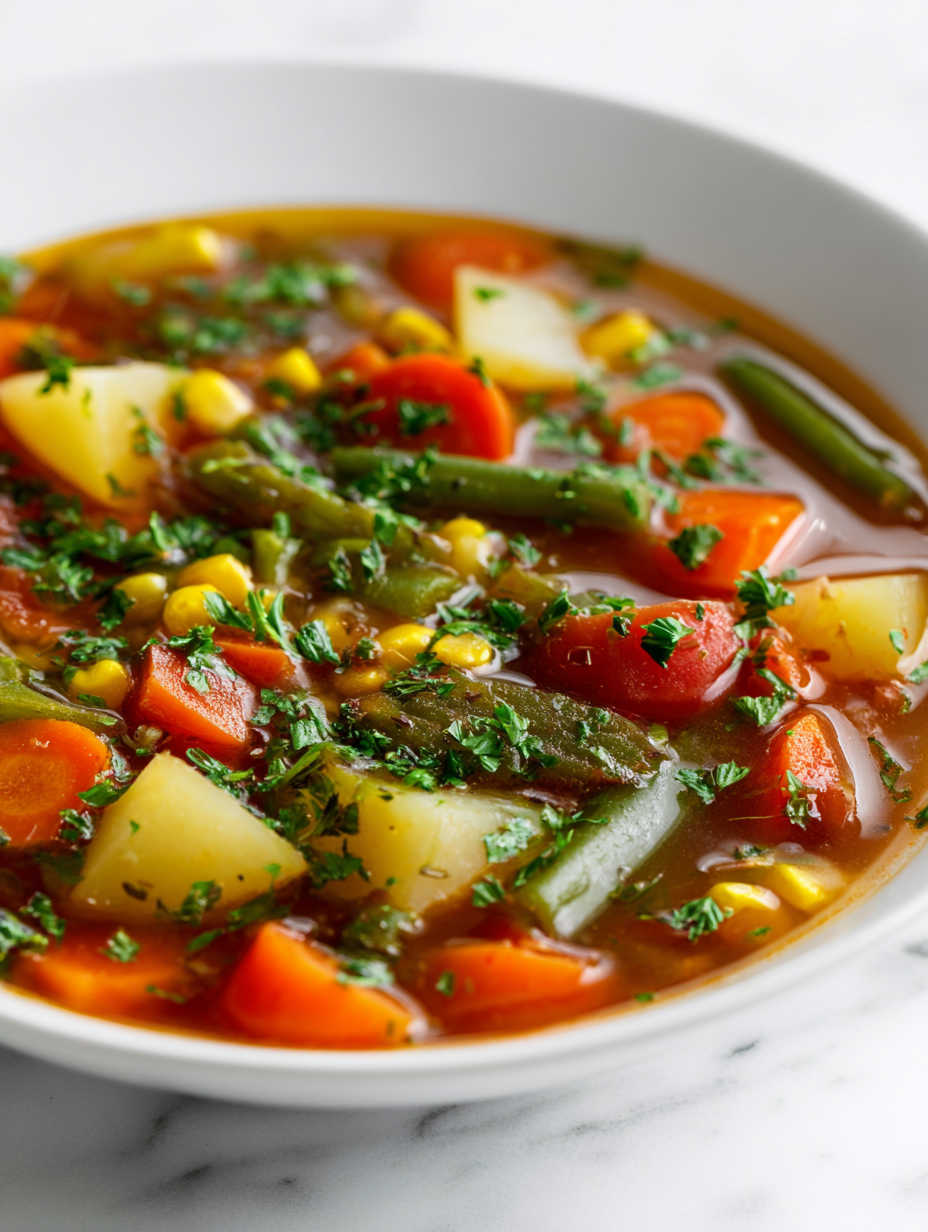
- Ladle the hot soup into bowls, revealing a colorful, hearty mixture of tender vegetables and a rich, aromatic broth.
- Finish with a drizzle of olive oil or a sprinkle of fresh herbs if desired, and serve with crusty bread for a complete, satisfying meal.
Pro Tips for Crockpot Veggie Soup
- Bolded mini-head: Sear vegetables briefly before adding to deepen their flavor and add a subtle caramel note.
- Bolded mini-head: Layer ingredients by hearty to delicate so they cook evenly and retain texture.
- Bolded mini-head: Use a splash of lemon juice or vinegar at the end to brighten and balance the broth’s richness.
- Bolded mini-head: Keep the lid on during cooking to trap moisture and heat, ensuring thorough, even simmering.
- Bolded mini-head: Occasionally tilt the lid slightly to release excess steam if the soup becomes too watery or dilute.
- Bolded mini-head: For a smoky undertone, add a pinch of smoked paprika or a dash of chipotle powder near the end.
- Bolded mini-head: Taste and adjust seasoning after resting—flavors often deepen and meld during the last few minutes.
Common mistakes and how to fix them
- FORGOT to brown vegetables first? Sear them briefly for deeper flavor.
- DUMPED too much water? Use less broth for a thicker soup.
- OVER-TORCHED the edges? Lower the heat and stir frequently to prevent burning.
- MISSED to check seasoning? Taste and adjust salt or acid before serving.
Quick fixes and pantry swaps
- If soup is too thick, splash in hot broth and stir to thin out gently.
- When vegetables are mushy, reduce cook time or add fresh veggies later.
- Splash a little vinegar or lemon when aroma is flat for brighter flavor.
- Patch bland broth with a pinch more salt or herbs to boost taste.
- Shield from burning by stirring more frequently, especially near the edges.
Prep, store, and reheat tips
- Chop all vegetables the night before; keep in airtight containers in the fridge for up to 24 hours. The aroma of fresh-cut carrots and onions is irresistible.
- Store prepped vegetables in the fridge; they’ll stay good for about a day or two, but the sooner, the fresher the flavors stay—especially the herbs and delicate greens.
- Cooked soup can be refrigerated in an airtight container for 3-4 days. Reheat gently on the stove, smelling the warm, savory aroma bloom as it heats.
- For longer storage, freeze the soup in portions—up to 3 months. Expect some loss of brightness, but a quick thaw and simmer restores its hearty charm.
- Reheat in a pot over low heat; stir occasionally. The soup should shimmer and steam, with flavors intensifying slightly as it warms.
Top questions about crockpot vegetable soup
1. How do I know when the vegetables are tender enough?
Use firm vegetables like carrots, potatoes, and celery. Softening varies, so check toward the end.
2. Can I add beans or lentils to this soup?
Yes, you can add canned beans or lentils for extra protein and texture, cooking just until heated through.
3. How do I brighten the flavor at the end?
Stir in fresh herbs or a squeeze of lemon after cooking for a bright, fresh flavor boost.
4. How do I keep the soup from being too salty?
Use low-sodium broth and control salt to prevent the soup from becoming too salty. Adjust seasoning after cooking.
5. How long does the soup last in the fridge or freezer?
Leftovers can be refrigerated in an airtight container for 3-4 days, or frozen for up to 3 months.
6. What’s the best way to reheat leftovers?
Reheat gently on the stove over low heat, stirring occasionally, until steaming and hot enough to enjoy.
7. How can I adjust the flavor for more spice or sweetness?
You can add a dash of hot sauce or red pepper flakes for extra heat, or a teaspoon of sugar to balance acidity.
8. What if the soup turns out too thick?
If the soup is too thick, add a splash of hot broth or water and stir until it reaches your desired consistency.
9. Can I use frozen vegetables?
Use fresh, good-quality vegetables for the best flavor. Frozen is fine if you’re in a hurry, just avoid soggy ones.
10. Is this recipe suitable for meal prepping?
Yes, it’s perfect for busy days. Just prep your ingredients the night before, toss everything in, and forget about it.
This simple soup is more than just a meal; it’s a reminder of how humble ingredients can come together to create something warm and satisfying. It’s perfect for those days when you want honest, easy nourishment without fuss.
In the end, it’s about the comfort of knowing you’ve got a pot of something hearty waiting—something that smells like home, tastes like honesty, and fills your belly with real, straightforward flavor. Sometimes, that’s all you need.

Hi there! I’m Himani and welcome to Val’s Recipe Box. This little corner of the internet didn’t begin with me. It began with Val my neighbourhood aunt whose kitchen held more warmth than any fireplace ever could.


 This little corner of the internet didn’t begin with me.
It began with Val my neighbourhood aunt whose kitchen held more warmth than any fireplace ever could.
She was more of a friend and I’ve come to know her in the most unexpected way.
This little corner of the internet didn’t begin with me.
It began with Val my neighbourhood aunt whose kitchen held more warmth than any fireplace ever could.
She was more of a friend and I’ve come to know her in the most unexpected way.