
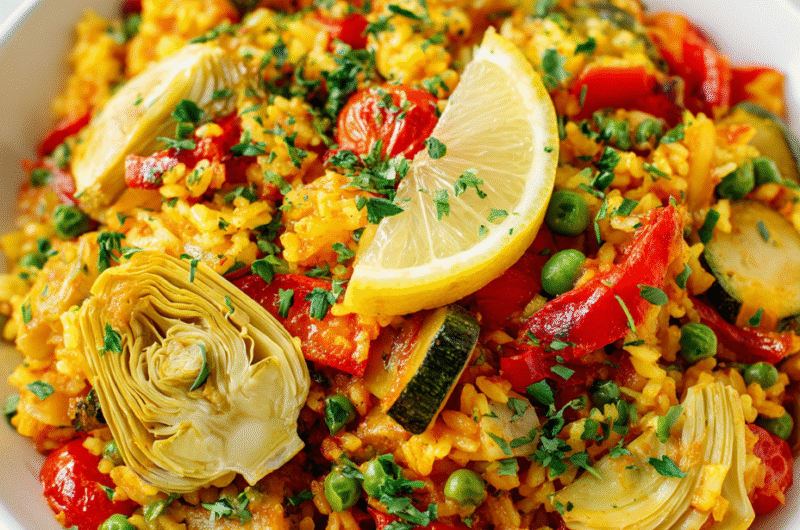
Making a vegetable paella that feels hearty and satisfying can seem like a tall order, especially on busy weeknights. I’ve found that focusing on accessible ingredients and straightforward techniques makes all the difference. This dish is about capturing bold flavors without fuss, using what’s in the fridge or pantry.
The secret is in the layering—building flavor with simple steps that don’t require fancy equipment or long simmering times. I like to think of it as a one-pan meal that’s forgiving and adaptable, perfect for those nights when you want something warm, wholesome, and a little bit special.
This recipe is my go-to when I want to keep it real, satisfying my craving for something vibrant and comforting. It’s a reminder that good food doesn’t have to be complicated, just honest, flavorful, and made with a bit of love—no matter how rushed the evening.
Focusing on how to make vegetable paella accessible and satisfying for weeknight cooks who want bold flavors without complicated techniques.
Reimagining Comfort with Veggie Paella
- I love how this dish turns simple vegetables into something unexpectedly rich and smoky.
- There was a night I threw in leftover roasted peppers, and it added a sweet, caramelized layer I hadn’t planned for.
- Cooking this reminds me of summer evenings in Spain, whole kitchens filled with garlic and saffron aroma.
- Seeing the rice absorb all those vibrant flavors and turn tender and fluffy always makes me smile.
- It’s a recipe that feels like a warm hug after a long day, honest and straightforward but deeply satisfying.
The story behind this recipe
- This vegetable paella grew out of a summer of leftovers and improvisation. I’d been experimenting with ways to make veggie dishes feel just as indulgent as their meat-heavy counterparts. One evening, I threw together what I had—bell peppers, green beans, a pinch of saffron—and suddenly, it felt like I was transported to a sunny Spanish kitchen. It’s that magic moment when simplicity turns into something memorable, even if you’re not in Spain.
- This dish became my go-to when I wanted comfort that didn’t demand hours or fancy ingredients. It’s honest, forgiving, and full of flavor—kind of like a good story shared over a simple meal. I love how it invites you to use what’s in your fridge, making every batch a little different but always satisfying.
- heading: ‘The story behind this recipe’
Historical Roots of Vegetable Paella
- Vegetable paella originated in the Valencian region of Spain, where rice dishes were traditionally cooked over open fires with local ingredients.
- The dish evolved as a way to make the most of seasonal vegetables, making it a humble yet flavorful meal for farm workers.
- Historically, paella was a communal dish, cooked outdoors in large shallow pans called ‘paelleras,’ fostering community bonds.
- The use of saffron in paella is a nod to ancient trade routes, adding both aroma and a golden hue to the rice.
- Modern interpretations often feature a variety of vegetables, reflecting both local seasons and a shift toward vegetarian eating habits.
Vegetable Paella Ingredient Breakdown
- Rice: I prefer short-grain for its creamy texture, but if you like a firmer bite, go with medium-grain. The rice should be tender yet slightly al dente, with a subtle chew and aroma of saffron and broth lingering.
- Bell Peppers: I love the sweet, smoky flavor of roasted red peppers, but fresh adds a nice crunch. Roast or sauté until slightly charred—gives the dish a caramelized depth and a pop of color.
- Green Beans: Crisp-tender is ideal, providing a fresh bite that contrasts the soft rice. Blanch briefly or sauté—just enough to keep that vibrant green and slight snap.
- Saffron: The magic is in the bloom—soak a pinch in hot water to release its bright, floral aroma. Use quality saffron if you can—it’s what makes the dish sing with that golden hue and smoky scent.
- Tomatoes: I prefer ripe, heirloom or vine-ripened for their juicy, sweet-tart burst. Chop finely or crush to release their bright, tangy juice—adds a fresh, vibrant layer.
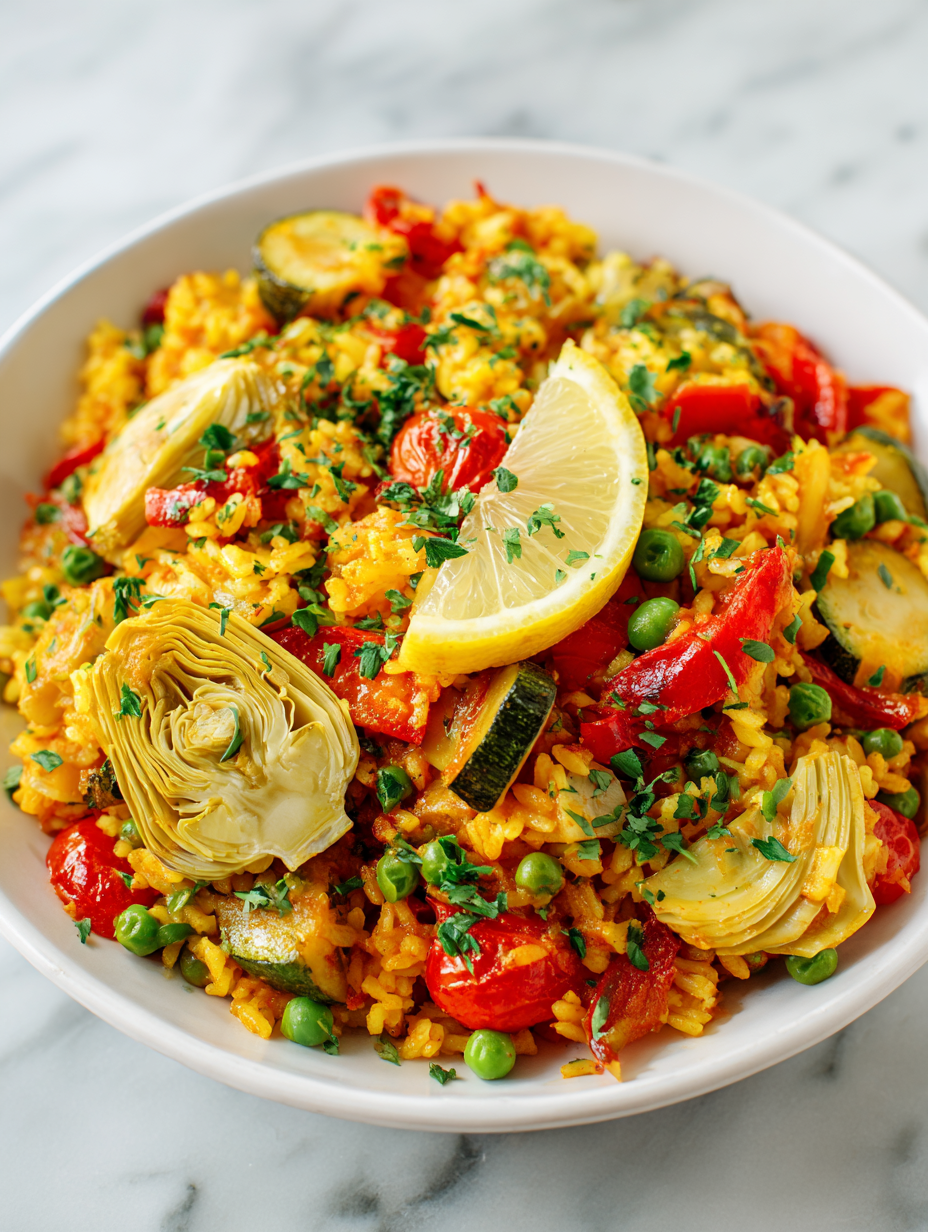
- Vegetables: Feel free to mix what you have—zucchini, artichokes, or peas. Sauté or roast to concentrate their flavors and add variety—each brings its own aroma and texture.
- Broth: Use vegetable stock with a good depth of flavor. Warm it before adding, so the rice cooks evenly and absorbs all those savory, aromatic notes, making every bite rich and comforting.
Spotlight on key ingredients
Rice:
- I prefer short-grain for its creamy texture, but if you like a firmer bite, go with medium-grain. The rice should be tender yet slightly al dente, with a subtle chew and aroma of saffron and broth lingering.
- Bell Peppers: I love the sweet, smoky flavor of roasted red peppers, but fresh adds a nice crunch. Roast or sauté until slightly charred—gives the dish a caramelized depth and a pop of color.
Tomatoes:
- Saffron: The magic is in the bloom—soak a pinch in hot water to release its bright, floral aroma. Use quality saffron if you can—it’s what makes the dish sing with that golden hue and smoky scent.
- I prefer ripe, heirloom or vine-ripened for their juicy, sweet-tart burst. Chop finely or crush to release their bright, tangy juice—adds a fresh, vibrant layer.
Notes for ingredient swaps
- Rice: I like short-grain for creaminess, but medium-grain works if you prefer a firmer bite. Keep an eye on cooking time to prevent over-softening.
- Bell Peppers: Roasted red peppers add smoky sweetness, but fresh peppers give a crunch. Roast or sauté until slightly charred for depth.
- Green Beans: Blanch or sauté briefly for a crisp-tender bite. Frozen works in a pinch—just add a minute longer cooking time.
- Saffron: Soak it in hot water before adding—the fragrance blooms, and the color intensifies. Use good quality for true aroma and hue.
- Tomatoes: Ripe, vine-ripened tomatoes provide a bright, juicy tang. Crush or finely chop to release their vibrant, tangy juice.
- Vegetables: Feel free to swap in zucchini, artichokes, or peas. Roast or sauté to concentrate their flavors and add variety.
- Broth: Vegetable stock with good flavor makes all the difference. Warm it before adding, so the rice absorbs rich, aromatic broth.
Equipment & Tools
- Paella pan or wide skillet: Provides even heat and a large surface for rice to cook uniformly.
- Ladle or spoon: For stirring ingredients and adding broth gradually.
- Measuring cups: Ensures accurate rice and broth quantities.
- Heat diffuser (optional): Helps distribute heat evenly if your stove is hot in the center.
- Lid or foil: To cover the pan if the rice isn’t tender after initial cooking.
Step-by-step guide to vegetable paella
- Gather a 30cm (12-inch) wide, shallow skillet or paella pan. It should have a flat base for even heat distribution.
- Heat 2 tbsp olive oil over medium heat (around 160°C/320°F). Add 1 diced onion and 2 minced garlic cloves. Cook until translucent, about 5 minutes. You want a gentle sizzle and a sweet aroma.
- Stir in 1 cup short-grain rice. Toast for 2 minutes, stirring often. It should look slightly translucent and smell nutty.
- Add 1 chopped bell pepper and 1 cup chopped green beans. Sauté for 3–4 minutes until vegetables are just starting to soften, and the peppers are slightly charred at the edges.
- Pour in 3 cups warmed vegetable broth, then stir in a pinch of saffron soaked in 2 tbsp hot water. Bring to a gentle simmer, not boil—about 80°C (175°F).
- Spread the rice evenly in the pan. Cook uncovered over medium-low heat (around 150°C/300°F). Let it simmer gently, without stirring, for about 15 minutes. You’ll see the broth absorbing and the rice developing a light crust at the edges.
- Check the rice: the grains should be tender yet retain a slight bite, and the bottom should show a golden, crispy layer (socarrat). If the liquid evaporates too fast, add a splash more broth and continue cooking.
- If the rice is still too firm or soupy, cover loosely with foil and cook for another 2–3 minutes. If it’s overdone or sticking, lower the heat and add a splash of water to loosen.
- Remove from heat. Cover loosely with a clean kitchen towel and let rest for 5 minutes to settle flavors and finish cooking the rice evenly.
- Serve straight from the pan, garnished with fresh herbs or lemon wedges if desired. The rice should be fluffy, with a smoky aroma and slightly crispy bottom—perfectly tender.
Rest the paella off the heat, covered loosely with a towel, for 5 minutes. This allows the flavors to meld and the rice to finish absorbing remaining moisture. Serve directly from the pan, garnished with herbs or lemon if you like.
How to Know It’s Done
- The rice is tender with a slight chew, and the bottom has a golden crust.
- Vegetables are cooked through but retain their vibrant color and slight crunch.
- Broth is fully absorbed, leaving the rice creamy and flavorful with a smoky aroma.
Vegetable Paella
Ingredients
Equipment
Method
- Start by heating olive oil in your wide skillet or paella pan over medium heat. Add the diced onion and cook until it becomes translucent and fragrant, about 5 minutes, filling your kitchen with a sweet aroma.
- Stir in the minced garlic and cook for another minute until fragrant, being careful not to burn it. The garlic should release a savory smell that complements the onions.
- Add the rinsed short-grain rice to the pan and toast it for about 2 minutes, stirring constantly. You want the rice to look slightly translucent and smell nutty, developing a light sheen.
- Next, stir in the chopped bell pepper and green beans, cooking for 3–4 minutes until the vegetables start to soften and the peppers develop a slight charred edge, adding smoky depth.
- Pour in the warmed vegetable broth and add the soaked saffron threads along with their soaking water. Bring everything to a gentle simmer, adjusting the heat to maintain a low, steady bubbling without boiling vigorously.
- Spread the rice evenly across the pan and cook uncovered over medium-low heat. Let it simmer gently for about 15 minutes, without stirring, until the liquid is mostly absorbed and the rice begins to develop a golden crust at the edges.
- Check the rice: it should be tender with a slight bite, and the bottom should be crispy and golden—this is the socarrat that adds a delicious smoky crunch. If needed, add a splash more broth and cook a few more minutes.
- If the rice appears too firm or the liquid is gone, cover loosely with foil or a lid and cook for an additional 2–3 minutes. If it's overdone or sticking, lower the heat and add a tiny bit of water to loosen the grains.
- Remove the pan from heat and cover loosely with a clean towel or foil. Let it rest for about 5 minutes; this helps the flavors meld and the rice finish absorbing any residual moisture.
- Uncover and gently fluff the rice with a spoon. Serve directly from the pan, garnished with fresh herbs or lemon wedges if desired, and enjoy the vibrant, smoky aroma and tender, fluffy rice.
Tips and tricks for perfect paella
- Bolded mini-head: Use high heat for a quick sizzle when sautéing vegetables, boosting flavor without overcooking.
- Bolded mini-head: Toast the rice briefly before adding broth to develop a nutty aroma and improve texture.
- Bolded mini-head: Soak saffron in hot water for at least 10 minutes—this releases its full floral fragrance and vibrant color.
- Bolded mini-head: Spread rice evenly in the pan to promote an even crust, avoiding clumps and uneven cooking.
- Bolded mini-head: Keep the heat moderate during simmering; too high can burn the bottom, too low prolongs cooking and dulls flavors.
- Bolded mini-head: Rest the paella off heat, covered loosely, for 5 minutes—this helps the rice absorb residual moisture and enhances flavor melding.
- Bolded mini-head: Finish with a quick broil for a minute if you want a crispy socarrat on the bottom—watch it carefully to prevent burning.
Common mistakes and how to fix them
- FORGOT to preheat the pan → Always warm the pan before adding ingredients.
- DUMPED too much broth → Use the right amount; too much makes it soupy.
- OVER-TORCHED the rice → Keep heat moderate to avoid burning and ensure even cooking.
- SKIPPED resting time → Rest after cooking to let flavors meld and rice settle.
Quick fixes and pantry swaps
- When rice is undercooked, add a splash of warm broth and simmer covered for 2 minutes.
- If vegetables are too soggy, quickly sauté them over high heat to crisp up and rehydrate.
- Splash a little lemon juice when the rice is too bland to brighten the flavors instantly.
- Patch a burnt bottom by removing the crispy crust and adding a few drops of water to steam off scorch smell.
- Shield the pan with foil if the edges are burning, then lower heat and add more broth for even cooking.
Prep, store, and reheat tips
- You can chop all vegetables a day ahead; keep them in airtight containers in the fridge, where they stay crisp and fresh.
- Cook the rice and prepare the broth mixture a few hours in advance; store separately and reheat gently to preserve texture and aroma.
- Paella tastes best within 24 hours; store leftovers in the fridge for up to 3 days, where the flavors meld and deepen.
- Reheat on the stovetop over low heat, adding a splash of broth if needed. Expect the rice to absorb more liquid and develop a slightly softer texture.
- For a smoky flavor boost, gently re-toast the rice in the pan before serving, and watch for the crispy socarrat to reappear.
Top questions about vegetable paella
1. Can I use long-grain rice instead?
Use short-grain rice for creaminess and better absorption of flavors. Long-grain rice won’t achieve the same texture.
2. Why do I soak saffron?
Soak saffron in hot water for 10 minutes to unlock its floral aroma and vibrant color. Use good quality saffron.
3. What kind of pan should I use?
Use a wide, shallow pan to allow the rice to cook evenly and develop a crispy socarrat at the bottom.
4. How do I know when to add more broth?
Add broth gradually, just enough to keep the rice moist. Too much makes it soupy, too little burns the rice.
5. Why rest the paella after cooking?
Rest the cooked paella off the heat, covered loosely, for 5 minutes to let flavors meld and rice finish absorbing.
6. Can I use different vegetables?
Feel free to swap in vegetables like zucchini, artichokes, or peas. Roast or sauté first to deepen their flavors.
7. How do I reheat leftover paella?
Reheat gently on the stovetop with a splash of broth to keep it moist. Avoid microwaving which can dry out the rice.
8. Can I add herbs or lemon at the end?
For extra flavor, finish with a squeeze of lemon or a sprinkle of fresh herbs just before serving.
9. How important is broth quality?
Ensure your broth is flavorful; a bland broth will result in a dull-tasting dish. Use good-quality stock.
10. What if the rice sticks or burns?
If the bottom burns, quickly remove the pan from heat and cover to prevent further scorching and salvage the rest.
Cooking this vegetable paella is about embracing the imperfect, the slightly charred bits, and those vibrant, smoky aromas. It’s a dish that calls for honest ingredients and a bit of patience, but the reward is a deeply satisfying and colorful meal that feels like a celebration of simple things.
In times when comfort food feels more essential than ever, this recipe offers a warm, nourishing escape—something easy to make yet full of heart. It’s not just about the flavors, but about how a humble pan of rice can bring a little joy and a sense of accomplishment to the table.

Hi there! I’m Himani and welcome to Val’s Recipe Box. This little corner of the internet didn’t begin with me. It began with Val my neighbourhood aunt whose kitchen held more warmth than any fireplace ever could.


 This little corner of the internet didn’t begin with me.
It began with Val my neighbourhood aunt whose kitchen held more warmth than any fireplace ever could.
She was more of a friend and I’ve come to know her in the most unexpected way.
This little corner of the internet didn’t begin with me.
It began with Val my neighbourhood aunt whose kitchen held more warmth than any fireplace ever could.
She was more of a friend and I’ve come to know her in the most unexpected way.