
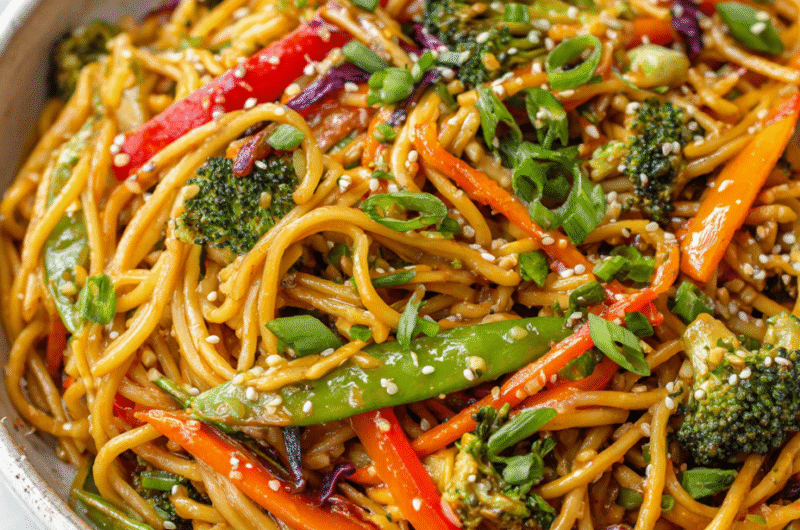
In many vegetable lo mein recipes, the sauce gets lost behind the stir-fried veggies, but I’ve always felt it’s the secret to making this dish truly memorable. It’s not just about tossing everything together; it’s about balancing that sweet, tangy, and savory punch that ties all the ingredients into one cohesive bite. I’ve spent years tweaking this sauce until it hits that perfect note, and now I can’t imagine making lo mein without it.
What I love about this approach is how it turns a simple veggie noodle dish into something that sparks joy with every bite. The sauce is where I get to play with flavors—adding just enough acidity to brighten, enough sweetness to soothe, and a salty depth that makes the noodles sing. It’s honest cooking, really; no fancy ingredients, just a handful of pantry staples transformed into a flavor powerhouse. That’s the magic I want you to discover.
Focusing on the overlooked importance of the sauce in vegetable lo mein, this recipe emphasizes balancing sweet, savory, and tangy flavors to truly elevate the dish beyond just stir-fried vegetables.
Hidden Sauce Secrets
- I used to overlook how much the sauce defined this dish, but now I see it’s the heart of vegetable lo mein.
- There’s a quiet pride in mastering the balance of flavors—sweet, salty, tangy—that makes this dish sing every time.
- Honestly, it’s a relief to have a go-to veggie stir-fry that feels both quick and deeply satisfying, especially after busy days.
- Every time I make this, I’m reminded of family dinners where the smell of garlic and soy filled the house with warmth.
- I get a little nostalgic thinking about those late-night kitchen experiments that finally led me to this perfect sauce combo.
The spark that started it all
- This vegetable lo mein recipe grew out of a late-night craving for something cozy yet vibrant. I remember rummaging through my fridge, frustrated by the usual stir-fry options, and then realizing it’s really all about the sauce—how it ties everything together. That moment of clarity pushed me to experiment with balancing flavors, especially in a dish that’s so quick to come together but easy to overcomplicate.
- Over the years, I’ve learned that the secret isn’t just in the ingredients but in how you layer the flavors—sweet, tangy, salty. Every batch reminds me of the chaos and joy of cooking in my tiny kitchen, where a simple dish can turn into a small celebration. Now, I keep this recipe close, especially when I need something honest and satisfying, no fuss, no pretenses.
- heading: ‘The spark that started it all’
Quick history of vegetable lo mein
- Vegetable lo mein has roots in Chinese-American cuisine, emerging from the need for quick, satisfying takeout dishes in bustling cities.
- Traditionally, lo mein involves tossing cooked noodles with a stir-fry of vegetables and a savory sauce, a practice that dates back to street vendors in Shanghai.
- The dish’s popularity soared in the 20th century, especially in the U.S., where it became a staple in Chinese-American eateries highlighting adaptable, budget-friendly ingredients.
- Different regions have their own twists—some add tofu or egg for extra protein, while others focus on super fresh, seasonal vegetables.
Key ingredients and their secrets
- Wavy egg noodles: They’re the backbone, chewy and slightly buttery. Cook until just al dente, then toss in a little oil so they don’t stick, like a soft cloud in your wok.
- Carrots and bell peppers: Crunchy, colorful, and sweet. Slice thin, and sauté until they shimmer with a hint of char—adds a smoky sweetness that wakes up the dish.
- Green onions: Bright and fresh, they go in at the end. Slice diagonally for a splash of green that looks lively and adds a mild onion punch.
- Garlic and ginger: The aromatics that make your kitchen smell like a secret. Toast ginger first, then garlic, until fragrant but not burnt—smoky and warm.
- Soy sauce and oyster sauce: Salty and umami-rich. Use good-quality soy, and if you want a richer flavor, a splash of oyster sauce makes everything taste savory and deep.
- Sesame oil: Just a dash for that nutty aroma. Add it at the very end, it’s the whisper of toastiness that completes the dish with a toasted sesame scent.
- Optional chili flakes: For a little heat, toss in near the end. Start small—better to add more heat than try to tame a fiery overreach later.
Spotlight on key ingredients
Wavy egg noodles:
- They’re the backbone, chewy and slightly buttery. Cook until just al dente, then toss in a little oil so they don’t stick, like a soft cloud in your wok.
- Carrots and bell peppers: Crunchy, colorful, and sweet. Slice thin, and sauté until they shimmer with a hint of char—adds a smoky sweetness that wakes up the dish.
Sauces and aromatics:
- Garlic and ginger: The aromatics that make your kitchen smell like a secret. Toast ginger first, then garlic, until fragrant but not burnt—smoky and warm.
- Soy sauce and oyster sauce: Salty and umami-rich. Use good-quality soy, and if you want a richer flavor, a splash of oyster sauce makes everything taste savory and deep.
Notes for ingredient swaps
- Gluten-Free Noodles: Use rice noodles or soba for a gluten-free version that still offers great chew and soak up flavors well.
- Vegetable Variations: Swap broccoli florets, snap peas, or bok choy for peppers and carrots—each adds a different crunch and fresh note.
- Sauce Adjustments: Tamari or coconut aminos can replace soy sauce for a milder, slightly sweeter, and gluten-free profile.
- Oil Choices: Sesame oil lends a toasted aroma, but if you want neutral, swap with vegetable or canola oil—less aroma, same function.
- Sweeteners: Honey or maple syrup can replace sugar for a more nuanced sweetness, especially if you like a touch of complexity.
- Vegan Options: Skip oyster sauce and use mushroom sauce or a splash of miso paste mixed with water—rich umami without animal products.
- Add Protein: Tofu, tempeh, or even cooked shrimp can be added for extra protein—just sauté separately and toss in at the end.
Equipment & Tools
- Wok or large skillet: For high-heat stir-frying and tossing ingredients quickly.
- Tongs or spatula: To toss and turn the noodles and vegetables without breaking them.
- Fine-mesh strainer: For draining noodles efficiently and preventing sticking.
- Small bowl: To whisk together the sauce ingredients.
Step-by-step guide to vegetable lo mein
- Equipment & Tools: Gather a large wok or deep skillet (for high heat stir-frying), tongs or a spatula (for tossing), a fine-mesh strainer (for noodles), and a small bowl (for sauce prep).
- Boil water in a large pot, add a pinch of salt, and cook the noodles until just al dente, about 2-3 minutes. Drain and toss with a teaspoon of oil to prevent sticking. Set aside.
- Prep vegetables: Slice carrots and bell peppers thinly on a bias. Chop green onions diagonally. Mince garlic and ginger finely.
- Make the sauce: In a small bowl, whisk together 3 tbsp soy sauce, 1 tbsp oyster sauce, 1 tsp sesame oil, 1 tsp rice vinegar, a pinch of sugar, and a splash of water. Adjust to taste.
- Heat the wok over high heat until it shimmers—about 200°C/400°F. Add 1 tbsp vegetable oil. When hot, toss in ginger and garlic. Cook until fragrant, about 30 seconds, stirring constantly.
- Add carrots and peppers. Stir-fry until they start to soften and char slightly, about 2-3 minutes. They should be vibrant and slightly blistered.
- Push vegetables to one side of the wok. Add the noodles directly to the empty side. Let sit undisturbed for 30 seconds to develop a light sear, then toss everything together.
- Pour the sauce over the noodles and vegetables. Toss vigorously for 1-2 minutes, ensuring everything is evenly coated. The noodles should glisten and pick up the sauce’s aroma.
- Add chopped green onions and a drizzle of sesame oil. Toss once more, then turn off heat. The dish should be hot, fragrant, and slightly sticky.
- Rest the stir-fry for 1-2 minutes. Serve immediately, garnished with extra green onions or sesame seeds if desired. Plate in shallow bowls for best presentation.
Serve immediately in shallow bowls, garnished with extra green onions or sesame seeds if desired. Rest for 1-2 minutes to let flavors settle before eating.
How to Know It’s Done
- Noodles are tender yet firm (al dente) and not sticky.
- Vegetables are slightly blistered but still crisp and colorful.
- The sauce is glossy and coats everything evenly, with a balanced aroma of garlic, soy, and sesame.
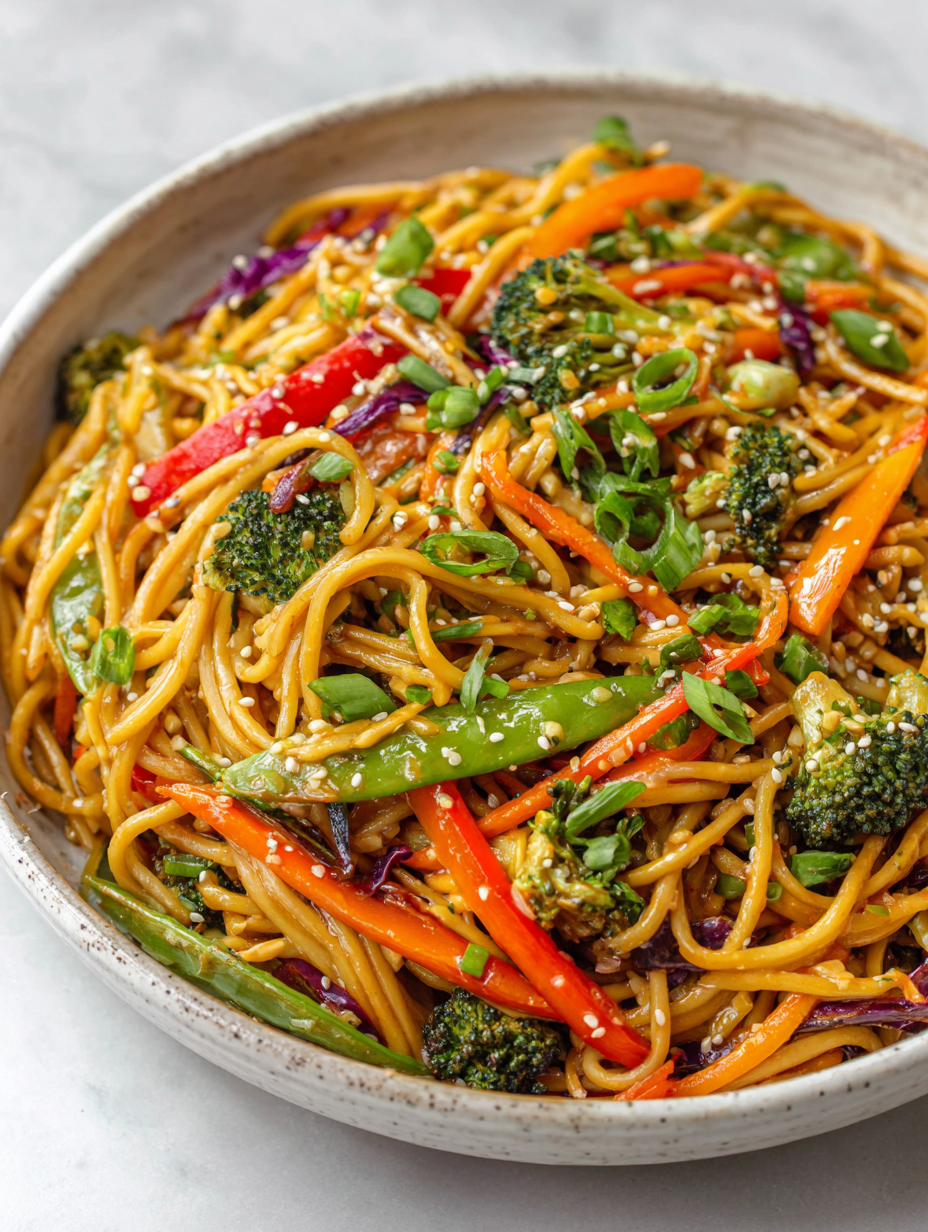
Vegetable Lo Mein with Perfectly Balanced Sauce
Ingredients
Equipment
Method
- Bring a large pot of water to a boil, add a pinch of salt, and cook the noodles until just al dente, about 2-3 minutes. Drain and toss with a teaspoon of oil to prevent sticking. Set aside.
- While the noodles cook, prepare your vegetables by slicing carrots and bell peppers thinly on a bias. Chop the green onions diagonally, and mince the garlic and ginger finely for maximum flavor release.
- In a small bowl, whisk together soy sauce, oyster sauce, rice vinegar, sugar, and sesame oil to create your flavorful sauce. Set aside.
- Heat your wok or large skillet over high heat until it shimmers. Add vegetable oil, then toss in the finely chopped ginger and minced garlic, cooking for about 30 seconds until fragrant and slightly golden.
- Add the sliced carrots and bell peppers to the wok. Stir-fry for 2-3 minutes until they start to soften and develop a slight char, releasing a smoky aroma and vibrant color.
- Push the vegetables to one side of the wok. Place the drained noodles directly into the empty space. Let them sit undisturbed for about 30 seconds to develop a light sear, then toss everything together to combine.
- Pour the prepared sauce evenly over the noodles and vegetables. Toss vigorously for 1-2 minutes, ensuring each strand is coated and glossy, and the sauce starts to caramelize slightly.
- Add the sliced green onions and a drizzle of sesame oil. Toss again to distribute evenly, then remove from heat. The dish should look glossy, fragrant, and just slightly sticky.
- Serve immediately in shallow bowls, garnished with extra green onions if desired. Enjoy the vibrant flavors and satisfying texture of this quick, flavorful vegetable lo mein.
Tips for perfect vegetable lo mein
- High heat: Keep your wok hot—around 200°C/400°F—to get that quick, smoky stir-fry sear.
- Prep in advance: Have all vegetables sliced and noodles ready before you start—stir-frying is fast and furious.
- Oil for tossing: Use enough oil to coat the ingredients; it helps prevent sticking and encourages even browning.
- Add sauce gradually: Pour in your sauce in stages, tasting as you go—too much at once can make everything soggy.
- Don’t overcook veggies: Keep them crisp-tender—remove from heat as soon as they shimmer and look vibrant.
- Toss vigorously: Use tongs or a spatula to toss noodles and vegetables, ensuring even coating with sauce and avoiding clumping.
- Finish with sesame oil: A drizzle at the end adds a toasted aroma—don’t skip this for depth and fragrance.
Common mistakes and how to fix them
- FORGOT to check noodle doneness → Overcooked noodles turn mushy, drain immediately.
- DUMPED sauce all at once → Add sauce gradually, taste and adjust for balance.
- OVER-TORCHED vegetables → Stir constantly to prevent burning and retain color.
- MISSED resting time → Rest briefly after cooking to allow flavors to meld.
Quick fixes and pantry swaps
- When sauce thickens too much, splash in a bit of water and stir gently.
- If noodles stick together, rinse with warm water and toss with a teaspoon of oil.
- Splash soy sauce if flavor is dull—boosts saltiness and umami instantly.
- Patch over overcooked vegetables with a squeeze of lemon—brightens without losing texture.
- Shield delicate greens from over-high heat by adding them last—crisp and fresh every time.
Prep, store, and reheat tips
- Prep vegetables: Slice carrots, peppers, and green onions the night before for quick stir-frying; keep in airtight containers. They stay crisp for up to 2 days in the fridge.
- Cook noodles ahead: Boil, drain, and toss with a teaspoon of oil. Store in a sealed container for up to 24 hours—reheat briefly to loosen before stir-frying.
- Make sauce in advance: Whisk together soy, oyster, sesame oils, and vinegar. Store in a jar for up to 3 days. The flavors deepen overnight, so taste and adjust before using.
- Refrigerate leftovers promptly: Store cooled lo mein in an airtight container for 2-3 days. The noodles may absorb flavors and become slightly firmer, but still tasty.
- Reheat with care: Warm in a hot skillet or wok over medium-high heat, stirring constantly. Expect the noodles to plump up and smell fragrant—add a splash of water if needed to loosen.
Top questions about vegetable lo mein
1. How do I get the noodles evenly coated with sauce?
Use a wide, flat wok or skillet over high heat to get that quick sear. It helps prevent steaming and encourages charring.
2. Can I adjust the sauce to make it sweeter or saltier?
Add the sauce gradually while tossing vigorously. Taste as you go to avoid overpowering the dish with salt or sweetness.
3. How do I know when the vegetables are perfect?
Cook vegetables until just tender but still vibrant and crisp, about 2-3 minutes on high heat. Overcooking softens them too much.
4. What vegetables work best for this dish?
Use fresh, firm vegetables sliced thinly. They cook quickly and hold texture. Keep your prep station organized for speed.
5. Should I rinse the cooked noodles?
Cook the noodles until just al dente, about 2-3 minutes. Drain thoroughly and toss with a little oil to prevent sticking.
6. When do I add the garlic and ginger?
Stir-fry aromatics first—ginger and garlic—until fragrant, about 30 seconds. This builds a rich, warm flavor base.
7. How should I serve vegetable lo mein?
Finish with a drizzle of sesame oil and chopped green onions. Serve immediately for the best texture and aroma.
8. How do I reheat leftover lo mein?
Store leftovers in an airtight container up to 3 days. Reheat in a hot skillet, stirring constantly, until steaming and fragrant.
9. Can I make this gluten-free?
Use soy sauce or tamari for a gluten-free option. Adjust the saltiness and add a splash of rice vinegar for brightness.
10. Can I add protein to this dish?
Yes! Add cooked tofu, shrimp, or chicken for extra protein. Sauté separately and toss in at the end to keep everything fresh.
This vegetable lo mein is a reminder that simple ingredients, when balanced well, can create something comforting and vibrant. It’s perfect for busy nights when you want quick gratification without sacrificing flavor. Plus, the aroma of garlic, sesame, and sizzling veggies can fill your home with a sense of warmth and familiarity.
Cooking this dish feels honest and unpretentious, a small act of everyday joy. It’s a way to reconnect with the basics—just noodles, vegetables, and that magic sauce—crafted with care and a bit of kitchen chaos. No matter how often I make it, it always feels like coming home to something I truly enjoy.

Hi there! I’m Himani and welcome to Val’s Recipe Box. This little corner of the internet didn’t begin with me. It began with Val my neighbourhood aunt whose kitchen held more warmth than any fireplace ever could.


 This little corner of the internet didn’t begin with me.
It began with Val my neighbourhood aunt whose kitchen held more warmth than any fireplace ever could.
She was more of a friend and I’ve come to know her in the most unexpected way.
This little corner of the internet didn’t begin with me.
It began with Val my neighbourhood aunt whose kitchen held more warmth than any fireplace ever could.
She was more of a friend and I’ve come to know her in the most unexpected way.