
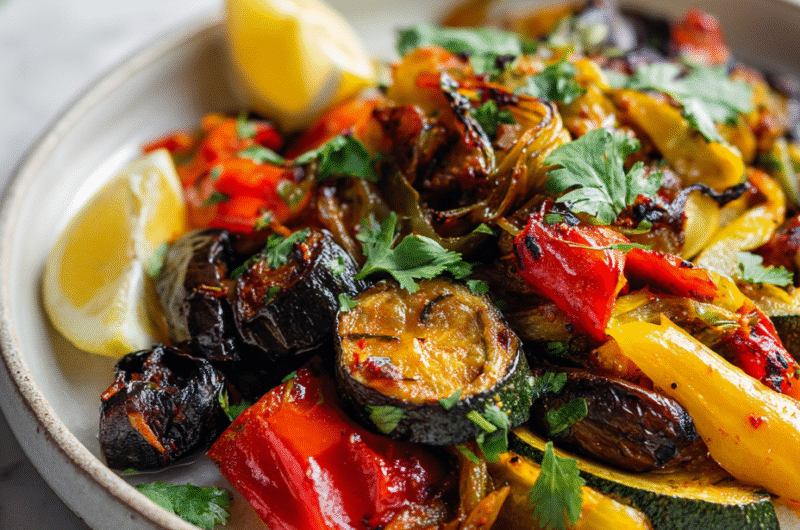
This vegetable jalfrezi recipe is my way of bringing smoky, charred flavors into a dish that’s usually bright and fresh. No tandoor? No problem. I love the challenge of mimicking those deep, roasted notes using just my stovetop and a good-quality cast-iron skillet. It’s a bit of kitchen alchemy, turning simple vegetables into something that feels roasted over open flames.
What really drew me to this dish is how it balances that smoky richness with the crunch of fresh vegetables. It’s perfect for a busy weeknight when I want something hearty but not heavy, vibrant but not complicated. Every time I make it, I feel like I’ve somehow captured a little bit of outdoor grill magic in my cozy kitchen.
This recipe focuses on how to make vegetable jalfrezi that captures the vibrant, smoky flavors of a tandoor, even without one. It’s about recreating that deep, roasted aroma and charred texture using everyday kitchen tools, turning humble vegetables into a dish that feels like it’s been grilled over open flames.
Harnessing Smoke Without a Tandoor
- I love how this dish reminds me of summer barbecues, even when it’s cold outside.
- There’s a quiet satisfaction in turning everyday vegetables into something smoky and complex.
- Making this recipe always sparks a little nostalgia for family dinners around the stove.
- It’s a reminder that simple ingredients, when treated right, can taste extraordinary.
- I feel proud every time I get that perfect char and smoky aroma without needing fancy equipment.
The story behind this recipe
- This vegetable jalfrezi came about from late-night kitchen experiments. I was craving something smoky and vibrant but didn’t have a tandoor or open flame. So I started playing with high heat and a cast-iron skillet, trying to coax out those deep, roasted flavors with everyday ingredients. It became a sort of quest to mimic that charred, smoky aroma using just my stovetop.
- Every time I make it, I remember how powerful simple techniques can be. Turning raw vegetables into something that tastes like it’s been grilled over an outdoor fire feels like a little kitchen victory. It’s honest, unpolished, and totally satisfying—just the way I like cooking best.
- heading
- story_type
Trivia and Historical Roots
- This dish has roots in Bengali cuisine, where it’s known for quick, spice-packed vegetable stir-fries.
- Jalfrezi emerged during British-Indian culinary exchanges, blending fresh vegetables with bold, tangy sauces.
- Originally, it was a way to use leftover vegetables, turning them into a vibrant, quick curry with a smoky undertone.
Ingredient breakdown: key components
- Bell peppers: I like the sweetness and crunch of red bell peppers, but you can swap in yellow or orange for a milder flavor and vibrant color.
- Tomatoes: Juicy, ripe tomatoes give the sauce a bright, tangy backbone. If your tomatoes are lacking flavor, add a splash of lemon juice at the end.
- Onions: I prefer yellow onions for depth, but shallots work beautifully if you want a subtler, sweeter note. Cook until golden for richness.
- Green chilies: They add heat and a punch of sharpness—adjust or skip if you prefer milder. Roast briefly to deepen their smoky aroma.
- Spices: Garam masala, turmeric, and cumin—these are my go-tos, but feel free to experiment with smoked paprika for extra smoky depth.
- Oil: A good splash of vegetable or mustard oil gives that authentic, slightly pungent base. Use what you like, but avoid overly bland oils.
- Fresh coriander: I love adding chopped fresh coriander at the end for brightness, but dried coriander seeds can be toasted and ground for a deeper flavor.
Spotlight on key ingredients
Bell peppers:
- I love their sweet, juicy crunch that adds brightness and texture; roasting intensifies their smoky sweetness.
- Tomatoes: They bring a tangy, juicy richness that balances spices; ripe, sun-warmed tomatoes give the best flavor and aroma.
Onions:
- Green chilies: They provide sharp heat and a fresh bite; roasting them deepens smoky notes and enhances flavor complexity.
- They develop a sweet, golden depth when sautéed thoroughly; their texture should be tender but still hold some bite.
Notes for ingredient swaps
- Bell peppers: I like the sweetness and crunch of red bell peppers, but you can swap in yellow or orange for a milder flavor and vibrant color.
- Tomatoes: Juicy, ripe tomatoes give the sauce a bright, tangy backbone. If your tomatoes are lacking flavor, add a splash of lemon juice at the end.
- Onions: I prefer yellow onions for depth, but shallots work beautifully if you want a subtler, sweeter note. Cook until golden for richness.
- Green chilies: They add heat and a punch of sharpness—adjust or skip if you prefer milder. Roast briefly to deepen their smoky aroma.
- Spices: Garam masala, turmeric, and cumin—these are my go-tos, but feel free to experiment with smoked paprika for extra smoky depth.
- Oil: A good splash of vegetable or mustard oil gives that authentic, slightly pungent base. Use what you like, but avoid overly bland oils.
- Fresh coriander: I love adding chopped fresh coriander at the end for brightness, but dried coriander seeds can be toasted and ground for a deeper flavor.
Equipment & Tools
- Cast-iron skillet: To achieve high heat and smoky char without burning.
- Wooden spoon: For stirring vegetables and spices without scratching the skillet.
- Sharp knife: To chop vegetables precisely and quickly.
- Chopping board: To prep all ingredients efficiently.
Step-by-step guide to vegetable jalfrezi
- Gather your equipment: a large cast-iron skillet, a wooden spoon, a sharp knife, and a chopping board.
- Prep the vegetables: chop bell peppers, onions, tomatoes, and green chilies into bite-sized pieces. Keep everything ready to go.
- Heat the skillet over high heat until it’s just starting to smoke, about 250°C (480°F).
- Add a generous splash of oil—vegetable or mustard—and swirl to coat the pan. Wait until it shimmers and smells slightly pungent.
- Toss in the chopped onions and green chilies. Sauté for 2-3 minutes, stirring frequently, until onions are golden and fragrant.
- Add the bell peppers next. Cook for another 4-5 minutes, stirring often, until they start to char at the edges and smell smoky.
- Stir in the spices: turmeric, cumin, garam masala. Cook for 30 seconds until fragrant—don’t burn them.
- Add the chopped tomatoes. Reduce heat slightly to medium-high. Cook for 8-10 minutes, stirring occasionally, until the sauce thickens and deepens in color.
- Optional: splash in a bit of lemon juice or add extra chili for brightness and heat. Stir well.
- Check the texture: vegetables should be tender but still have some crunch, and the sauce should be rich and smoky.
- Taste and adjust seasoning—more salt, a squeeze of lemon, or a pinch of sugar if needed.
- Remove from heat. Let it rest for a couple of minutes to allow flavors to meld.
- Serve hot, garnished with fresh coriander if you like, alongside rice or flatbread.
Let the dish sit off heat for a couple of minutes, then garnish with chopped coriander. Serve immediately with rice or naan for maximum flavor and aroma.
How to Know It’s Done
- Vegetables are slightly charred and smoky on edges.
- Sauce is thick, vibrant, and coats the vegetables evenly.
- A deep, roasted aroma fills the kitchen, signaling good caramelization.
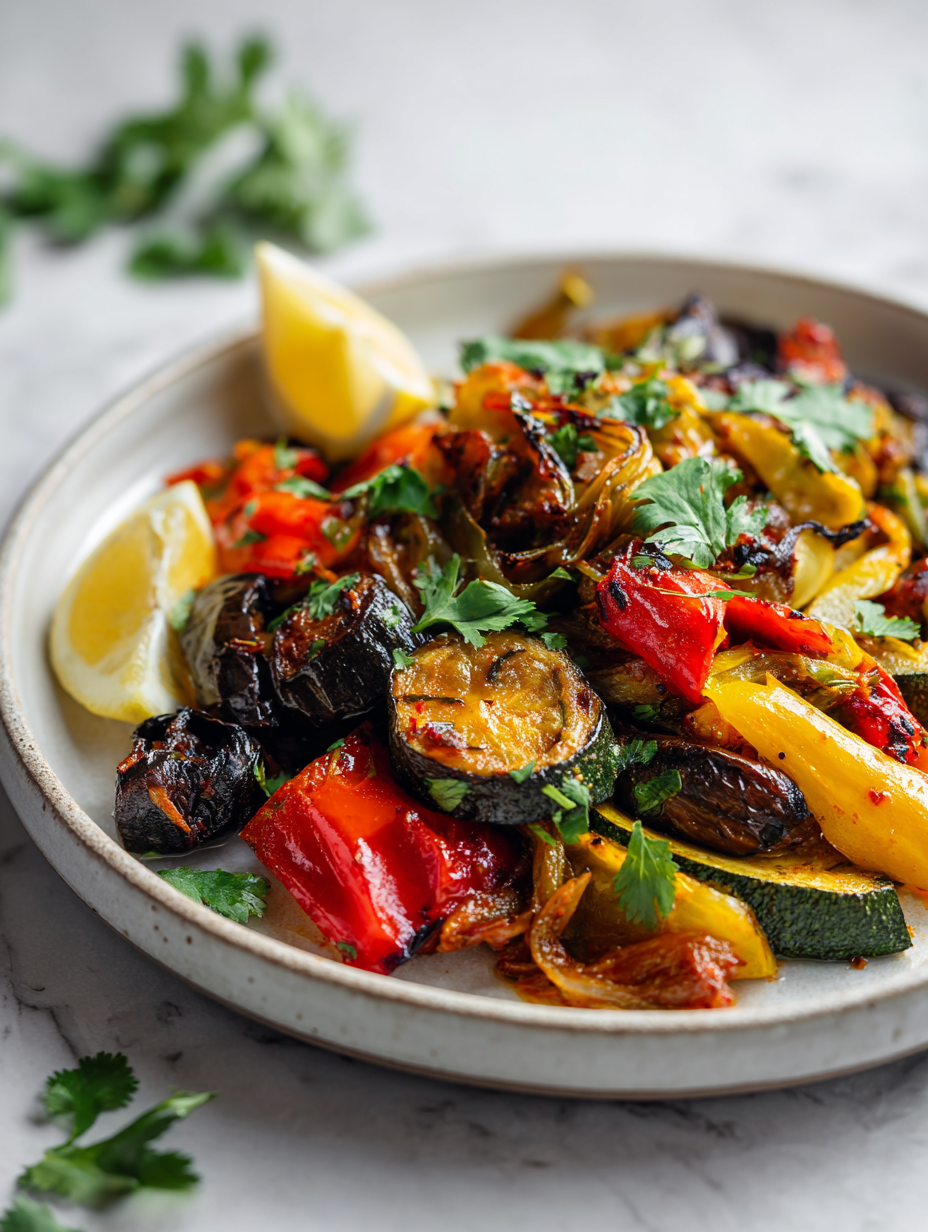
Smoky Vegetable Jalfrezi
Ingredients
Equipment
Method
- Start by preheating your cast-iron skillet over high heat until it just begins to smoke, which creates the perfect environment for smoky flavor.
- Add a generous splash of oil to the hot skillet, swirling to coat the bottom. Wait until the oil shimmers and smells slightly pungent, indicating it's ready.
- Toss in the sliced onions and green chilies, stirring constantly. Sauté for about 2-3 minutes until the onions turn golden and fragrant, and green chilies start to char slightly.
- Add the chopped bell peppers and continue to stir. Cook for 4-5 minutes, allowing the edges to char and develop a smoky aroma while vegetables soften slightly.
- Stir in the minced garlic along with turmeric, cumin seeds, and garam masala. Cook for about 30 seconds until fragrant, taking care not to burn the spices.
- Add the chopped tomatoes and reduce the heat slightly to medium-high. Simmer for 8-10 minutes, stirring occasionally, until the sauce thickens and deepens in color, with vegetables tender yet still crunchy.
- Adjust the seasoning with a squeeze of lemon or extra chili if desired. Taste and make sure the vegetables are charred at the edges, with a smoky, vibrant sauce.
- Remove the skillet from heat and sprinkle chopped fresh coriander over the top for a bright, herbal finish. Let sit for a couple of minutes to allow flavors to meld.
- Serve your smoky vegetable jalfrezi hot, alongside rice or naan, enjoying the rich aroma and lively textures.
Notes
Tips for Perfect Vegetable Jalfrezi
- Bolded mini-head: High heat for smoky sear → Preheat your skillet until it just starts to smoke before adding vegetables, for that charred flavor.
- Bolded mini-head: Don’t overcrowd the pan → Cook vegetables in batches if needed, so they char properly and don’t steam.
- Bolded mini-head: Use the right oil → A splash of mustard or vegetable oil withstands high heat and adds authenticity.
- Bolded mini-head: Roast chilies briefly → Char green chilies over high heat to deepen smoky aroma before chopping.
- Bolded mini-head: Taste and adjust → Always taste the sauce before finishing; add lemon or salt to brighten or balance the smoky notes.
- Bolded mini-head: Rest before serving → Let the dish sit for 2 minutes off heat to meld flavors and intensify aroma.
- Bolded mini-head: Finish with fresh herbs → Chopped coriander added at the end brightens the dish and adds fresh contrast.
Common mistakes and how to fix them
- FORGOT to heat the skillet sufficiently → Preheat until just smoking for smoky flavor.
- DUMPED vegetables too early → Wait for charring and smoky aroma before adding spices.
- OVER-TORCHED spices → Toast spices gently until fragrant, avoid burning to prevent bitterness.
- MISSED resting time → Rest dish 2 minutes for flavors to meld and deepen.
Quick fixes and pantry swaps
- When vegetables are soggy — splash with a little water and crank up heat to revive crunch.
- If the aroma lacks smokiness — open the window and increase the heat; a five-second rescue can help.
- Splash soy sauce or tamari for depth if the dish feels flat—adds umami without extra fuss.
- Patch burnt spices by removing the pan from heat immediately and adding fresh spices to finish.
- Shield vegetables from overcooking by stirring constantly once they start to char, maintaining texture and flavor.
Prep, store, and reheat tips
- Chop all vegetables a day ahead; keep in airtight containers in the fridge for up to 24 hours. Their fresh crunch remains intact.
- The spice mix can be prepared in advance and stored in a small jar for up to a week. The aroma of toasted spices makes it worth the extra step.
- Refrigerate leftovers in an airtight container for up to 2 days. The flavors deepen, and the smoky notes become more pronounced over time.
- Reheat gently over low heat, stirring often, until steaming and fragrant. Expect the aroma to intensify and the sauce to thicken slightly.
- For longer storage, freeze in portions for up to 3 months. Thaw in the fridge overnight, then reheat as above, watching for the sauce to regain its vibrant color and aroma.
Top questions about Vegetable Jalfrezi
1. How do I get that smoky flavor without a tandoor?
Use firm, colorful bell peppers and roast them until slightly charred for smoky sweetness.
2. What’s the secret to achieving the charred edges?
Cook vegetables over high heat in a hot skillet, aiming for charring and fragrant aroma before adding spices.
3. Can I make this milder or spicier?
Adjust chili quantity based on your heat preference; roasting green chilies deepens smoky aroma.
4. How do I make the tomato sauce perfect?
Use ripe tomatoes and cook until sauce is thick and vibrant for a balanced tang and richness.
5. Can I prepare this ahead of time?
Pre-chop all vegetables and toast spices beforehand to streamline cooking and enhance flavor.
6. How do I reheat without losing flavor?
Reheat gently in a skillet over low heat, stirring often, until steaming and fragrant again.
7. What oil is best for high heat?
Use mustard or vegetable oil for high-heat roasting; it withstands the heat and adds authenticity.
8. How do I brighten the flavors at the end?
Finish with fresh coriander for brightness, or add a squeeze of lemon to lift the smoky notes.
9. What vegetables work best for this dish?
Look for vegetables with firm texture and vibrant color; avoid wilted or dull produce.
10. How can I fix a bland jalfrezi?
If the dish feels flat, add a splash of soy sauce or a pinch of sugar to deepen flavor.
This vegetable jalfrezi isn’t just about the smoky flavor, it’s about rediscovering how simple ingredients can surprise you. It’s a reminder that with a little high heat and patience, everyday vegetables can taste like they’ve been grilled over an open flame. That aroma, that charred crunch—once you get it right, it’s hard to go back to the usual.
Right now, when everyone’s craving comfort and something a little different, this dish fits right in. It’s honest cooking, quick to toss together, and deeply satisfying without fuss. Every time I make it, I feel like I’ve captured a little piece of outdoor grilling magic—no backyard needed.

Hi there! I’m Himani and welcome to Val’s Recipe Box. This little corner of the internet didn’t begin with me. It began with Val my neighbourhood aunt whose kitchen held more warmth than any fireplace ever could.


 This little corner of the internet didn’t begin with me.
It began with Val my neighbourhood aunt whose kitchen held more warmth than any fireplace ever could.
She was more of a friend and I’ve come to know her in the most unexpected way.
This little corner of the internet didn’t begin with me.
It began with Val my neighbourhood aunt whose kitchen held more warmth than any fireplace ever could.
She was more of a friend and I’ve come to know her in the most unexpected way.