
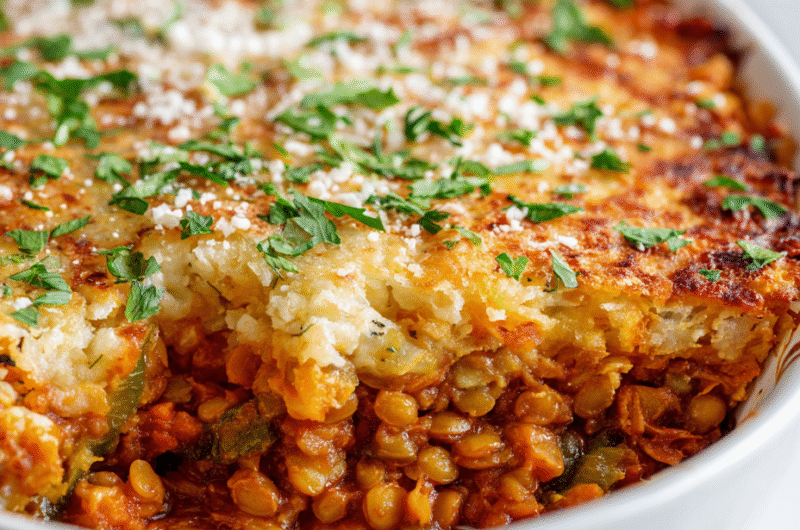
This baked lentil casserole is my quiet rebellion against the usual weeknight rush. I love how it’s a one-dish wonder, forgiving of whatever leftover veggies I toss in, and still somehow tastes like a warm, hearty hug. It’s the kind of dish that feels like a small victory after a long day, filling the house with a smoky, earthy aroma that sticks around long after the first bite.
Growing up, my grandmother’s kitchen was full of those spontaneous, imperfect meals—rustic, honest, and deeply comforting. She’d toss in bits of cheese, a splash of hot sauce, whatever was left in the fridge, turning humble lentils into something almost magical. Now, this casserole reminds me of those afternoons, a simple way to bring some of that old-world warmth into my own busy life.
This recipe is inspired by my grandmother’s kitchen, where she used to toss in leftover vegetables and a splash of hot sauce to transform humble lentils into a comforting, smoky casserole. It’s my go-to after a long day, a dish that feels like a warm hug from memories and flavors I can’t quite replicate.
A Cozy Twist on Lentils
- This dish reminds me of lazy Sunday afternoons at my grandmother’s; it’s rustic, imperfect, and full of love.
- I feel a rush of pride when I pull this casserole out of the oven—golden, bubbling, and smelling like home.
- There’s a quiet relief in knowing I’ve turned simple pantry staples into something hearty and nourishing.
- It’s funny how a bowl of lentils can evoke such nostalgia, a little piece of my childhood in every bite.
The story behind this recipe
- This casserole came together one chilly evening when I was rummaging through my pantry, looking for something wholesome but quick. I remembered how my grandmother used to toss leftover vegetables and spices into her lentils, creating a dish that was both simple and deeply satisfying. That memory stuck with me, and I started experimenting, tweaking her approach into something I could bake and call my own.
- Every time I make this, I think of those cozy afternoons—kitchen warm with the smell of garlic and cumin, the sounds of a simmering pot, the comfort in knowing I’m feeding myself with something soulful and honest.
- heading: “The story behind this recipe”
Historical & Cultural Tidbits
- This dish traces its roots to humble farmsteads where lentils were a staple, often cooked into one-pot meals for family gatherings.
- In some cultures, baked lentil casseroles are a celebration dish, symbolizing warmth and community during colder months.
- Historically, it was a clever way to stretch ingredients, turning dried lentils and leftover vegetables into something hearty and satisfying.
- The casserole style likely emerged in rural kitchens, where oven-baked meals became a practical method to meld flavors and feed larger families.
Ingredient breakdown: key components
- Brown lentils: I prefer the earthy, nutty flavor of brown lentils; they hold their shape well after baking, giving the casserole a hearty bite. Feel free to swap for green lentils if you like a slightly more peppery note.
- Vegetable broth: I use homemade or low-sodium broth for depth, but water with a squeeze of lemon works in a pinch—just add a bit more seasoning to compensate.
- Onion & garlic: The aroma of sautéed onion and garlic is my favorite part—if you’re short on time, use pre-minced versions, but fresh gives a brighter flavor.
- Cheese (optional): I love a sharp cheddar or tangy feta melted into this. For a dairy-free version, coconut yogurt or nutritional yeast can bring that umami kick, though it’s a different vibe.
- Spices: I keep cumin and smoked paprika in my pantry—they add warmth and smoky depth. Feel free to toss in a pinch of chili powder or turmeric for extra complexity.
- Vegetables: Leftover roasted carrots or wilted greens work beautifully—think of this casserole as a chance to clear out the fridge and make it delicious.
- Topping: Breadcrumbs give a nice crunch, but crushed nuts or seeds can add a different texture; just toast them lightly first for extra flavor.
Spotlight on key ingredients
Brown lentils:
- I love their earthy, nutty flavor and how they hold their shape after baking. They give the casserole a hearty, satisfying bite. If you prefer a softer texture, try green lentils, which cook slightly faster and become creamier.
- Vegetable broth: I prefer homemade or low-sodium broth for its rich, savory depth. If you’re in a pinch, water with a splash of lemon juice works well—just remember to adjust seasoning for that bright, tangy note.
Spices:
- Cheese (optional): Sharp cheddar or tangy feta melt beautifully into the hot casserole, creating a gooey, savory topping. For dairy-free, nutritional yeast or coconut yogurt can add that umami flavor, though they won’t melt the same way.
- Cumin and smoked paprika are my staples—they add a warm, smoky aroma that’s almost irresistible. Feel free to add chili powder or turmeric for an extra layer of complexity and color.
Notes for ingredient swaps
- Dairy-Free: Swap cheese for coconut yogurt or nutritional yeast. It adds umami but loses that melty, cheesy texture.
- Gluten-Free: Use crushed nuts or seeds instead of breadcrumbs for topping—adds crunch, keeps it nutty and wholesome.
- Vegetable Broth: Switch to water plus a squeeze of lemon or a splash of soy sauce for depth—less rich but still flavorful.
- Lentils: Green lentils work well too, they hold shape a bit more, with a slightly peppery flavor; adjust cooking time slightly.
- Oil: Olive oil is classic, but sesame oil adds a nutty aroma—use sparingly to avoid overpowering the dish.
- Add-ins: Feel free to toss in leftover cooked grains like quinoa or rice, for extra texture and bulk—just reduce the cooking liquid.
- Spices: Smoked paprika can be replaced with chipotle powder for a more intense smoky kick, if you like heat.
Equipment & Tools
- Medium baking dish: To bake the casserole evenly and keep ingredients contained.
- Large skillet: To sauté aromatics and lightly toast lentils for flavor.
- Stirring spoon: To mix ingredients and check consistency during cooking.
Step-by-step guide to baking
- Gather your equipment: a medium baking dish (for even baking), a large skillet (to sauté), and a stirring spoon. Preheat your oven to 180°C (350°F).
- In the skillet over medium heat (about 160°C/320°F), warm a tablespoon of oil. Add diced onion and minced garlic. Cook until fragrant, about 3-4 minutes, until onion is translucent and fragrant—smells sweet and earthy.
- While the onions cook, rinse 1 cup of dried brown lentils under cold water until the water runs clear. Set aside.
- Add the lentils to the skillet, stir to coat with the aromatics, then pour in 2 cups of vegetable broth or water. Bring to a gentle simmer, about 10 minutes, until lentils are just starting to soften but are still holding shape. They should smell earthy, slightly toasted.
- Transfer the lentil mixture to your baking dish. Stir in chopped leftover vegetables (like carrots or greens), a teaspoon of smoked paprika, cumin, and a pinch of salt. Mix well. Top with shredded cheese or a sprinkle of breadcrumbs if using.
- Bake uncovered in the preheated oven for 30-35 minutes. The top should turn golden brown, and the casserole should smell smoky and savory. The lentils should be tender but not mushy—test with a fork.
- Remove from oven, let rest for 10 minutes. The casserole will set slightly, making it easier to serve. Garnish with fresh herbs if desired, then scoop onto plates with a spoon.
- Serve hot, with a side of crusty bread or a simple green salad. The top should be crispy, the inside moist and hearty, with a deep, smoky aroma.
Let the casserole rest for 10 minutes after baking. This helps it set up, making serving easier and preventing it from falling apart. Garnish with fresh herbs or a drizzle of olive oil before plating.
How to Know It’s Done
- Lentils are tender but hold their shape (probe with a fork).
- Top is golden and slightly crisp (visual cue).
- Smell should be smoky, earthy, and inviting (aromatic check).
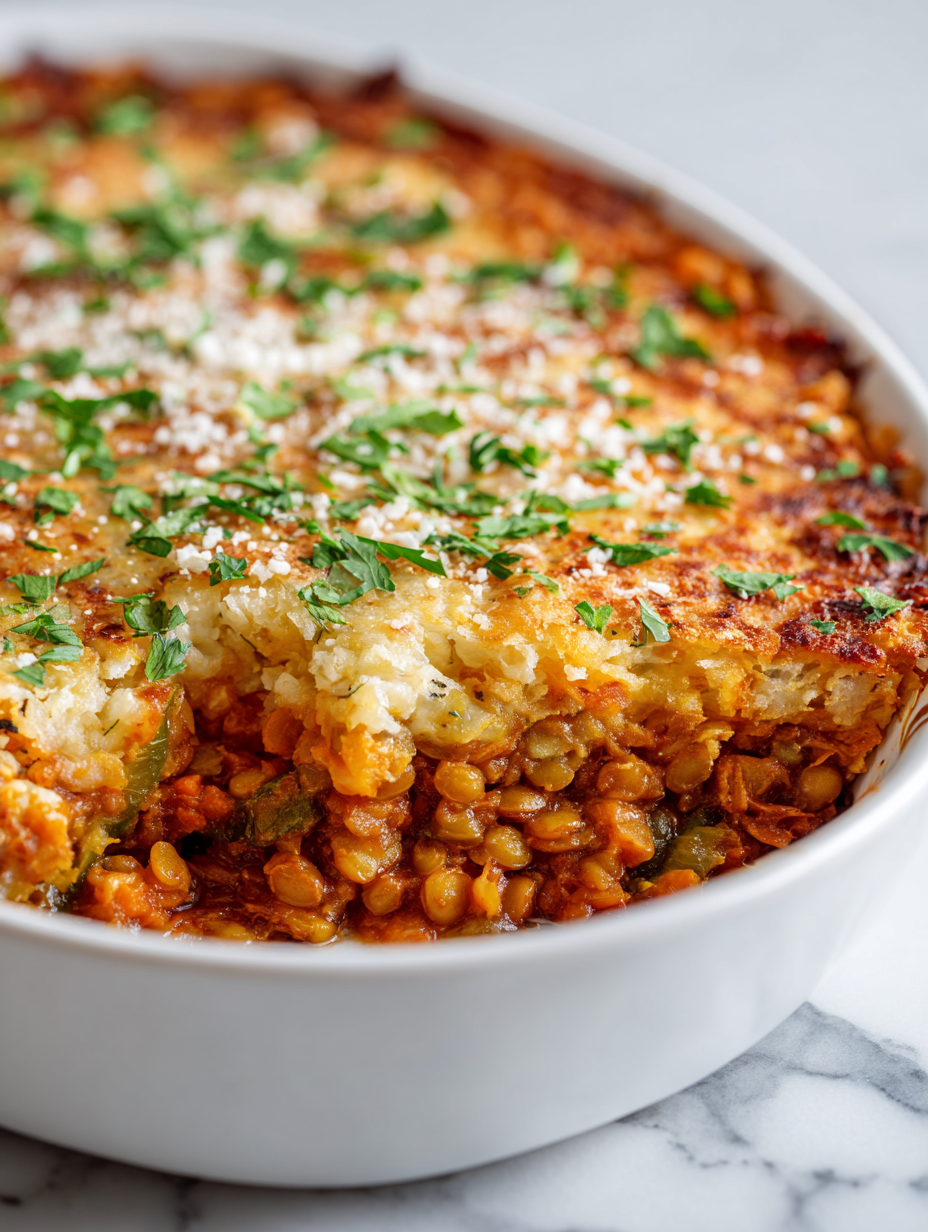
Baked Lentil Casserole
Ingredients
Equipment
Method
- Preheat your oven to 180°C (350°F). Gather a medium baking dish, a large skillet, and a stirring spoon to get started.
- In the skillet, heat a tablespoon of olive oil over medium heat until it shimmers and begins to smell fragrant. Add the diced onion and minced garlic, sautéing until the onion turns translucent and releases a sweet, earthy aroma—about 3-4 minutes.
- Meanwhile, rinse the dried lentils under cold water until the water runs clear. Drain well and set aside.
- Add the rinsed lentils to the skillet, stirring to coat them with the aromatic oil. Pour in the vegetable broth and bring to a gentle simmer. Cook for about 10 minutes, or until the lentils are just starting to soften but still hold their shape. The mixture will smell nutty and toasted.
- Transfer the lentil mixture to the baking dish, spreading it out evenly. Stir in the chopped leftover vegetables, smoked paprika, cumin, and a pinch of salt and pepper. Mix gently so the flavors combine.
- If using cheese, sprinkle it evenly over the top of the mixture. Then, sprinkle breadcrumbs or crushed nuts for a crunchy topping if desired.
- Bake uncovered in the preheated oven for 30-35 minutes, or until the top is golden brown and bubbling with smoky aroma. The lentils should be tender, and the topping crispy.
- Remove from the oven and let rest for about 10 minutes to allow the casserole to set. This makes serving easier and helps the flavors meld beautifully.
- Serve hot, garnished with herbs if you like. The top should be crispy, and the inside moist and hearty—perfect for cozy evenings.
Notes
Pro tips for baked lentil casserole
- Use a heavy-bottomed skillet to prevent hot spots and ensure even sautéing.
- Toast spices in oil for 30 seconds to release their full aroma before adding liquids.
- Rinse lentils thoroughly—this removes dust and helps them cook more uniformly.
- Cover the casserole halfway through baking to trap moisture and develop a tender texture.
- Check the top at 25 minutes—if it’s not golden, broil on high for 2-3 minutes to crisp it up.
- Let the casserole rest for at least 10 minutes—this helps it set and makes slicing easier.
- If the casserole looks dry, drizzle a little more broth before baking, for a moist final dish.
Common mistakes and how to fix them
- FORGOT to preheat the oven → Always preheat to ensure even baking and proper crust formation.
- DUMPED in all ingredients at once → Sauté aromatics first for flavor depth before adding lentils and liquids.
- OVER-TORCHED the casserole top → Cover with foil if browning too quickly, check at 20 minutes.
- USED too much liquid → Lentils should be moist but not swimming; adjust broth amount for desired consistency.
Quick fixes and pantry swaps
- When burnt edges appear, shield with foil and lower oven temp to prevent further charring.
- If casserole is too watery, splash in a bit more breadcrumbs and bake uncovered for crunch.
- DUMPED in all ingredients cold? Splash a little hot water over the top to jumpstart simmering.
- Splash with lemon juice if the dish feels flat or dull—brightens flavors instantly.
- If you’re missing breadcrumbs, swap with crushed nuts or seeds for a crunchy topping and rich flavor.
Prep, store, and reheat tips
- You can prep the lentil mixture a day ahead; keep it in the fridge for up to 24 hours. The flavors meld overnight, becoming richer and more complex.
- Assemble the casserole a few hours before baking, cover tightly, and store in the fridge. The dish will be chilled but still flavorful and ready to go in the oven.
- Cooked lentils and baked casserole are good for about 3-4 days in the fridge. Reheat gently in the oven or microwave until steaming and hot to the touch, about 2 minutes in microwave, smelling smoky and earthy.
- For longer storage, freeze in airtight containers for up to 3 months. Thaw overnight in the fridge, then reheat as above. The texture might soften slightly, but the flavor will still be there.
Top questions about baked lentil casserole
1. Can I use different types of lentils?
Yes, you can use red or yellow lentils, but they cook faster and can become mushy, so adjust cooking time accordingly.
2. Can I swap lentils for another bean?
Absolutely, just keep in mind they may cook quicker or hold less shape. Keep an eye on texture during baking.
3. Can I substitute canned beans for dried lentils?
Yes, but it might alter the cooking time and texture. Chickpeas or kidney beans work well, but pre-cooked is best.
4. Can I make this with canned lentils?
Definitely. Use about 2 cups of cooked beans, drained and rinsed. Reduce the baking time slightly to prevent over-softening.
5. Do I need to cook lentils beforehand?
Yes, just reduce the cooking time since they are already cooked. Mix and bake until bubbly and golden on top.
6. Should I pre-cook the lentils or can I use raw?
You can, but cooking them until just tender and draining excess water helps prevent a soggy casserole.
7. Can I make it vegetarian or vegan?
Use low-sodium broth or water if you want a milder flavor. Adjust seasonings to taste after baking.
8. Is cheese necessary for this recipe?
Yes, omit cheese or replace with dairy-free options like nutritional yeast or plant-based cheese for a similar umami effect.
9. Can I leave out the cheese?
No, it’s optional. The casserole remains flavorful and hearty without cheese, especially if you add extra spices or herbs.
10. How do I make it gluten-free?
To keep it gluten-free, use crushed nuts or seeds instead of breadcrumbs on top for crunch and texture.
This baked lentil casserole has become a fallback for me—something honest and filling, especially on busy nights. The smell of toasted spices and slow-baked vegetables still fills my kitchen with a sense of comfort I can’t quite replicate elsewhere.
It’s a dish that reminds me to keep things simple, using what I have on hand, and trusting that even humble ingredients can create something memorable. A quiet, nourishing end to any day, served hot and straight from the oven.

Hi there! I’m Himani and welcome to Val’s Recipe Box. This little corner of the internet didn’t begin with me. It began with Val my neighbourhood aunt whose kitchen held more warmth than any fireplace ever could.


 This little corner of the internet didn’t begin with me.
It began with Val my neighbourhood aunt whose kitchen held more warmth than any fireplace ever could.
She was more of a friend and I’ve come to know her in the most unexpected way.
This little corner of the internet didn’t begin with me.
It began with Val my neighbourhood aunt whose kitchen held more warmth than any fireplace ever could.
She was more of a friend and I’ve come to know her in the most unexpected way.