
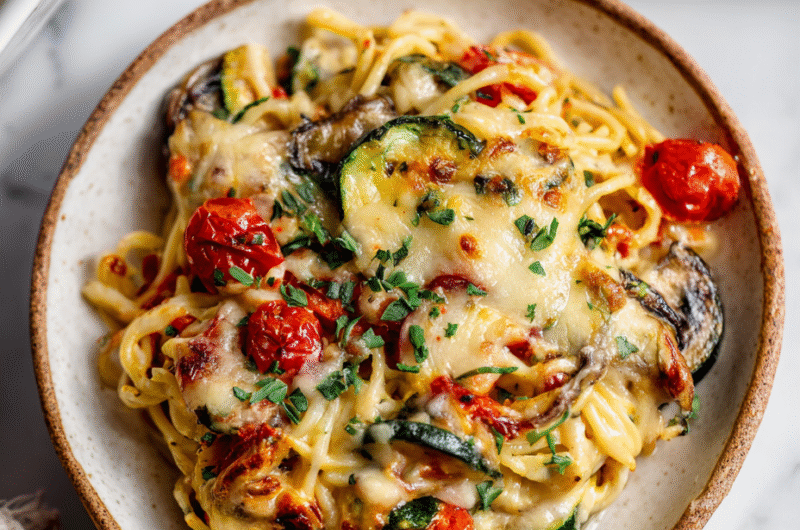
This vegetable pasta bake is my go-to for turning odds and ends in the fridge into something hearty and satisfying. I love how the roasted bits of zucchini, peppers, and carrots get all caramelized and smoky in the oven, adding depth to the dish. It feels like a little kitchen victory every time I pull it out of the oven, golden and bubbling.
What makes this recipe special is how forgiving it is. No need for perfection—just toss together leftover roasted veggies with some pasta, cheese, and a splash of cream, then bake until hot and cheesy. It’s a cozy, unpolished kind of meal that’s perfect after a busy day or when you’re just craving something warm and familiar.
This recipe focuses on how using a mix of leftover roasted vegetables transforms a simple pasta bake into a cozy, flavor-packed dish. It’s about turning what you already have into something comforting and satisfying, with a bit of a rustic, home-cooked feel.
Turning leftovers into comfort
- This dish reminds me of lazy weekend afternoons, the smell of roasted veggies filling the kitchen, making everything feel slower and sweeter.
- I get a little proud every time I see the golden, bubbling top—like I’ve managed to turn simple ingredients into something special.
- There’s a nostalgic comfort in how this bake brings together odds and ends, making me think of family dinners and shared stories around the table.
- Honestly, I love how forgiving it is—no perfect measurements, just a splash of this and a handful of that, and it always turns out cozy.
- Cooking this makes me feel connected to my roots, using what I have to create something warm and satisfying.
The story behind this recipe
This vegetable pasta bake was born out of necessity and love for leftovers. One evening, I opened the fridge and saw a medley of roasted vegetables from the night before—zucchini, peppers, and carrots, a bit caramelized at the edges. Instead of letting them go to waste, I tossed them with some cooked pasta, a splash of cream, and generous handfuls of cheese, then baked it until bubbling and golden. That simple dish became a staple, a reminder that you can turn humble odds and ends into something warm, satisfying, and a little bit special, with just a bit of patience and a good oven.
Historical and Cultural Roots
- This dish has roots in rustic European kitchen traditions, where using leftovers creatively was a necessity.
- The idea of combining roasted vegetables with pasta and cheese dates back to peasant meals in Italy and France, turning humble ingredients into hearty fare.
- In the early 20th century, casseroles like this became popular in American homes as a way to stretch ingredients and save time.
- The concept of baking pasta with vegetables was a way to make everyday meals more satisfying and to incorporate seasonal produce.
Ingredient breakdown: key components
- Zucchini: I love the way zucchini gets silky and slightly caramelized when roasted; it adds a gentle sweetness. Swap with yellow squash if you prefer a milder flavor.
- Bell Peppers: Their smoky, sweet aroma when roasted lifts the whole dish. If you’re out, roasted eggplant or cherry tomatoes work well as substitutes.
- Carrots: I use them for a subtle sweetness and vibrant color; roasting makes them tender and caramelized. Parsnips can be a sweeter alternative with a similar texture.
- Pasta: Cook until just al dente—overcooked pasta turns mushy after baking. Whole wheat or gluten-free options can be swapped in without fuss.
- Cheese: I prefer a mix of mozzarella and Parmesan for melty, salty goodness, but Gruyère or cheddar can bring a different, deeper flavor. Use what you love and have on hand.
- Cream: Adds richness and helps bind everything together. Coconut milk is a good dairy-free option that keeps it creamy without sacrificing flavor.
- Herbs & Spices: Fresh basil or thyme brighten up the dish. Dried oregano or Italian seasoning work if you want a more robust, herbaceous note.
Spotlight on key ingredients
Zucchini:
- I love the way zucchini gets silky and slightly caramelized when roasted; it adds a gentle sweetness. Swap with yellow squash if you prefer a milder flavor.
- Bell Peppers: Their smoky, sweet aroma when roasted lifts the whole dish. If you’re out, roasted eggplant or cherry tomatoes work well as substitutes.
- Carrots: I use them for a subtle sweetness and vibrant color; roasting makes them tender and caramelized. Parsnips can be a sweeter alternative with a similar texture.
Cheese & Cream:
- Cheese: I prefer a mix of mozzarella and Parmesan for melty, salty goodness, but Gruyère or cheddar can bring a different, deeper flavor. Use what you love and have on hand.
- Cream: Adds richness and helps bind everything together. Coconut milk is a good dairy-free option that keeps it creamy without sacrificing flavor.
Notes for ingredient swaps
- Dairy-Free: Swap cheese and cream with cashew or coconut milk. Expect a slightly different richness and texture, but still satisfying.
- Gluten-Free: Use gluten-free pasta—many have a neutral flavor, but check for a good bite and avoid mushiness.
- Vegetable Variations: Replace zucchini with eggplant or mushrooms for a deeper umami. Carrots can be swapped for sweet potatoes for a softer bite.
- Cheese Choices: Mozzarella can be replaced with fontina or gouda for a different melt and flavor profile.
- Herb Boost: Fresh basil or parsley add brightness; dried herbs work if fresh aren’t available, but use less.
- Cream Alternative: Coconut or almond-based creams for dairy allergies—note they can alter the flavor slightly.
- Pasta Type: Whole wheat, chickpea, or lentil pasta can be used for extra fiber and protein. They may have a denser texture, so cook accordingly.
Equipment & Tools
- Large baking dish: To assemble and bake the pasta mixture evenly.
- Saucepan: To warm and gently simmer the cream and seasonings.
- Cooking spoon and mixing bowl: To toss pasta and vegetables together smoothly.
- Chef’s knife: To chop leftover roasted vegetables into uniform pieces.
- Grater: To shred cheese fresh for topping.
Step-by-step guide to vegetable pasta bake
- Gather all your ingredients and tools first—makes the process smoother. You’ll need a large baking dish, a saucepan, and a mixing bowl.
- Preheat the oven to 190°C (375°F). While it heats, chop leftover roasted vegetables into bite-sized pieces, about 1-2 cm chunks.
- Cook pasta in salted boiling water until just al dente, about 8-10 minutes. Drain and set aside. If overcooked, it turns mushy after baking, so watch it.
- In the saucepan, warm 250 ml (1 cup) of cream over medium heat. Add a pinch of salt, pepper, and a teaspoon of dried oregano if using. It should just start to steam—don’t boil.
- Mix the cooked pasta with the roasted vegetables and pour the warm cream over. Toss gently to coat evenly, ensuring every piece is covered with the creamy sauce.
- Transfer everything into your baking dish. Sprinkle generously with shredded mozzarella and grated Parmesan. Feel free to add chopped fresh basil or thyme on top for a fresh hit.
- Bake uncovered for 20-25 minutes. The top should be golden and bubbly around the edges. The cheese will be melted and slightly browned, look for a crackle when you gently shake the dish.
- Once out of the oven, let it rest for about 5 minutes. This helps the layers set slightly and makes serving easier. The smell of melted cheese and roasted veg should fill the kitchen.
- Serve hot, with a little extra sprinkle of Parmesan or fresh herbs if desired. The edges will be crispy, and the inside creamy and tender. It should jiggle slightly when moved.
Let the bake sit for about 5 minutes after removing from the oven. Then, sprinkle with herbs or extra cheese if you like. Serve with a simple green salad or crusty bread. The resting period helps the cheese set slightly, making it easier to serve neat slices.
How to Know It’s Done
- Cheese is golden and bubbling, not burnt or greasy.
- Pasta feels tender but not mushy when tested with a fork.
- Sauce is thick enough to coat but not runny, with a slightly crispy top.
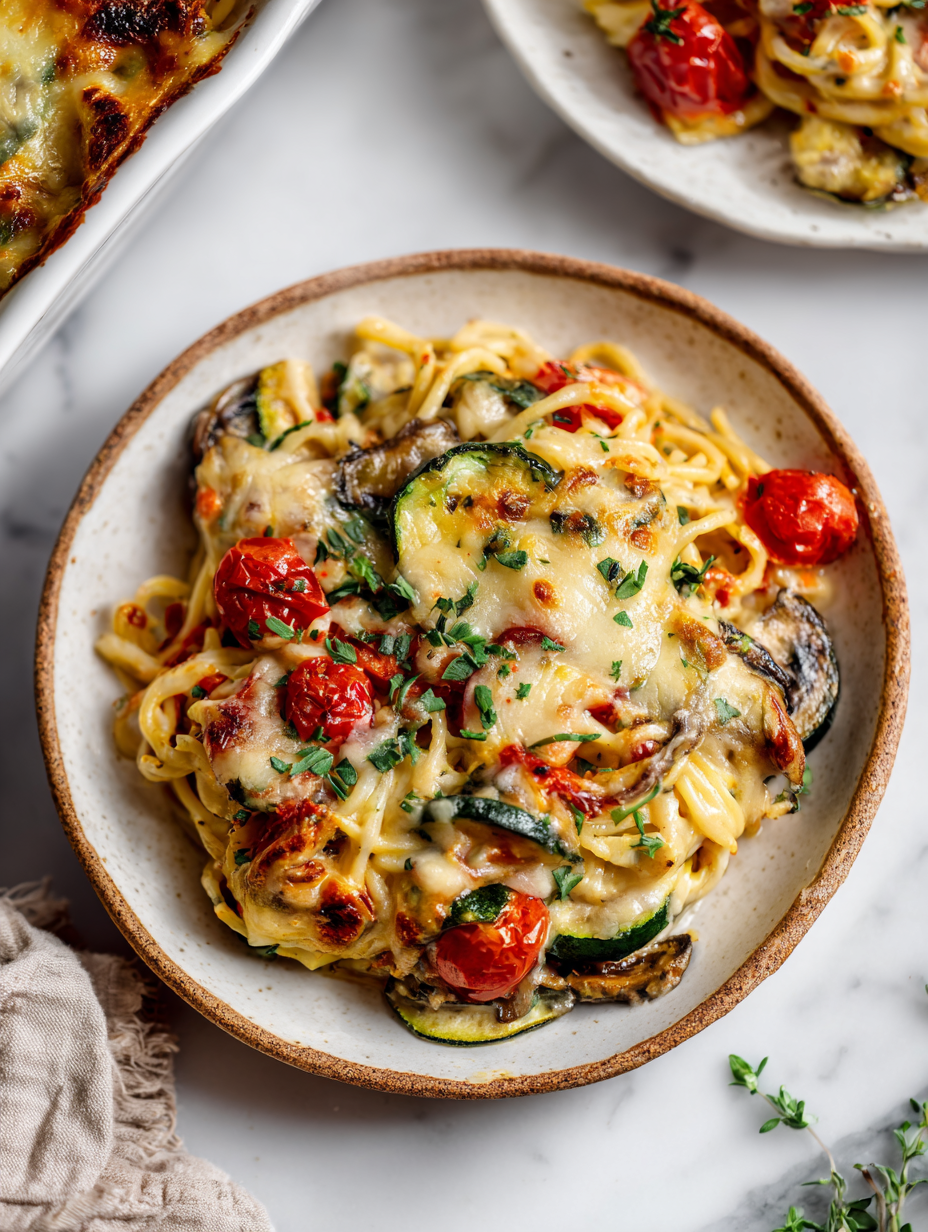
Leftover Vegetable Pasta Bake
Ingredients
Equipment
Method
- Bring a large pot of salted water to a boil and cook your pasta until just al dente, about 8-10 minutes. Drain and set aside.
- In a saucepan, gently warm the cream over medium heat. Add a pinch of salt, pepper, and dried oregano, stirring until the mixture just begins to steam—avoid boiling.
- While the cream heats, prepare your leftover roasted vegetables by chopping them into bite-sized pieces if needed.
- Combine the cooked pasta and chopped roasted vegetables in a large mixing bowl. Pour the warmed cream over and toss gently to coat everything evenly, ensuring the pasta and vegetables are well combined and coated in creamy sauce.
- Transfer the mixture into your baking dish, spreading it out evenly. Sprinkle the shredded mozzarella and grated Parmesan generously over the top.
- Bake uncovered in a preheated oven at 190°C (375°F) for 20-25 minutes, until the cheese is bubbling and golden brown around the edges.
- Remove from the oven and let it rest for 5 minutes. This helps the layers set and makes slicing easier. The top should be crispy, with a fragrant aroma of melted cheese and roasted vegetables.
- Garnish with fresh basil or thyme for a burst of herbal freshness. Serve hot with a side salad or crusty bread for a complete meal.
Pro tips for vegetable pasta bake
- Bolded Mini-Head: Use high heat when roasting vegetables to achieve deep caramelization and smoky edges.
- Bolded Mini-Head: Salt your pasta water generously; it should taste like the sea to boost flavor.
- Bolded Mini-Head: Toss pasta with a little pasta water before baking; it helps the sauce stick and creates a silky texture.
- Bolded Mini-Head: Cover the dish with foil in the first 10 minutes of baking if cheese browns too quickly, then uncover to finish.
- Bolded Mini-Head: Let the baked dish rest for at least 5 minutes; this helps it set and makes serving neater.
- Bolded Mini-Head: Use a sharp knife to evenly chop roasted vegetables; uniform pieces cook more consistently and look prettier.
- Bolded Mini-Head: For extra flavor, sprinkle fresh herbs on top after baking—adds brightness and a fragrant finish.
Common mistakes and how to fix them
- FORGOT to check pasta texture → cook until just al dente, not mushy.
- DUMPED in too much cheese → sprinkle gradually, watching for golden bubbling.
- OVER-TORCHED the top → cover with foil if browning too fast.
- MISSED seasoning at the end → taste and adjust salt and pepper before serving.
Quick fixes and pantry swaps
- When sauce looks too thin → splash in a little more cheese or breadcrumbs to thicken.
- If pasta is mushy → rescue with a quick rinse and toss in fresh pasta for texture contrast.
- Splash a bit of lemon juice if dish feels dull—brightens flavors instantly.
- Patch burnt edges with a sprinkle of fresh cheese and broil briefly to shimmer and recover.
- When ingredients seem dry → drizzle with a teaspoon of olive oil or splash of broth for moisture.
Prep, store, and reheat tips
- Prep the roasted vegetables and cooked pasta a day ahead; store in airtight containers in the fridge for up to 2 days. The flavors meld and intensify overnight, making the bake even more comforting.
- Assemble the dish unbaked, cover tightly with foil or plastic wrap, and keep in the fridge for up to 24 hours. The cold will slow baking time slightly, so add a few extra minutes if baking straight from fridge.
- Reheat leftovers in the oven at 180°C (350°F) for 15-20 minutes until bubbling and hot through. The aroma of cheese and roasted veg should fill your kitchen again, with a lightly crispy top.
- Leftovers keep well for about 3 days in the fridge. For longer storage, freeze in portions for up to 3 months. Thaw overnight in the fridge for best results.
- When reheating, expect a slightly softer texture as the dish settles. For a crispier top, broil for the last 2-3 minutes until golden and crackly, watching closely to avoid burning.
Common questions about vegetable pasta bake
1. Can I use fresh vegetables instead of leftovers?
Use leftover roasted vegetables for quick flavor. They add a smoky, caramelized taste that elevates the dish.
2. How do I prevent the pasta from becoming mushy?
Cook pasta until just al dente, about 8-10 minutes. Overcooked pasta turns mushy after baking, so keep an eye on it.
3. What’s the ideal baking time and temperature?
Bake at 190°C (375°F) for 20-25 minutes until the top is bubbly and golden. Cover with foil if it over-browns.
4. Can I substitute the cheese?
Use a mix of mozzarella and Parmesan for melty, salty goodness. Cheddar or Gruyère work well for different flavors.
5. Is it possible to make this vegan or dairy-free?
Yes, dairy-free options like coconut milk or cashew cream can replace cream, but expect a slightly different richness.
6. What herbs work best for garnish?
Add fresh herbs like basil or thyme on top after baking for a bright, fragrant finish.
7. Should I let it cool before slicing?
Let the dish rest for about 5 minutes after baking. This helps the layers set and makes serving neater.
8. How long does it keep in the fridge?
Leftovers can be stored in the fridge for up to 3 days. Reheat in the oven at 180°C (350°F) until bubbling.
9. My cheese isn’t melting. What should I do?
If cheese isn’t melting properly, sprinkle it evenly and broil for a few minutes until bubbly and golden.
10. The dish looks dry—how can I fix it quickly?
To fix dryness, drizzle with a little olive oil or broth before baking or serving.
This vegetable pasta bake feels like a warm hug, especially when you’re craving something familiar yet a bit special. The way the cheese bubbles and the roasted vegetables develop a smoky sweetness really sticks with you. It’s a dish that reminds me to use what I have and make it work, no fuss needed.
Right now, with the season’s bounty filling the markets, it’s a perfect way to celebrate simple ingredients. Plus, it’s forgiving enough to toss together after a busy day, with leftovers just as satisfying the next. Sometimes, these humble bakes turn into the most comforting meals of all.

Hi there! I’m Himani and welcome to Val’s Recipe Box. This little corner of the internet didn’t begin with me. It began with Val my neighbourhood aunt whose kitchen held more warmth than any fireplace ever could.


 This little corner of the internet didn’t begin with me.
It began with Val my neighbourhood aunt whose kitchen held more warmth than any fireplace ever could.
She was more of a friend and I’ve come to know her in the most unexpected way.
This little corner of the internet didn’t begin with me.
It began with Val my neighbourhood aunt whose kitchen held more warmth than any fireplace ever could.
She was more of a friend and I’ve come to know her in the most unexpected way.